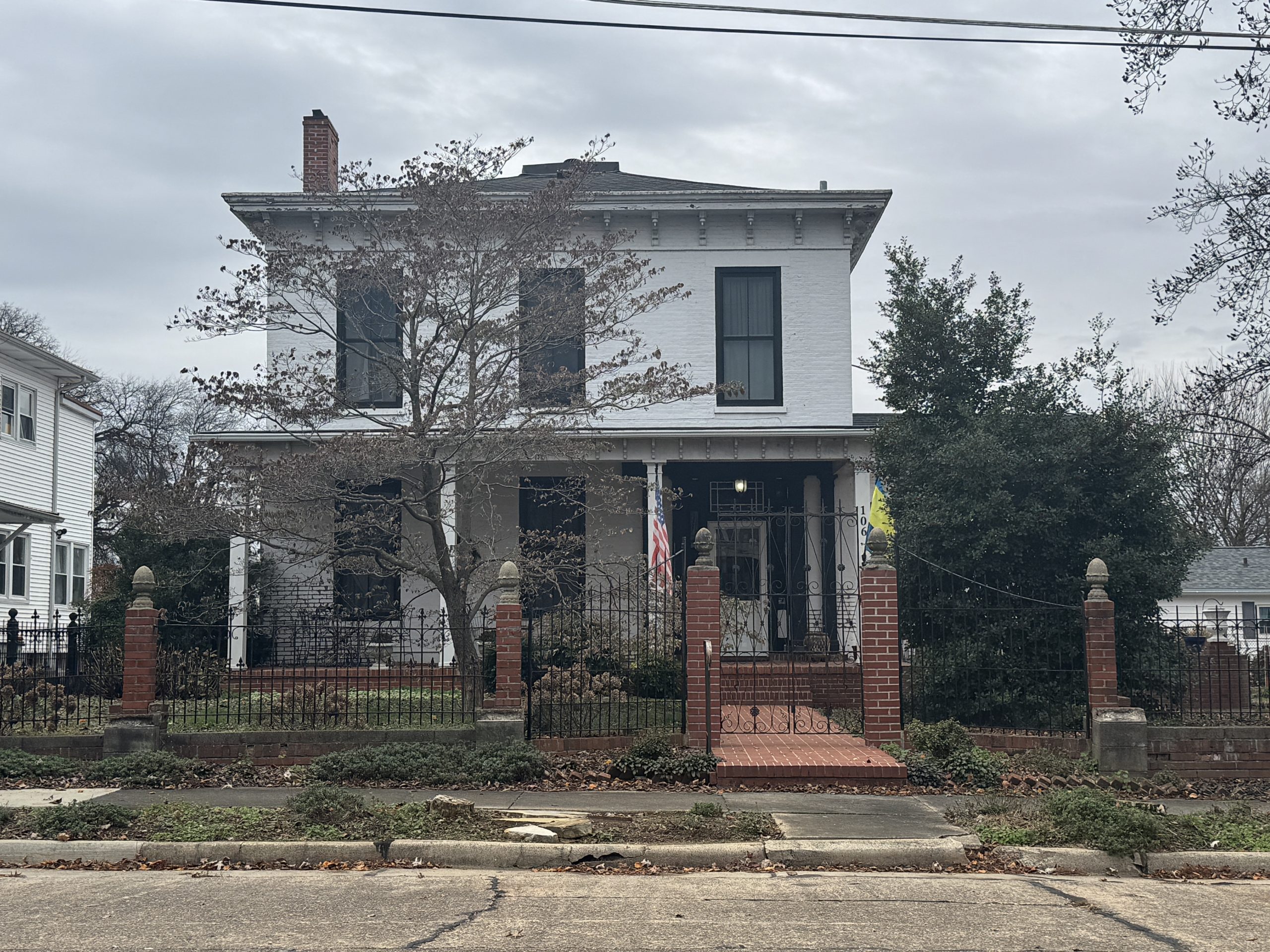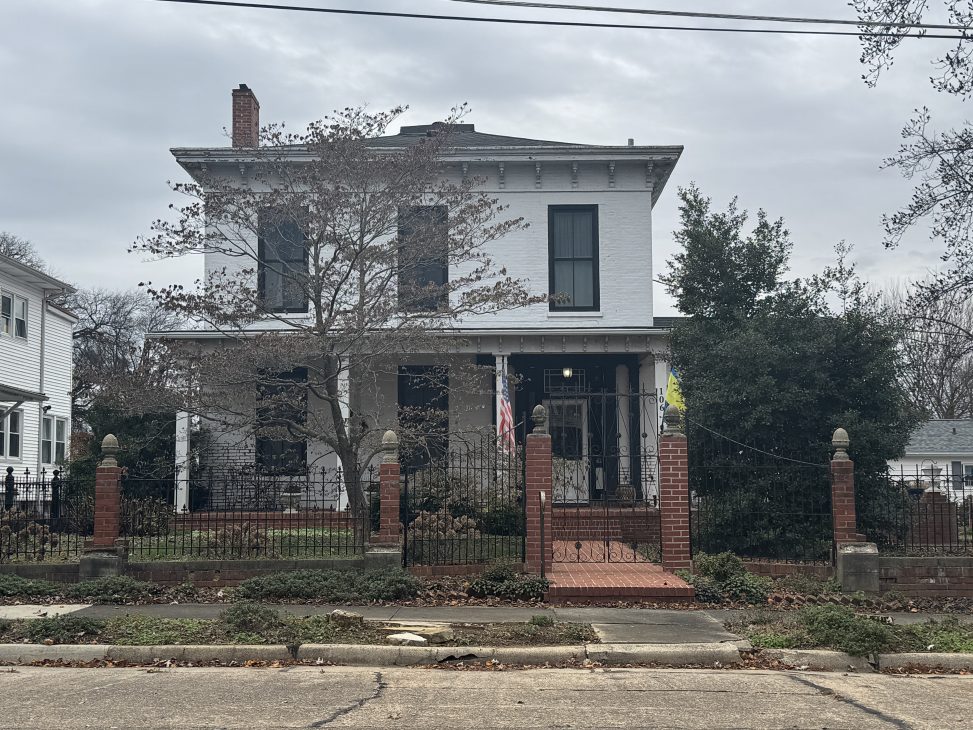
The Lyne-Morton House at 106 Clay Street is one of Henderson’s most refined mid-19th-century residences, a brick Greek Revival/Italianate transitional home that has retained its commanding presence for more than 160 years. Its three-bay façade, low-pitched hipped roof, and handsome bracketed cornice are hallmark Italianate features, while the balanced proportions and side-hall plan echo earlier Greek Revival sensibilities. A full-width hip-roofed porch, supported by squared posts, welcomes visitors and softens the home’s otherwise formal, block-like massing.
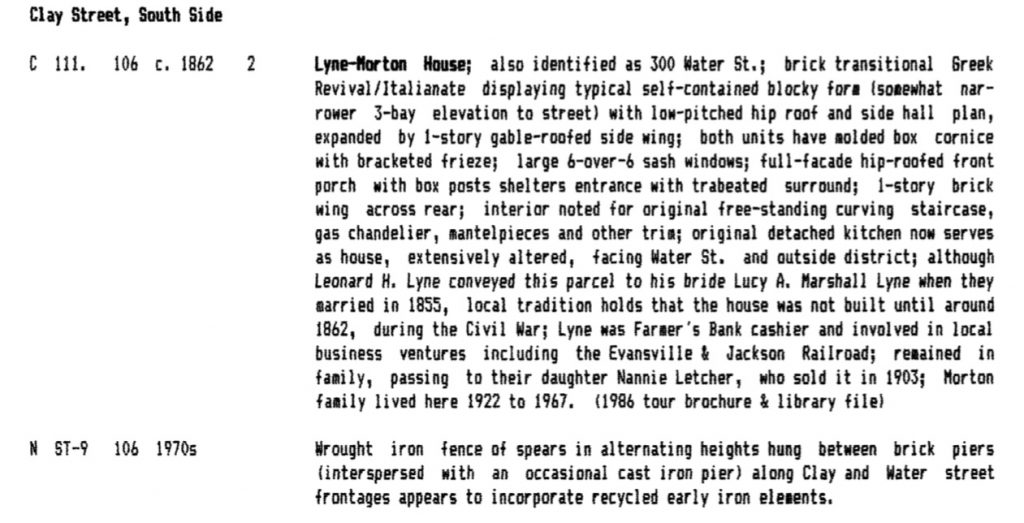
Tradition holds that Leonard H. Lyne, Farmer’s Bank cashier and local businessman involved in ventures such as the Evansville & Jackson Railroad, constructed the house around 1862, after conveying the parcel to his bride, Lucy A. Marshall Lyne, in 1855. The property remained in the Lyne family for decades, passing to their daughter Nannie Letcher, before being sold in 1903. From 1922 to 1967, the Morton family made the home their own, giving the property its long-recognized dual name.
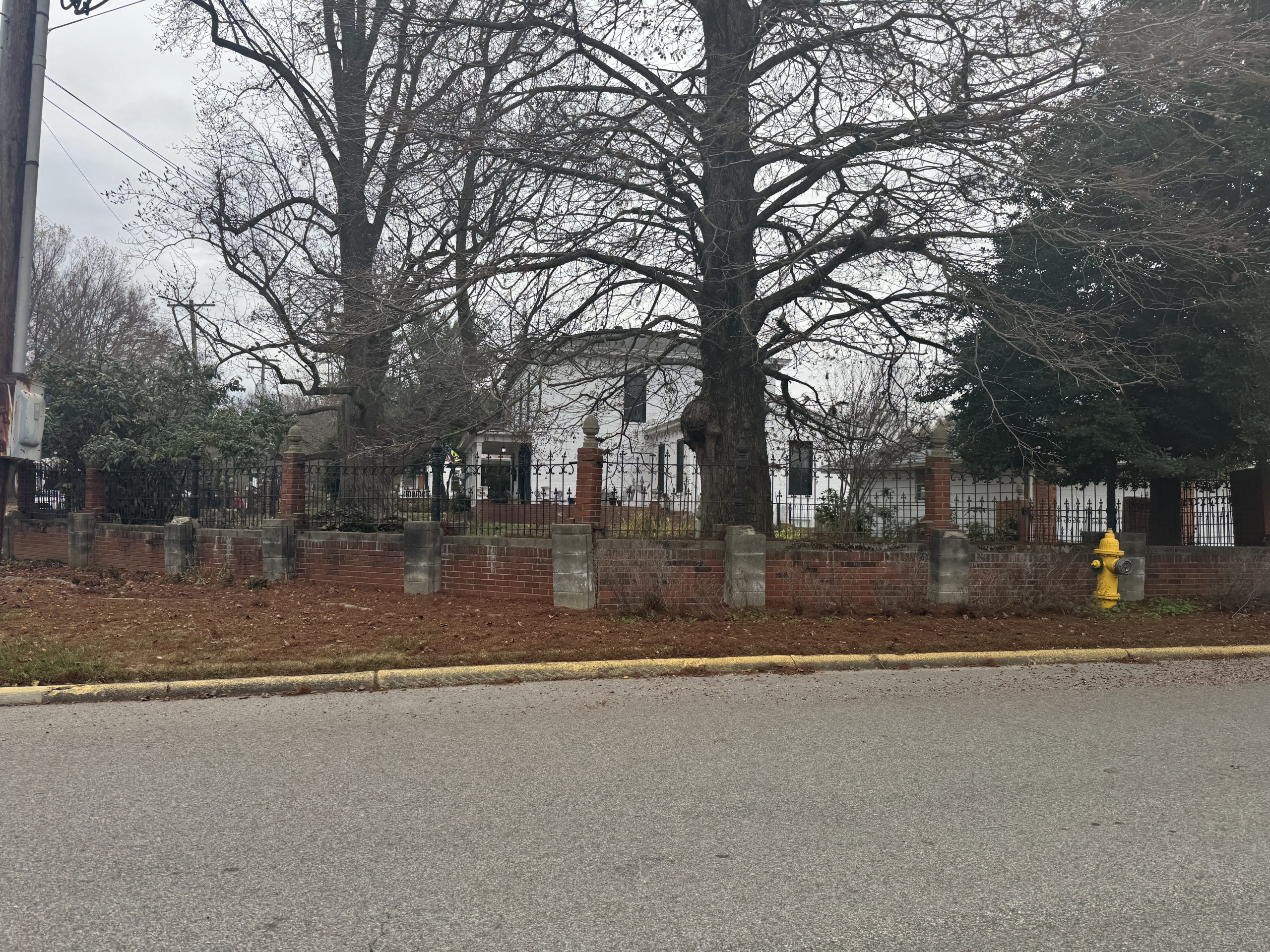
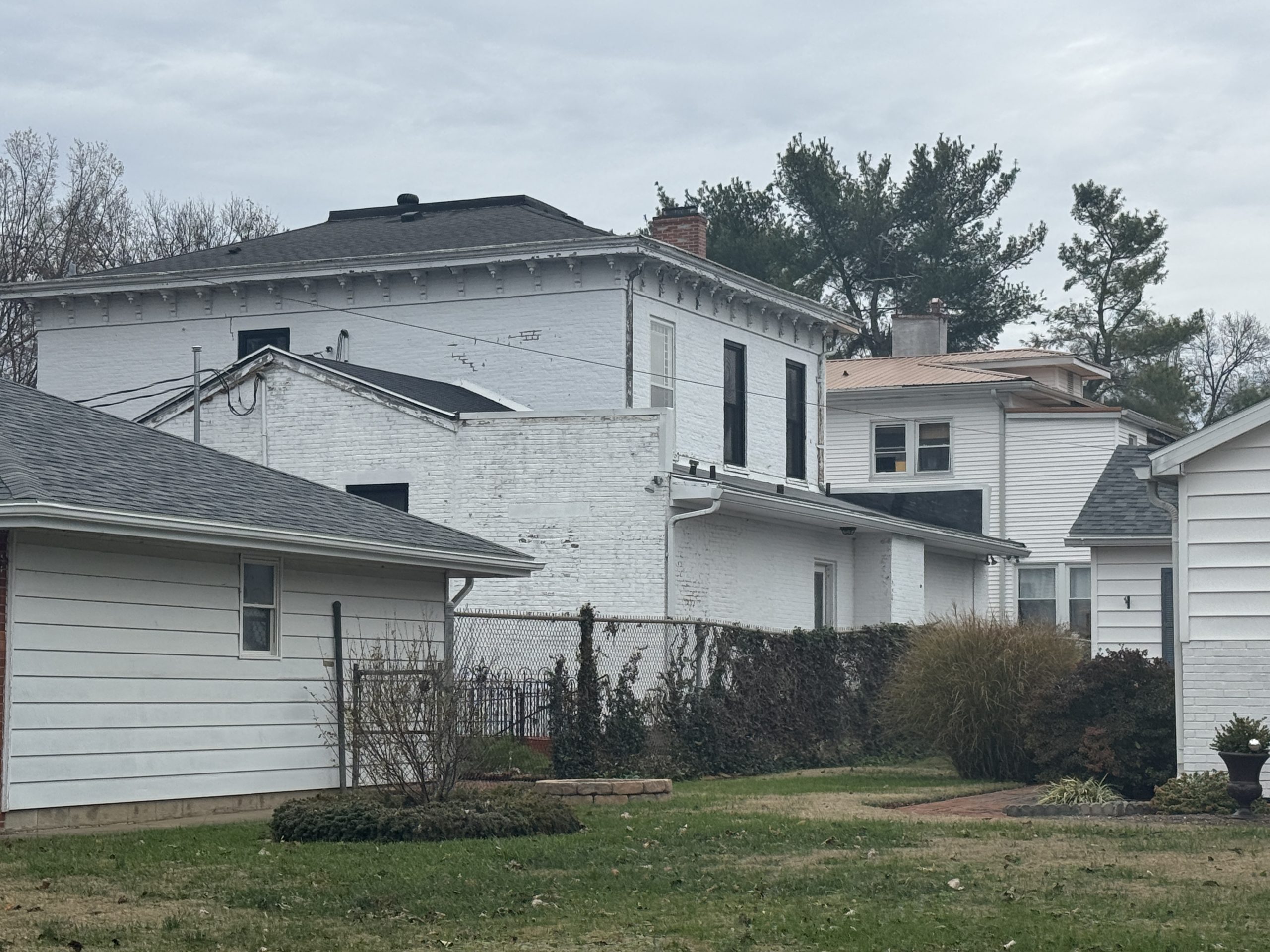
Behind the main block stands a brick rear wing, visible from Water Street, and the lot once included a detached kitchen building, now heavily altered. Encircling the property is one of its most distinctive features: a wrought-iron fence of alternating spear-point pickets suspended between tall brick piers, with the occasional cast-iron pier interspersed. The ironwork is believed to incorporate recycled 19th-century elements, further enriching the site’s historic character.
Today, with its mature trees, broad porch, and imposing roofline, 106 Clay Street remains a striking architectural anchor of the neighborhood, an enduring testament to Henderson’s Civil War-era prosperity and the families who shaped its story.