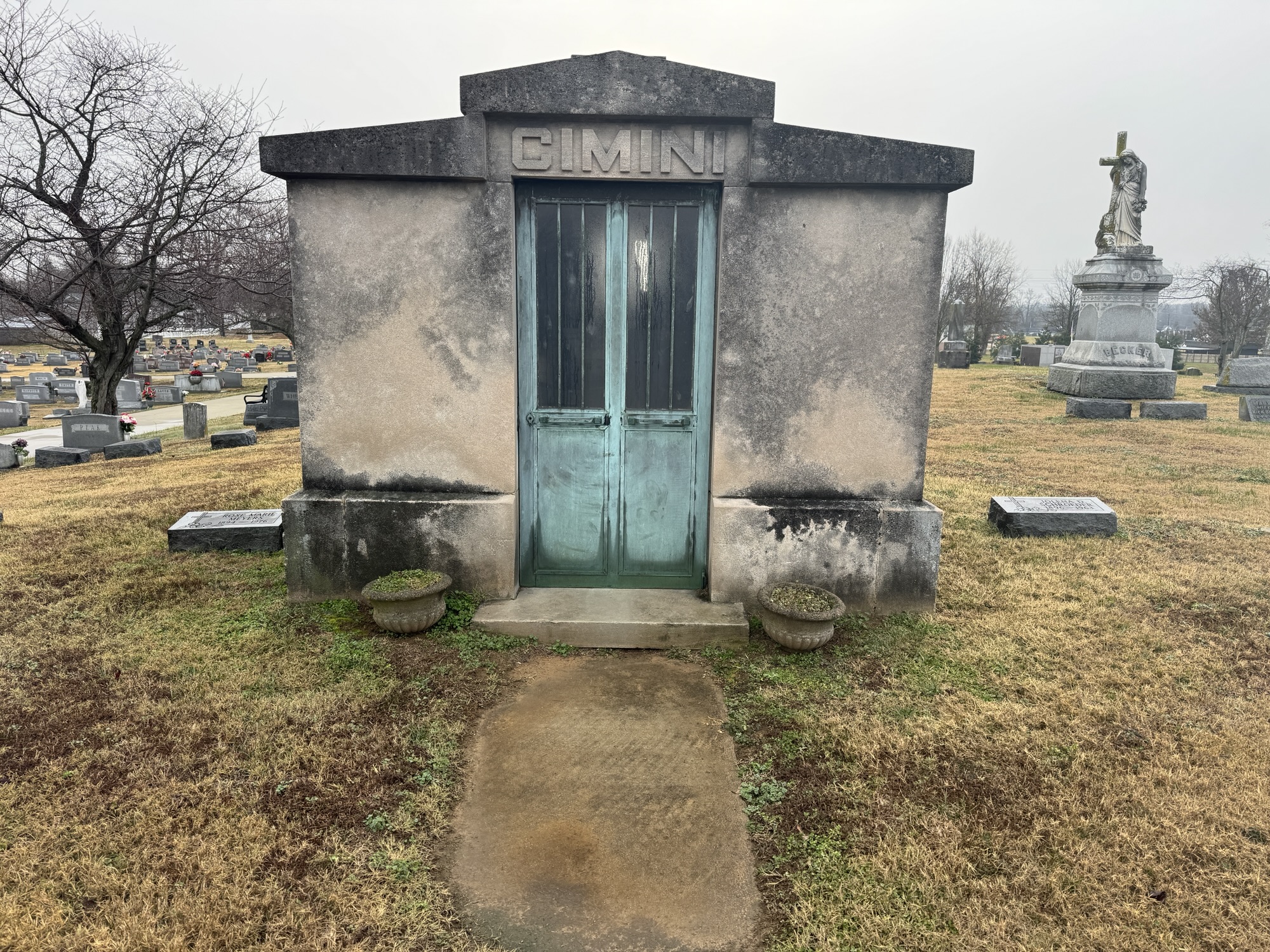
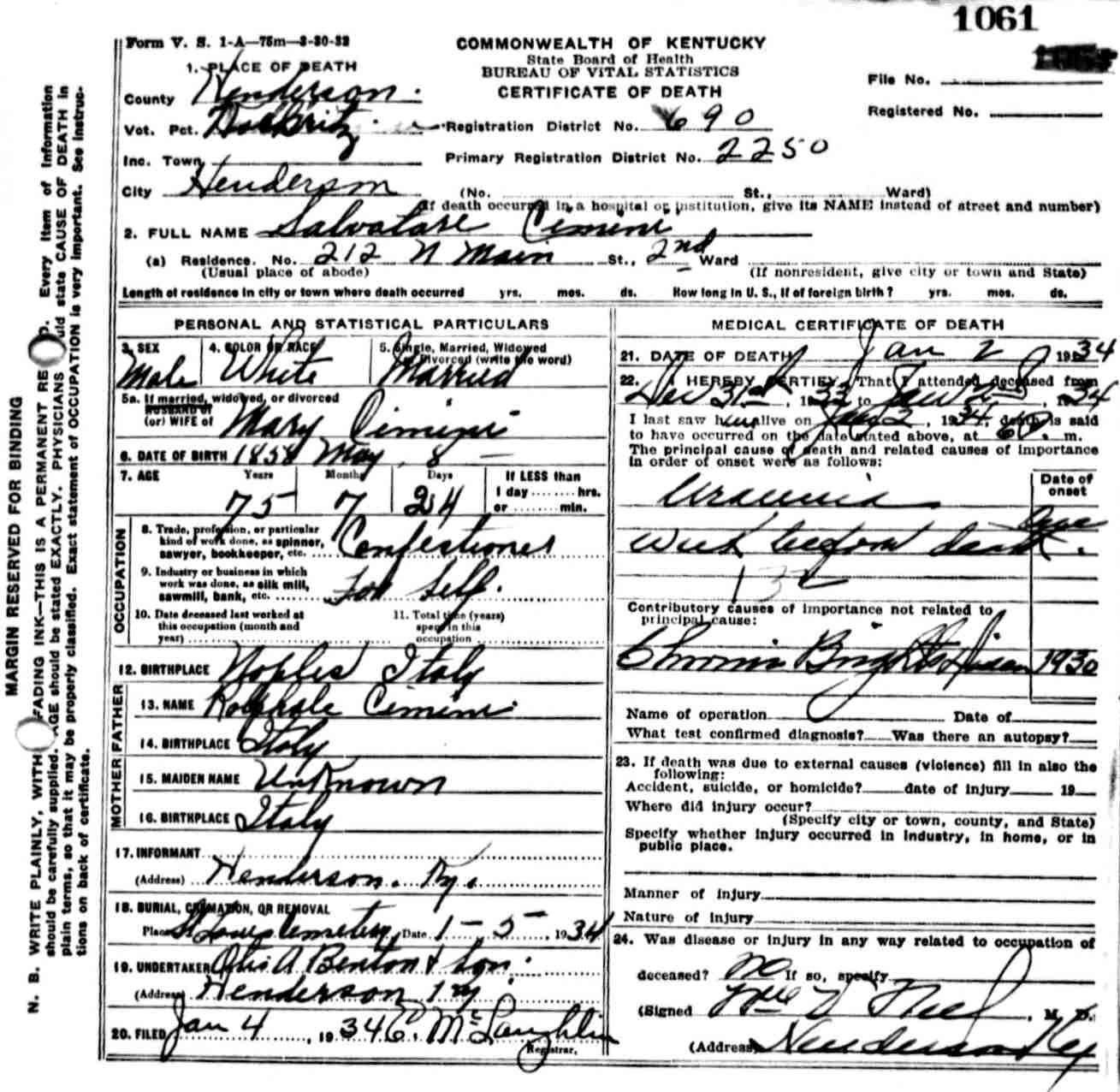
Salvatore “Frank” Cimini was born in Naples, Italy, in 1858, and like so many immigrants of his generation, he carried with him a trade, a determination to work, and the hope that persistence would be rewarded. By the late nineteenth century he had made his way to Henderson, Kentucky. He arrived first, establishing himself before his family joined him, and by 1890 his name appeared in city records on North Main Street as a confectioner selling fruit, nuts, candies, and small indulgences.
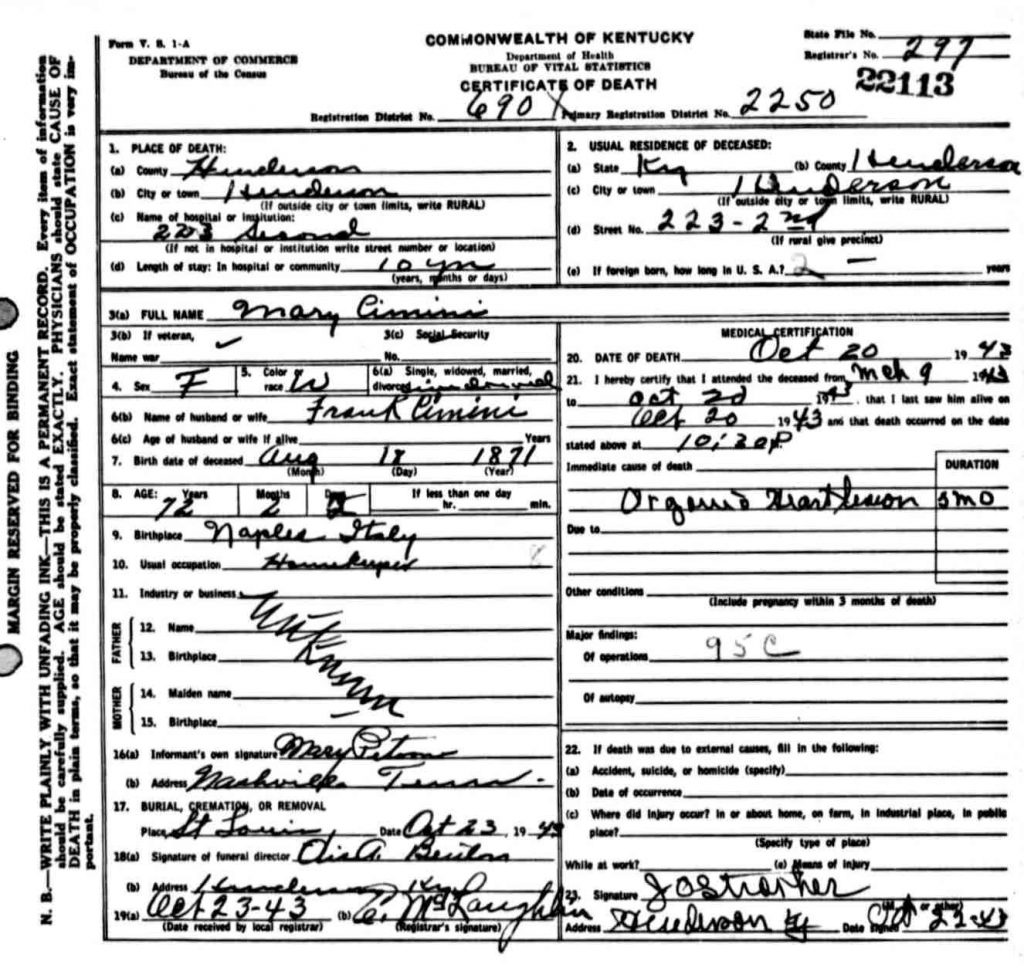
Mary Cimini, born in Italy in 1871, joined Frank in Henderson and quickly became his equal partner in business and life. If Frank built the foundation, Mary gave the enterprise its unmistakable personality. Together they operated a fruit and confectionery business in a downtown building later remembered for housing Danny’s Shoe Store. The family lived upstairs, as many merchants did, their home literally resting on their livelihood. The city’s children came to know the narrow stairway and the glass-fronted displays below, heavy with fruit and sweets.
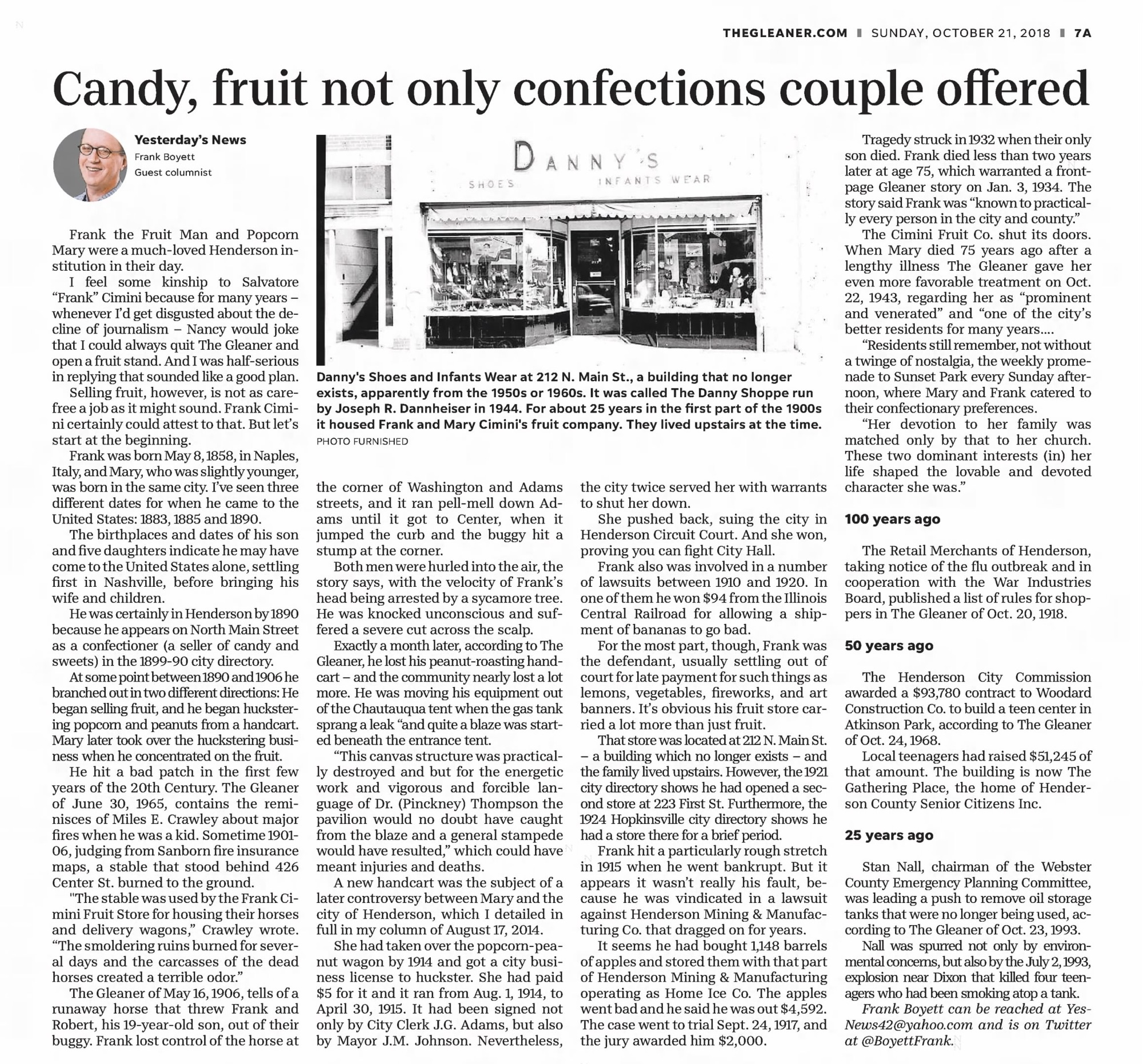
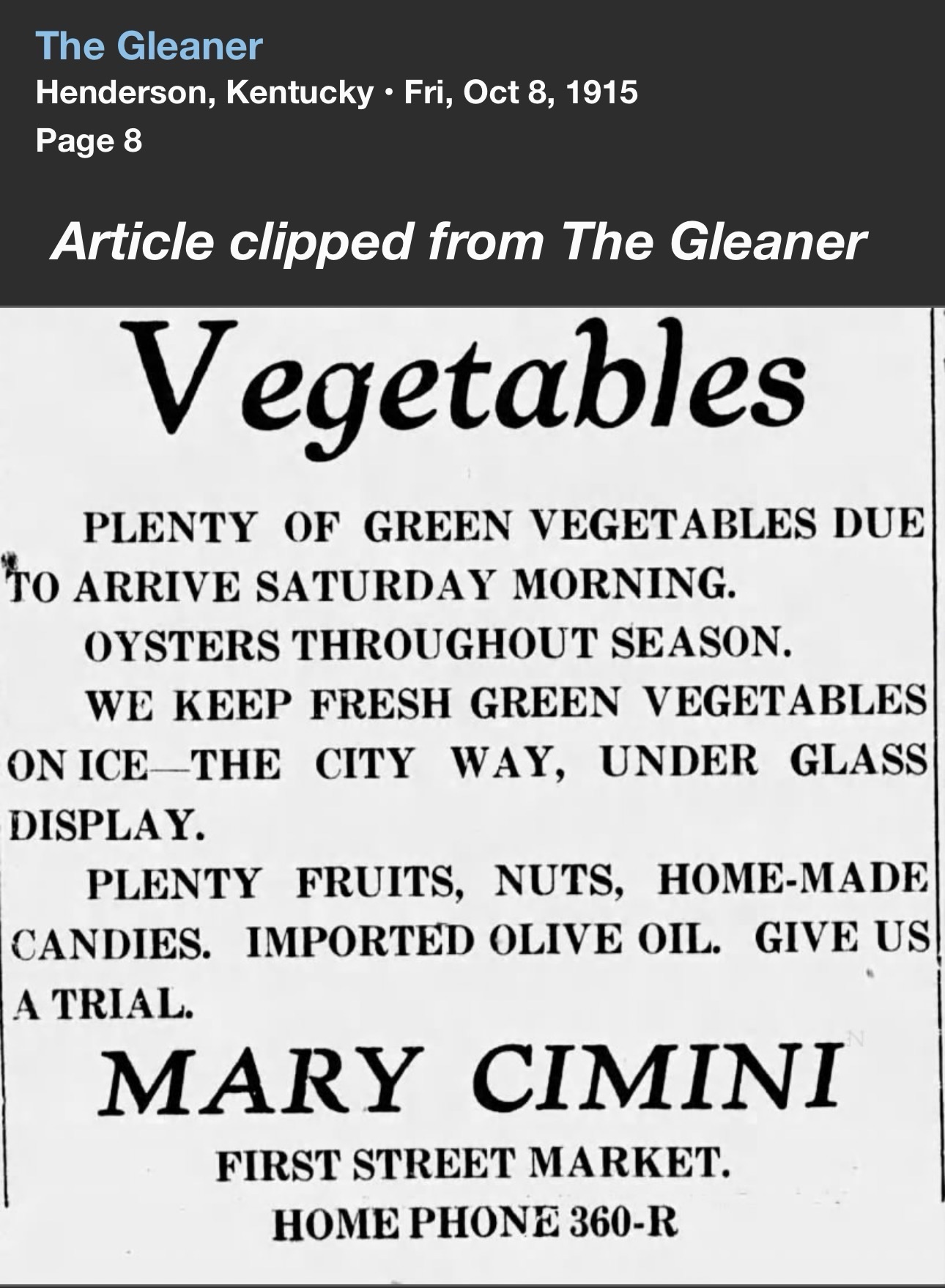
As Henderson grew, so did the Ciminis’ reach. Frank expanded beyond the storefront, running popcorn and peanut wagons through the business district and later operating stands that became landmarks in their own right. Mary eventually took charge of much of the huckstering trade, a role she embraced with both resolve and humor. Newspaper advertisements from the period show her name boldly printed, announcing fresh vegetables “kept on ice-the city way,” imported olive oil, homemade candies, and oysters in season. Her First Street Market was not simply a place to buy food; it was an invitation. “Give us a trial,” she urged, confident that customers would return.
They did-generation after generation.
The work was not without hardship. Frank endured accidents, including a runaway horse incident that left him seriously injured. Fire destroyed equipment and wagons. Financial reversals followed, including a bankruptcy in 1915. Yet each time, the Ciminis rebuilt. Lawsuits and city ordinances occasionally placed them at odds with local authorities, but Mary, in particular, proved unyielding. When charged with violating huckstering regulations, she took the city to court and won, affirming her right to operate under a business license. For an immigrant woman in the early twentieth century, it was an extraordinary assertion of independence.
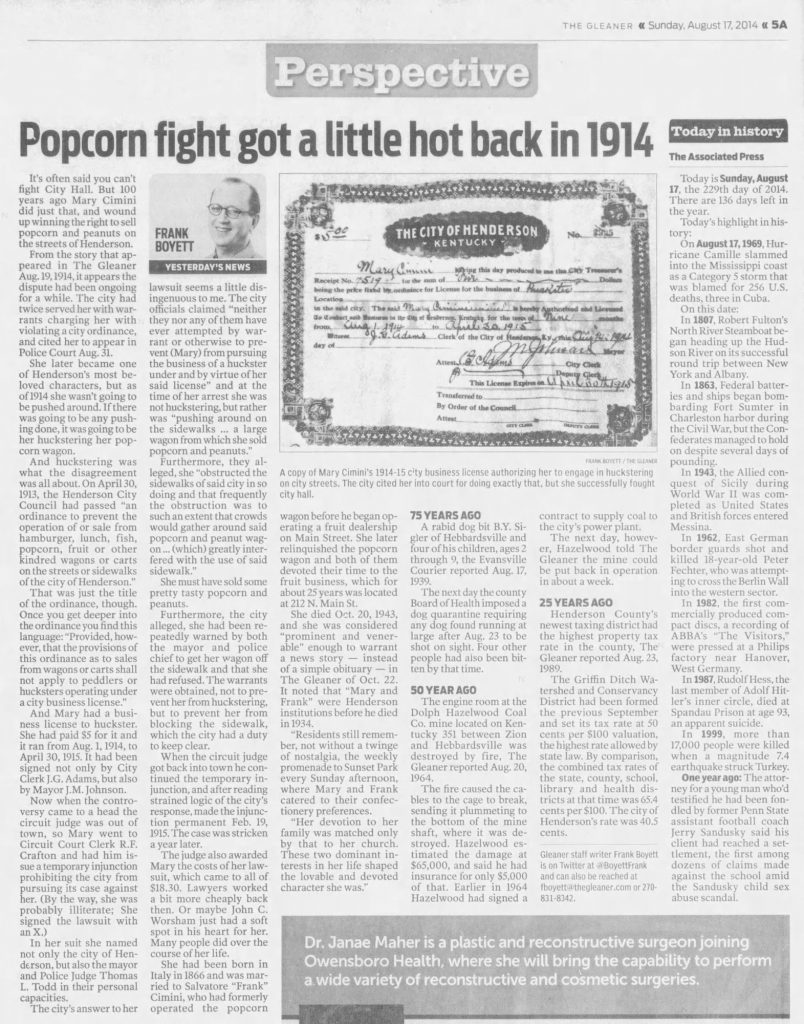
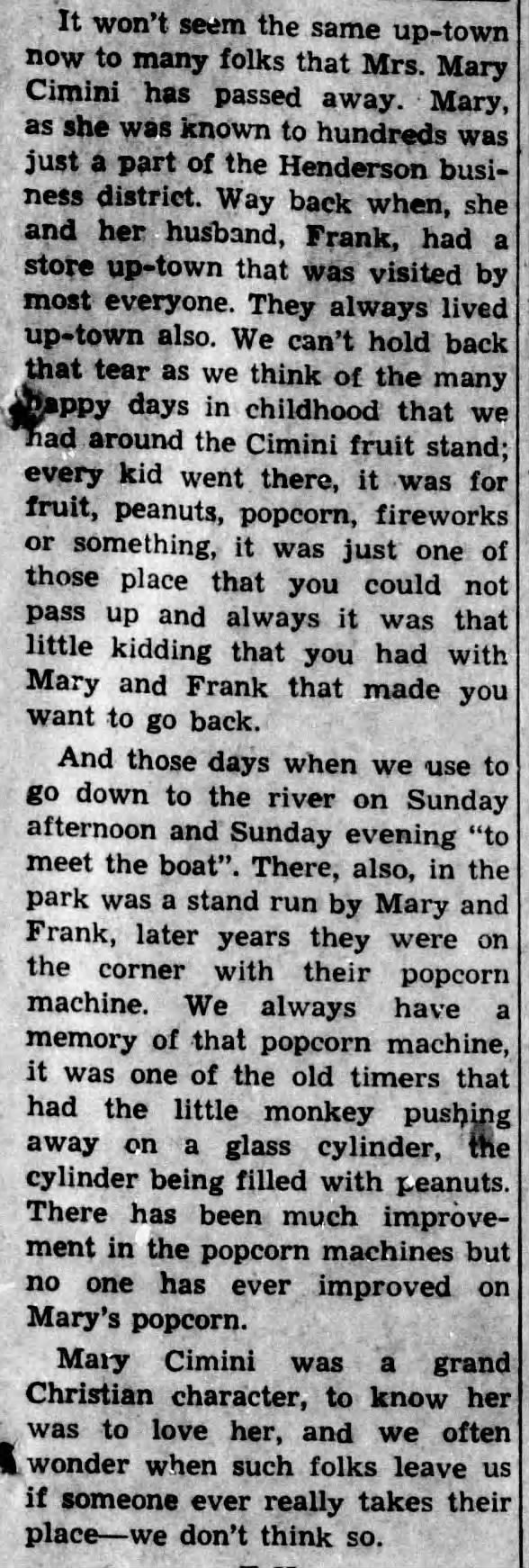
By the time Henderson residents spoke of “Mary and Frank,” no explanation was needed. They were fixtures of the city’s commercial heart. On Sundays, families strolling to Sunset Park knew they would find the Ciminis there, catering to what newspapers later called the city’s “confectionery preferences.” Children remembered popcorn served from a machine with a little mechanical monkey pushing peanuts behind a glass cylinder-an image that lingered decades later, long after newer machines replaced it. Many insisted that no improvement had ever been made on Mary’s popcorn.
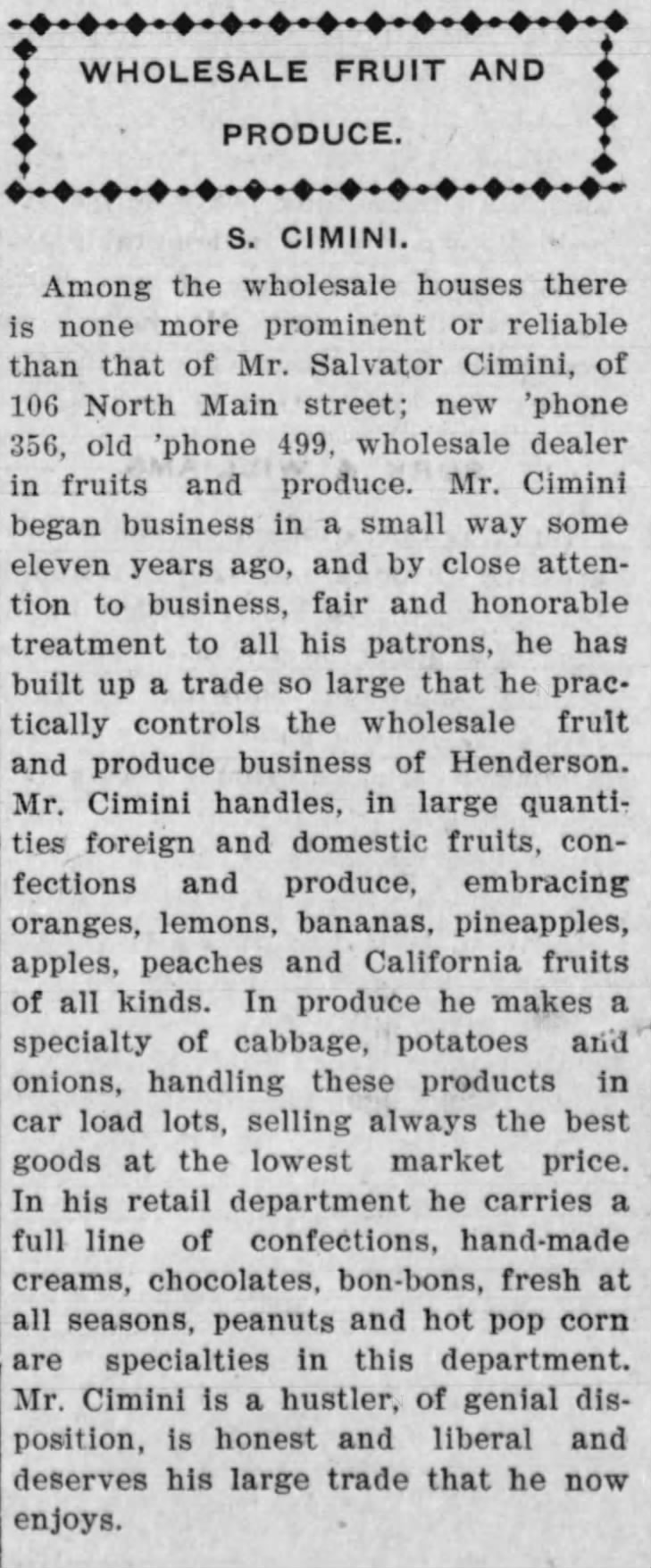
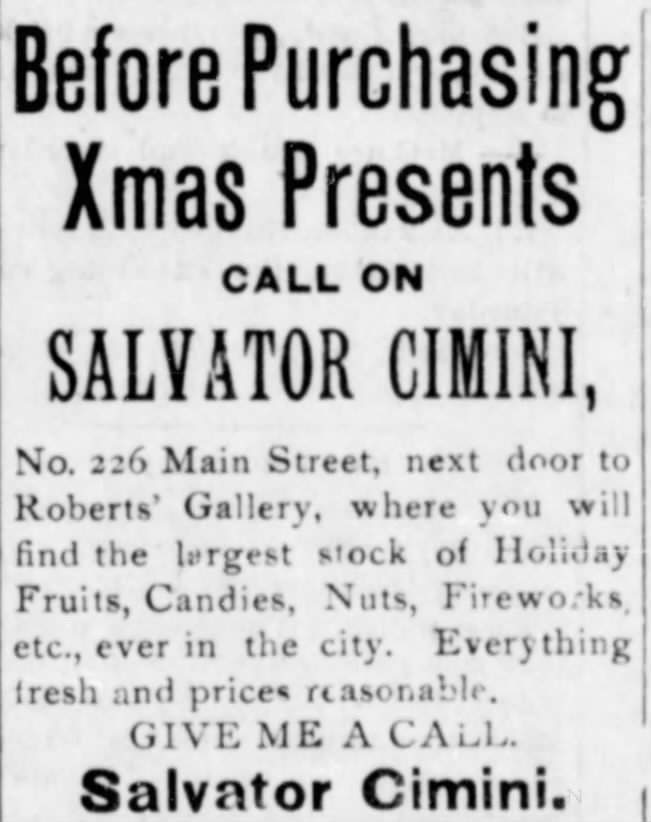
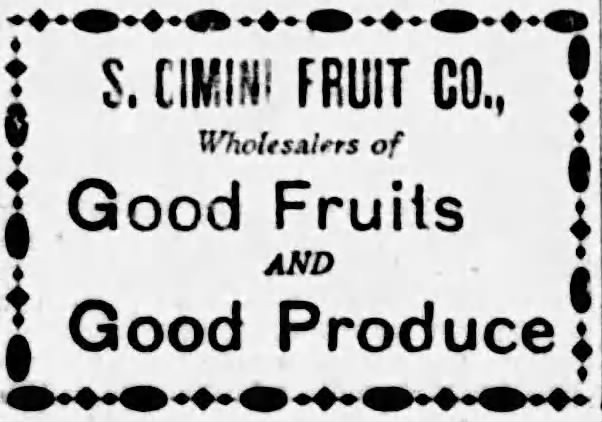
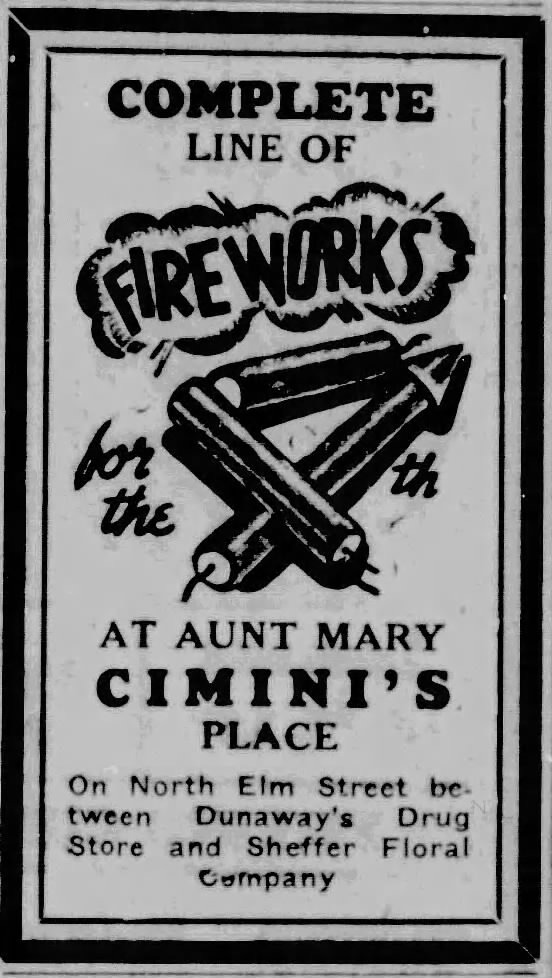
Their business also followed the seasons. Fireworks advertisements placed at “Aunt Mary Cimini’s Place” on North Elm Street became part of the city’s Fourth of July anticipation. Fruit, peanuts, popcorn, and fireworks-these were the small pleasures that marked time in Henderson, and the Ciminis supplied them faithfully.
Frank died in January 1934 at the age of seventy-five, his passing noted prominently in the local press. He was remembered as a man known to nearly everyone in the city and county, a merchant whose perseverance no mirrored the immigrant story that helped shape Henderson itself. Mary continued on without him, maintaining her place in the business district and in the city’s affection.
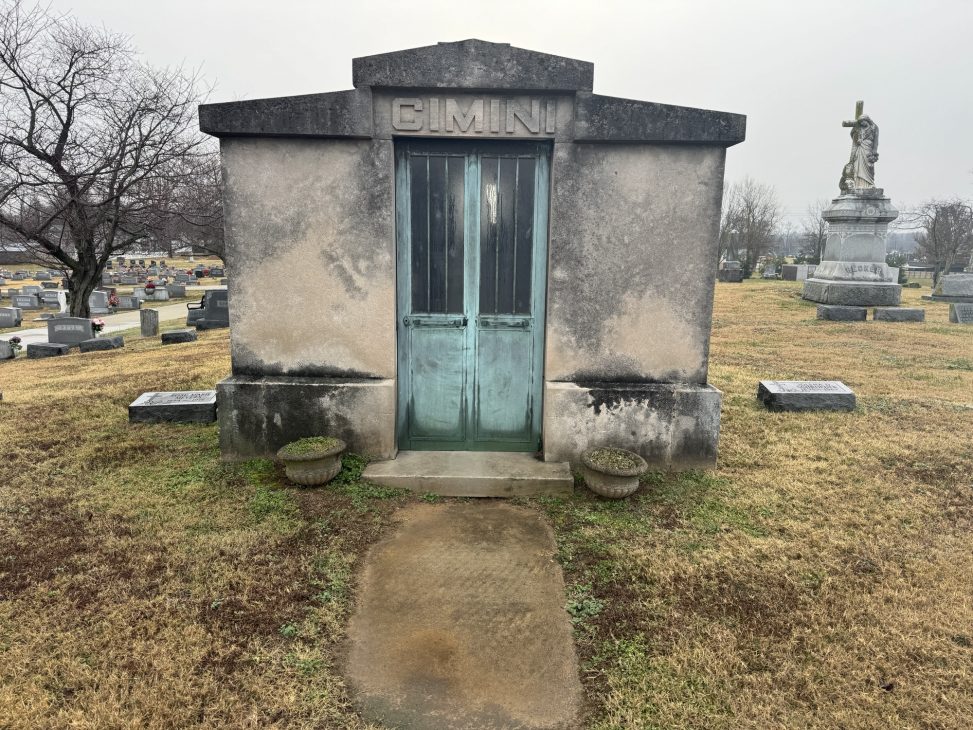
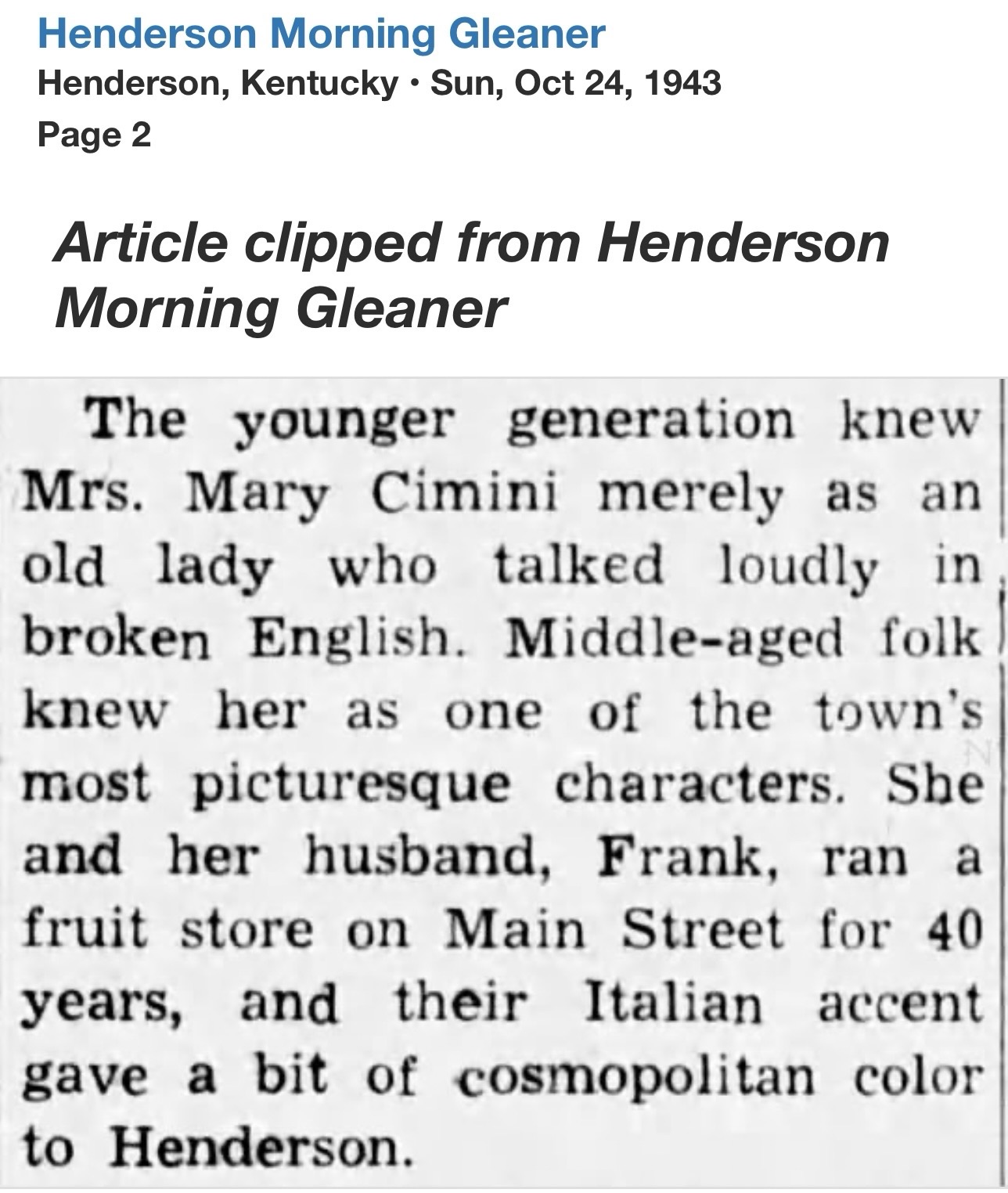
When Mary Cimini died in October 1943, the sense of loss was immediate and deeply felt. Newspapers described her as “prominent and venerated,” one of the city’s better residents for many years. Her funeral was held at Holy Name Catholic Church, reflecting the faith that had guided her life, and she was interred beside Frank in the family mausoleum at St. Louis Cemetery. Pallbearers included men from across the community, a final testament to the breadth of her connections.
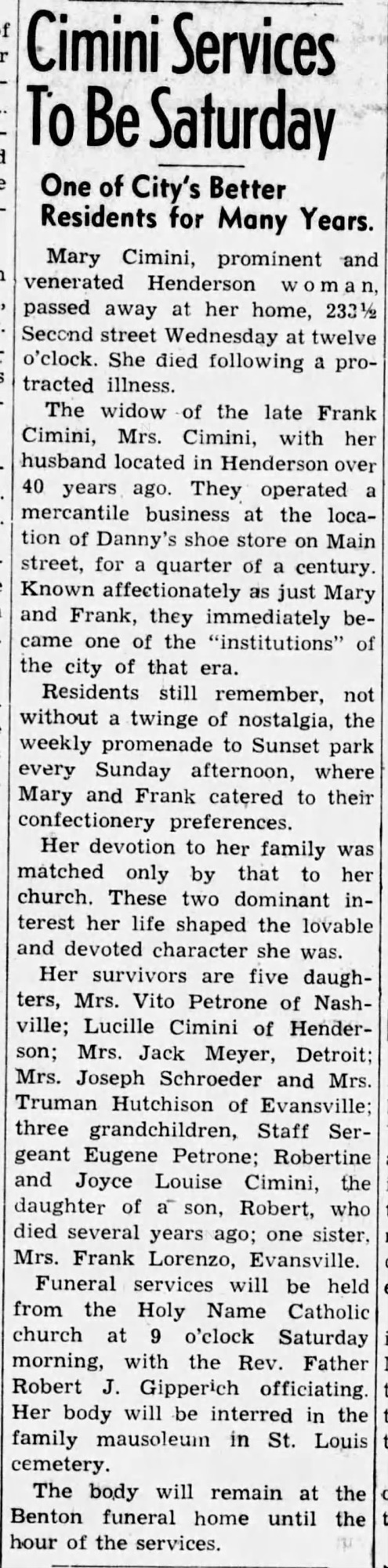
Those who wrote about her in the days following her death did so with emotion. Uptown, they said, would never seem the same. Mary was remembered not only for what she sold, but for how she sold it-with humor, warmth, and a familiar teasing that made customers feel known. Children who had once stood at her counter returned as adults, carrying memories of small purchases that somehow grew larger with time.
The stone mausoleum bearing the name Cimini still stands in St. Louis Cemetery, solid and unadorned, much like the lives it marks. It is a reminder of two people who came from far away and left an imprint on Henderson that outlasted buildings, businesses, and even memory itself.