A “Spider Web and Soap Bubble” in 1904 Henderson
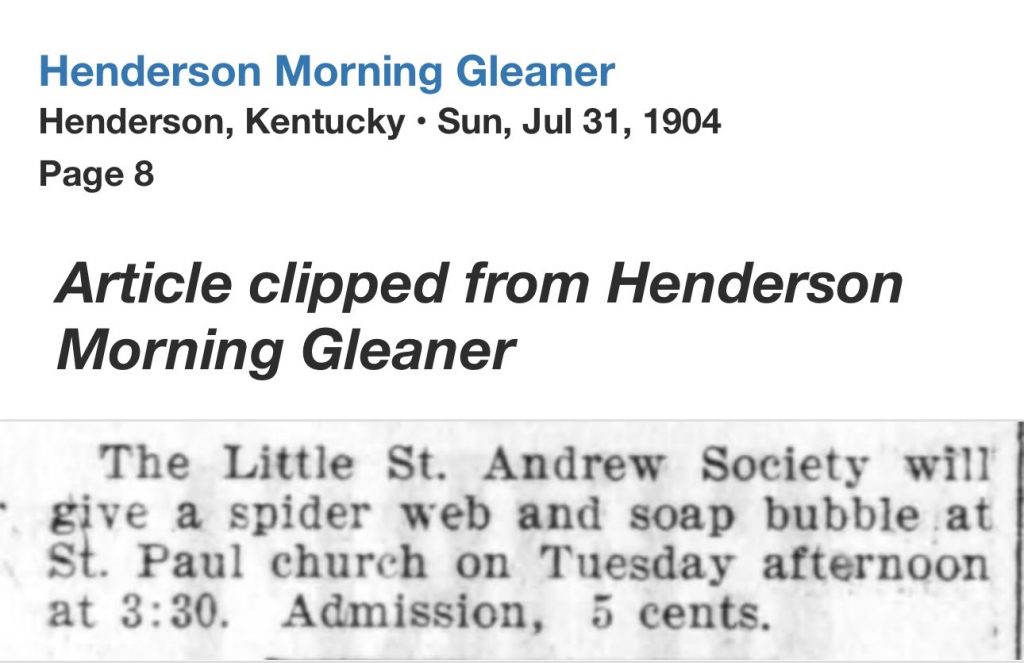
A small notice tucked into the Henderson Morning Gleaner on July 31, 1904, offers a glimpse into everyday life in Henderson at the turn of the century:
“The Little St. Andrew Society will give a spider web and soap bubble at St. Paul church on Tuesday afternoon at 3:30. Admission, 5 cents.”
At first glance, the wording feels unusual today, but in 1904 it would have been immediately understood.
The “Little St. Andrew Society” was likely a youth group connected to St. Paul Church, and events like this were a regular part of community life. Churches served as social centers, especially for children, hosting gatherings that combined entertainment with fellowship and often a bit of fundraising.
The “soap bubble” portion referred to simple, cheerful amusement. Children would blow bubbles, sometimes turning it into a contest or playful activity. It was inexpensive, easy to organize, and perfectly suited for a summer afternoon.
The “spider web” was a popular game of the era. Organizers would string yarn or thread across a room in a web-like pattern, with each strand leading to a small prize, note, or surprise. Participants would choose a string and follow it through the tangled web to see what awaited them. It was part game, part raffle, and part social activity.
For just five cents, local children, and likely their families, could gather at St. Paul Church for an afternoon of simple fun. No elaborate attractions or technology, just creativity, community, and a little imagination.
Not every piece of history is a major event. Sometimes it is a handful of bubbles and a web of string that tells us the most about how people lived.