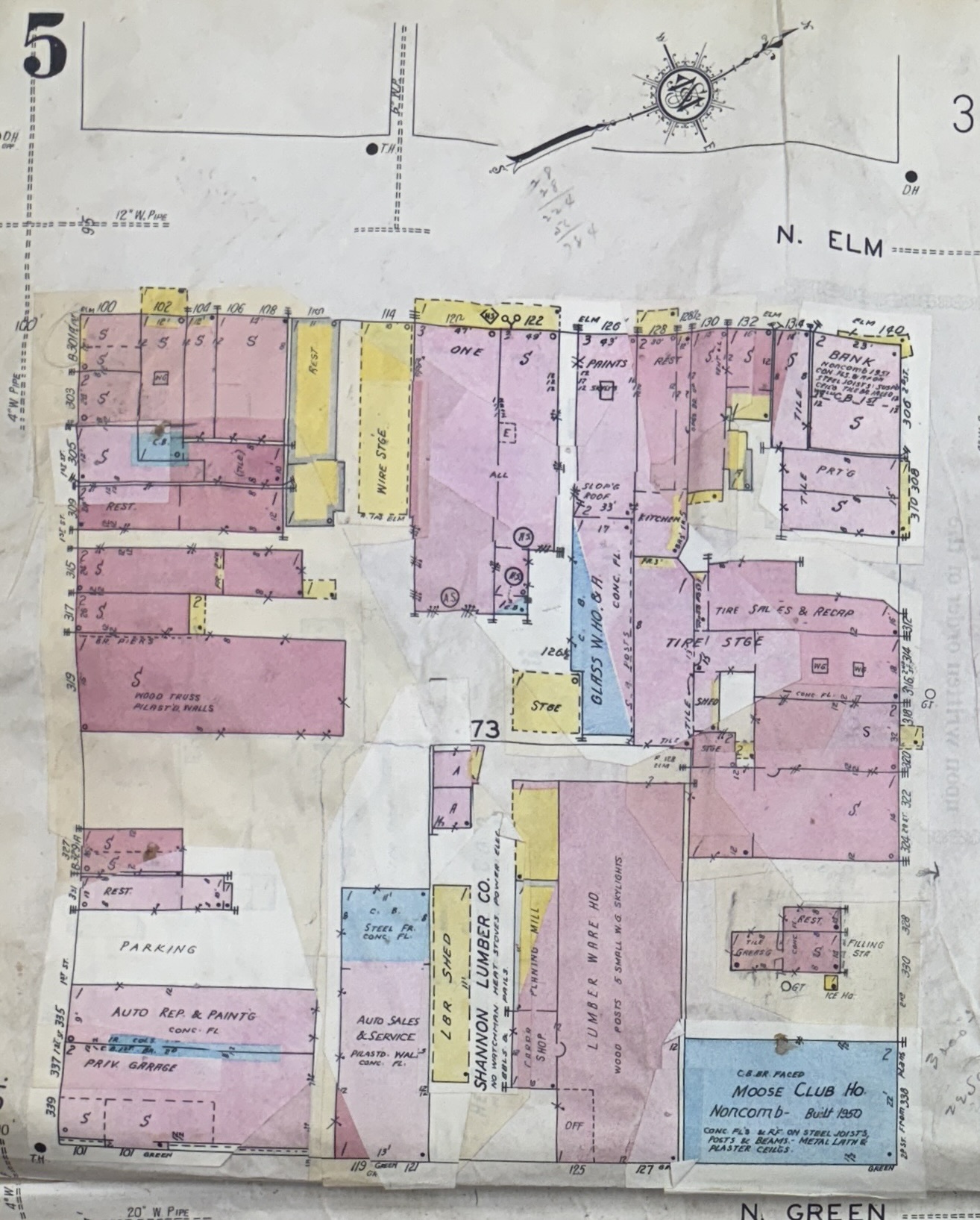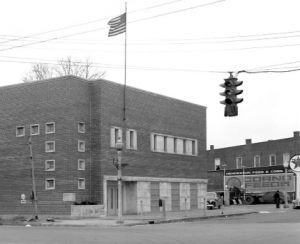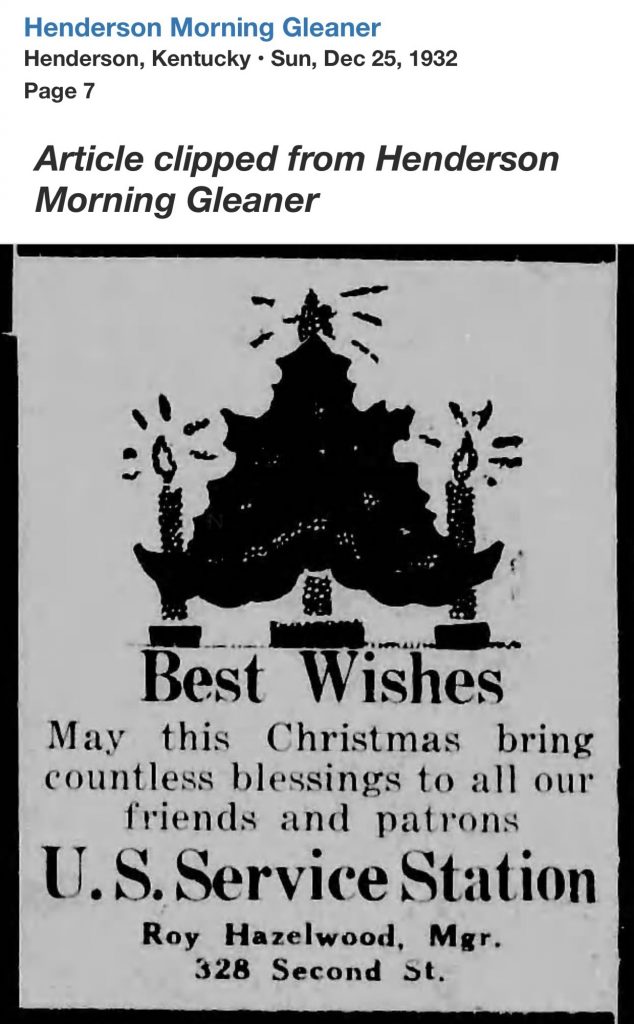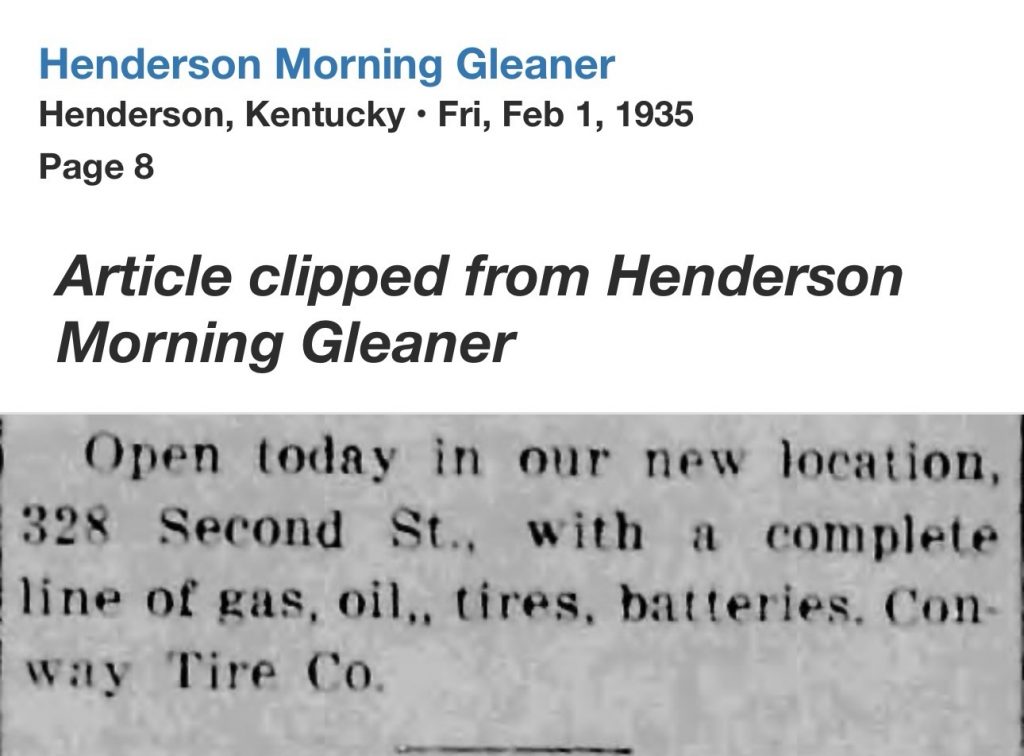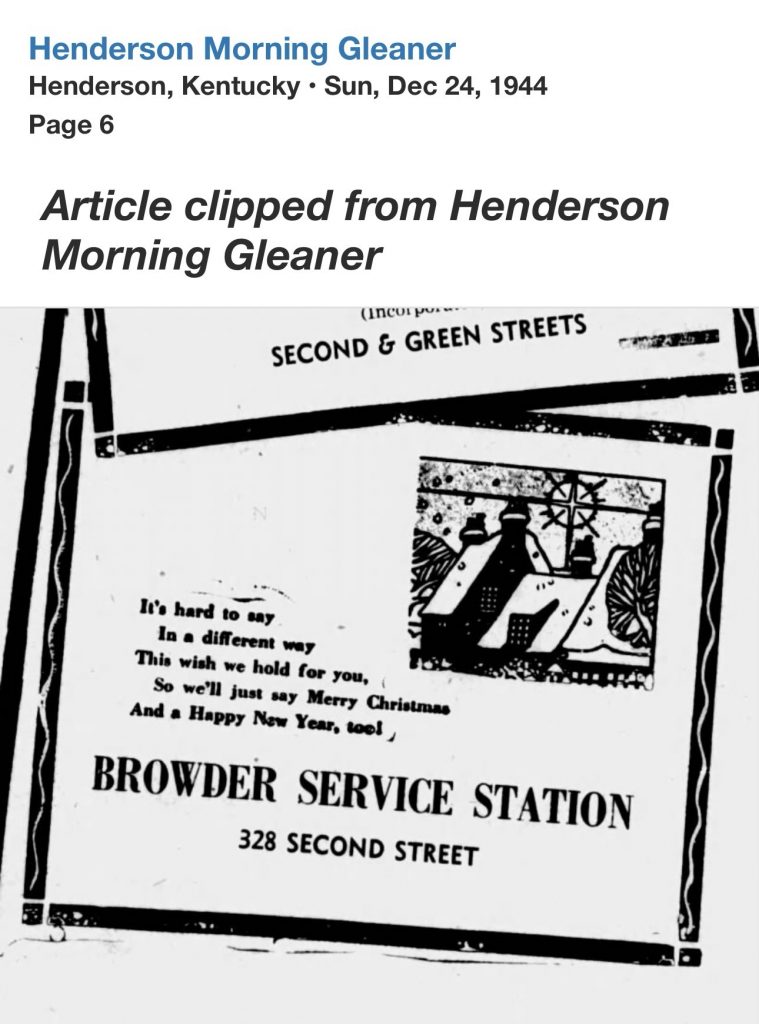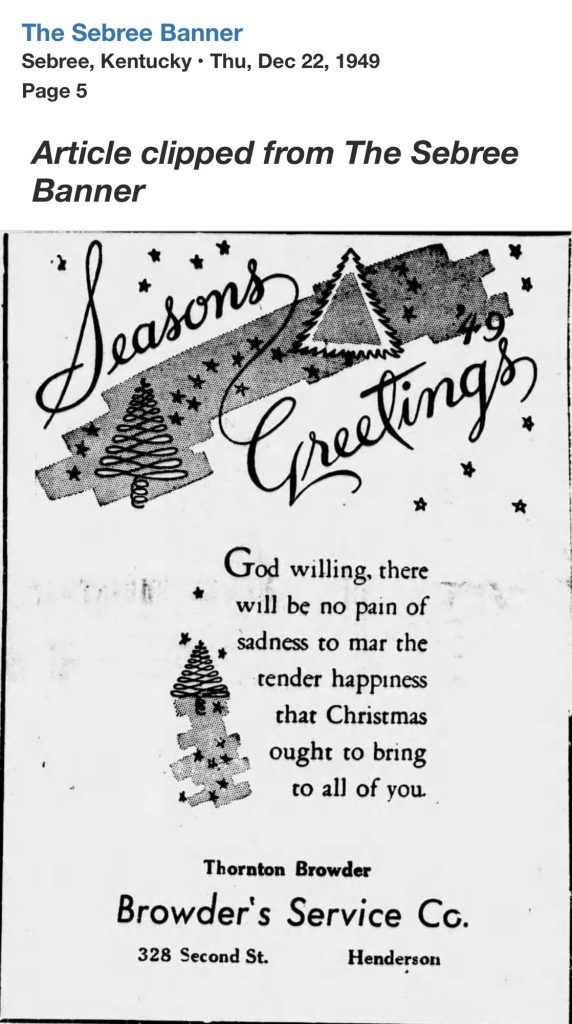
Near the corner of Second and Green, beyond the Moose Lodge building, stands a property that reflects the rise, peak, and transformation of Henderson’s automobile era. The address now known as 330 Second Street has roots stretching back to the late 1920s, when it served as one of the city’s early full-service automotive stations.
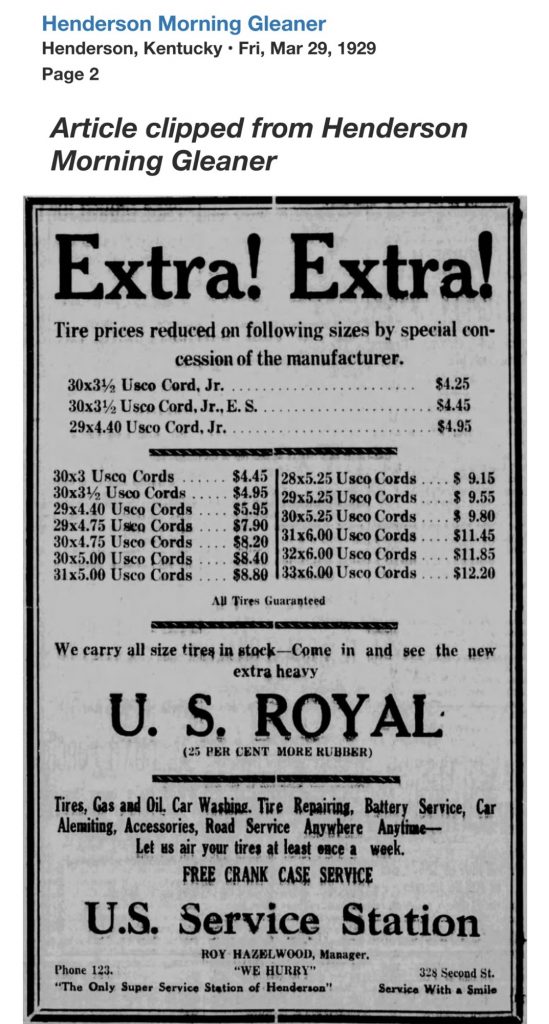
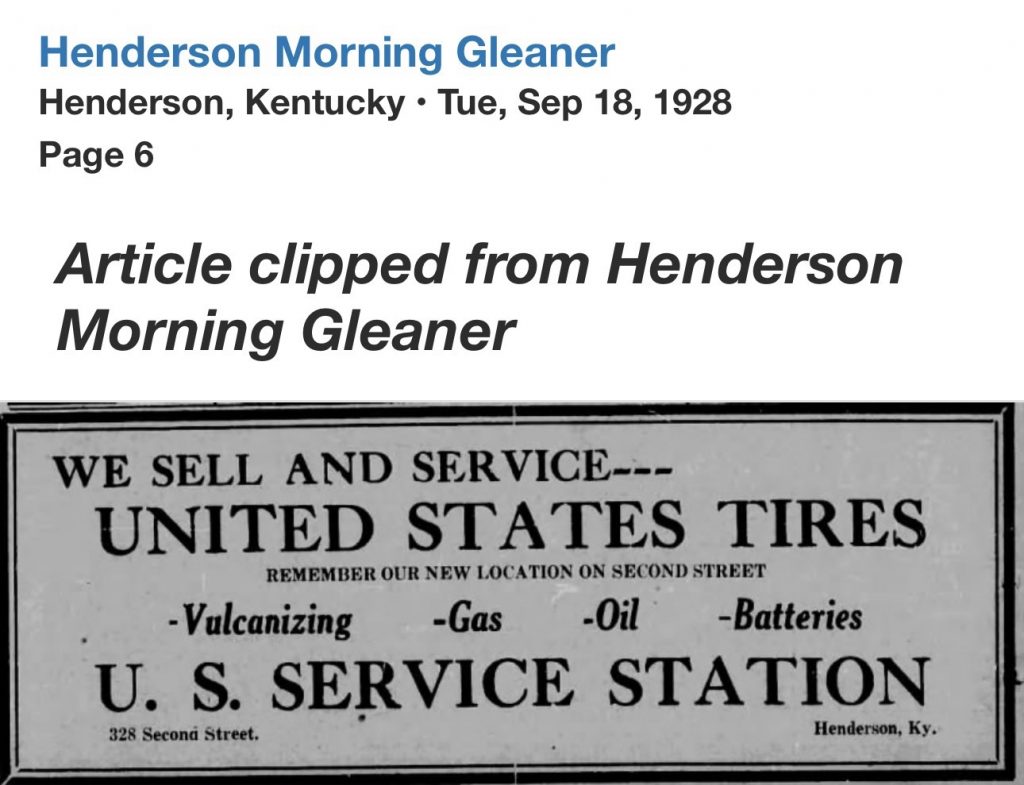
By 1928, the site appears in the Henderson Morning Gleaner as the U.S. Service Station, advertising United States tires along with vulcanizing, gasoline, oil, and battery service. At a time when automobiles were rapidly becoming part of daily life, stations like this were essential, providing not only fuel but repairs, tire work, and roadside assistance.
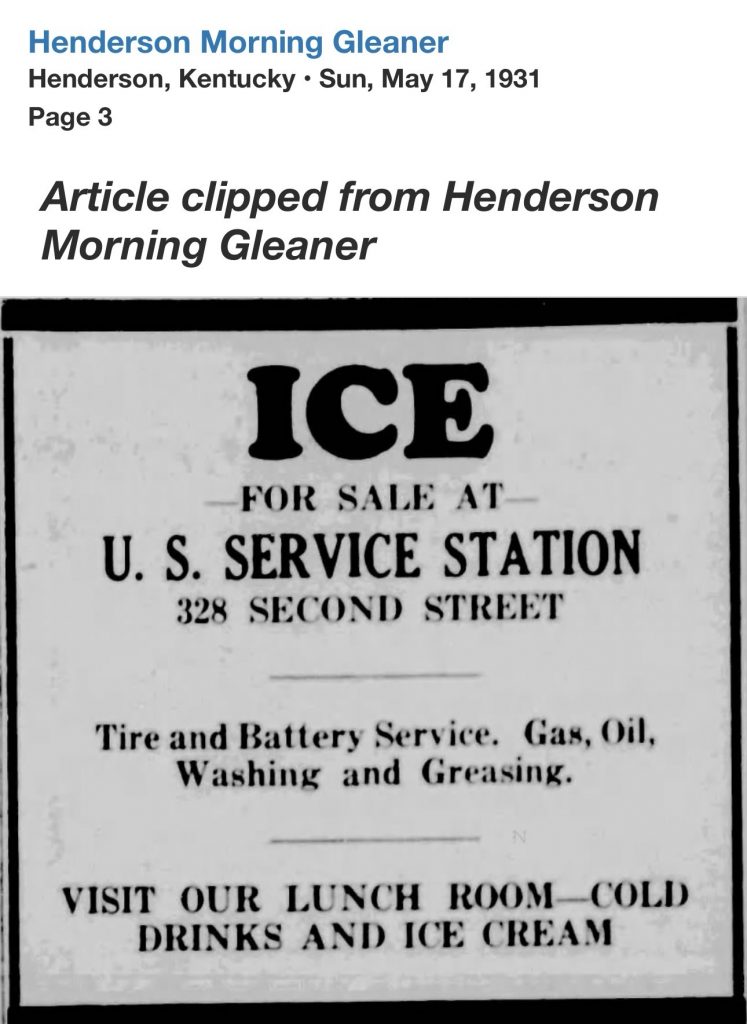
In 1929, advertisements emphasized reduced tire prices and expanded services, describing the business as a complete service station. Offerings ranged from washing and greasing to emergency road service, and even included a lunch room, a common feature of early stations where motorists might spend extended time while their vehicles were serviced.
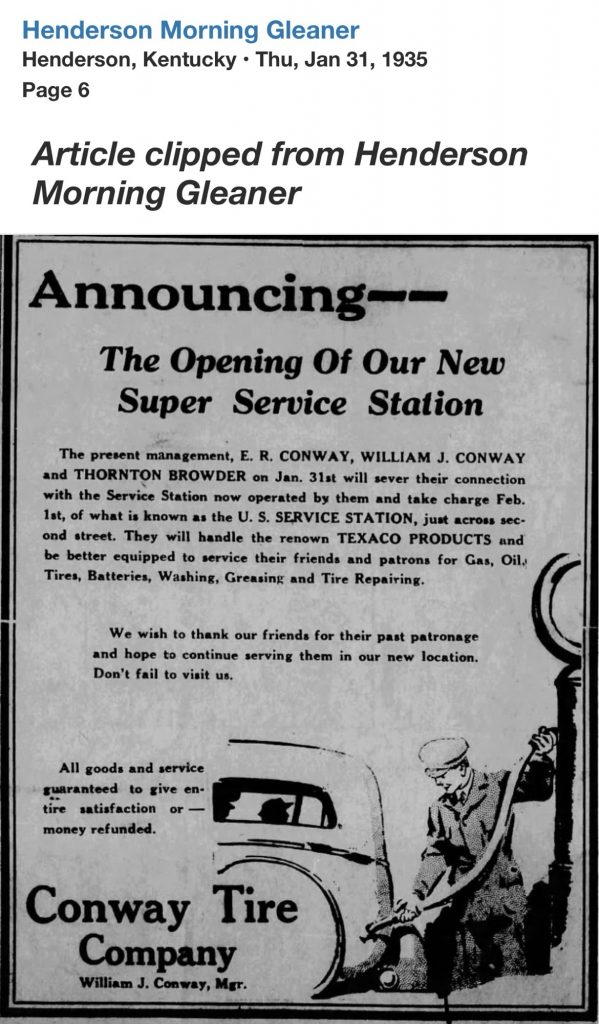
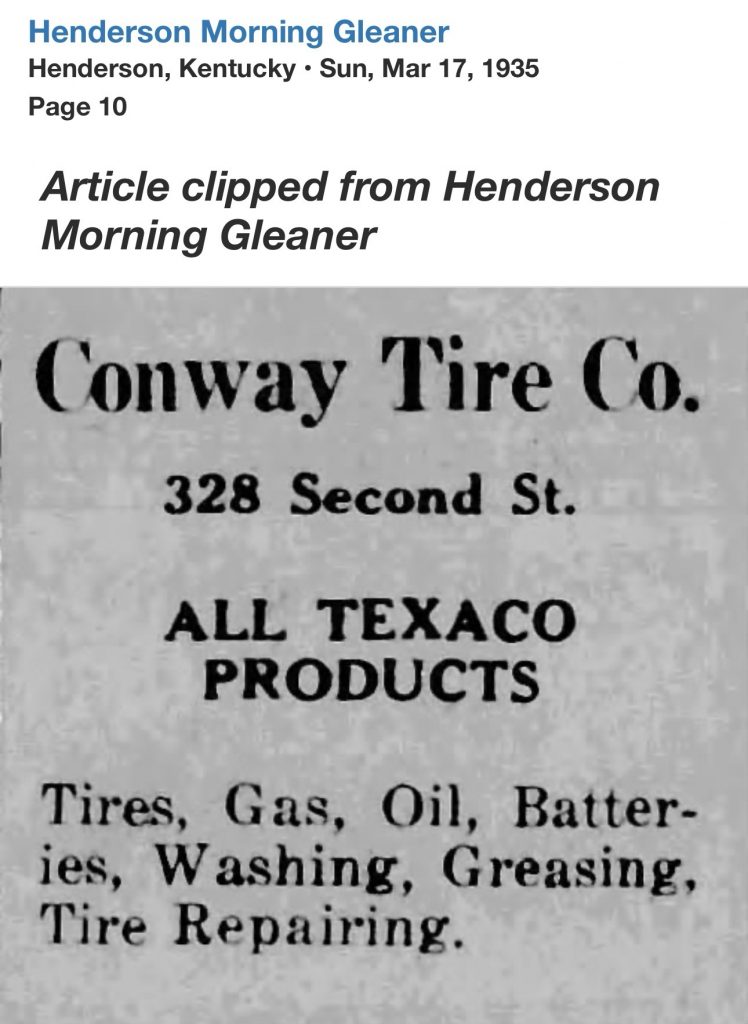
A significant shift came in early 1935. Announcements in the Gleaner marked the opening of a new “Super Service Station” at 328 Second Street under the management of E.R. Conway, William J. Conway, and Thornton Browder. Operating as the Conway Tire Company, the business aligned itself with Texaco products, reflecting a broader trend as independent stations increasingly partnered with national oil brands.
Within months, advertisements confirmed the Conway operation at the address, promoting Texaco gasoline alongside tire repair, batteries, and full automotive service. This transition illustrates the evolution of service stations during the 1930s, as branding and standardized fuel distribution became more prominent.
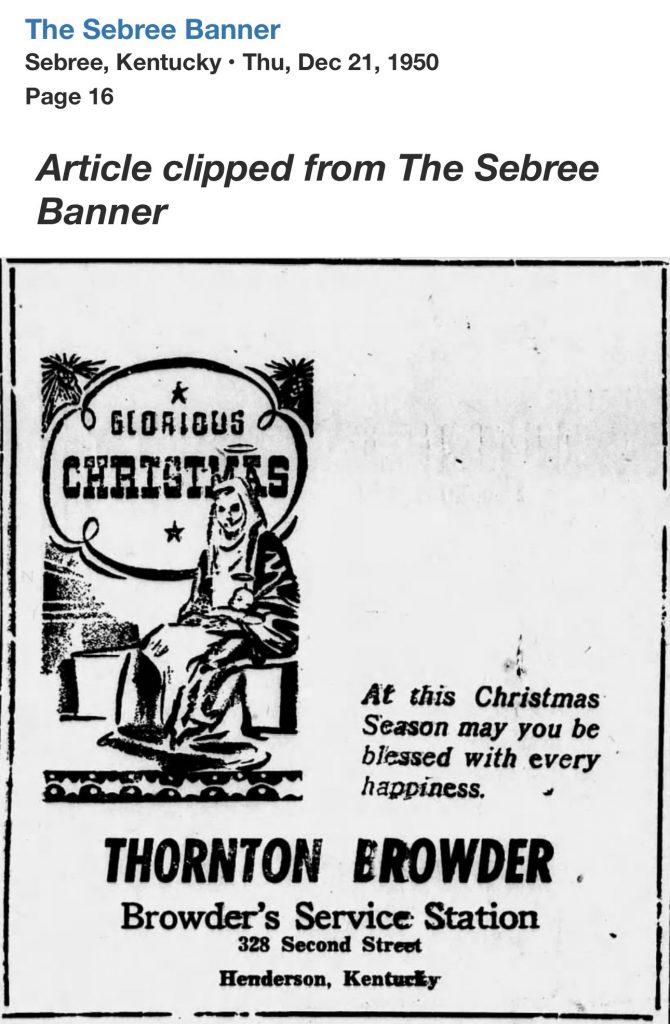
By the 1940s, the property appears under a new name, Browder Service Station, suggesting a continuation of operations tied to Thornton Browder. Though details are limited, the station remained part of the neighborhood’s commercial landscape during a period when automobile travel and maintenance were firmly embedded in everyday life.
Over time, the character of the property changed. As Henderson’s downtown evolved and automotive services shifted to larger, more modern facilities, the original service station gave way to a more traditional commercial building.
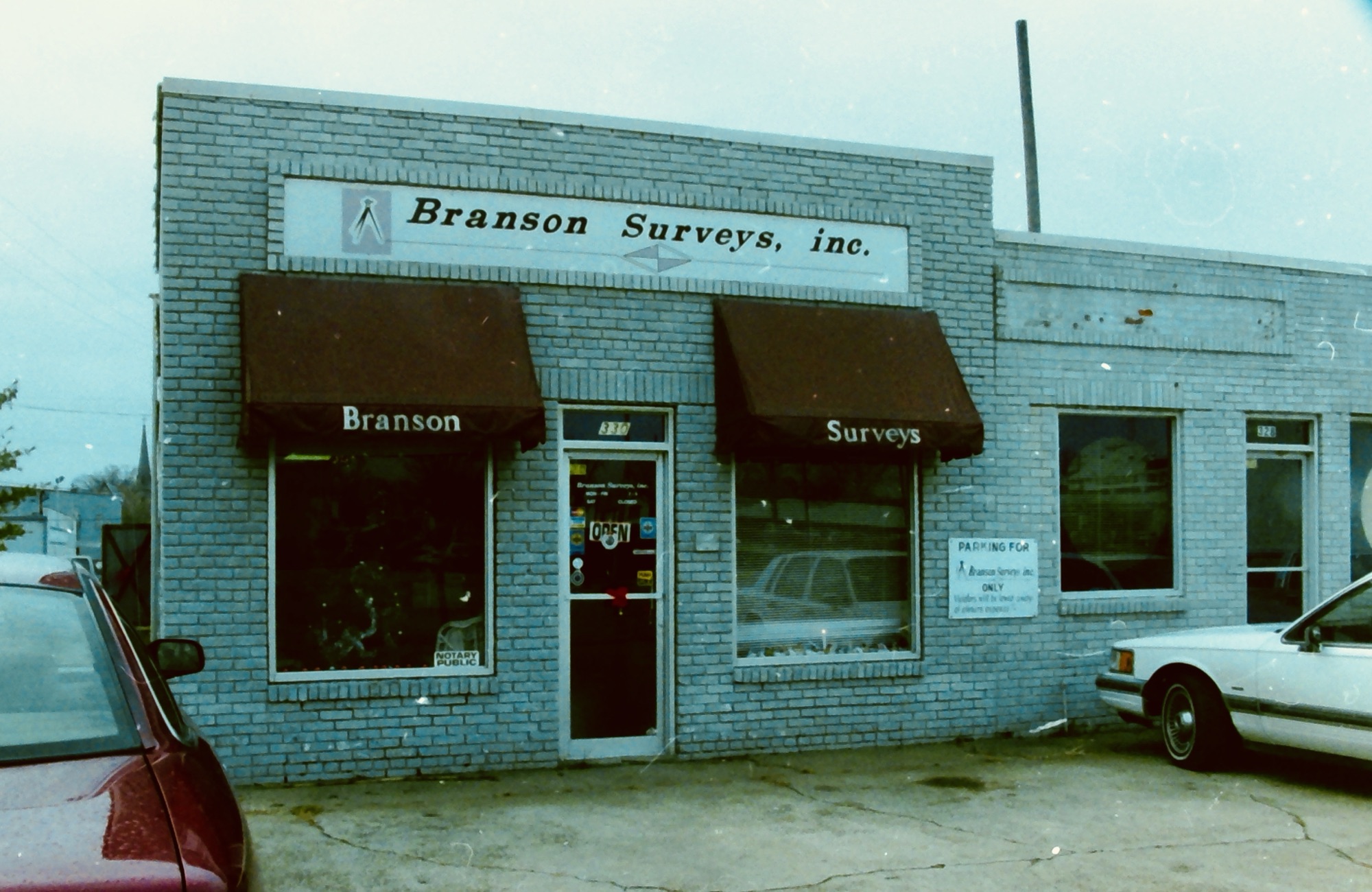
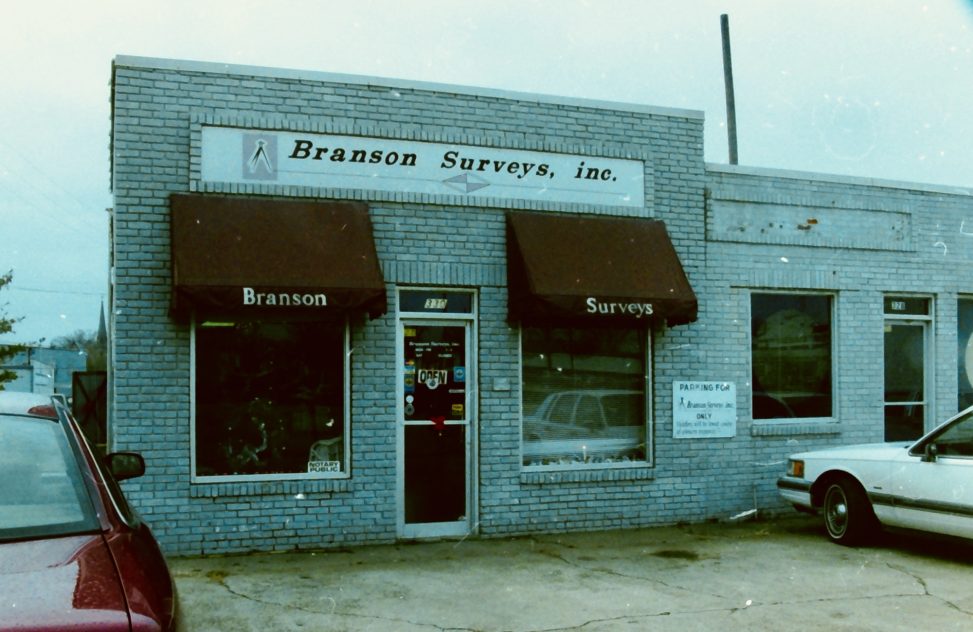
In the later twentieth century, the site became home to Branson Surveys, Inc., a business focused not on engines and tires, but on land, boundaries, and development. A surviving photograph shows a modest brick storefront with awnings and signage, representing a quieter but equally important chapter in the property’s history.
Today, 330 Second Street stands as a subtle reminder of Henderson’s transition from the early days of the automobile to a more diversified downtown economy. What began as a place of grease, gasoline, and roadside service eventually became a center for measuring and mapping the land itself, reflecting the changing needs of the community over nearly a century.