Glen Oak: The Harris Home and Gardens on Chestnut Street
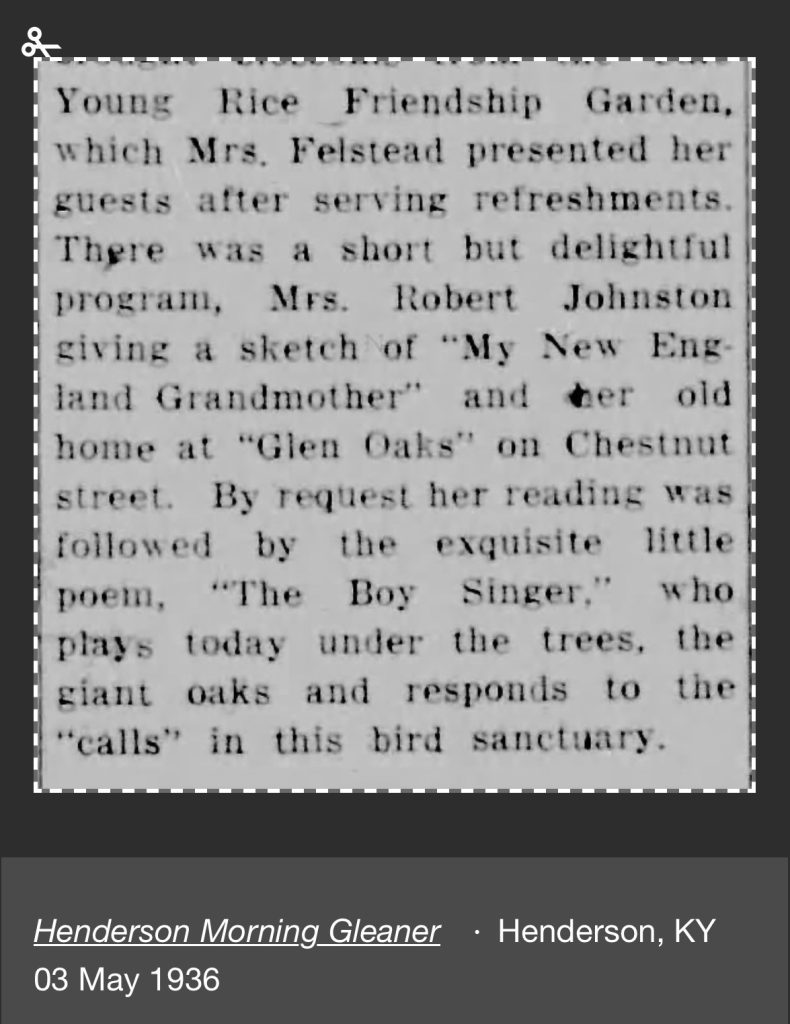
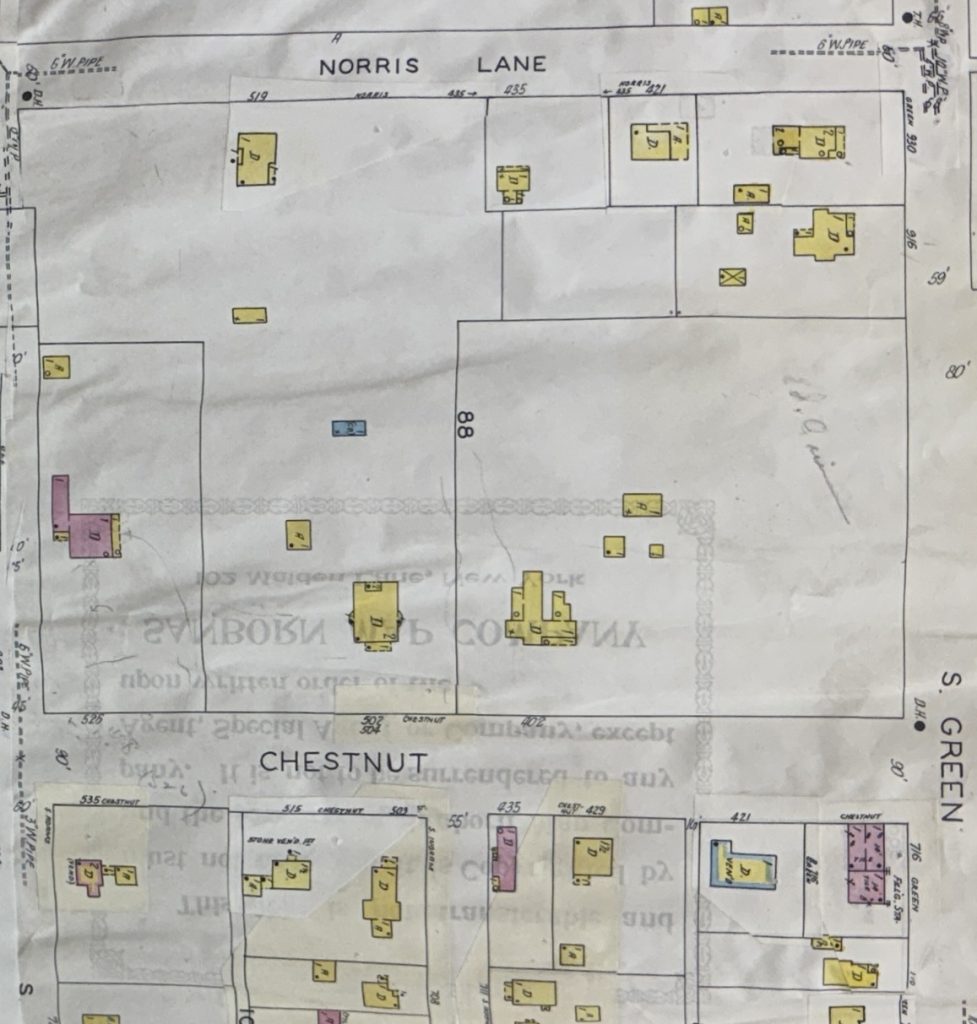
Glen Oak, the former Chestnut Street home of Leigh and Jane Harris, was well known in Henderson for its gardens and hospitality. Newspaper accounts, which used both Glen Oak and Glen Oaks, describe church benefits, afternoon parties, and visits by garden enthusiasts. The grounds became a familiar gathering place during the decades when Leigh Harris helped shape the city’s public conversation through his newspapers.
The home’s earlier history connects it to Ingram Crockett, a Henderson banker and writer. An August 13, 1950, Gleaner and Journal article about a collection of nineteenth-century photographs identified Crockett as the man who built the Chestnut Street house then known as Glen Oak. The same account mentioned his wife, Mary Cameron Stites, among the people pictured.
Born in Henderson in 1856, Crockett married Mary Cameron Stites on May 17, 1887. He served as cashier of Planters State Bank while pursuing a literary career. His published works included A Year Book of Kentucky Woods and Fields and The Magic of the Woods.
By 1921, Glen Oak was established as the Harris family home. Leigh Harris had come to Henderson in 1909 to take over the Journal, announcing his intentions in a one-sentence editorial: “I have come to Henderson to run a newspaper.” He purchased the Gleaner in 1914 and became an advocate for agricultural services, better roads, parks, and other local improvements.
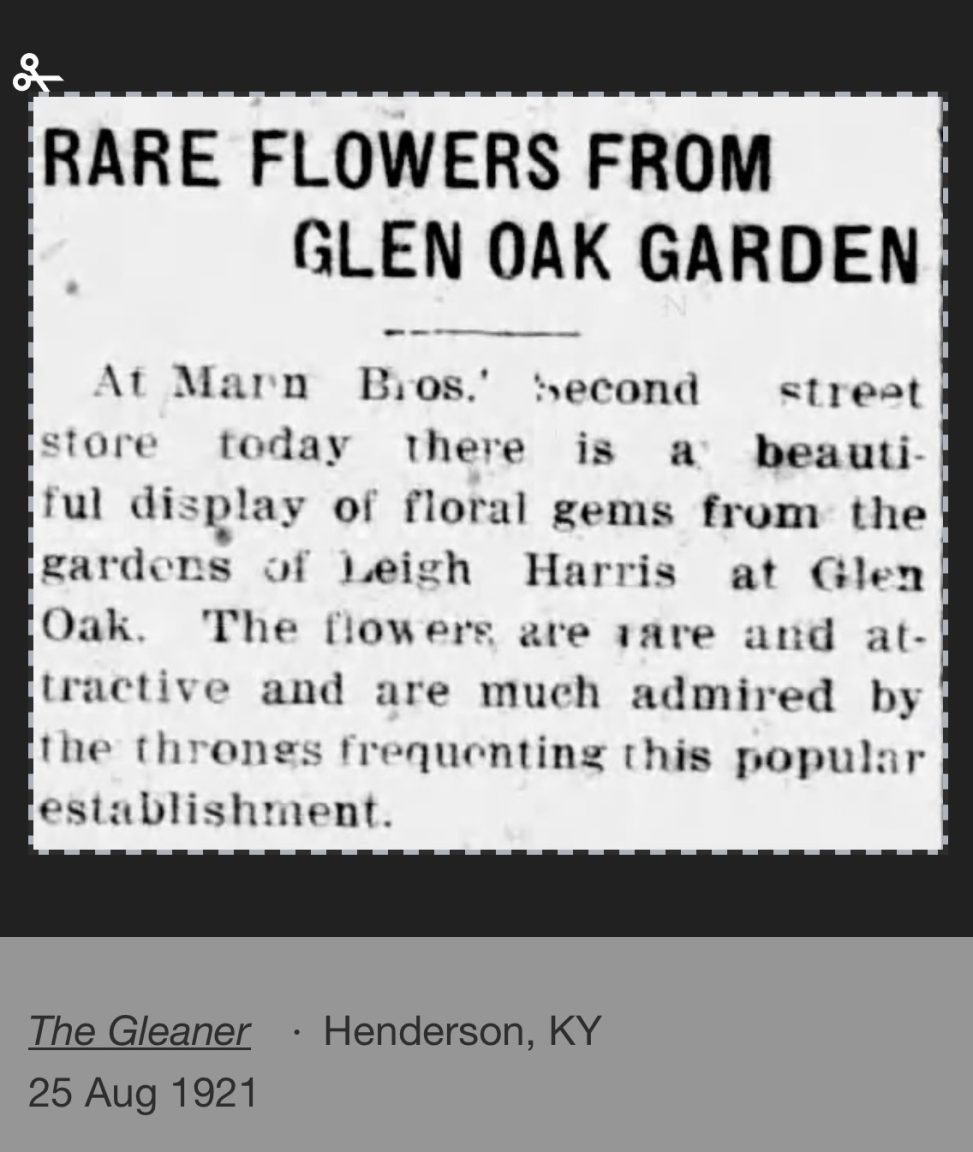
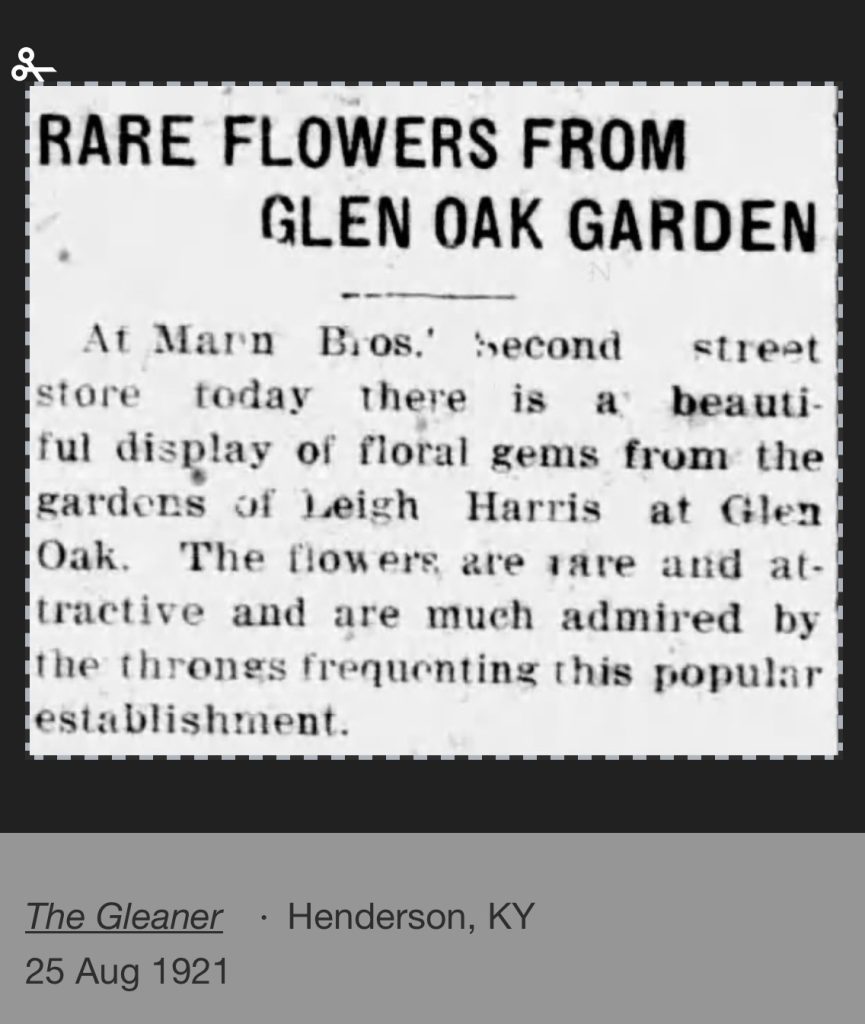
At Glen Oak, flowers attracted their own newspaper attention. On August 25, 1921, the Gleaner reported that rare blooms from Leigh Harris’s gardens were on display at Mawn Brothers’ Second Street store. Customers admired the flowers, bringing the reputation of the gardens into the downtown business district.
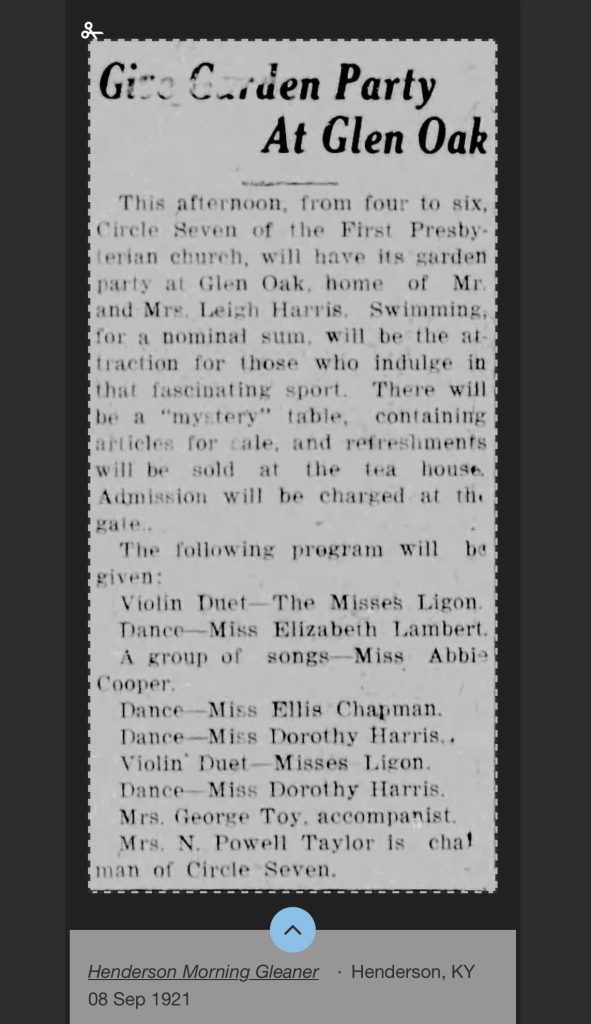
Two weeks later, the grounds were opened for a church benefit. The September 8, 1921, Henderson Morning Gleaner announced that Circle Seven of First Presbyterian Church would hold a garden party at the home of Mr. and Mrs. Leigh Harris from four until six that afternoon. Admission would be charged at the gate, a “mystery” table would offer articles for sale, and refreshments would be sold at the tea house. Swimming was also offered for a small additional charge.
The entertainment program included violin duets by the Misses Ligon, songs by Abbie Cooper, and dances by Elizabeth Lambert, Ellis Chapman, and Dorothy Harris. Mrs. George Toy served as accompanist, while Mrs. N. Powell Taylor chaired the church circle. The notice gives a detailed picture of an afternoon when the Harris grounds accommodated both fundraising and performances by local musicians and dancers.
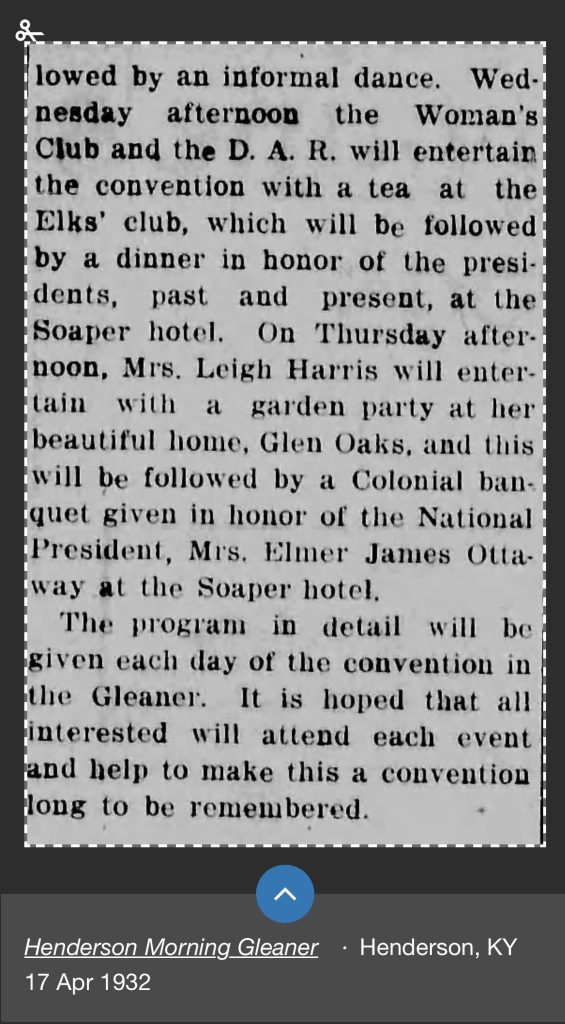
Jane Harris continued to receive guests in the gardens during the following decade. An April 17, 1932, convention announcement included a Thursday afternoon garden party at Mrs. Leigh Harris’s home, Glen Oaks. Other festivities were scheduled at the Elks’ Club and Soaper Hotel, placing the Harris home among the settings used to welcome visitors to Henderson.
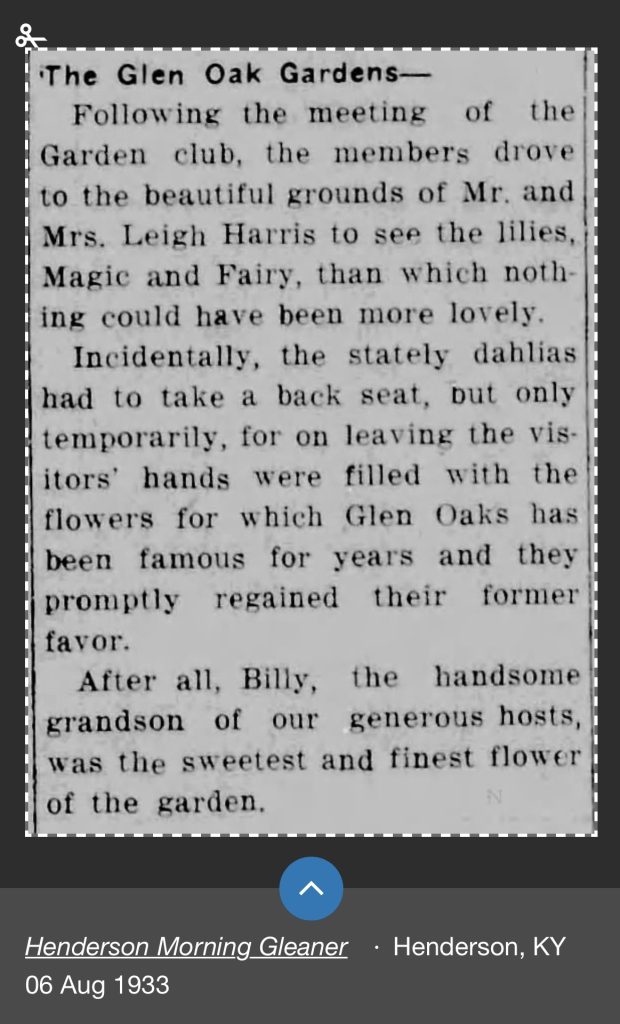
A report published August 6, 1933, offers a closer look at the flowers themselves. Following a Garden Club meeting, members drove to the Harris grounds to see lilies described as Magic and Fairy. The writer praised their beauty but also noted the dahlias for which Glen Oak had been known for years. As the visitors departed, their hosts filled their hands with flowers.
The same account ended on a personal note. Billy, the Harrises’ grandson, received an affectionate mention as the garden’s sweetest and finest flower. Alongside the descriptions of prized blooms, the notice preserves a small glimpse of family life at Glen Oak.
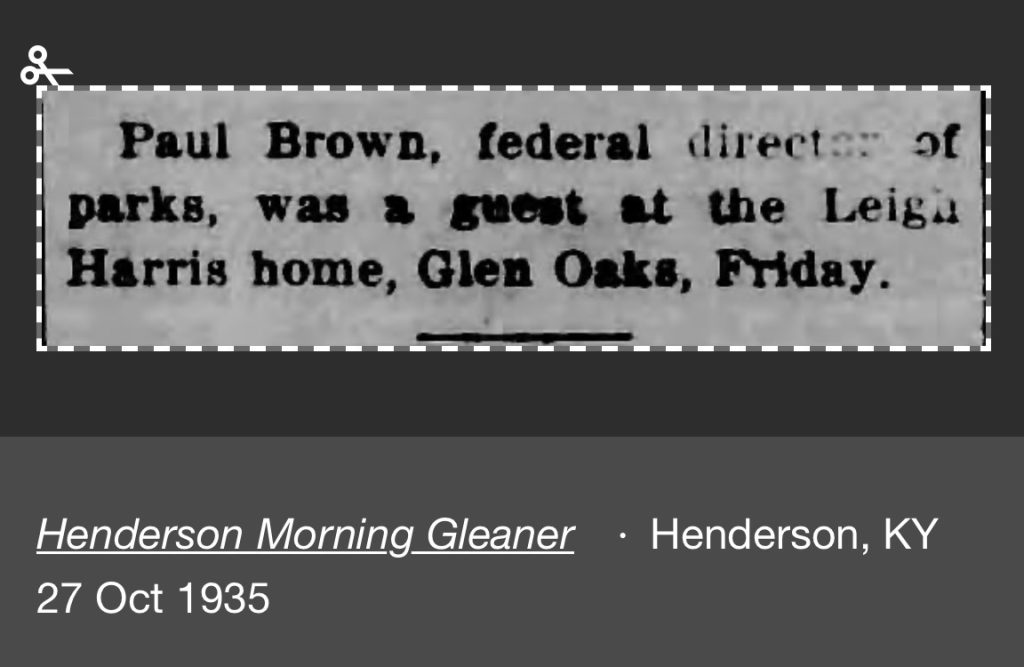
Guests also included people connected with public affairs. On October 27, 1935, the Henderson Morning Gleaner reported that Paul Brown, described in the notice as federal director of parks, had visited the Leigh Harris home the preceding Friday. The brief item recorded his presence without explaining the purpose of the visit.
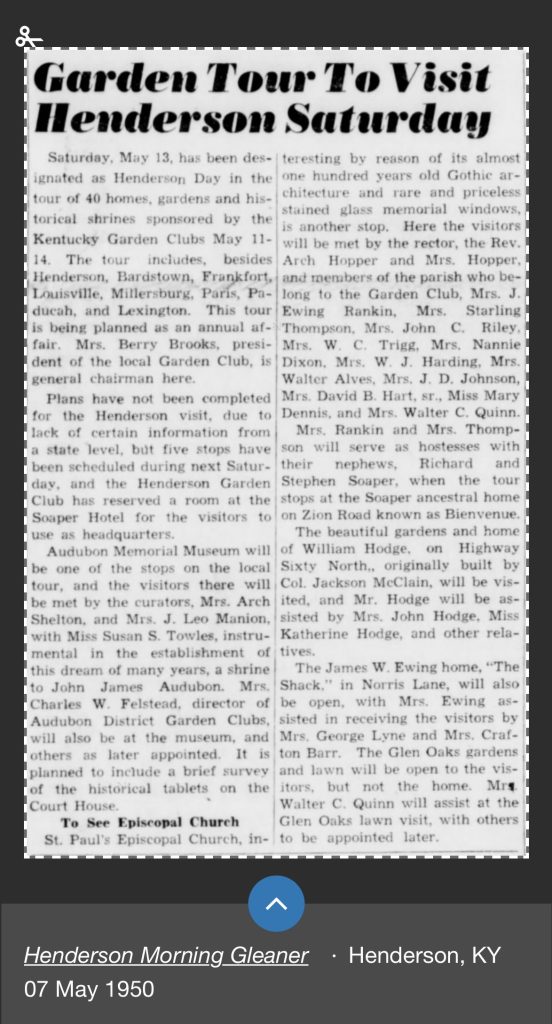
Glen Oak’s gardens remained a local attraction into the middle of the century. In May 1950, they were included in plans for the Henderson portion of a Kentucky Garden Clubs tour encompassing forty homes, gardens, and historic places across the state. Henderson’s visits were scheduled for Saturday, May 13.
Other announced local stops included the Audubon Memorial Museum, St. Paul’s Episcopal Church, the Soaper ancestral home Bienvenue, the William Hodge residence, and the James W. Ewing home on Norris Lane. At Glen Oak, the gardens and lawn would be open to visitors while the house remained closed. Mrs. Walter C. Quinn was to assist with receiving guests on the grounds.
Nearly thirty years after the 1921 church party, Glen Oak still helped represent Henderson to visitors. Its name was also closely associated with Harris himself. In a letter published in the Courier-Journal on November 6, 1950, Ellen Swanson of Chicago praised Henderson’s tree-lined streets and attractive residences. In describing the Norris Lane neighborhood, she referred to Leigh Harris as the “Sage of Glen Oaks.”
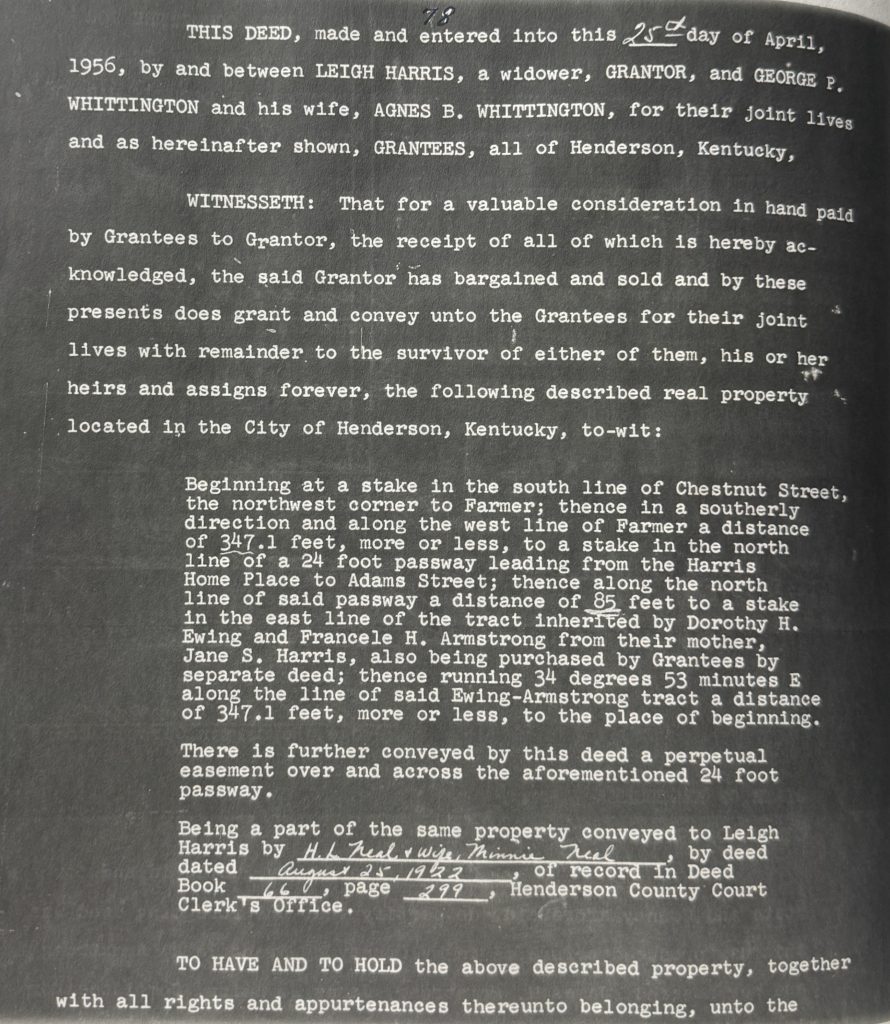
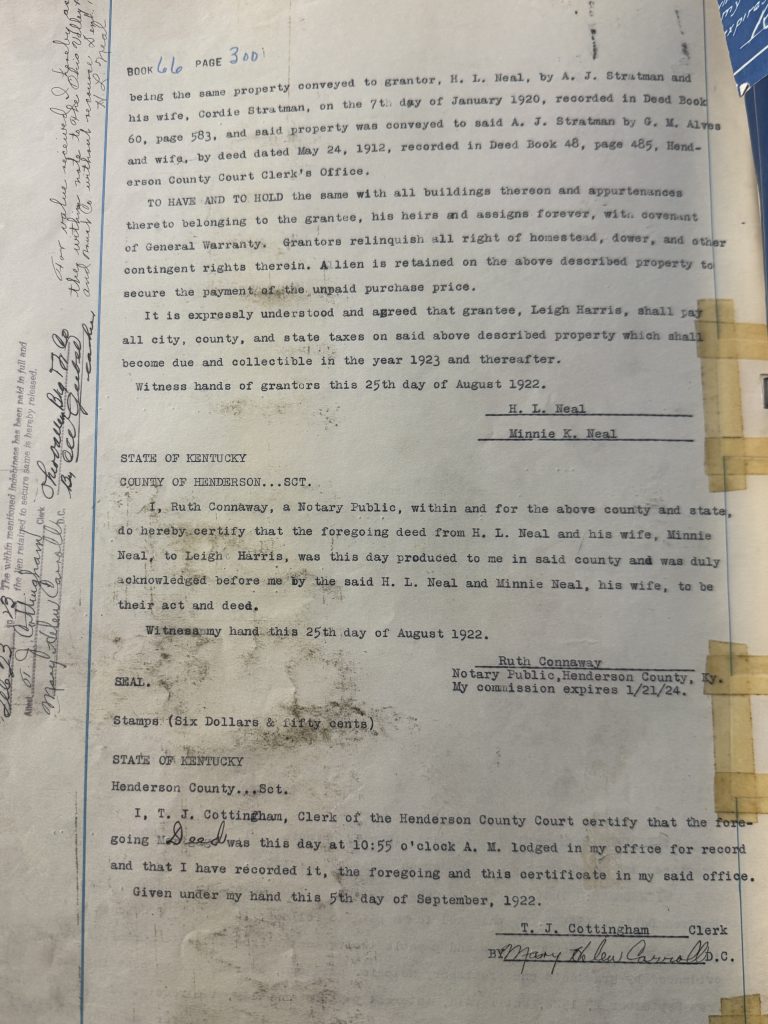
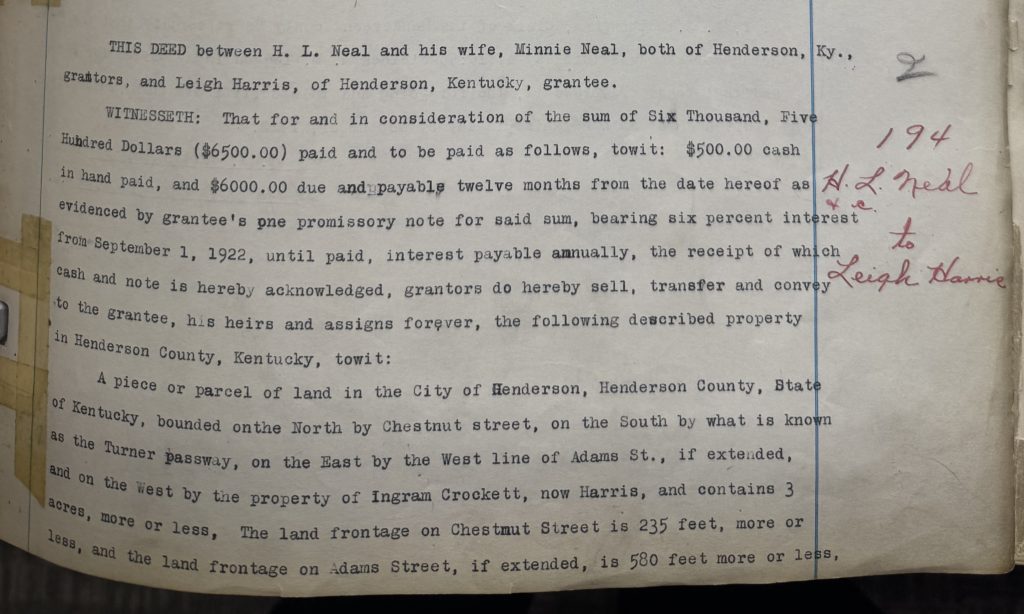
The property entered a new period of ownership during the 1950s. A deed dated April 25, 1956, conveyed part of Leigh Harris’s land to George P. Whittington and his wife, Agnes B. Whittington. Harris was identified as a widower. The conveyance included an easement across a twenty-four-foot passageway leading from the Harris Home Place toward Adams Street.
The deed also stated that the Whittingtons were acquiring, through a separate conveyance, the adjoining tract inherited by Dorothy H. Ewing and Francele H. Armstrong from their mother, Jane S. Harris. These transactions brought connected portions of the Harris property into Whittington ownership. The PVA history for 502 Chestnut Street records the 1956 acquisitions from the Harris heirs and Leigh Harris in Deed Book 178, pages 146 and 148.
A later residence at 502 Chestnut Street was built in 1959. The auction company’s 2013 listing identifies John Hironimus as its architect and describes a substantial brick house in the mid-century modern style. Broad windows, open interior spaces, and a sunken living room characterized the design. This later house belongs to the Whittington period of the property’s history.
George Whittington was a decorated veteran of the Normandy invasion, and Agnes was an accomplished watercolorist and pilot. Their home contained artwork and objects collected during their travels. After Agnes’s death in 2011, the house and its contents were offered at auction in 2013.
The Henderson County PVA record lists a $400,000 sale from the Agnes Whittington estate on October 30, 2013. Its property photograph dated August 6, 2025, shows the later residence surrounded by lawn and mature plantings. Newspaper descriptions preserve the earlier Glen Oak through the events held there, the flowers admired by visitors, and the Harris family whose home it was
Leave a Reply