Gibson’s Furniture Store: Furnishing Henderson Homes on First Street
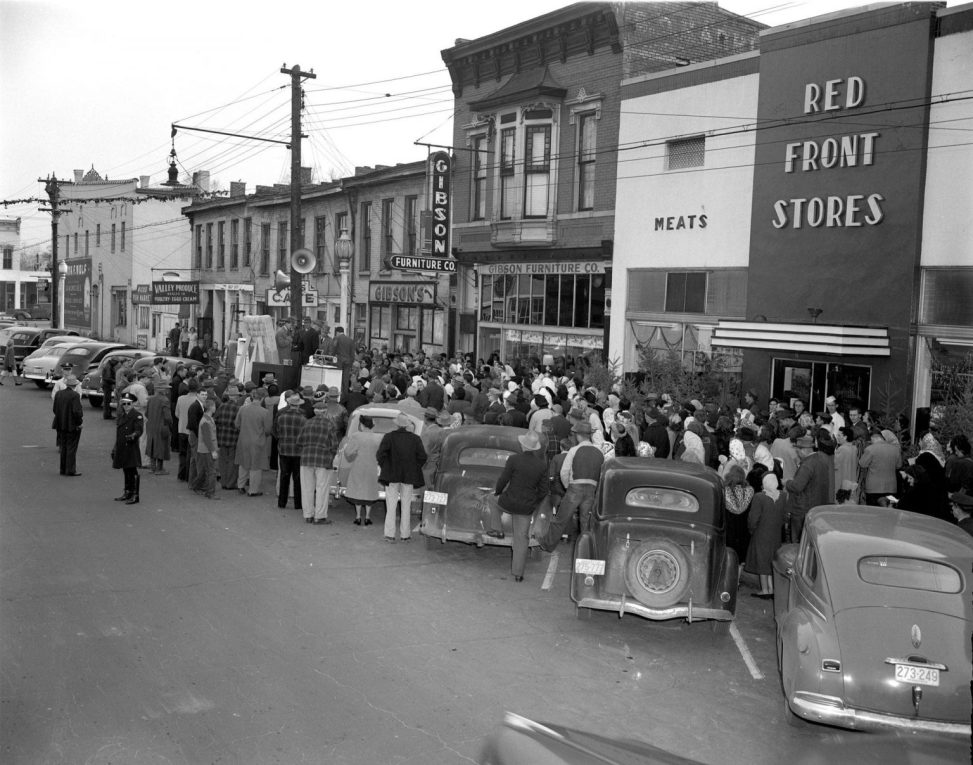
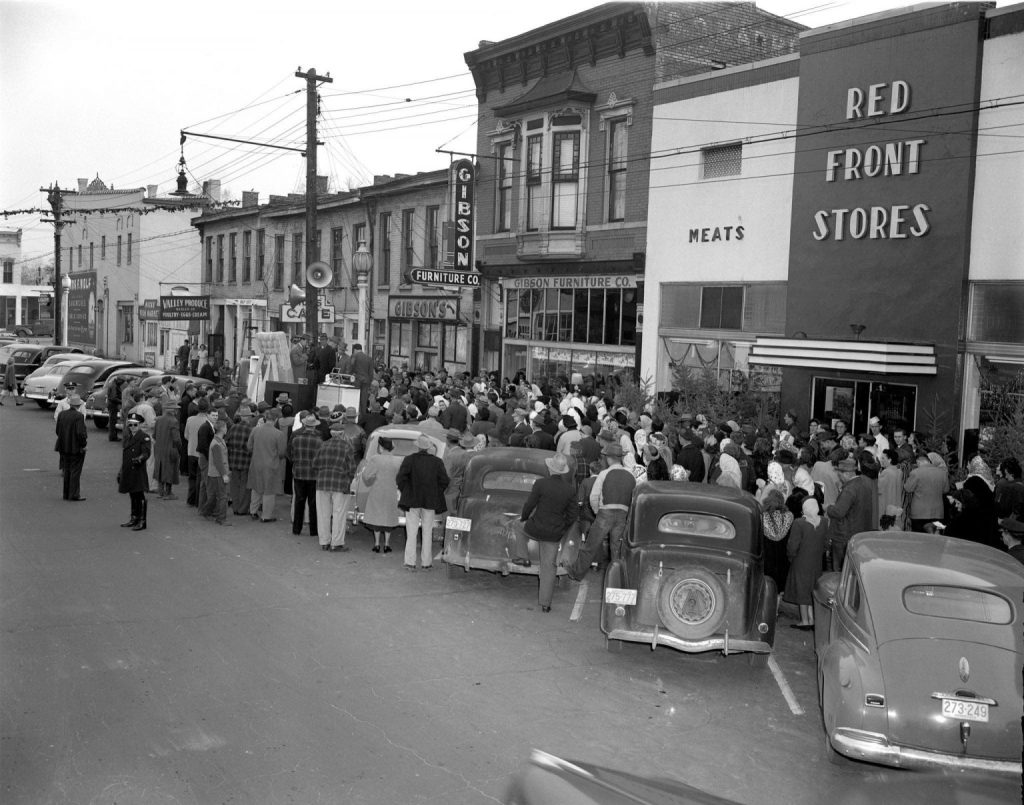
A crowd fills the sidewalk and spills into First Street. Automobiles line the curb, a mattress stands above the gathering, and a tall vertical sign announces Gibson Furniture Co. Next door, the large lettering of Red Front Stores provides another familiar landmark.
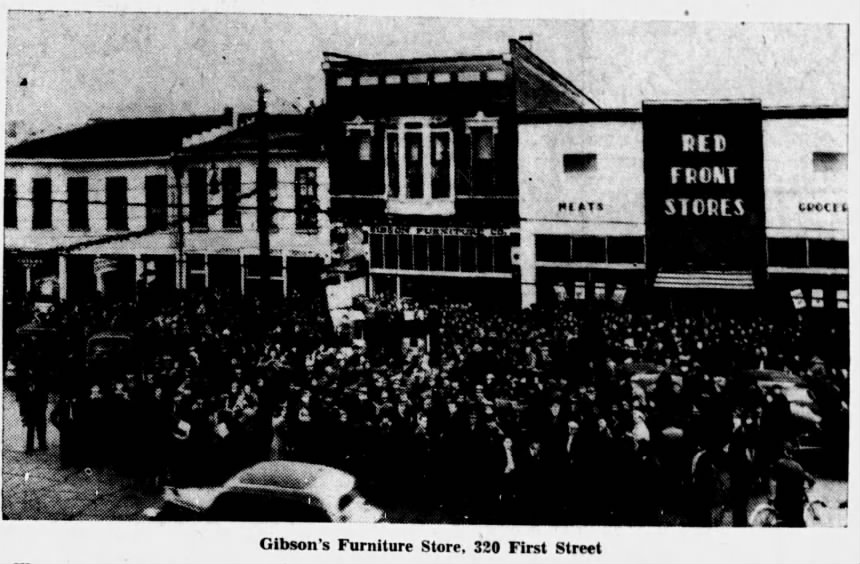
The photograph captures a busy moment outside Gibson’s Furniture Store at 320 First Street. It also preserves the setting of a business that Frank and Daisy Gibson built around household furnishings, recognizable brands, and personal relationships with their customers.
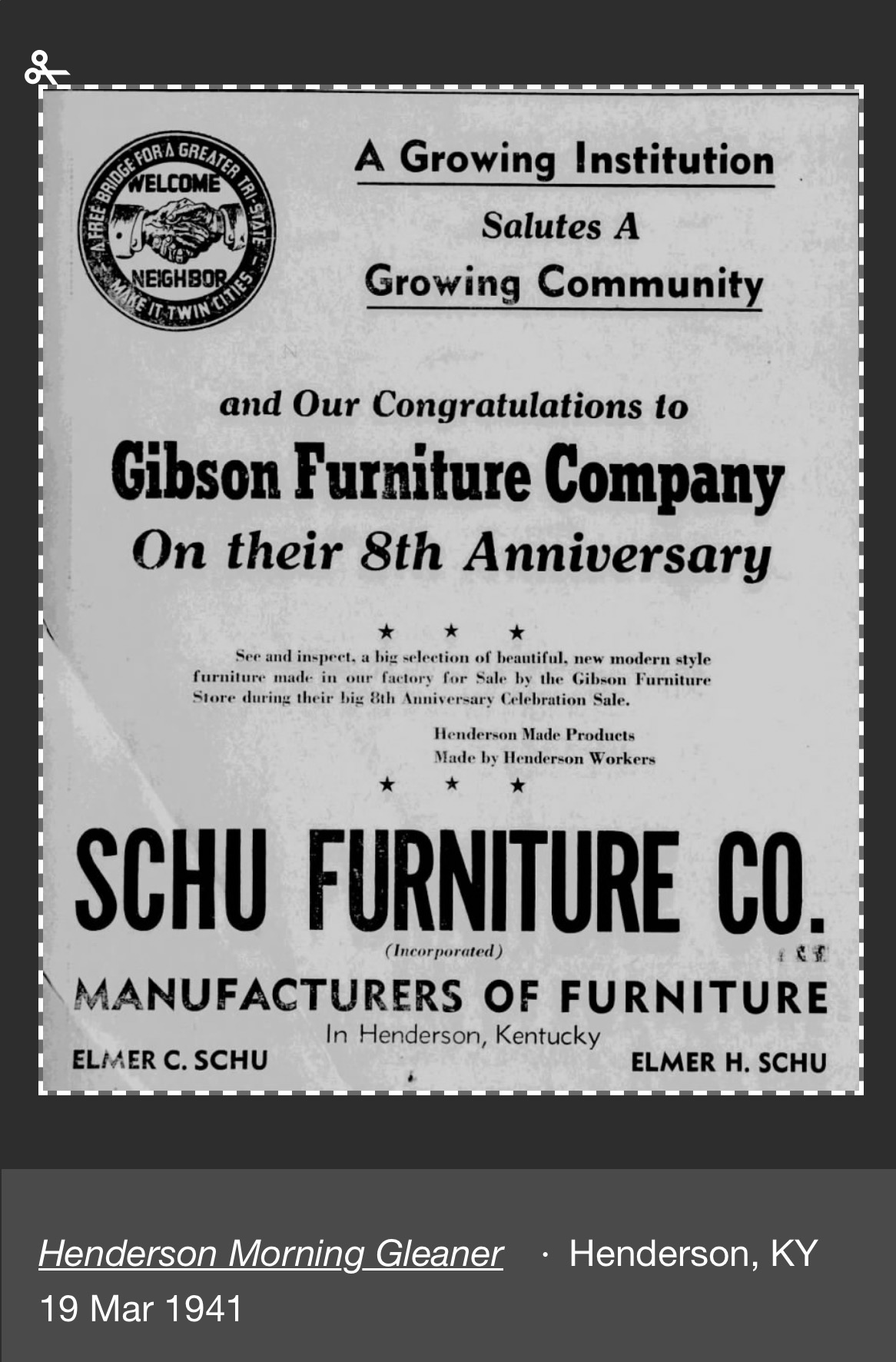
Gibson Furniture Company’s beginnings date to about 1933. An advertisement in the March 19, 1941, Henderson Morning Gleaner congratulated the business on its eighth anniversary, placing its establishment during the Great Depression.
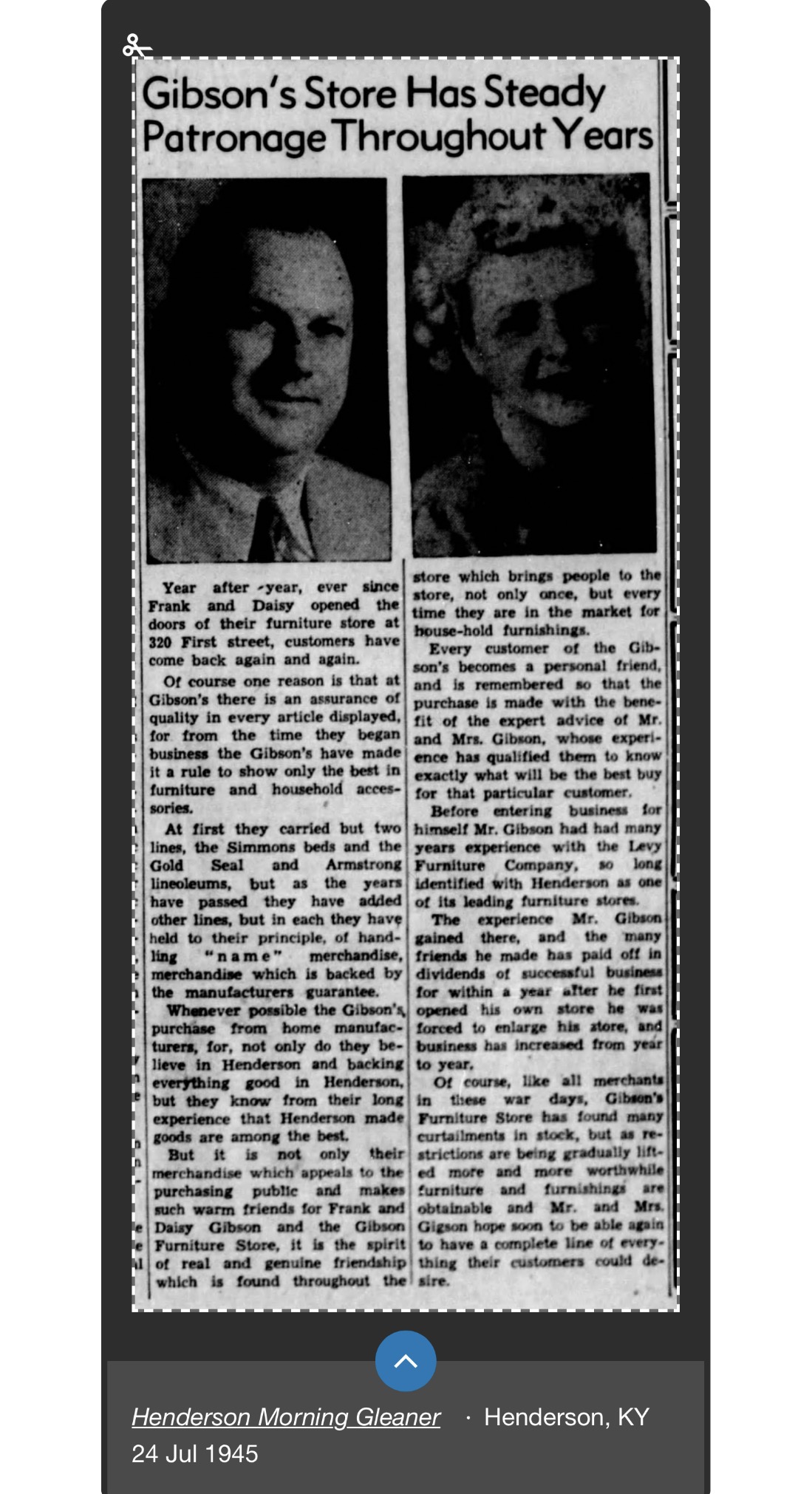
Frank Gibson brought considerable experience to the venture. According to a July 24, 1945, newspaper profile, he had spent many years with the Levy Furniture Company before entering business for himself. That work gave him both a knowledge of furniture and acquaintances who would help support the new store.
Frank and Daisy operated the business together. The 1945 article presented both as central to its success, describing a store where customers returned repeatedly and received advice based on the couple’s familiarity with their needs.
The early inventory was limited. The newspaper identified Simmons beds and Gold Seal and Armstrong linoleums among the original offerings. Additional lines followed as the business grew, with the Gibsons emphasizing established manufacturers and merchandise backed by guarantees. According to the profile, the store required enlargement within its first year.
Whenever possible, the Gibsons purchased goods from local manufacturers. Their business connected Henderson’s furniture makers with the people furnishing its homes.
That relationship appeared prominently during the store’s eighth-anniversary celebration in 1941. Schu Furniture Company purchased a congratulatory advertisement inviting readers to inspect modern furniture manufactured in its Henderson factory and offered through Gibson’s anniversary sale.
The advertisement emphasized “Henderson Made Products—Made by Henderson Workers” and carried the names of Elmer C. Schu and Elmer H. Schu. For customers, Gibson’s offered an opportunity to purchase furniture produced nearby. For Schu, the store provided a local showroom and a connection to household buyers.
The July 1945 profile attributed Gibson’s steady patronage to more than its merchandise. It emphasized the friendly atmosphere Frank and Daisy cultivated and their ability to remember returning customers. Although written in the complimentary style of a business feature, the article reveals how the store presented itself: an establishment where the owners knew their customers and helped them select suitable furnishings.
Price was another part of that message. A surviving advertisement paired the company’s name with the slogan “We Sell for Less,” its First Street address, and the telephone instruction “Dial 2120.”
World War II complicated the furniture trade. In July 1945, the newspaper reported that Gibson’s had experienced reductions in available stock during the war. The owners expressed hope that easing restrictions would allow them to restore a fuller selection of furniture and household goods.
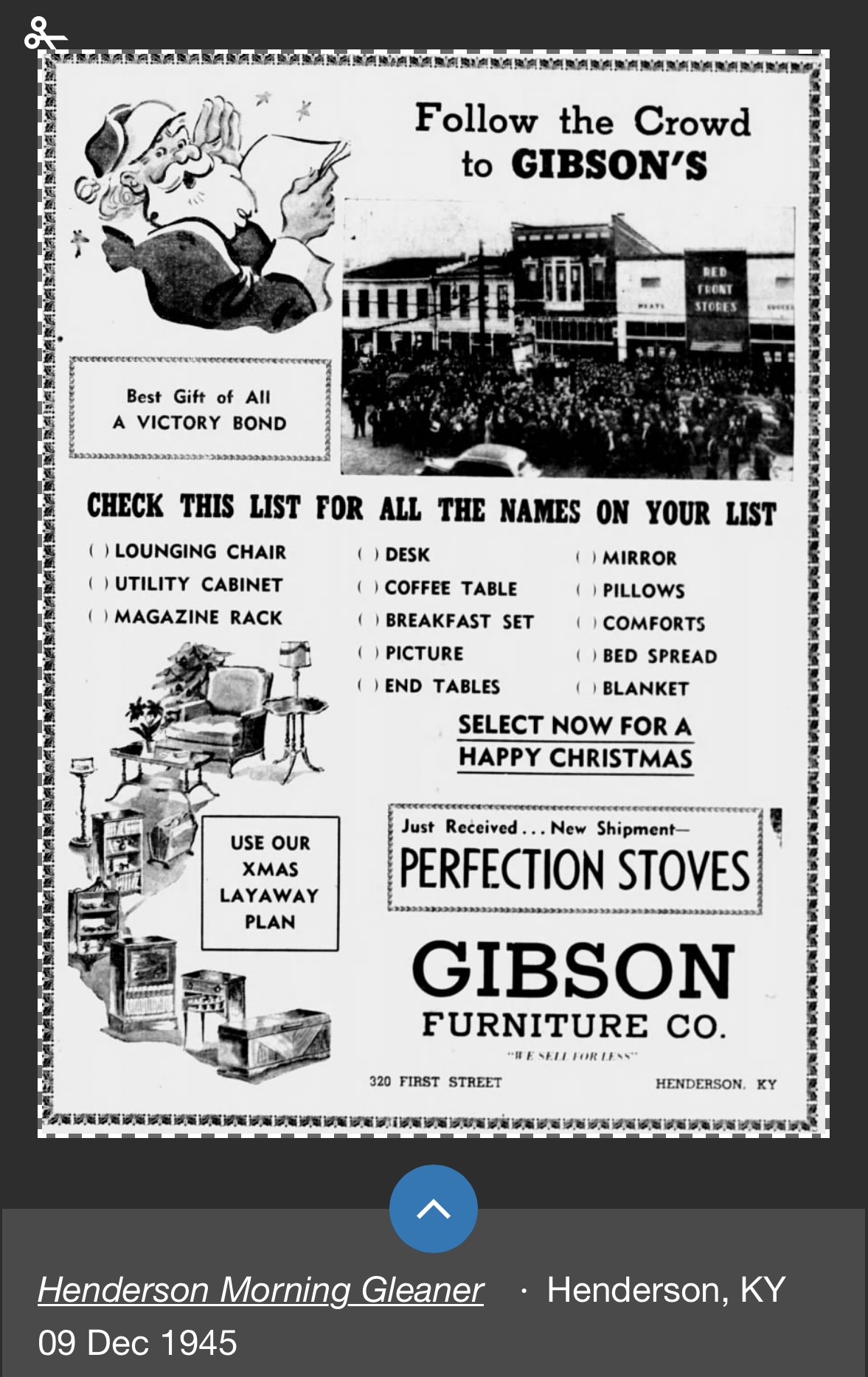
By December, the store was advertising an assortment of Christmas purchases. Its December 9, 1945, advertisement suggested lounging chairs, utility cabinets, magazine racks, desks, coffee tables, breakfast sets, pictures, end tables, mirrors, pillows, comforters, bedspreads, and blankets.
A newly received shipment of Perfection stoves received special attention. Customers could also use the store’s Christmas layaway plan.
The advertisement combined Santa Claus and household gift suggestions with an appeal to give a Victory Bond. Its headline, “Follow the Crowd to Gibson’s,” accompanied a photograph of the large gathering outside the store.
That advertisement establishes that the crowd photograph was already in use by December 1945. The supplied material does not identify the occasion, however, so the gathering cannot confidently be described as a particular sale, giveaway, or anniversary event.
Gibson’s remained part of First Street’s shopping district into the 1950s. A later newspaper retrospective on Henderson’s 1957 Christmas season recorded Gibson Furniture Company at 320 First Street advertising a Zenith high-fidelity sound system for $99.95. Alongside traditional household furnishings, customers could purchase equipment that brought recorded music into their living rooms.
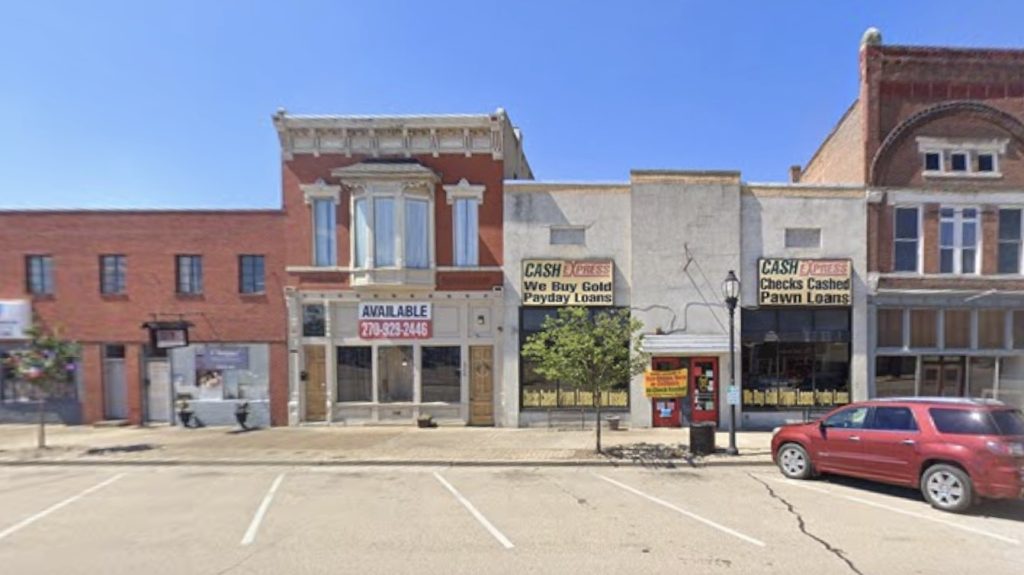
The historic photographs preserve Gibson’s distinctive setting: projecting signs, broad display windows, and an ornate upper facade with a central bay window. The supplied later streetscape photograph shows that recognizable upper facade surviving after the furniture-store signs had disappeared.
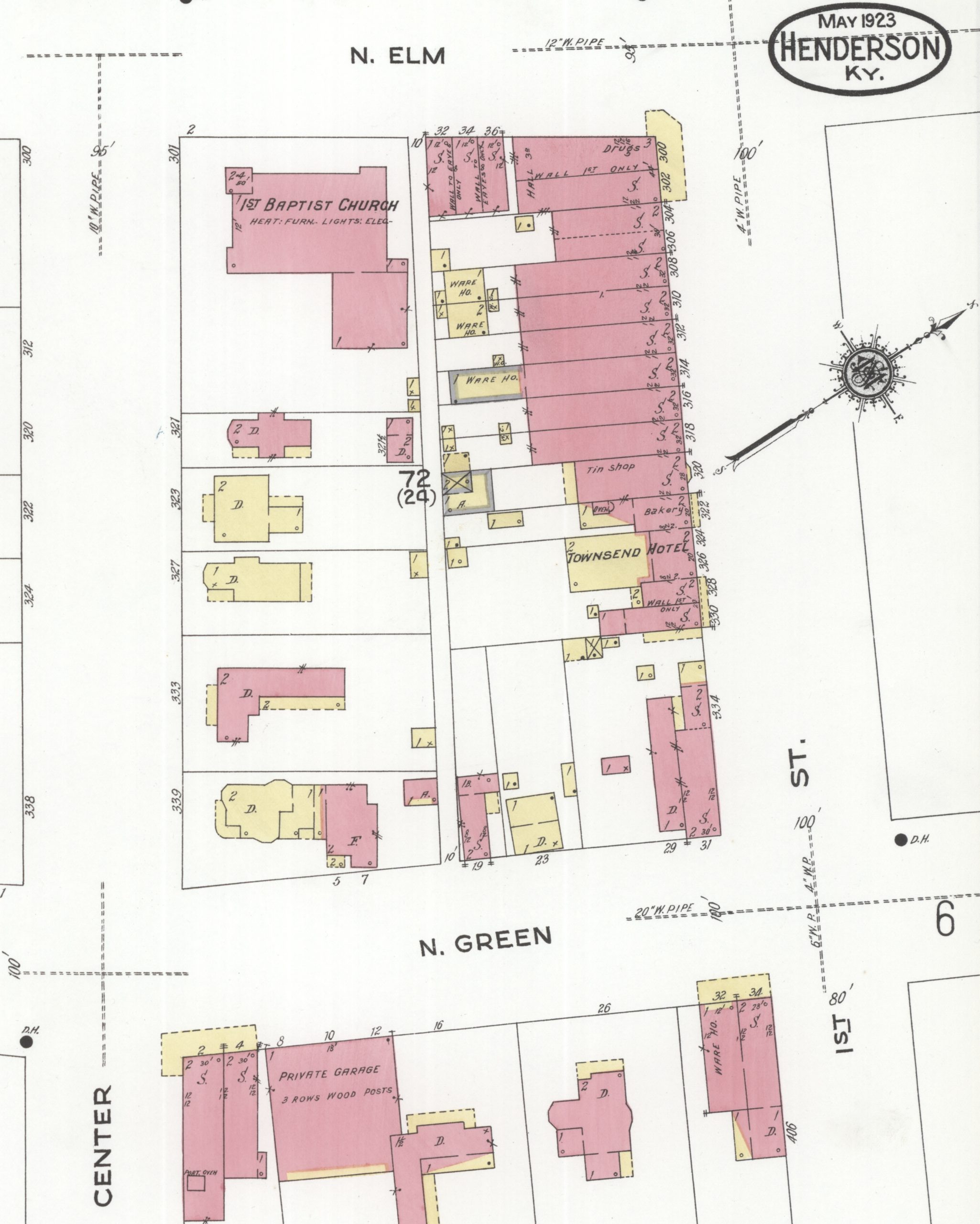
The address had a commercial history before the Gibsons arrived. A May 1923 Sanborn map labels the premises numbered 320 First Street as a tin shop, documenting an earlier use of the location.
For Gibson’s, the surviving newspaper accounts tell a story of experience, local manufacturing, and repeat customers. Frank brought knowledge gained at an established furniture company; Daisy helped build the relationships that encouraged shoppers to return. Together, they supplied the practical objects of daily life and gave Henderson-made furniture a place in Henderson homes.

Leave a Reply