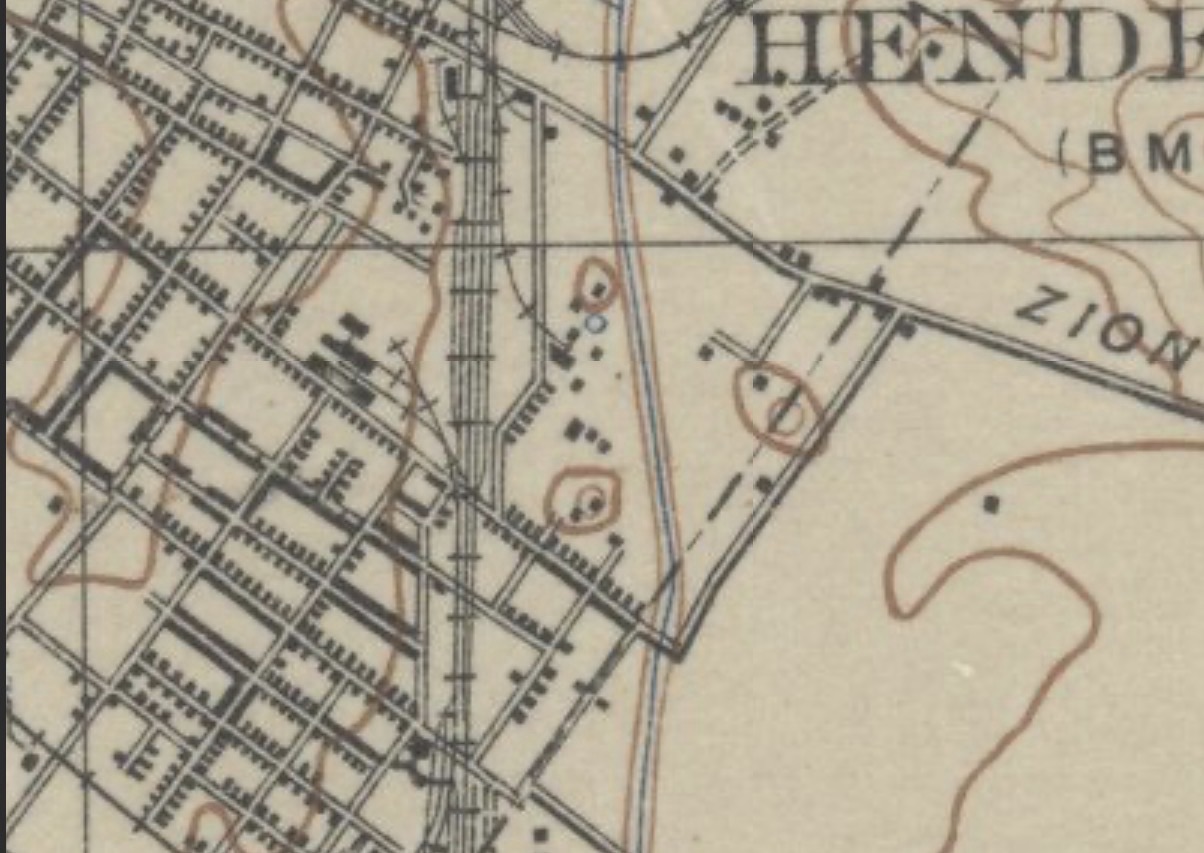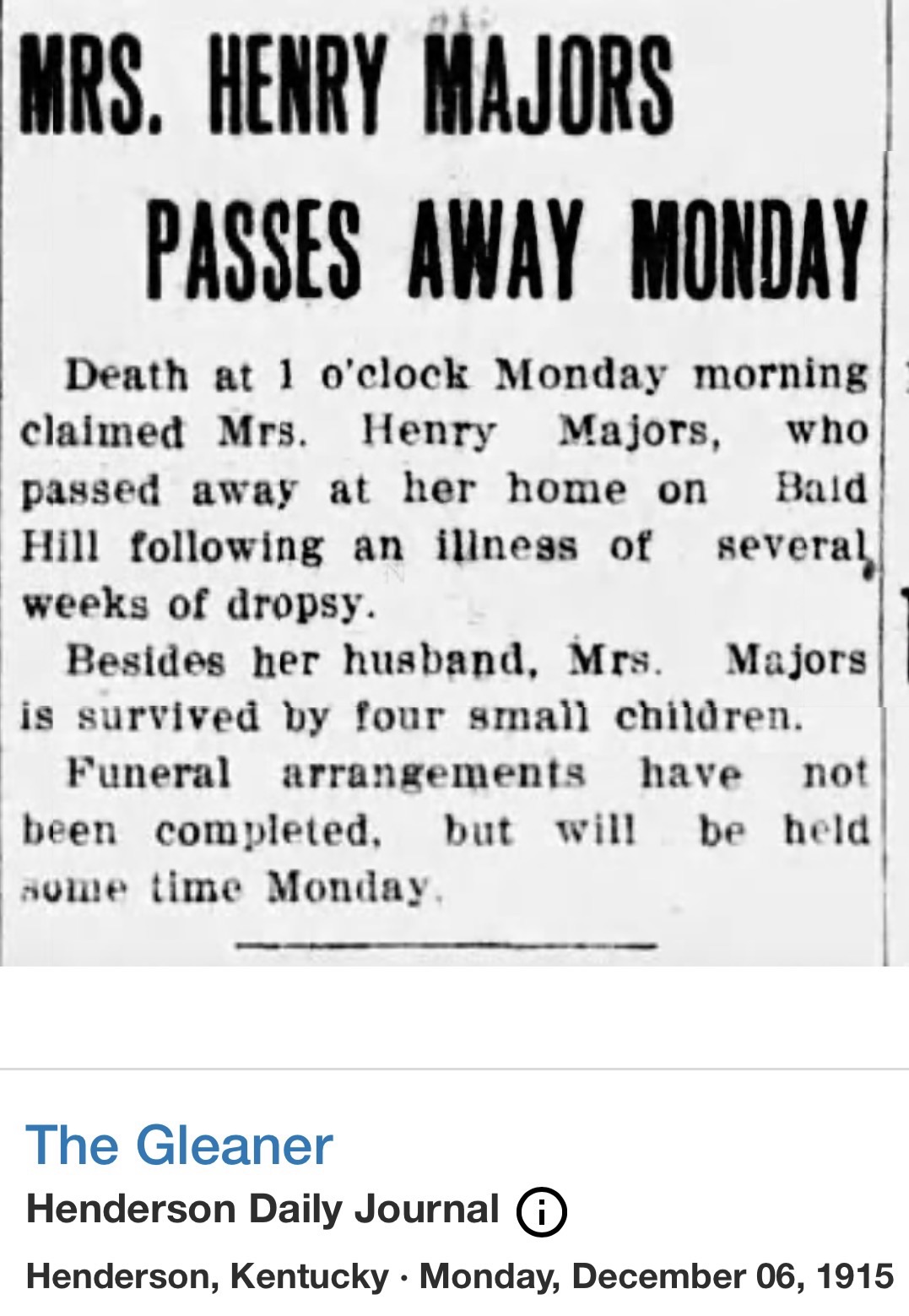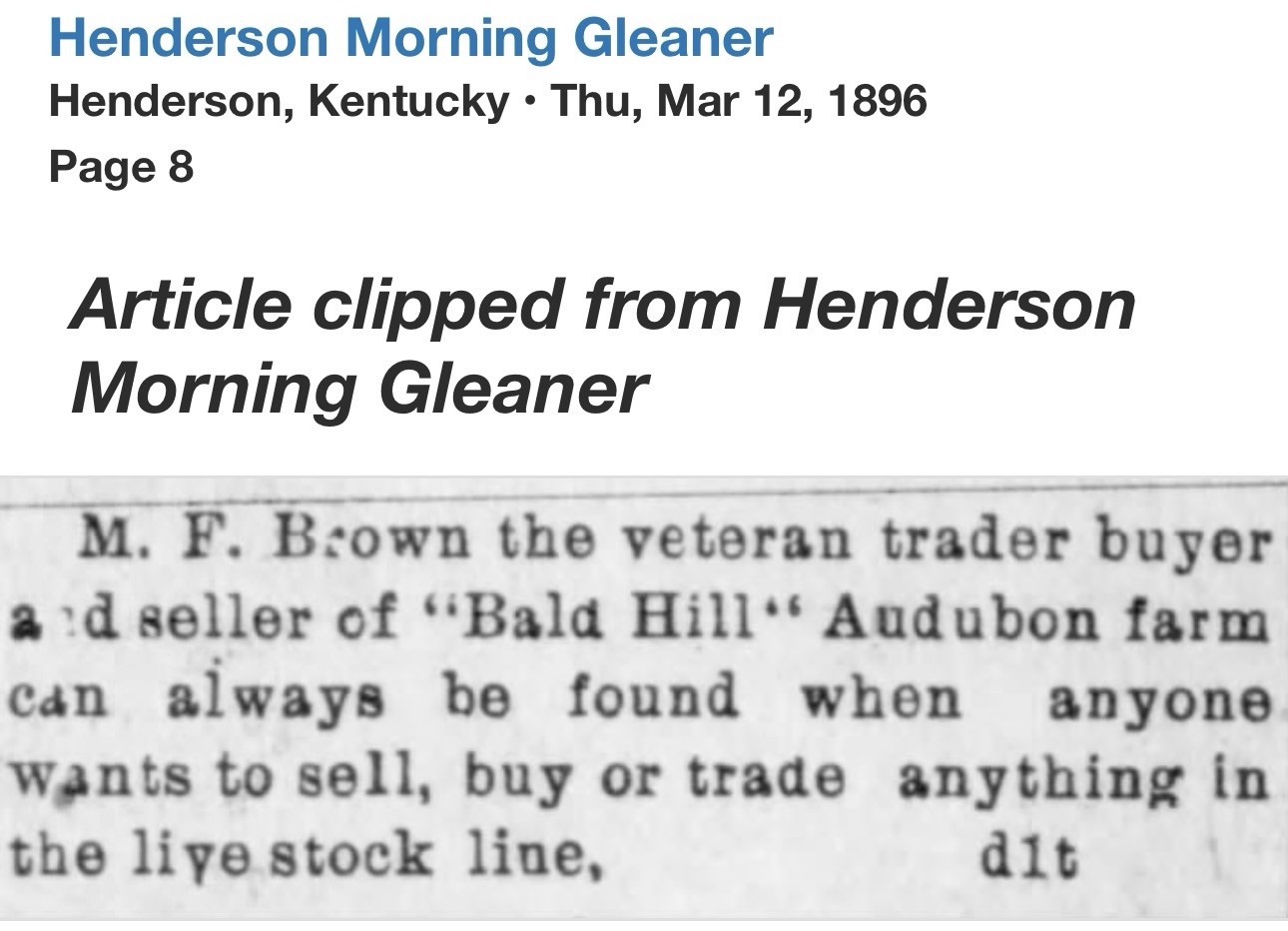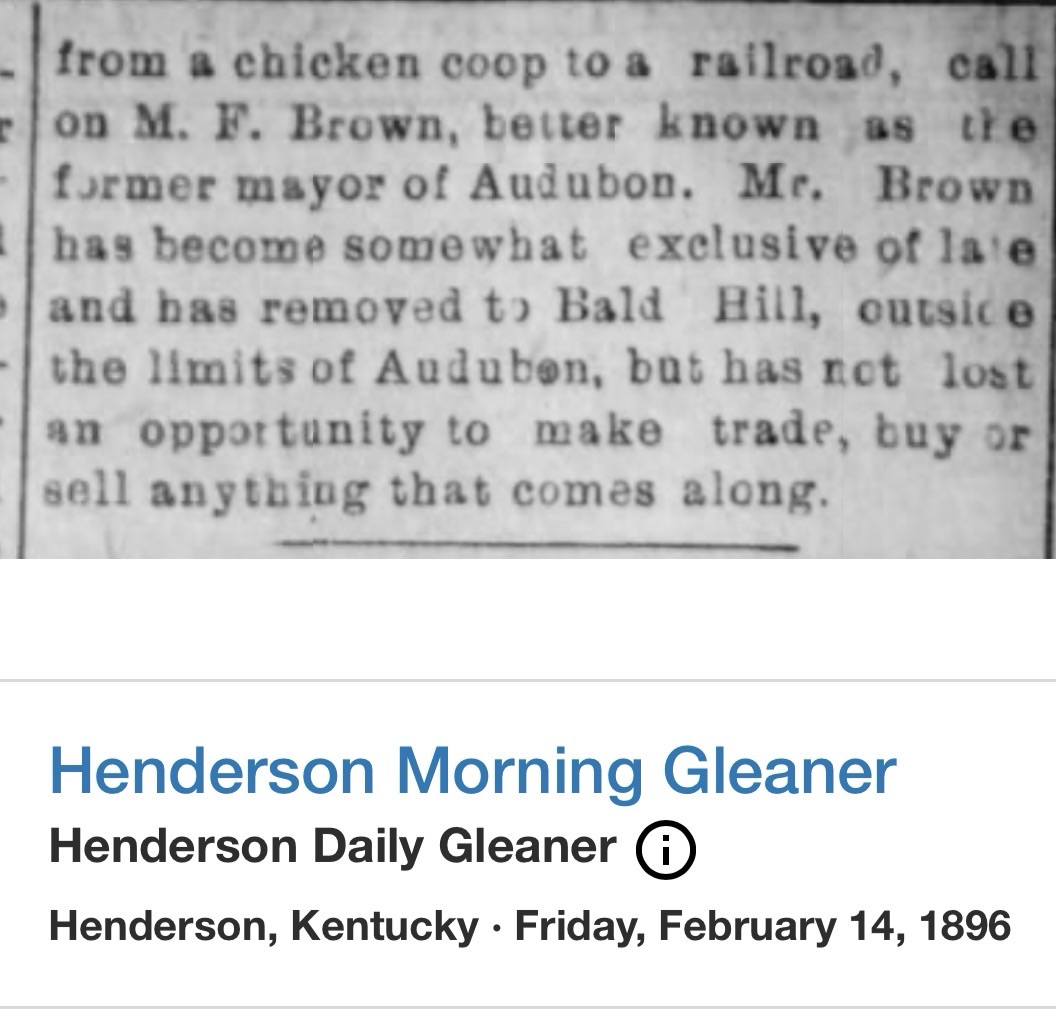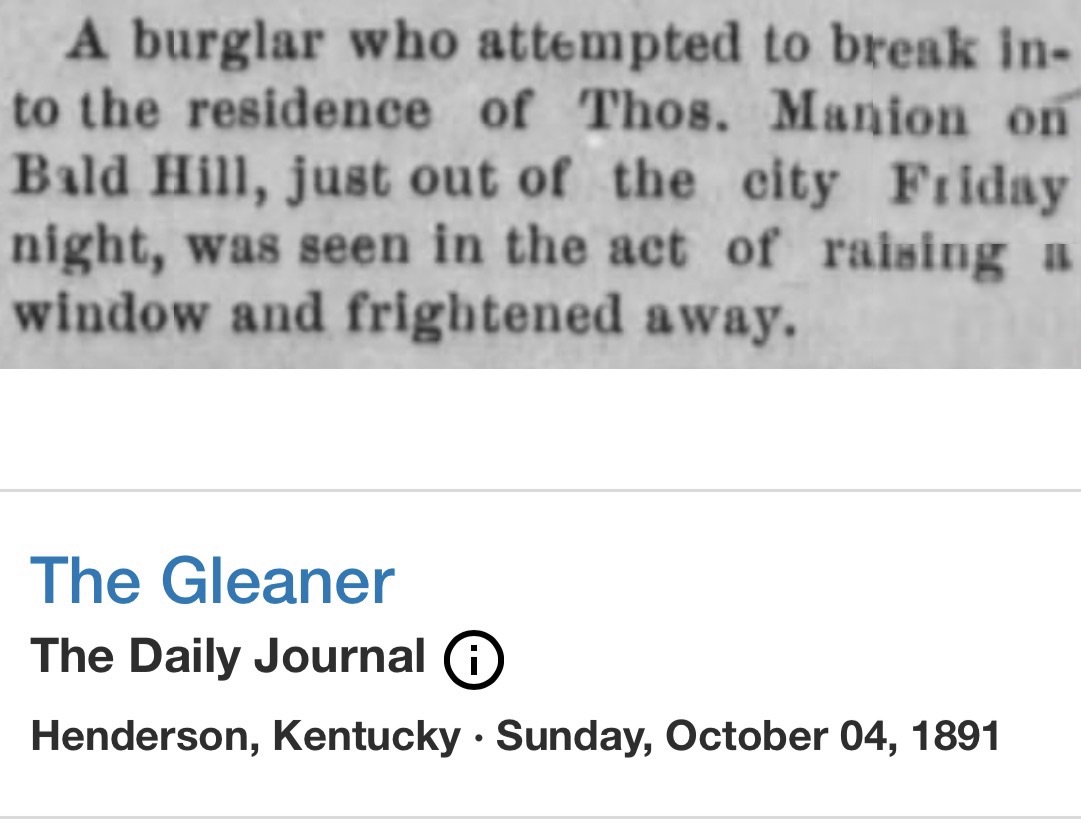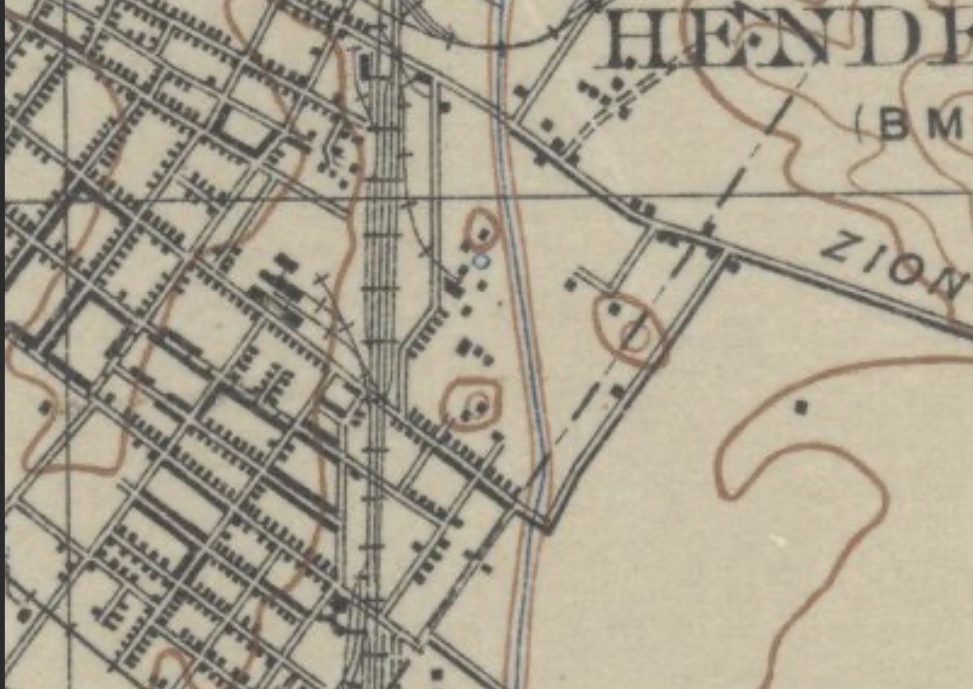
Bald Hill was a well-known early Henderson neighborhood, named for its elevated, once tree-sparse ridge just east of downtown.
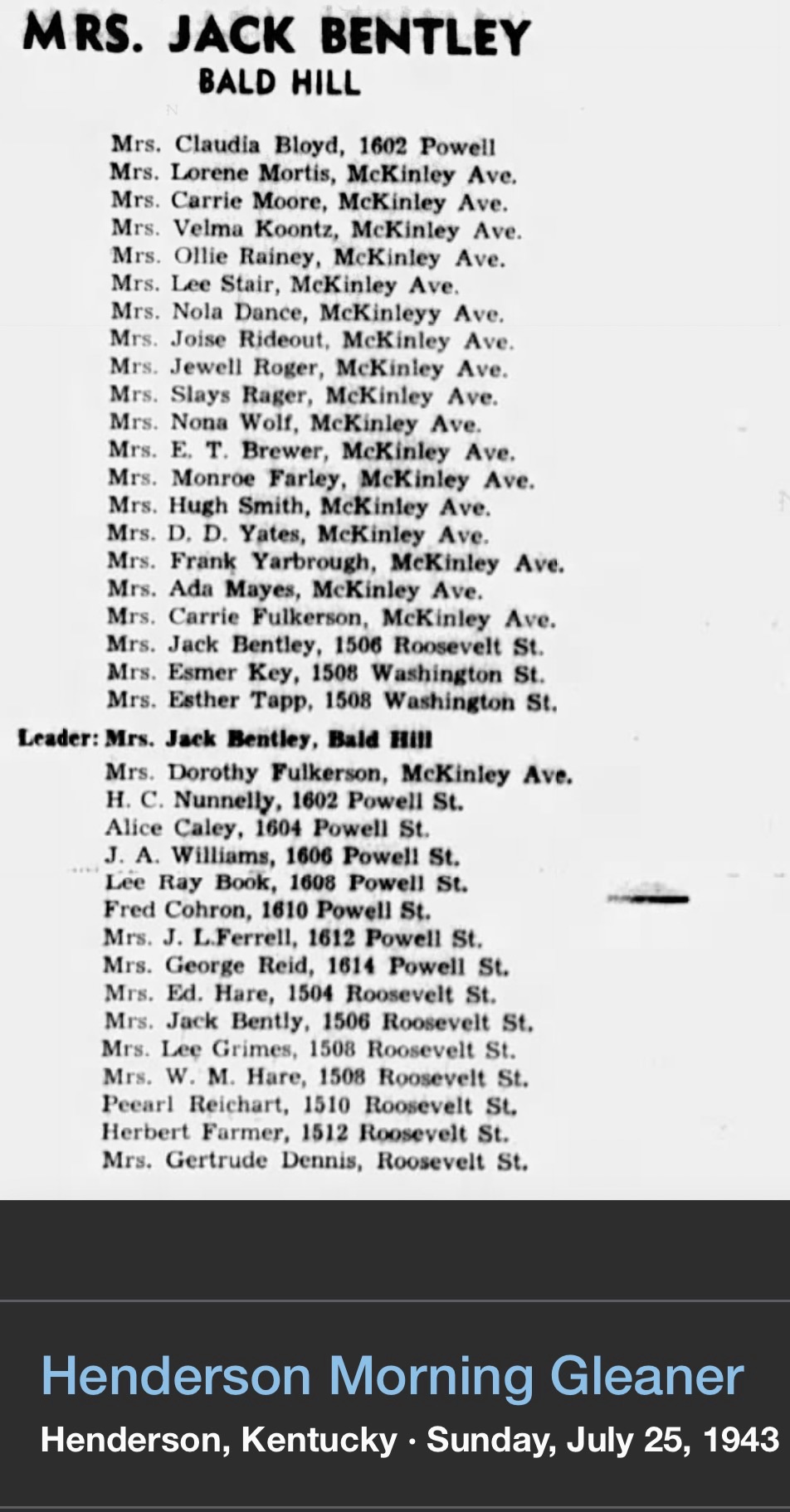
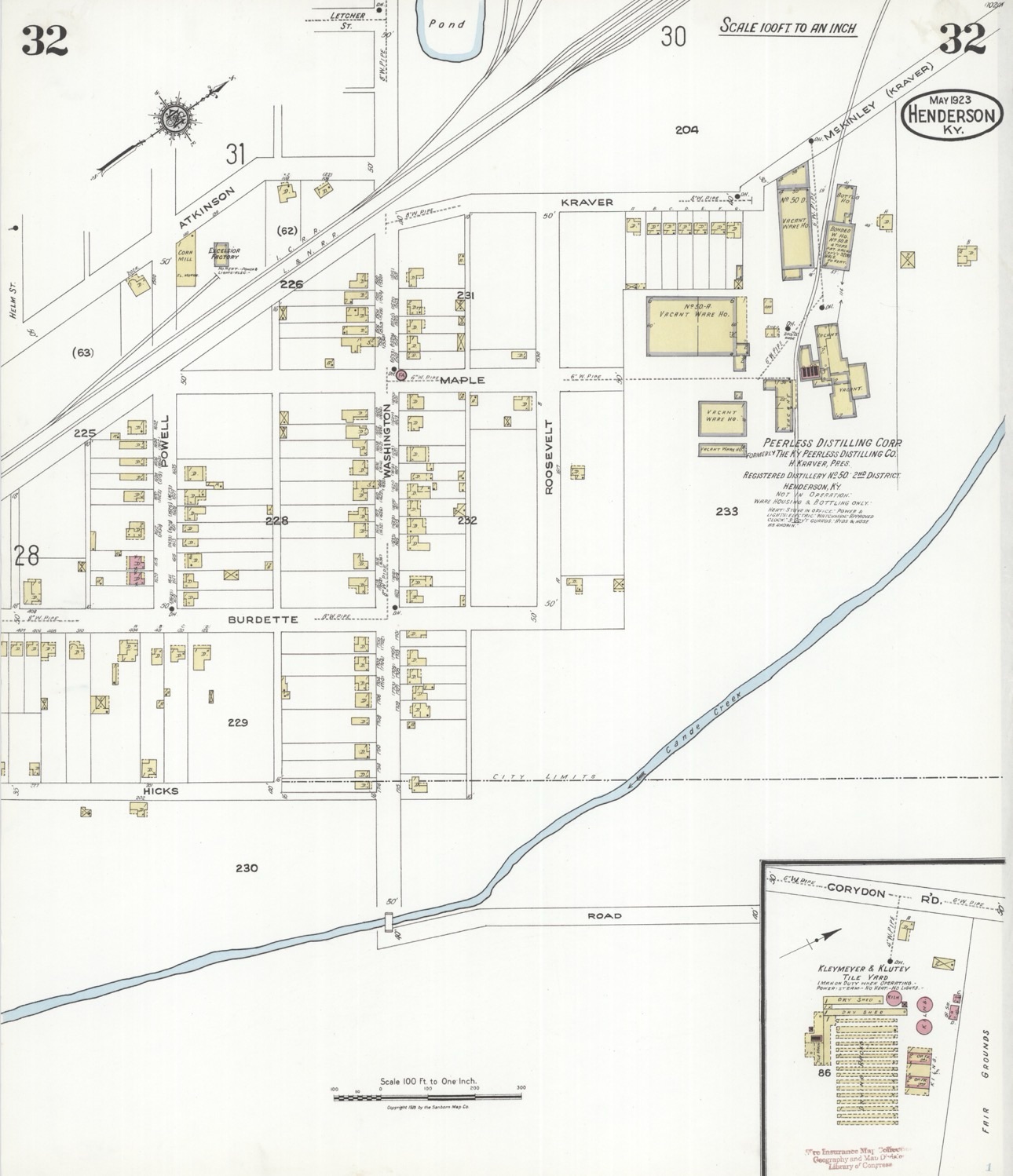
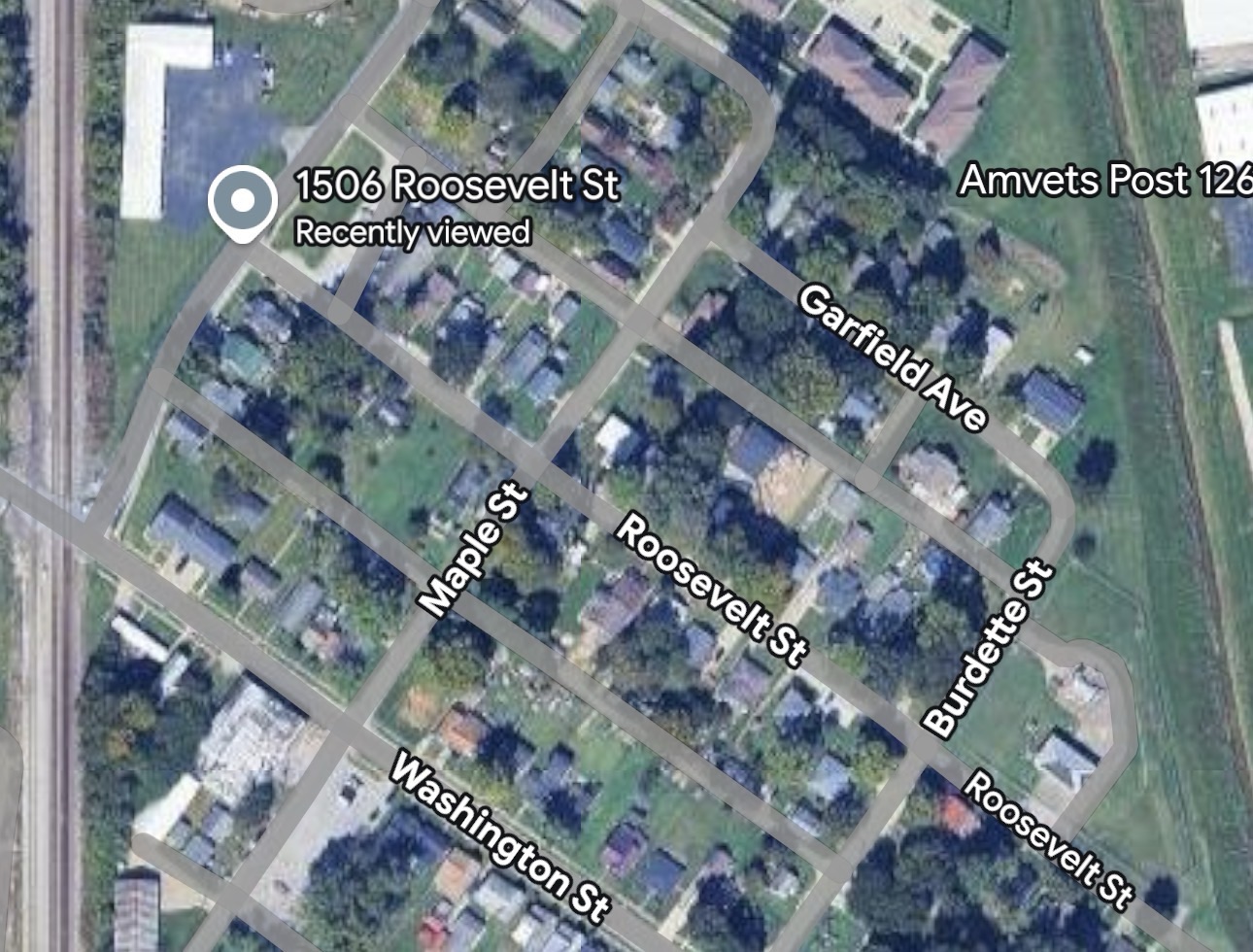
Late-1800s and early-1900s newspapers regularly referenced Bald Hill as “just out of the city limits,” generally centered around today’s Roosevelt Street, McKinley Avenue, Washington Street, and nearby blocks. The area shifted from farmland and livestock trading to a stable residential neighborhood by the early 20th century.
Though never an official subdivision, Bald Hill was a clearly understood place – a reminder of how Henderson’s neighborhoods often formed by landscape and local usage long before formal boundaries.
Supplement: Bald Hill – Also Known as “Ball Hill”
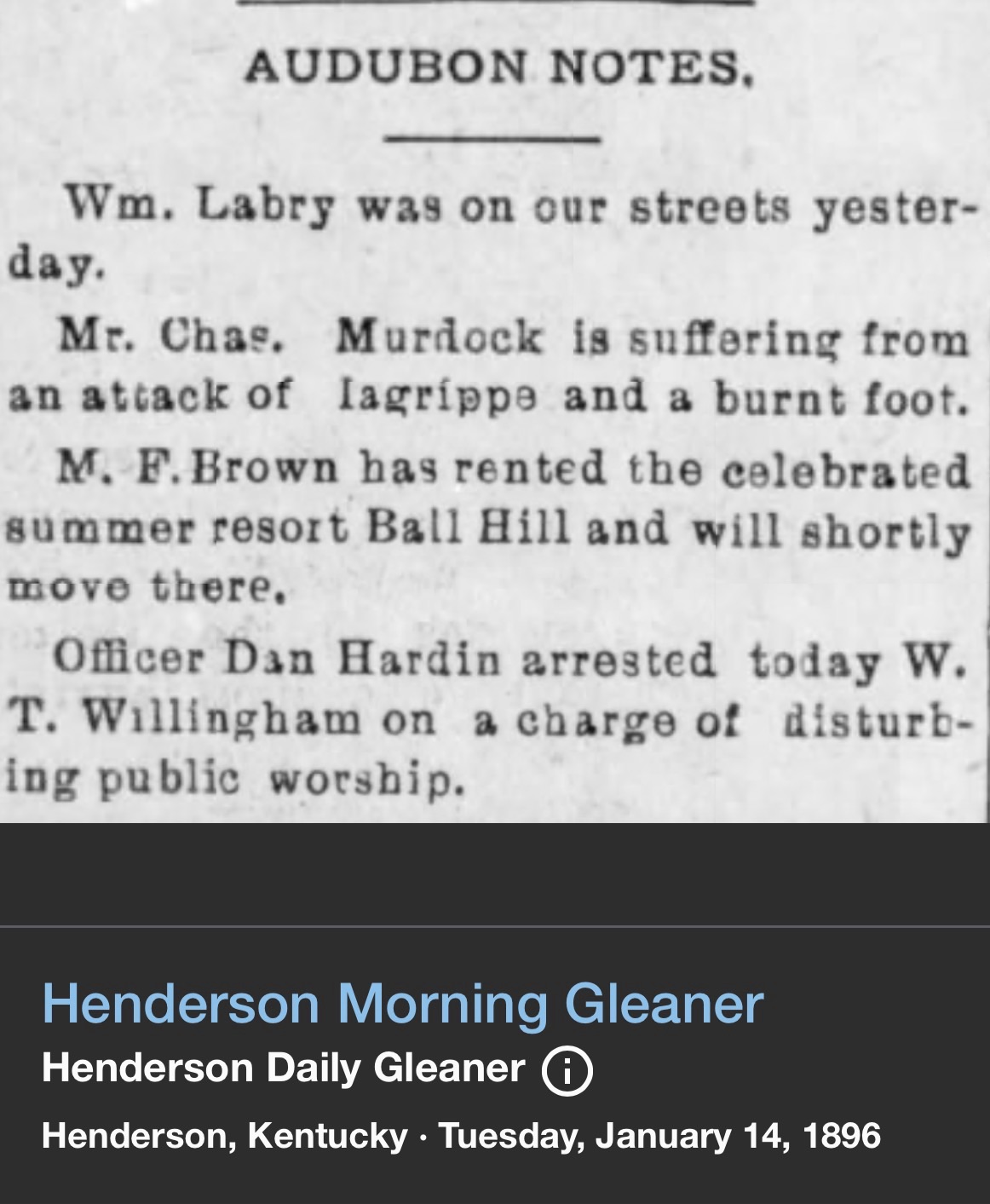
While most early references describe the neighborhood as Bald Hill, period newspapers make it clear that the name was often written – and apparently spoken – as “Ball Hill.”
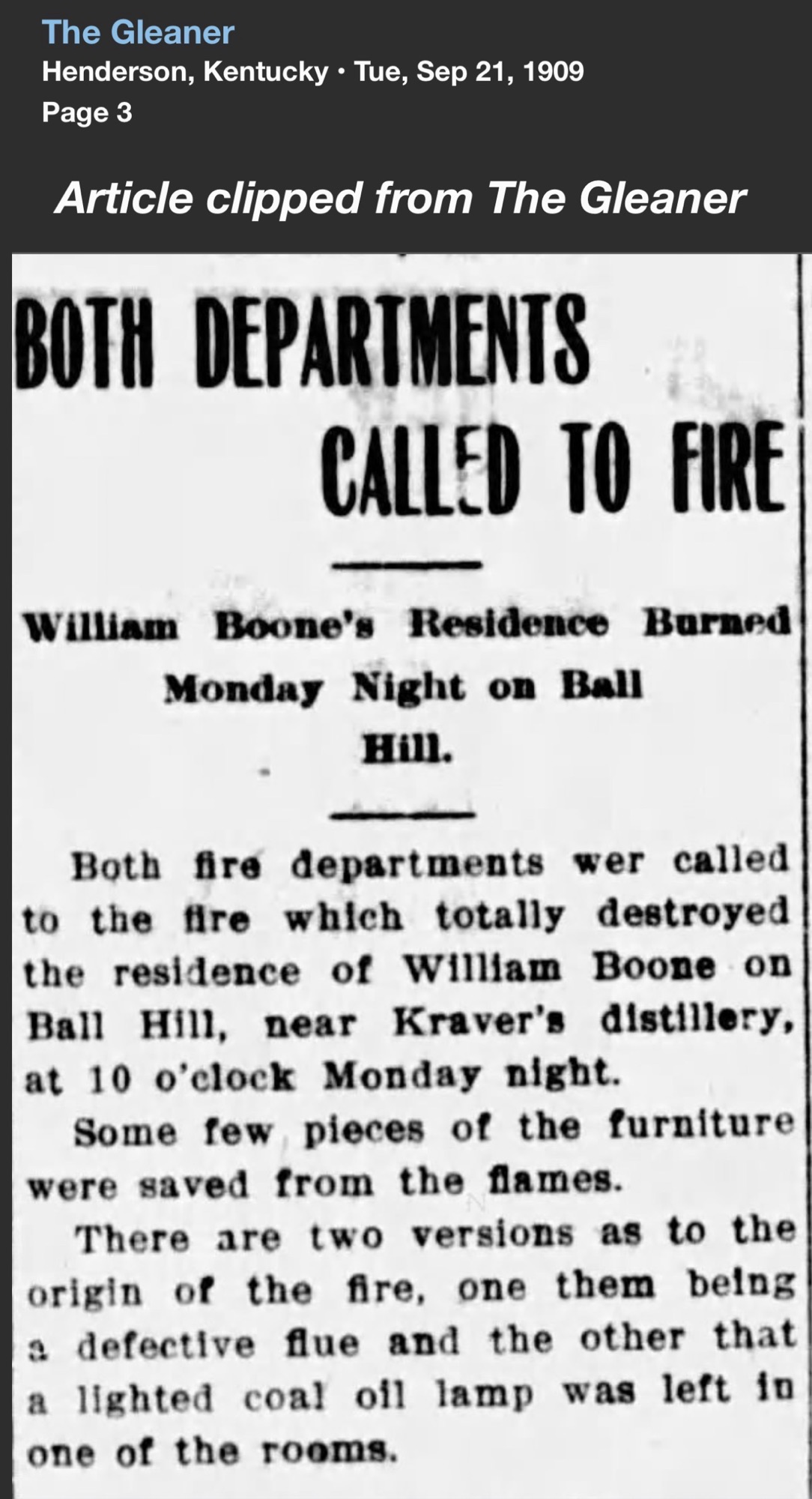
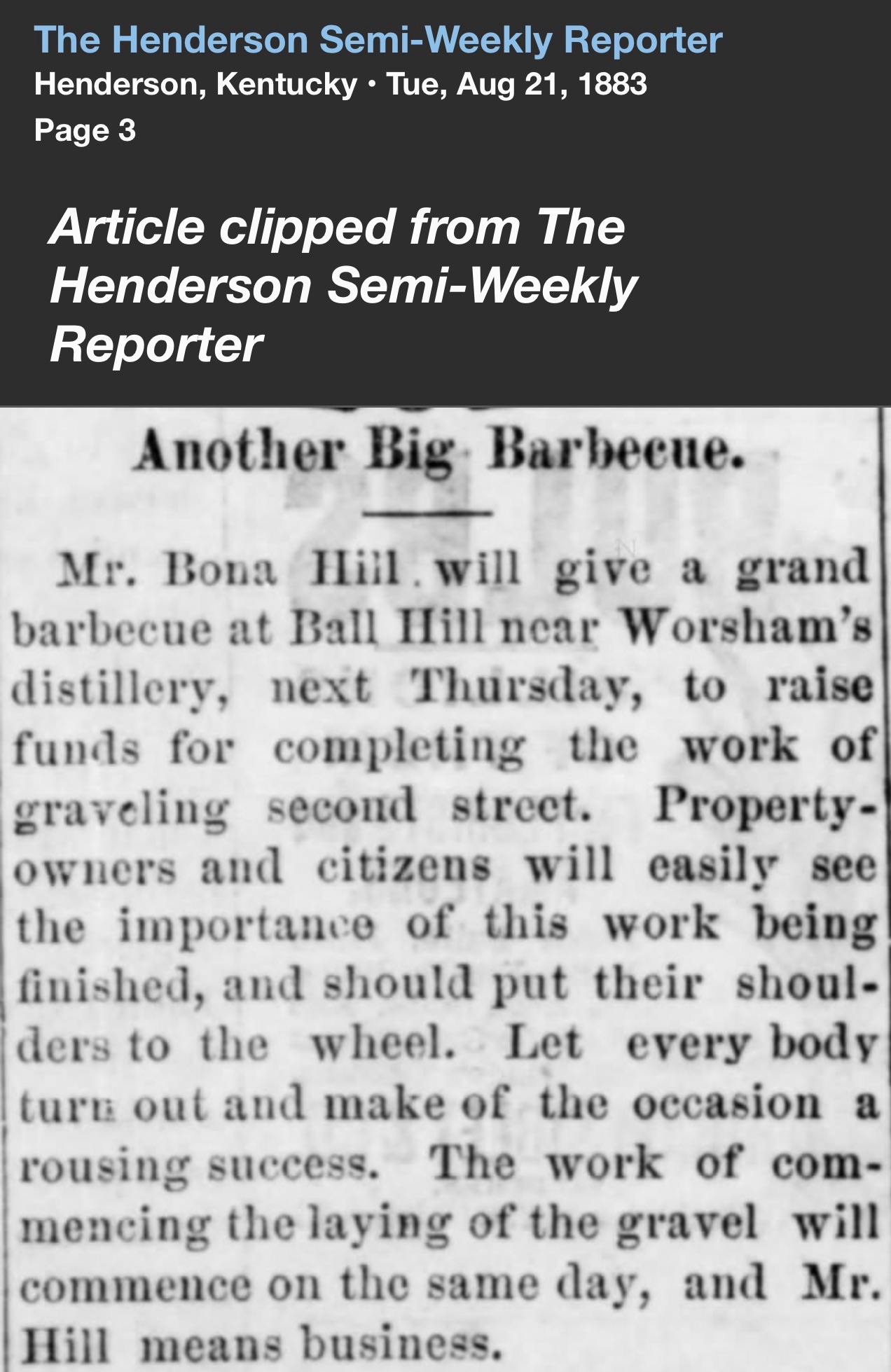
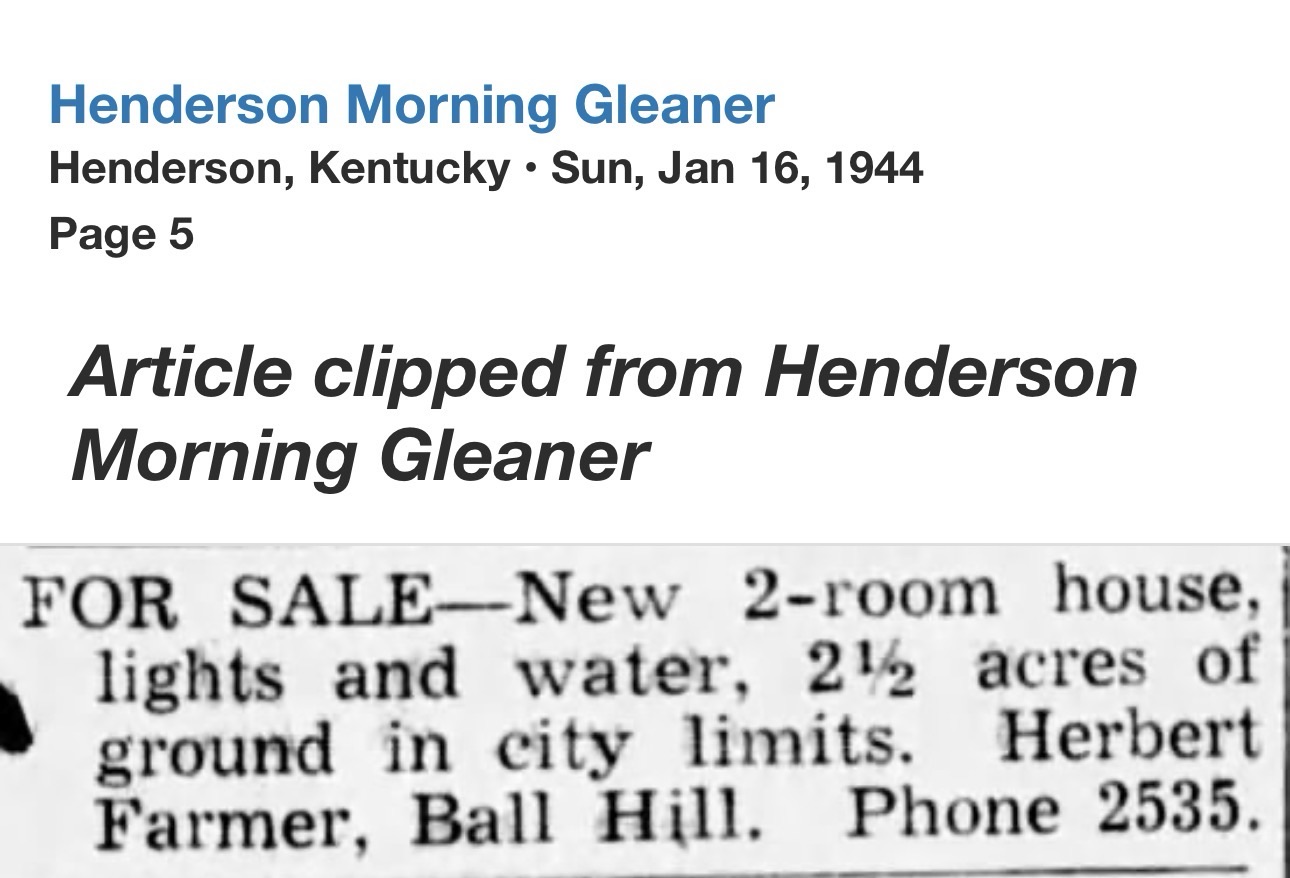
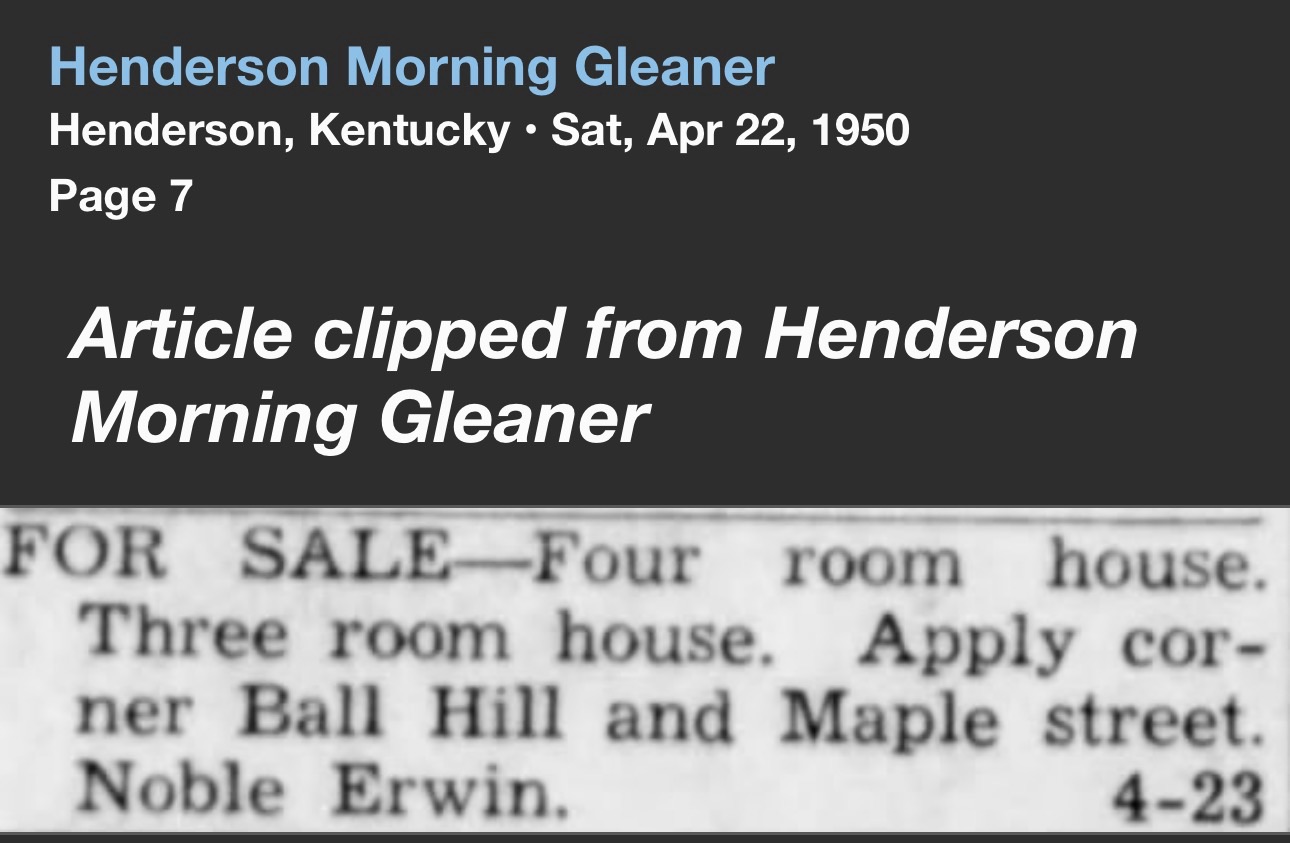
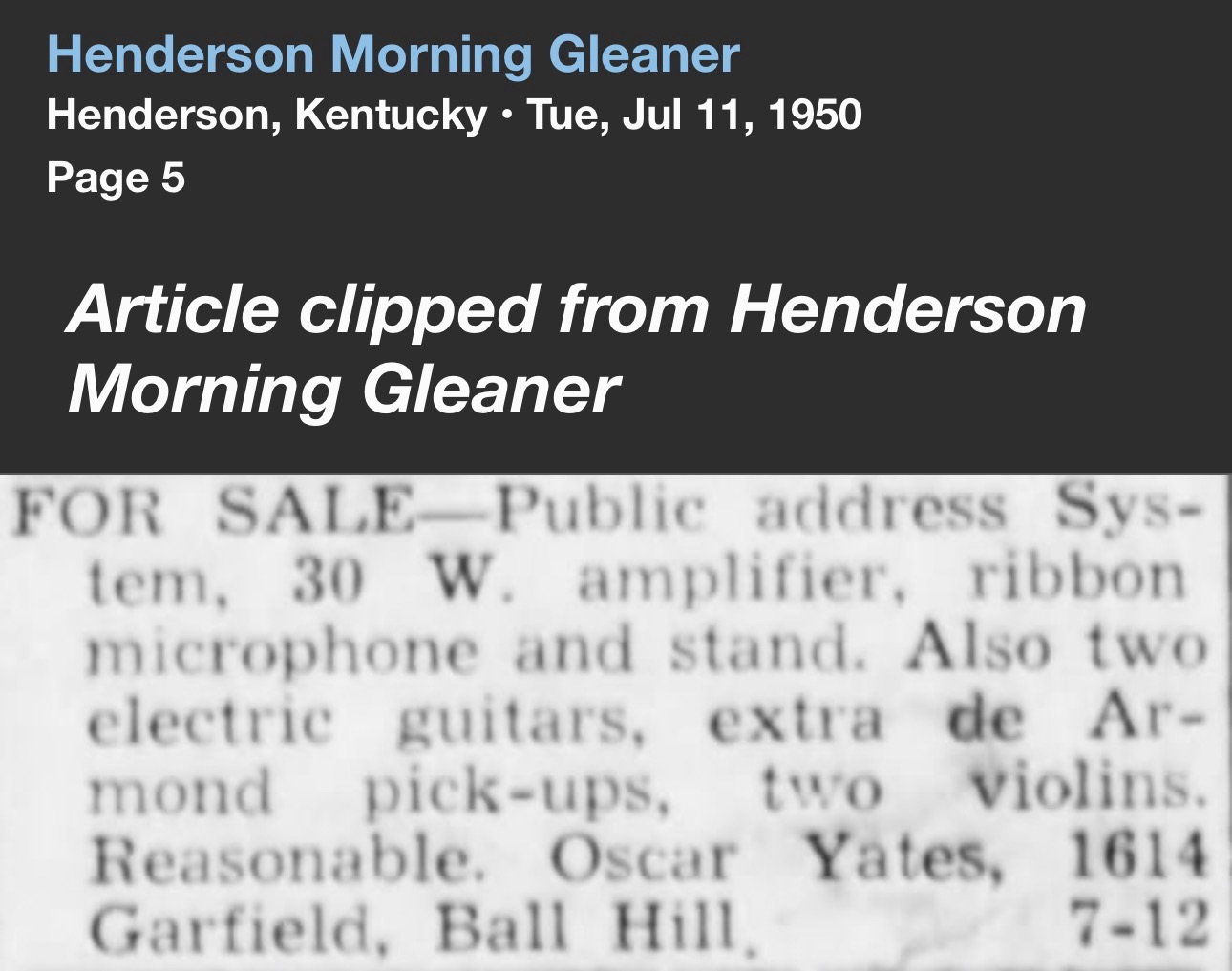
Throughout the late 1800s and early 1900s, Henderson papers used both spellings interchangeably. An 1883 article in The Henderson Semi-Weekly Reporter advertised a grand barbecue “at Ball Hill near Worsham’s distillery.” A 1909 Gleaner report described a fire at William Boone’s residence “on Ball Hill near Kraver’s distillery.” Classified advertisements from the 1940s and 1950s likewise listed properties simply as located on “Ball Hill,” including homes on Garfield and Maple streets.
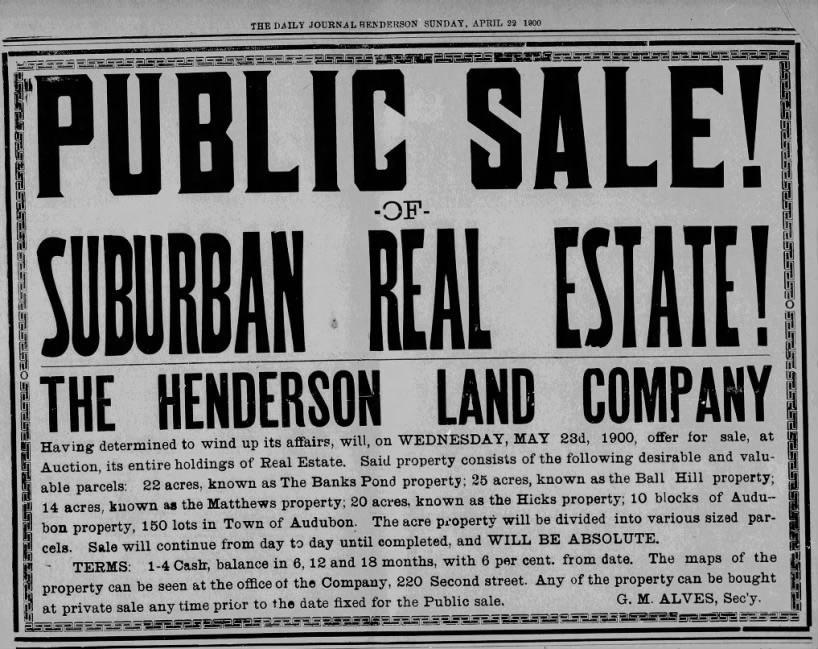
Even a 1900 public real estate sale by the Henderson Land Company referred to acreage known as the “Ball Hill property,” suggesting the alternate spelling was widely accepted and used in official business transactions.
The variation likely reflects the fluid nature of neighborhood naming in early Henderson. Before standardized maps and subdivision plats fixed boundaries and spellings, communities were often identified by local custom. Whether originally “Bald” (for the once tree-sparse ridge) or “Ball” through colloquial usage or transcription, the two names clearly refer to the same east-of-downtown rise that later developed into the residential blocks around Roosevelt, McKinley, Washington, Maple, and Garfield.
In short, Bald Hill and Ball Hill appear to be one and the same – a reminder that Henderson’s early geography was shaped as much by everyday language as by formal documentation.