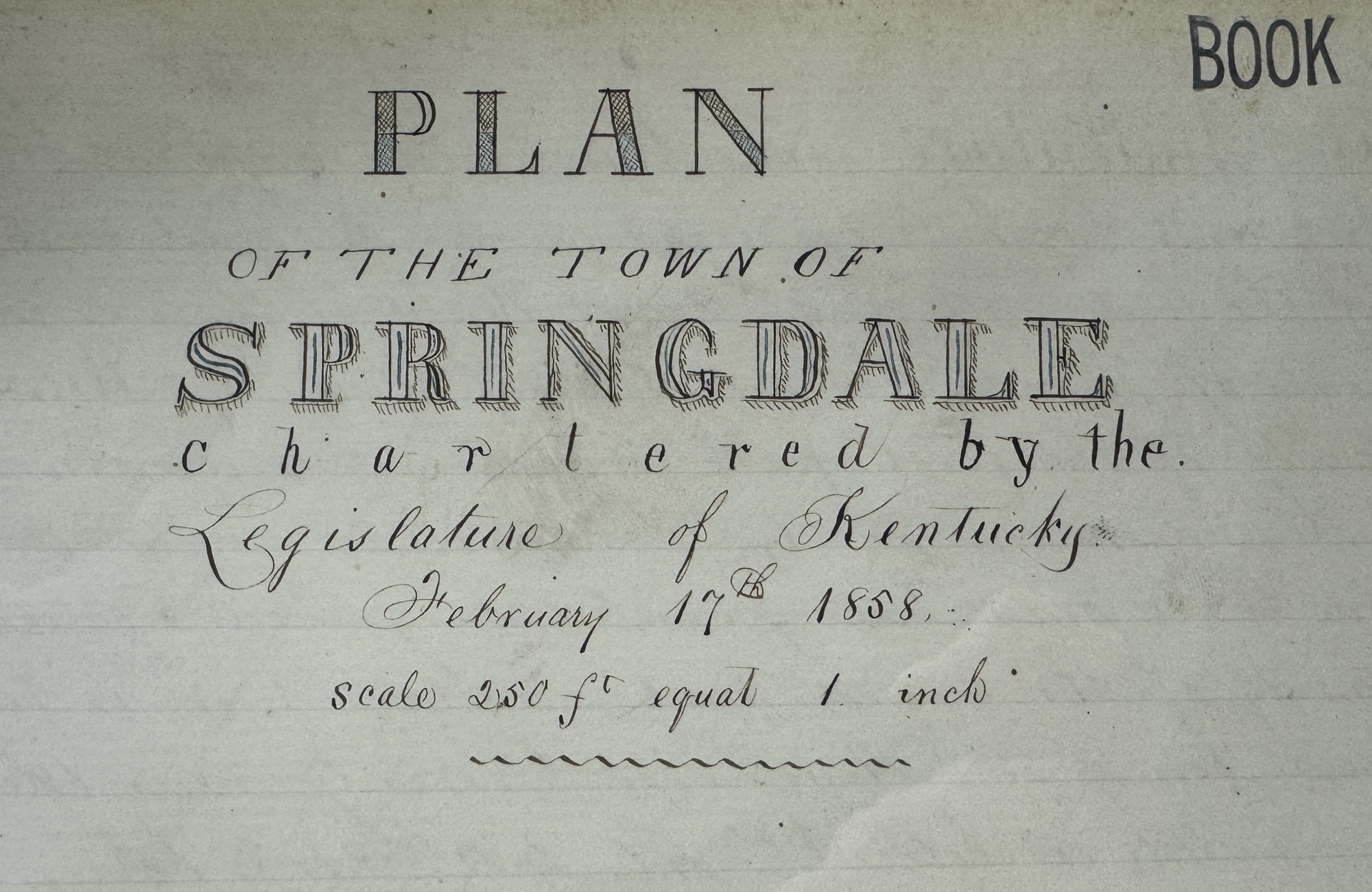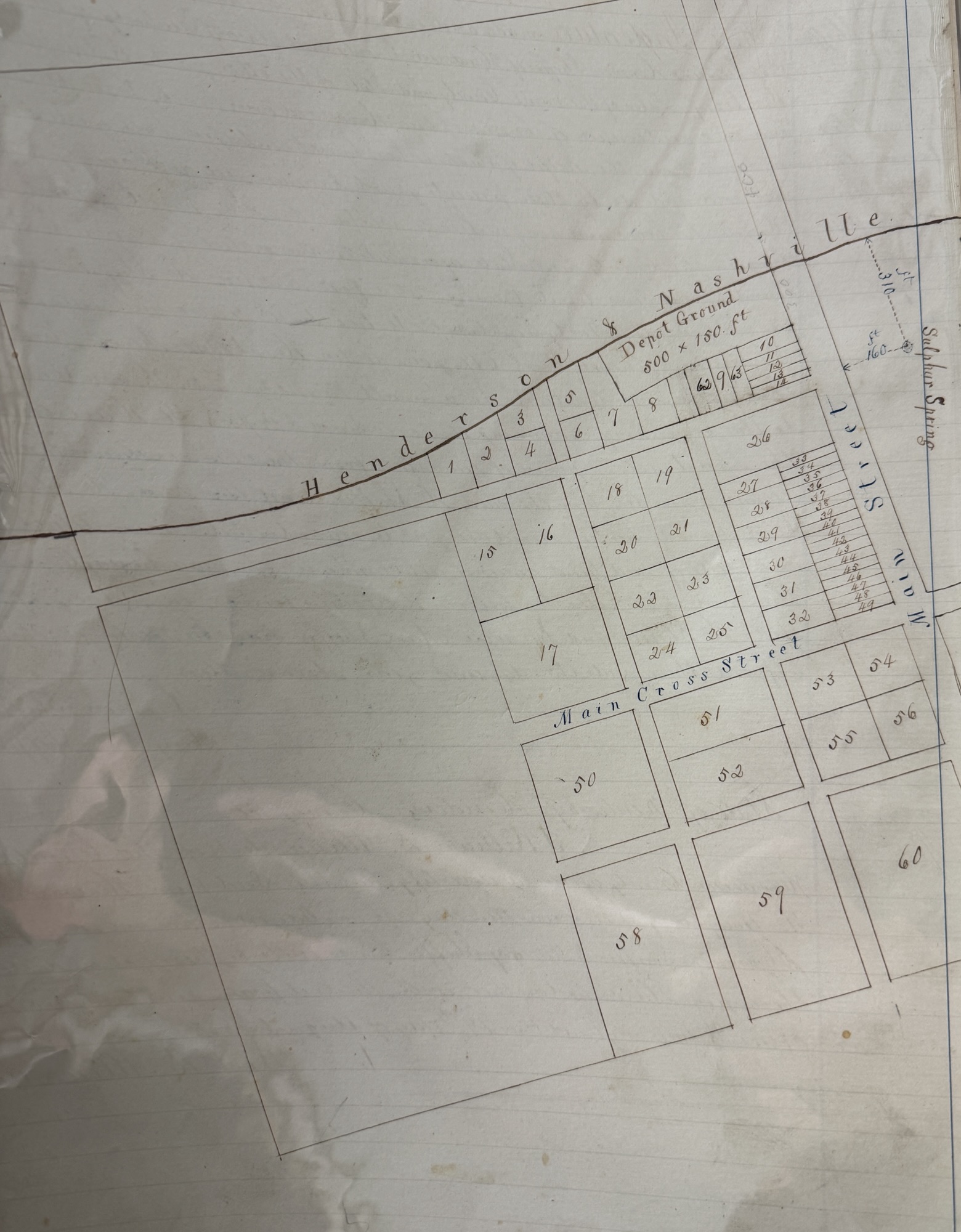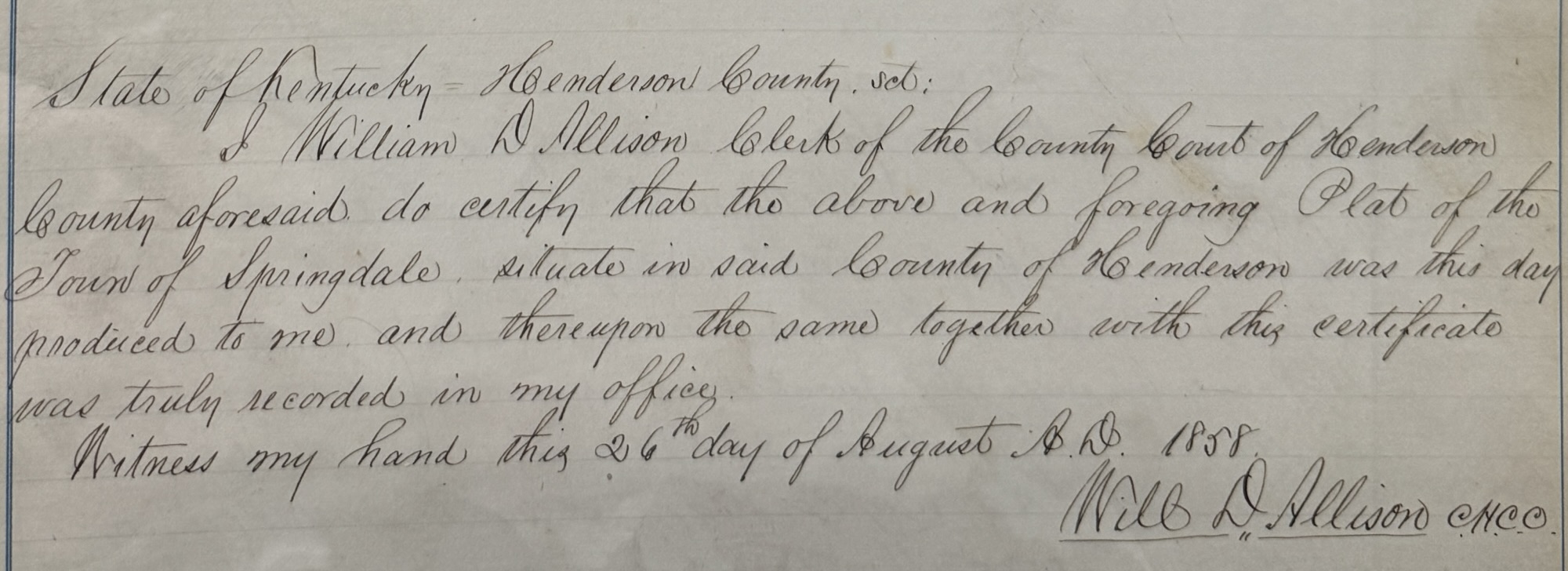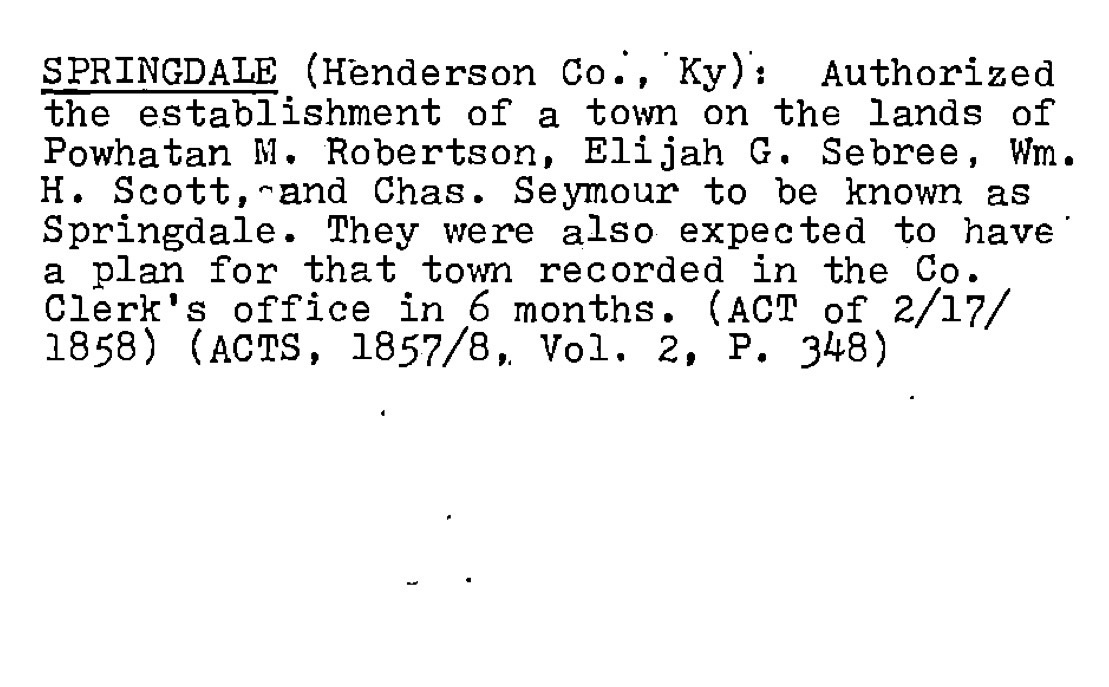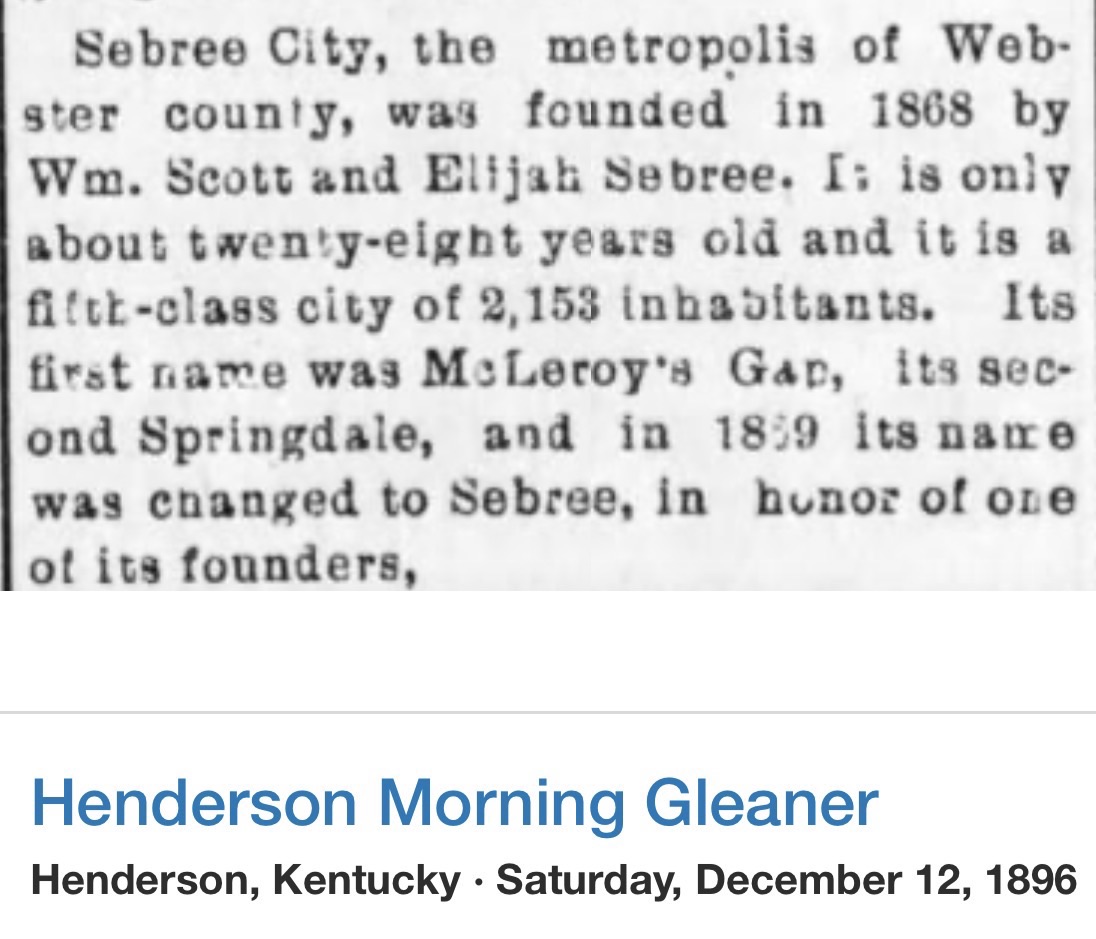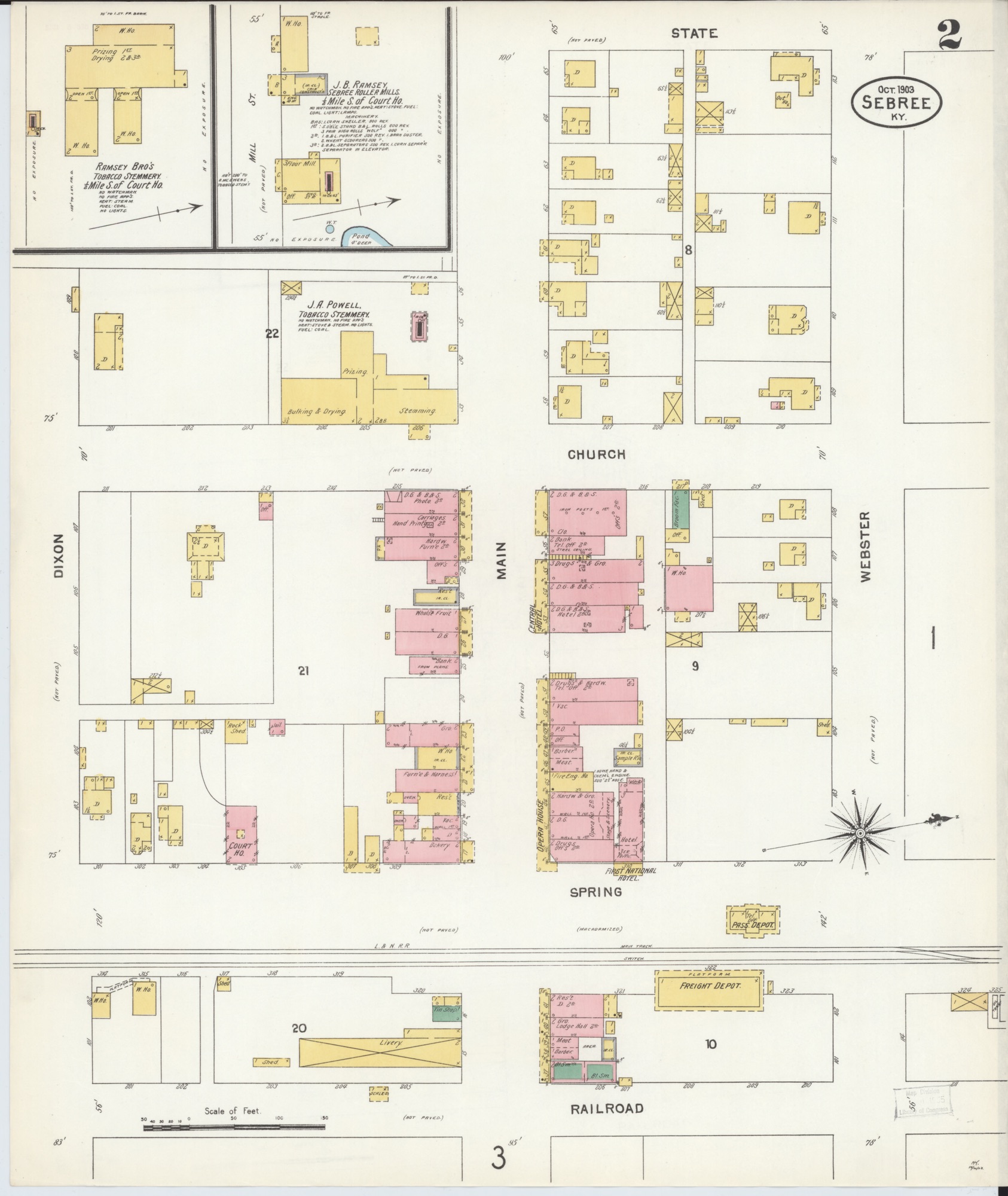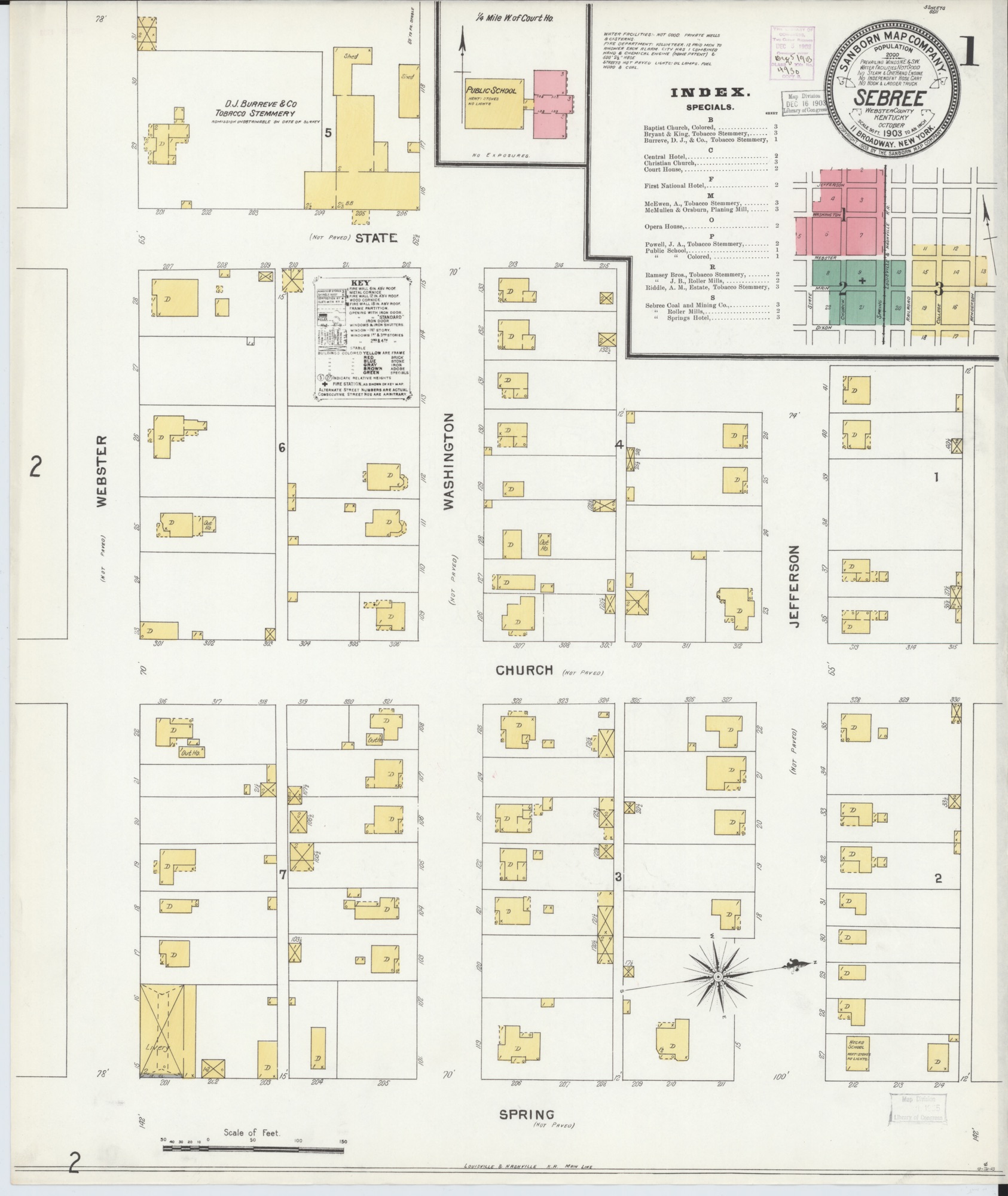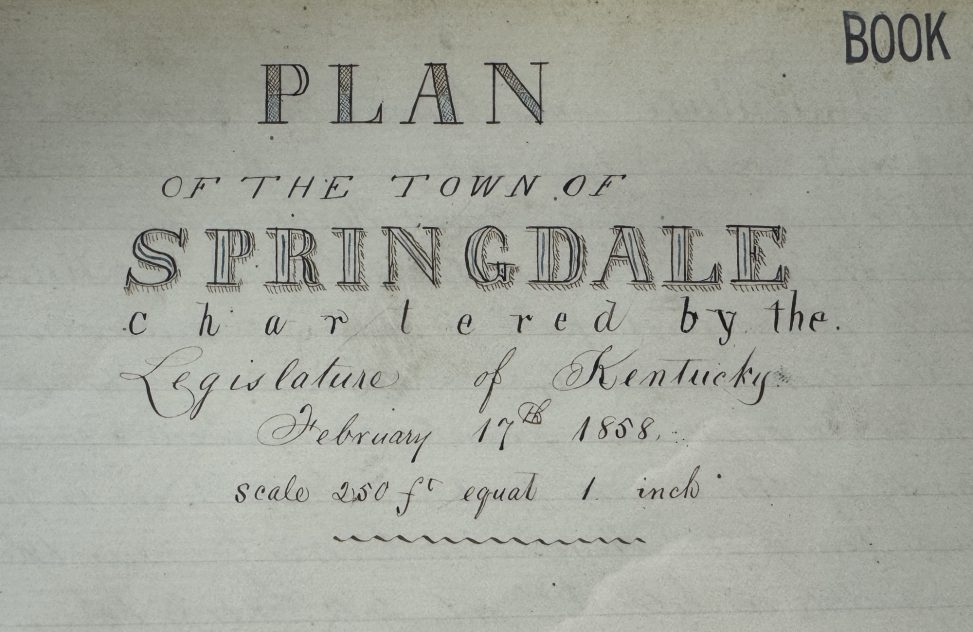
Sebree’s history is closely intertwined with Henderson County, dating back to a time before Webster County even existed. In 1858, the Kentucky General Assembly officially chartered a new town called Springdale on land then firmly within Henderson County. The act, approved on February 17, 1858 named Powhatan M. Robertson, Elijah G. Sebree, William H. Scott, and Charles Seymour as the proprietors. A beautifully hand-drawn plat of the town, still preserved today in Deed Book R at the Henderson County Clerk’s Office, shows its early layout along what would later become the route of the Henderson & Nashville Railroad.
Two years after Springdale’s chartering, the legislature created Webster County, taking a portion of Henderson County with it. The young town of Springdale found itself inside this new county, but its administrative and historical roots remained tied to Henderson through its land records and early planning.
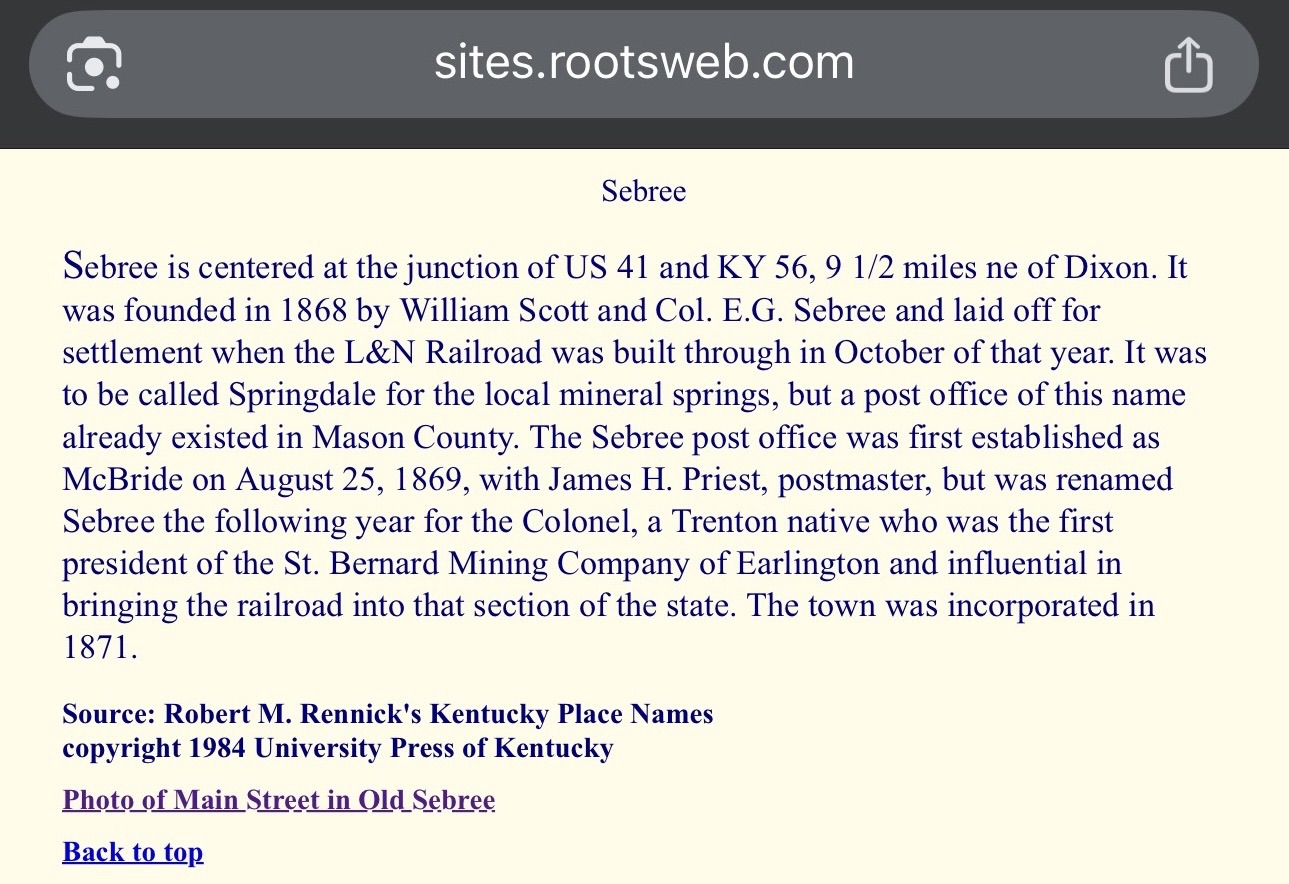
The transformation from Springdale to Sebree began in 1868, when the Louisville & Nashville Railroad expanded through the area. Col. E. G. Sebree, an influential railroad promoter, joined William Scott in laying off new town lots and promoting development. Although the name Springdale was initially retained, the federal government rejected the proposed post office name because another Springdale existed in Mason County. The local post office, first called McBride in 1869, was renamed Sebree the following year in honor of Colonel Sebree. The town of Sebree was formally incorporated in 1871.
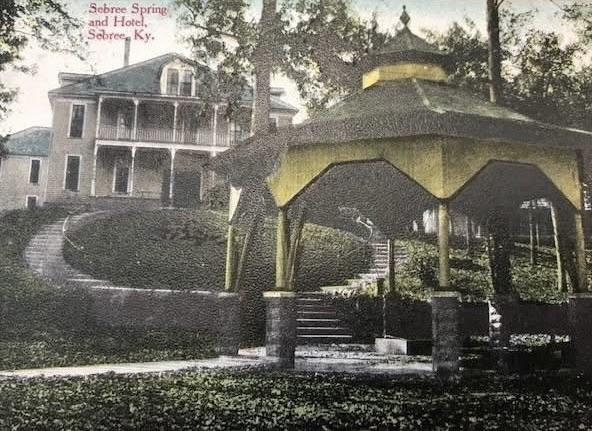
During the late 19th century, Sebree became well known as a health resort, drawing visitors to its abundant mineral springs. Newspaper articles from Henderson’s Gleaner in 1913 and 1926 recall how the community’s springs, some located beneath the courthouse itself, were believed to offer healing qualities. At the height of its popularity, Sebree’s springs and two resort hotels attracted thousands of summer visitors before a devastating fire destroyed the facilities in the early 1900s.
Though Sebree is now a Webster County town, its origins are firmly rooted in Henderson County’s early geography, records, and regional influence.