Jealousy, Murder, and Prison: The Troubled Life of Nash Sands
In the winter of 1905, a short marriage in Henderson County began with what seemed like an ordinary announcement in the Henderson Morning Gleaner. Within a few months, however, the marriage would end in tragedy and launch one of the most sensational criminal cases in Henderson’s early twentieth-century history.
The story of Nash A. Sands and Jane Brenner Sands would unfold across decades – involving murder, a life sentence, repeated attempts at clemency, later arrests, and a life that continued long after the crime that first made his name known.
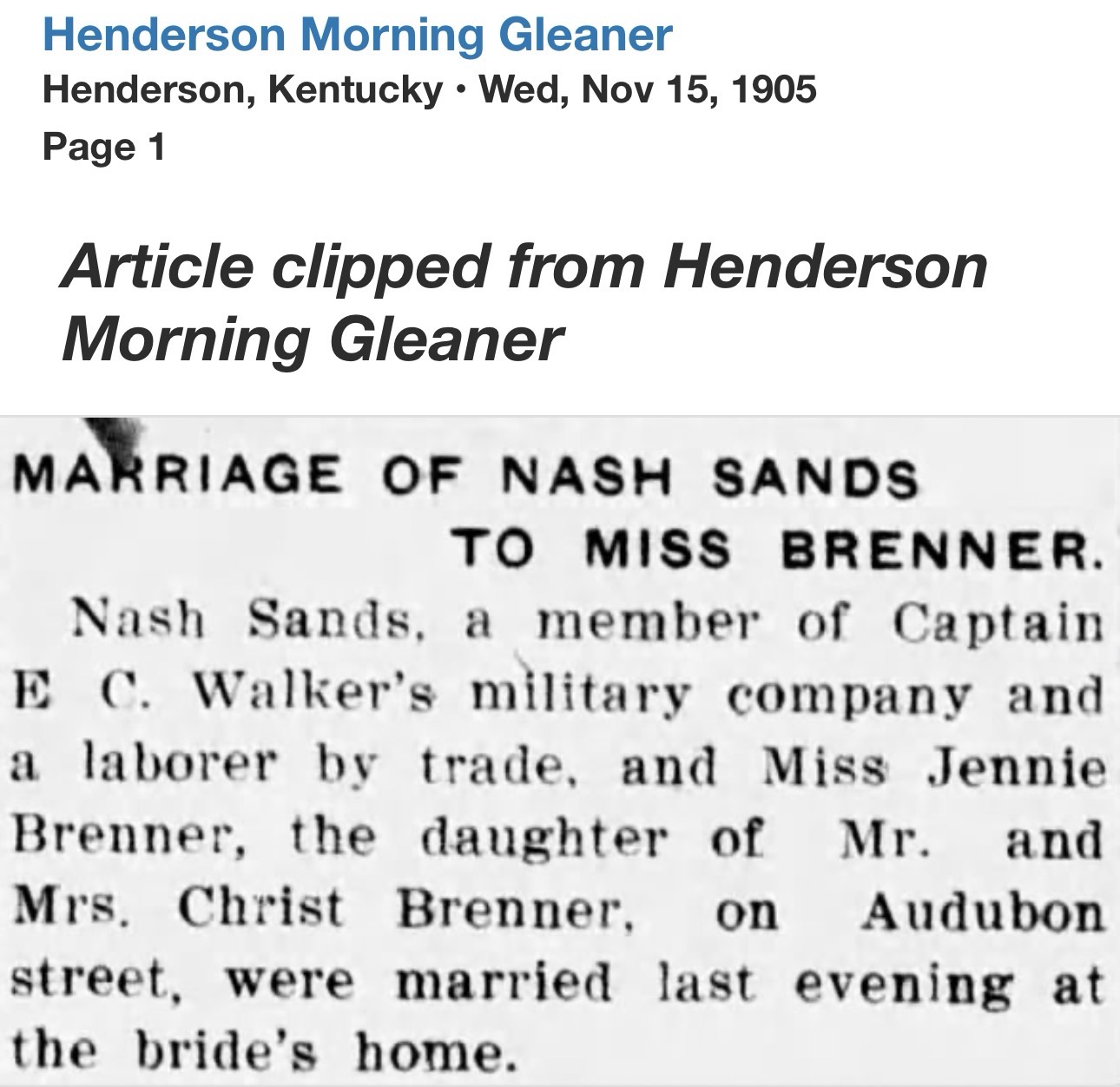
On November 15, 1905, the Henderson Morning Gleaner reported the marriage of Nash Sands to Miss Jennie (Jane) Brenner, daughter of Mr. and Mrs. Christ Brenner of Audubon Street in Henderson.
The article described Sands as a laborer by trade and a member of Captain E. C. Walker’s military company, one of the local militia units active in many Kentucky communities at the time.
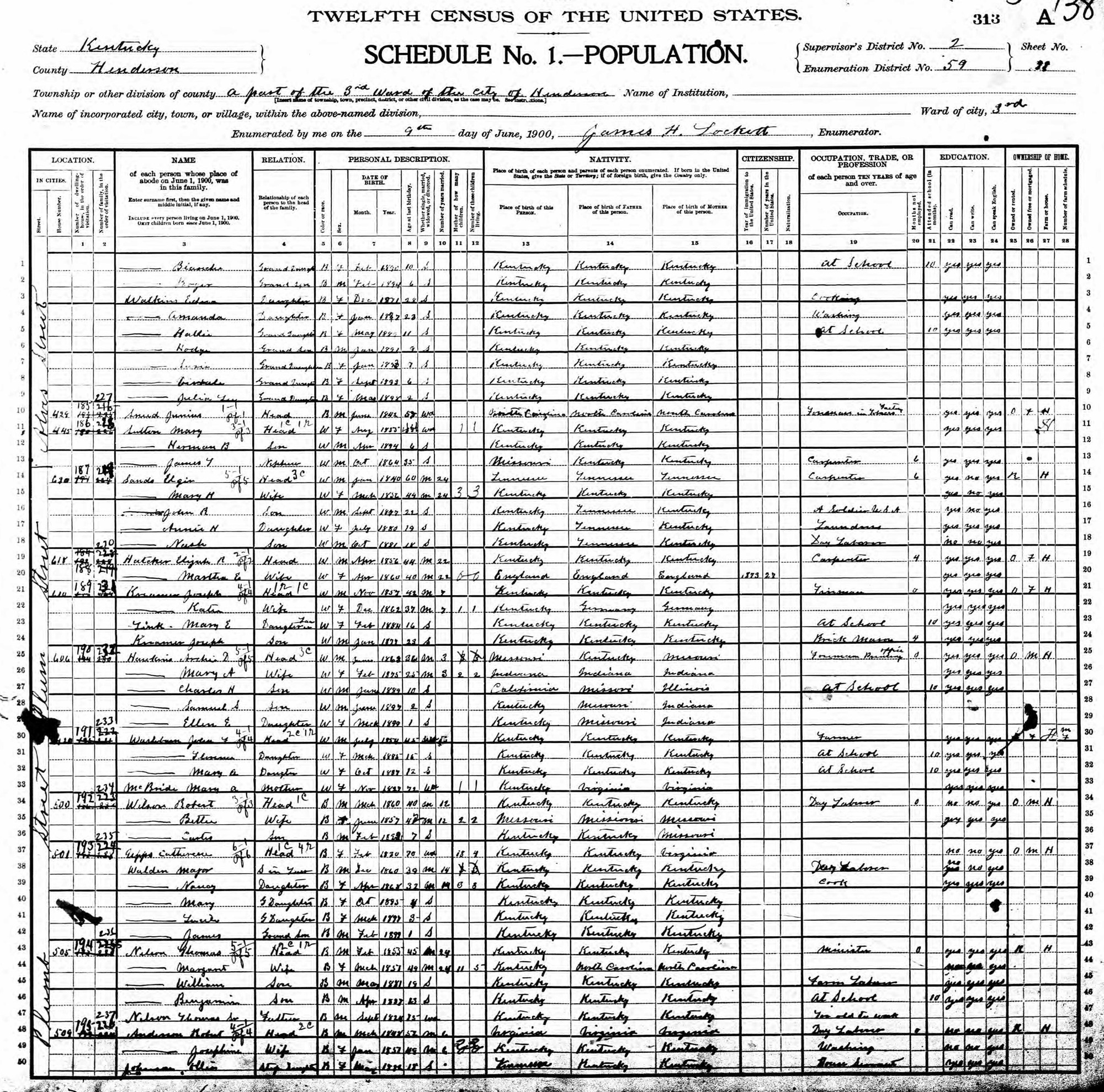
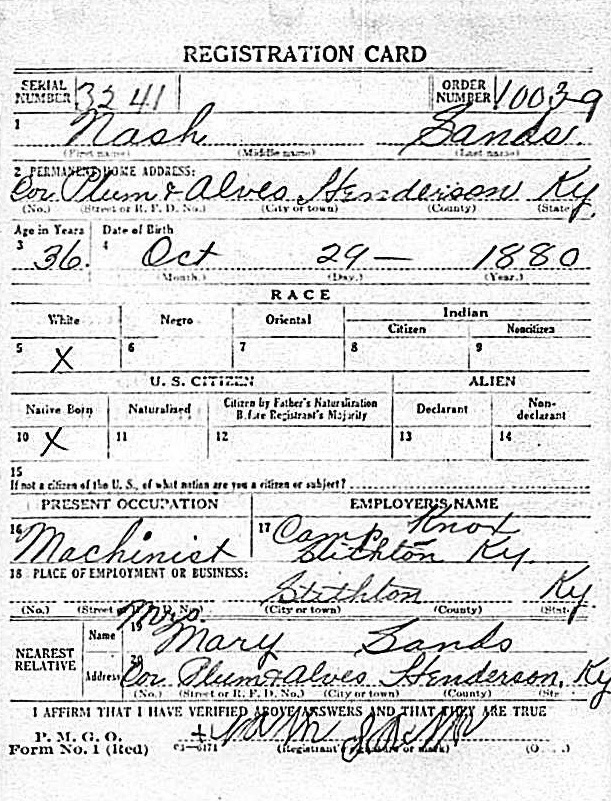
Jane Brenner was only fifteen years old. Sands, born October 29, 1880, was nearly twice her age. The wedding took place at the Brenner family home.
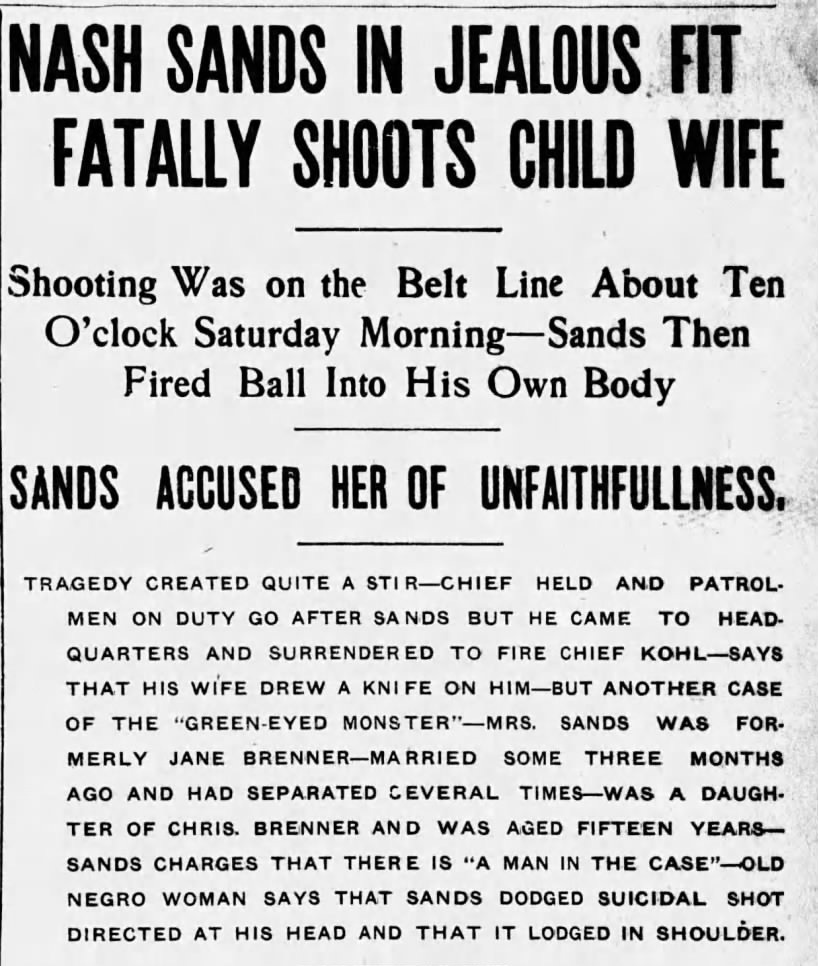
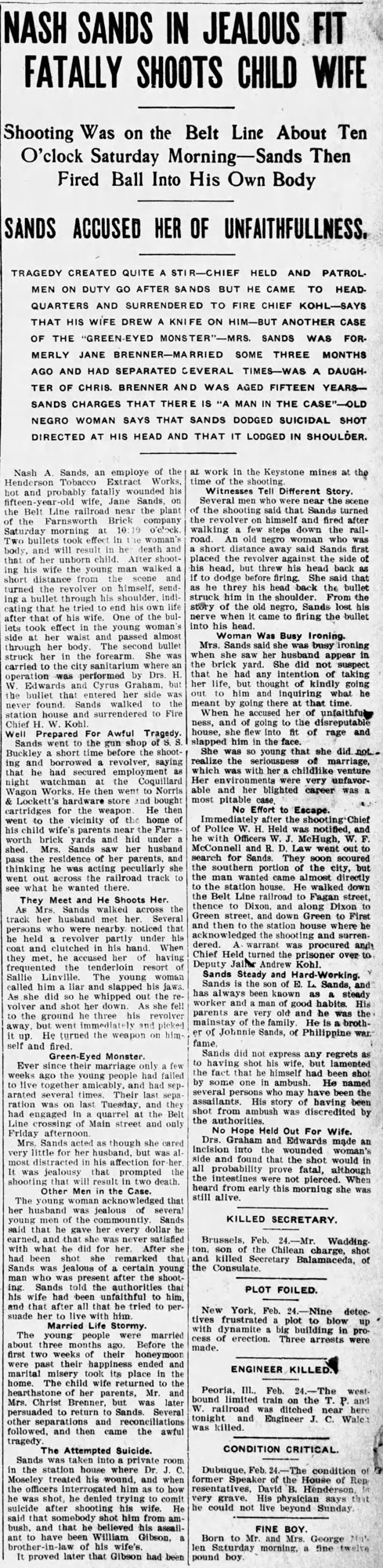
The relationship quickly deteriorated. According to testimony later presented in court, the couple argued frequently and separated several times during their short marriage. Jane eventually returned to live with her parents on Audubon Street. Rumors circulated that Sands believed his young wife had been unfaithful – accusations that would later play a central role in the tragedy that followed.
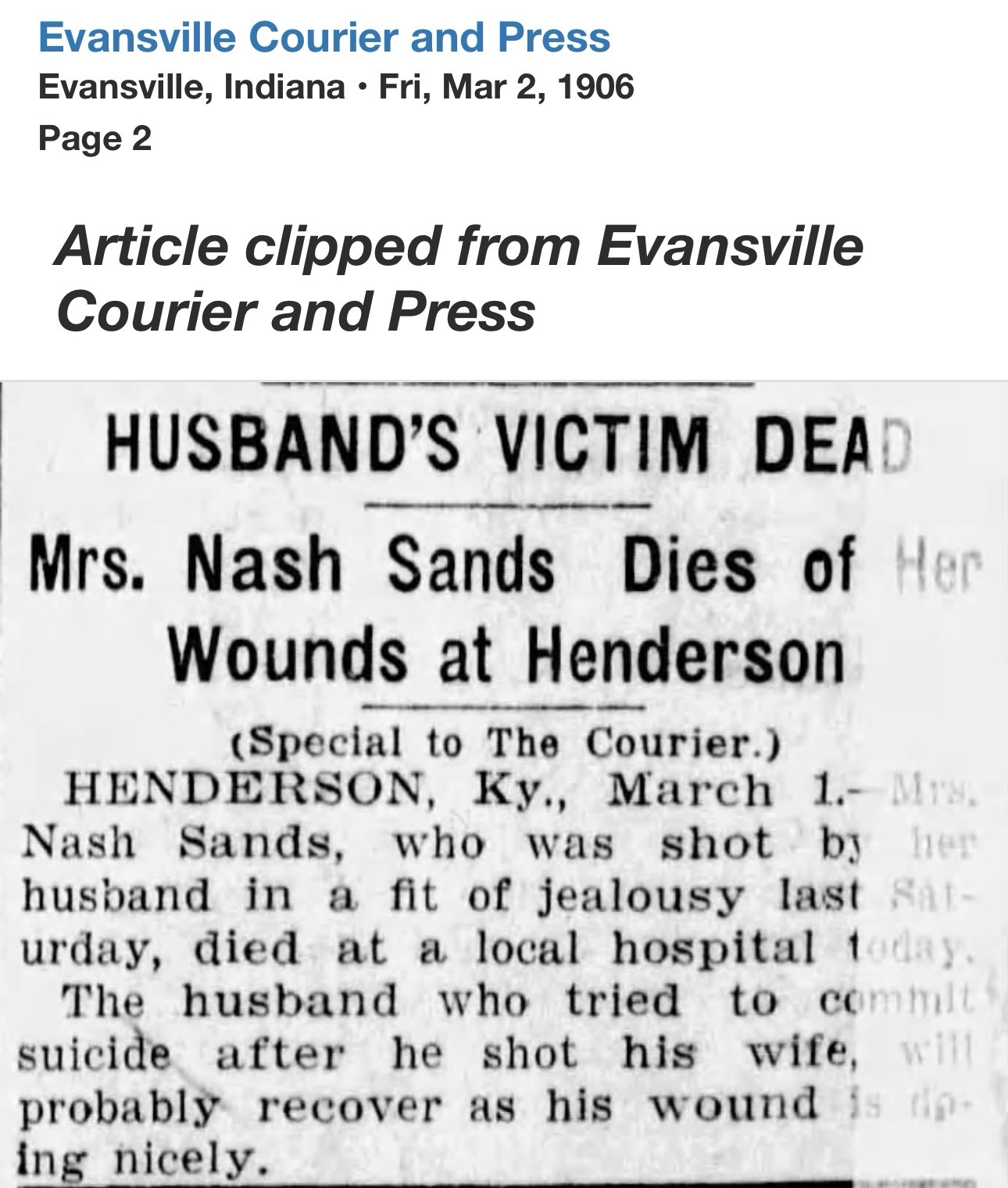
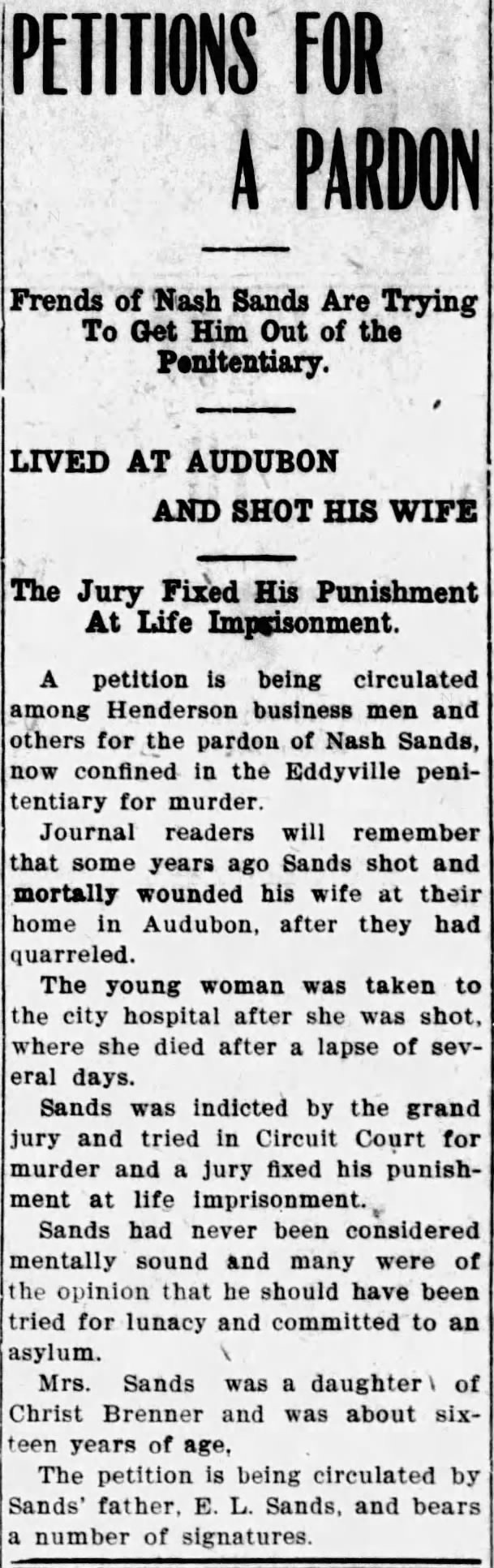
On the morning of February 24, 1906, Nash Sands went to the Farnsworth Brick Company yard near the Belt Line railroad tracks in Henderson. Witnesses later testified that Sands appeared to be waiting for someone. When Jane approached him, she reportedly asked calmly what he wanted. According to testimony presented at the coroner’s inquest, she even invited him inside the house where she was working. Instead, Sands drew a revolver and shot her at close range. Witnesses reported that Jane cried out that she had been shot and collapsed. Moments later, Sands walked a short distance away and turned the revolver on himself, firing a shot that lodged in his shoulder rather than killing him.
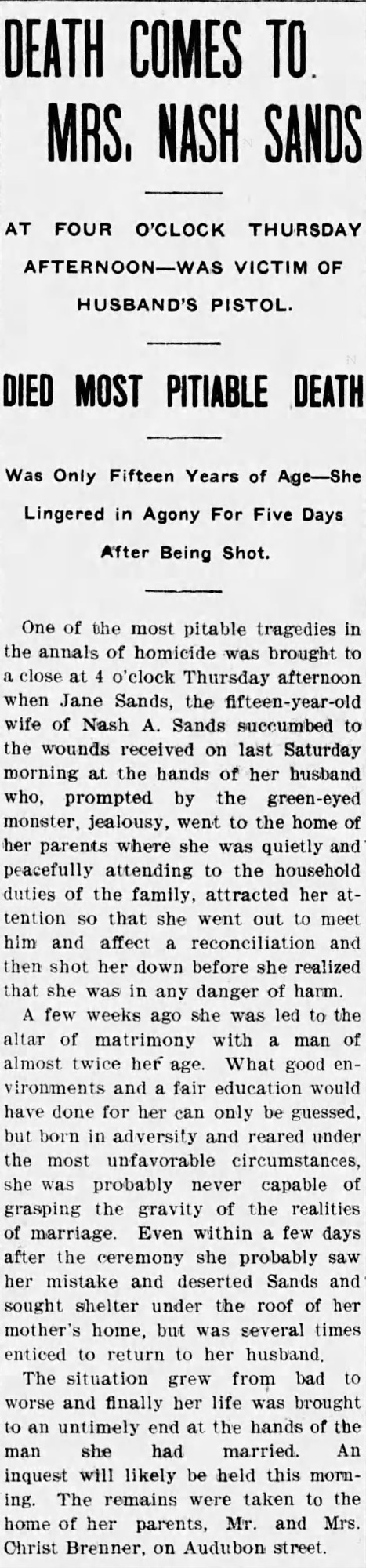
Jane was rushed to a local hospital where doctors attempted to save her life. Jane lingered for five days, suffering from the wound. On March 1, 1906, she died. She had been married only a few months and was still a child. Funeral services were conducted by Rev. J. T. Williams, and she was buried in Fernwood Cemetery in Henderson.
The case quickly moved to trial in Henderson Circuit Court. Witness testimony proved damaging for Sands. Several witnesses stated that Jane had done nothing to provoke the attack and had spoken kindly to her husband just moments before the shooting. Evidence also showed that Sands had borrowed a revolver and purchased cartridges shortly before the confrontation, suggesting that the crime had been planned.
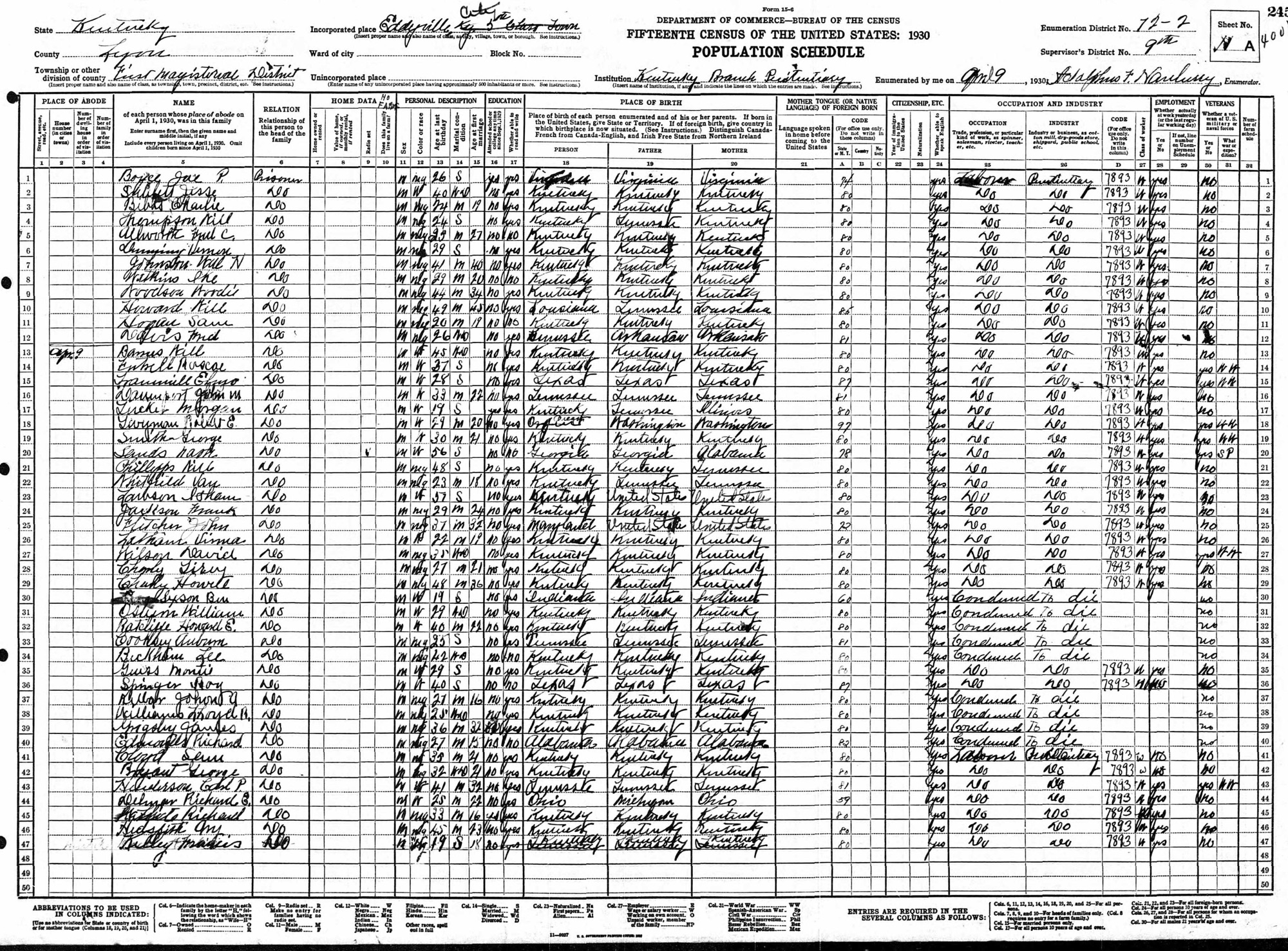
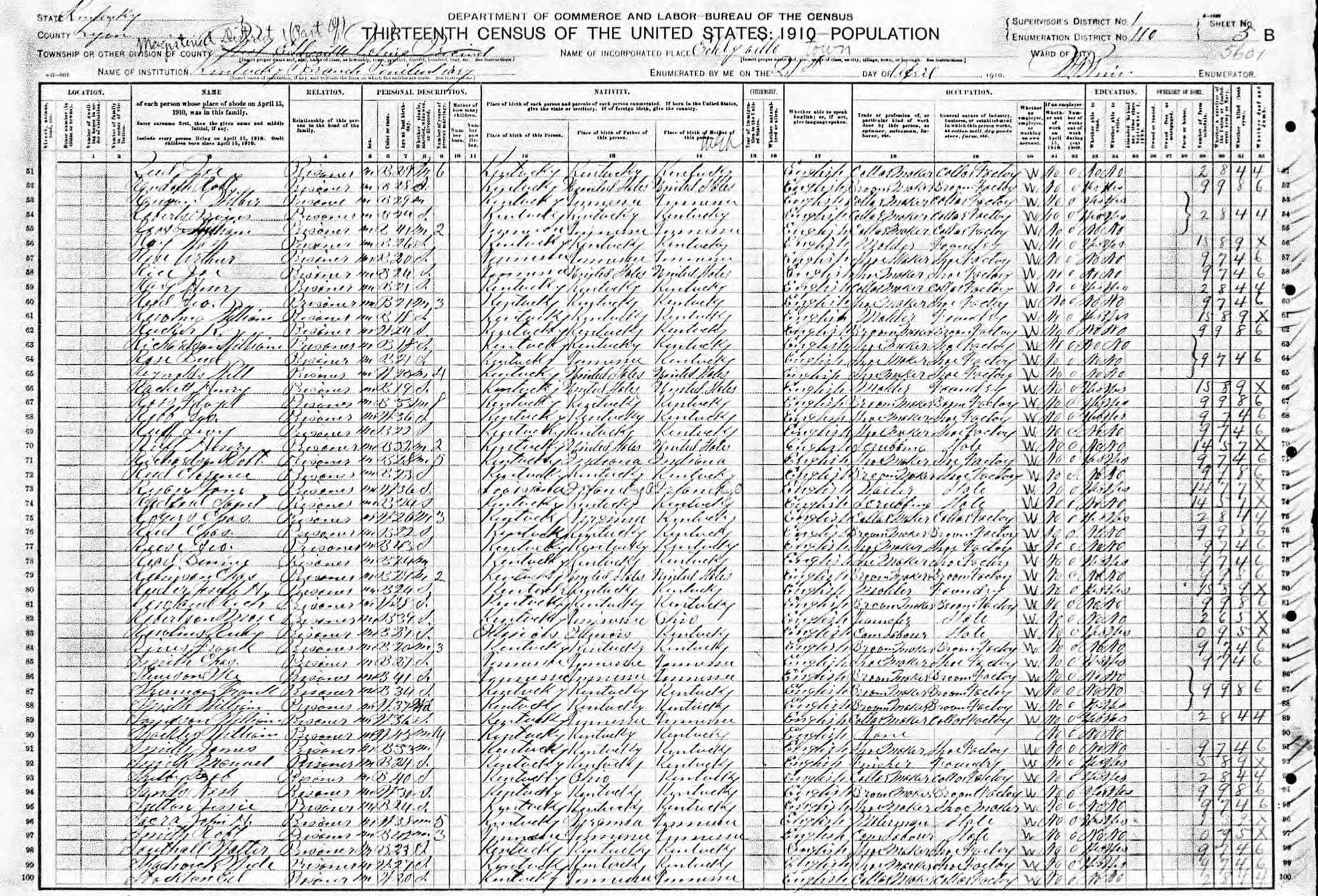
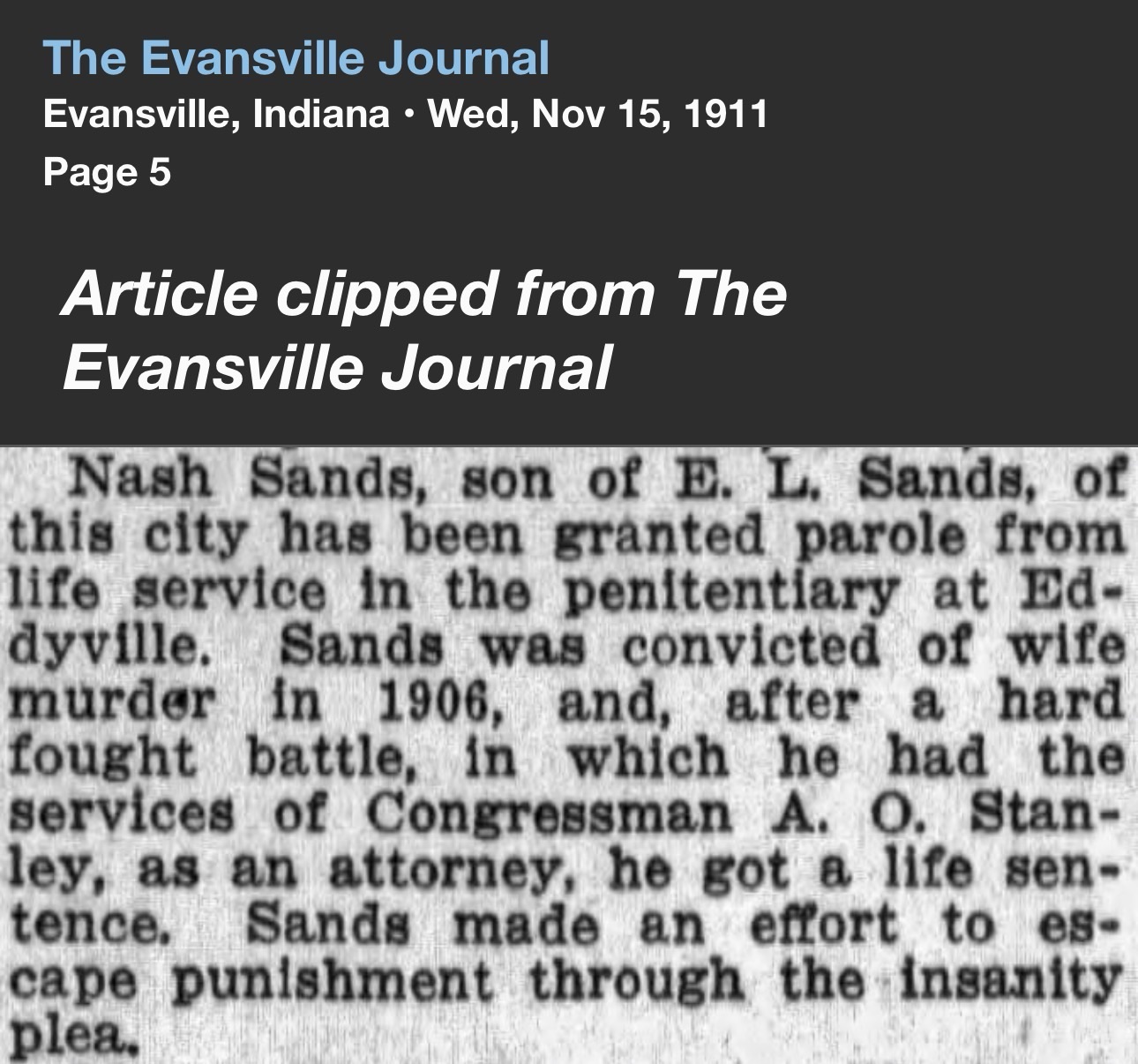
Sands’ defense attempted to argue insanity, claiming jealousy had driven him to a temporary loss of reason. The jury rejected the argument. In September 1906, Nash Sands was found guilty of the willful murder of his wife and sentenced to life imprisonment in the Kentucky State Penitentiary at Eddyville.
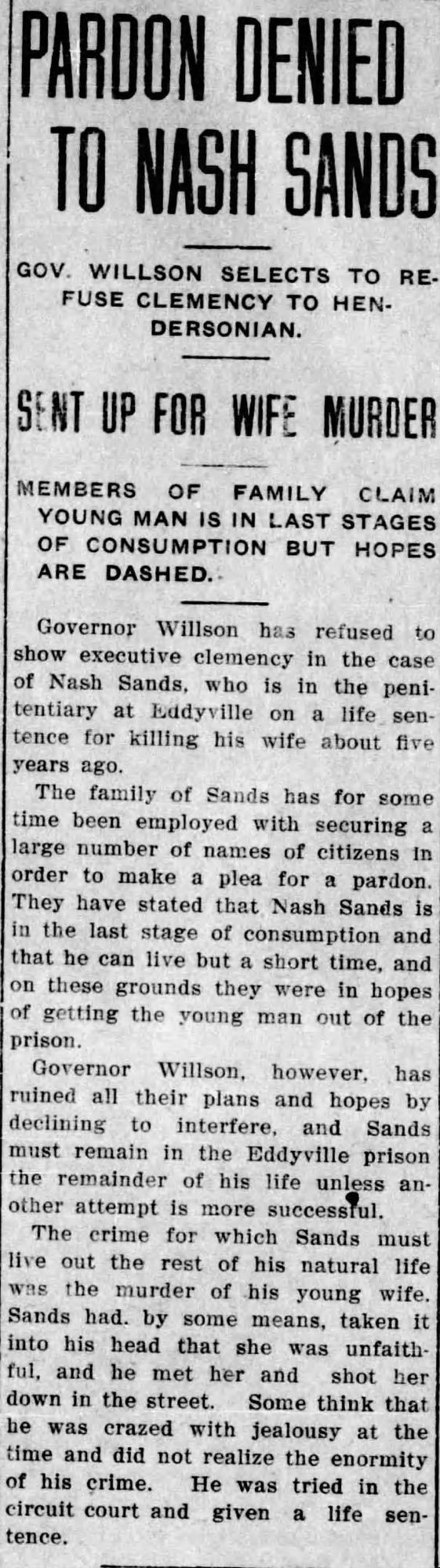
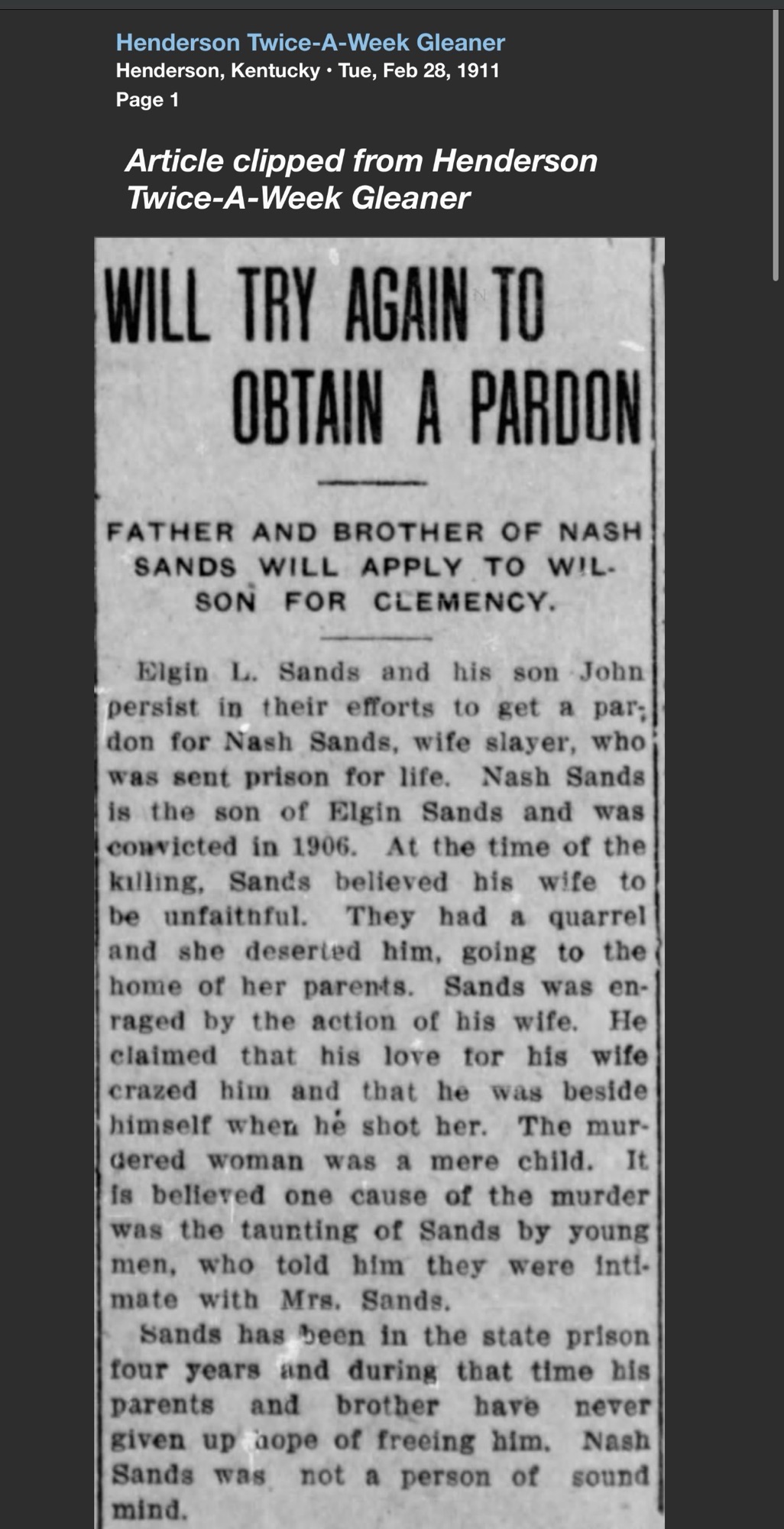
Sands’ family did not give up hope of securing his release. In 1909, relatives petitioned the governor for clemency, arguing that Sands was suffering from consumption (tuberculosis) and was unlikely to live long. Governor Augustus E. Willson refused the request. In 1911, Sands’ father Elgin L. Sands and brother John Sands again sought a pardon, claiming that Nash had been mentally unstable at the time of the killing. Despite these efforts, the life sentence remained in place.
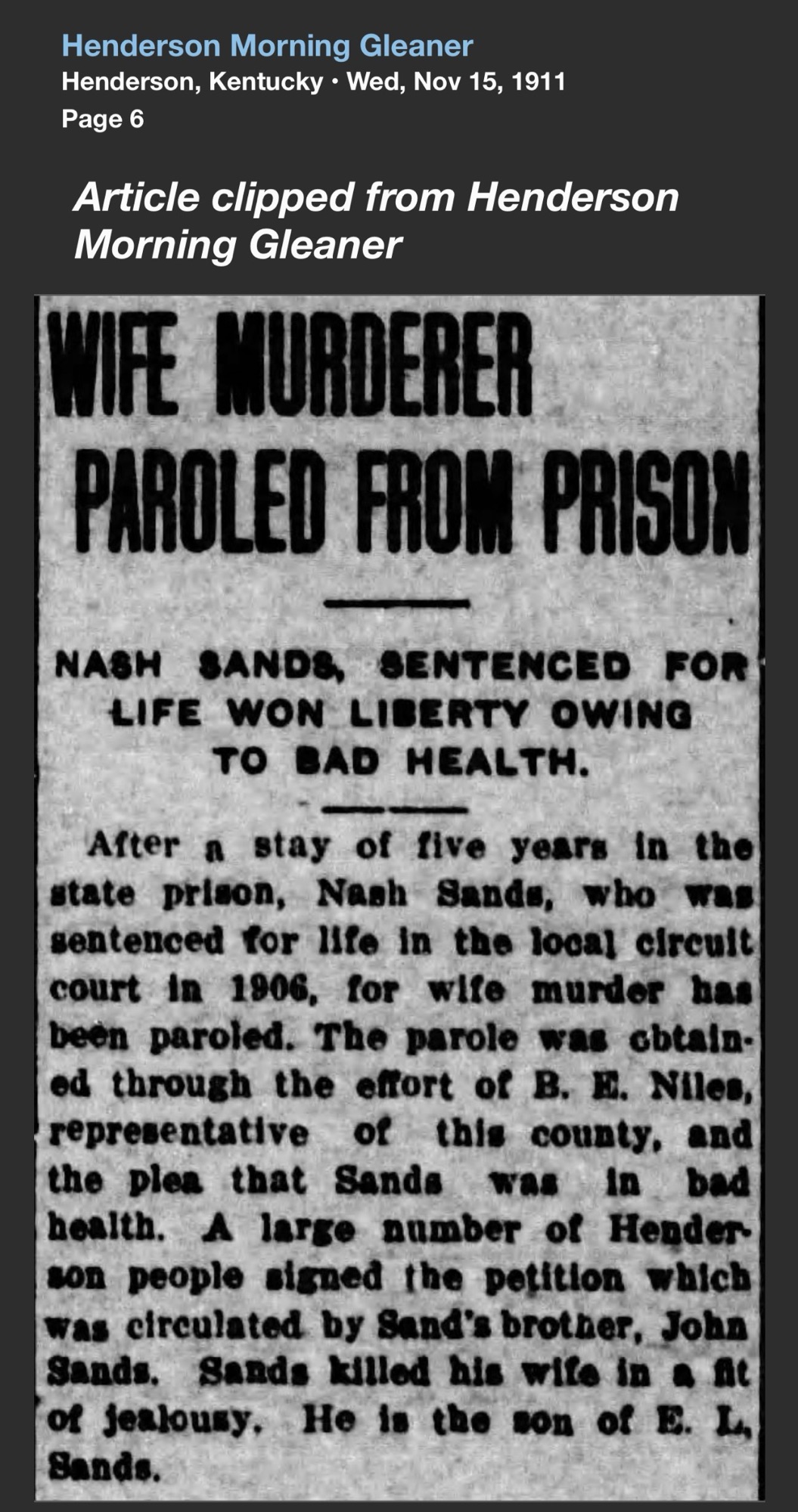
Later in 1911, however, Sands was unexpectedly paroled from the Eddyville penitentiary, reportedly due to poor health. Local newspapers reported that the parole was obtained through the efforts of B. E. Niles, a representative from Henderson County. A petition circulated by Sands’ brother gathered signatures from a number of Henderson residents asking for his release. After approximately five years in prison, Nash Sands returned to freedom.
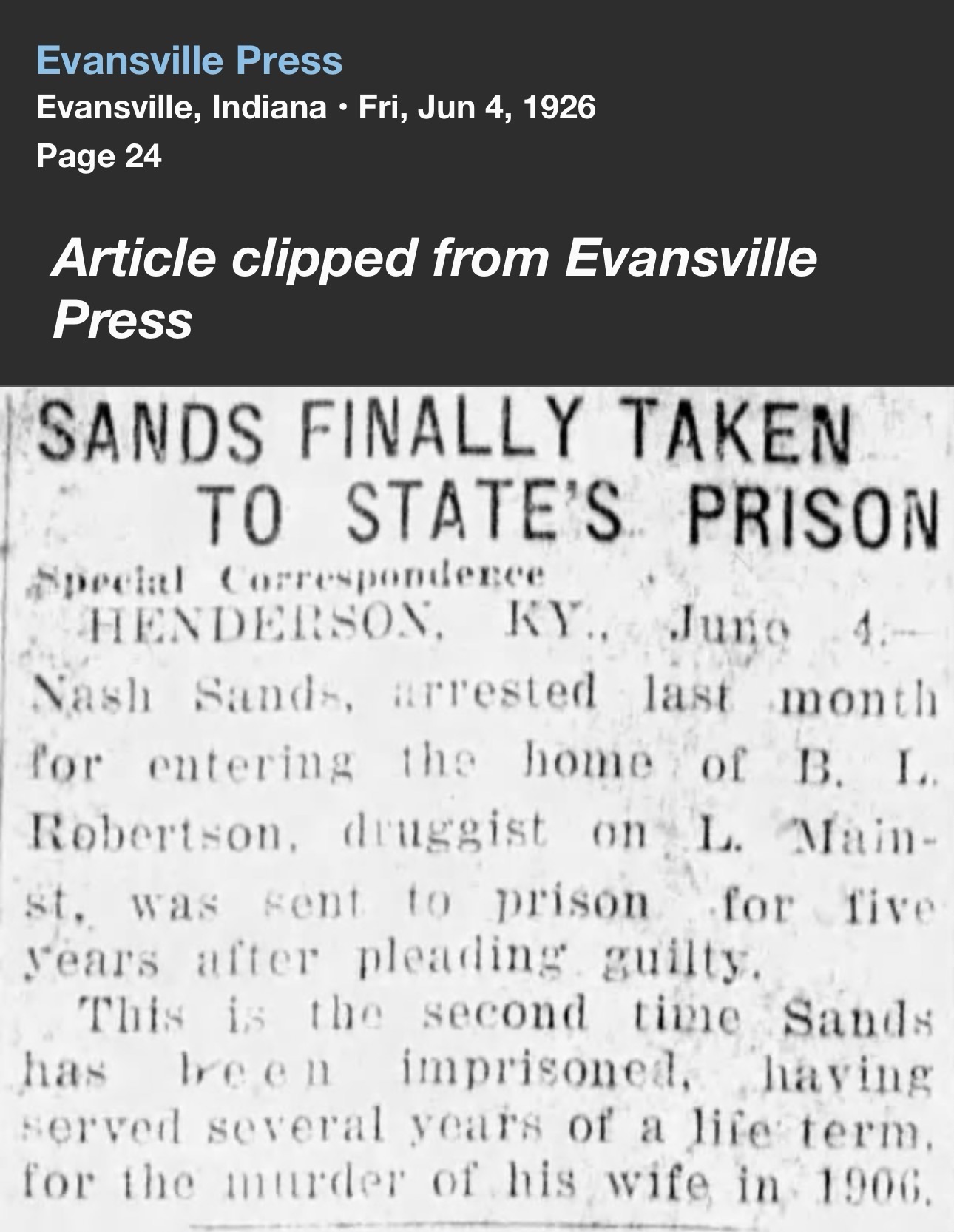
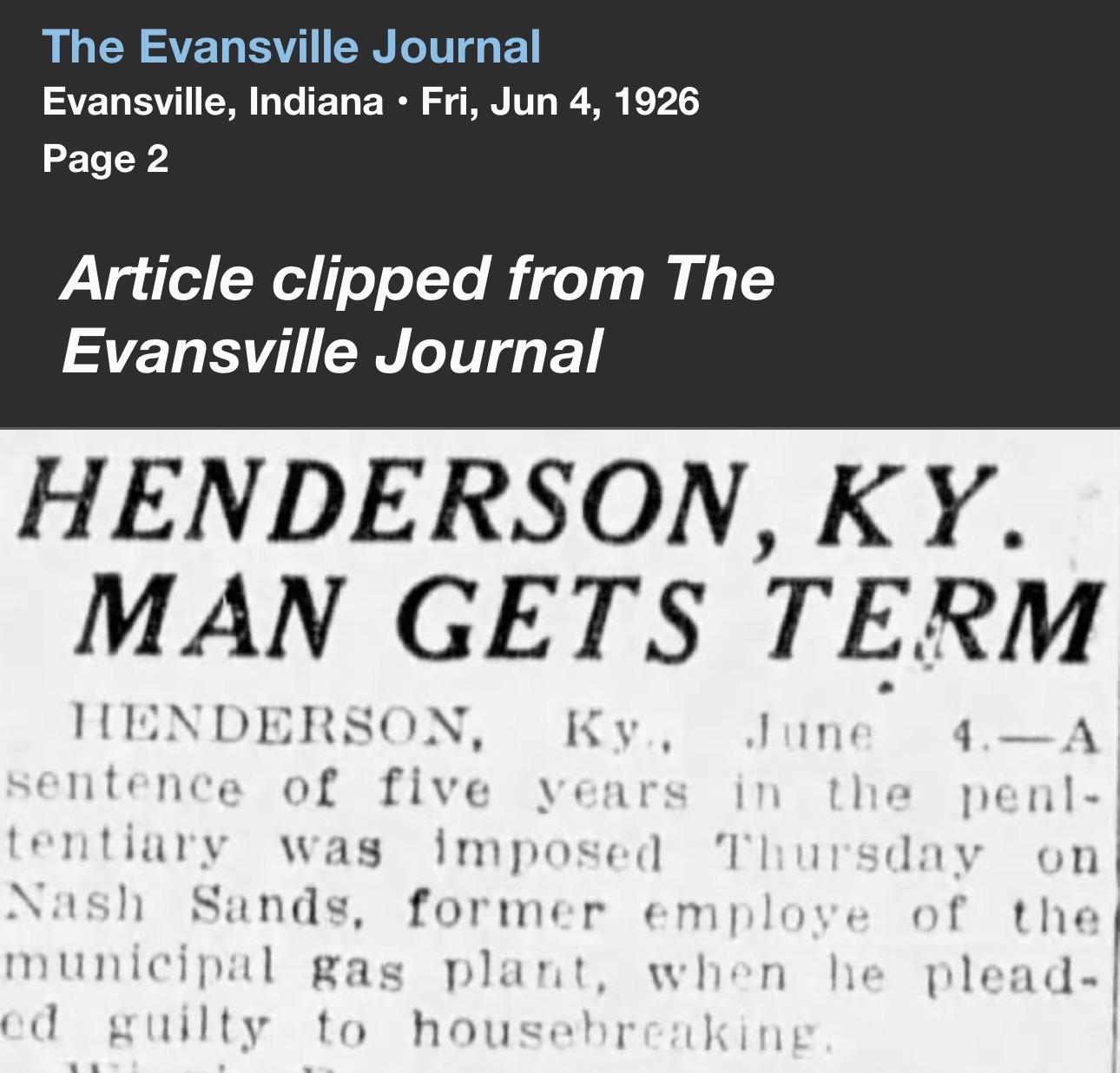
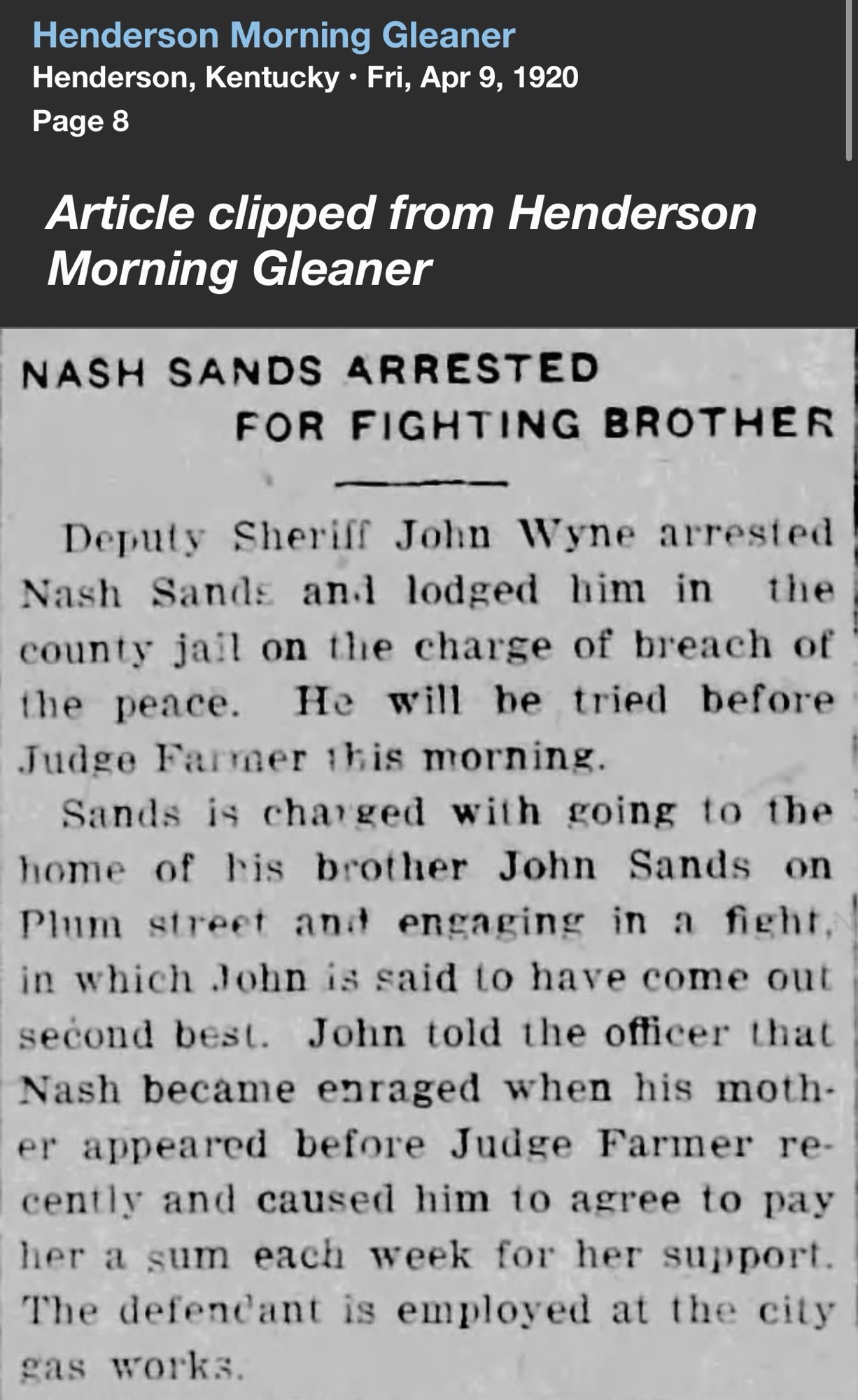
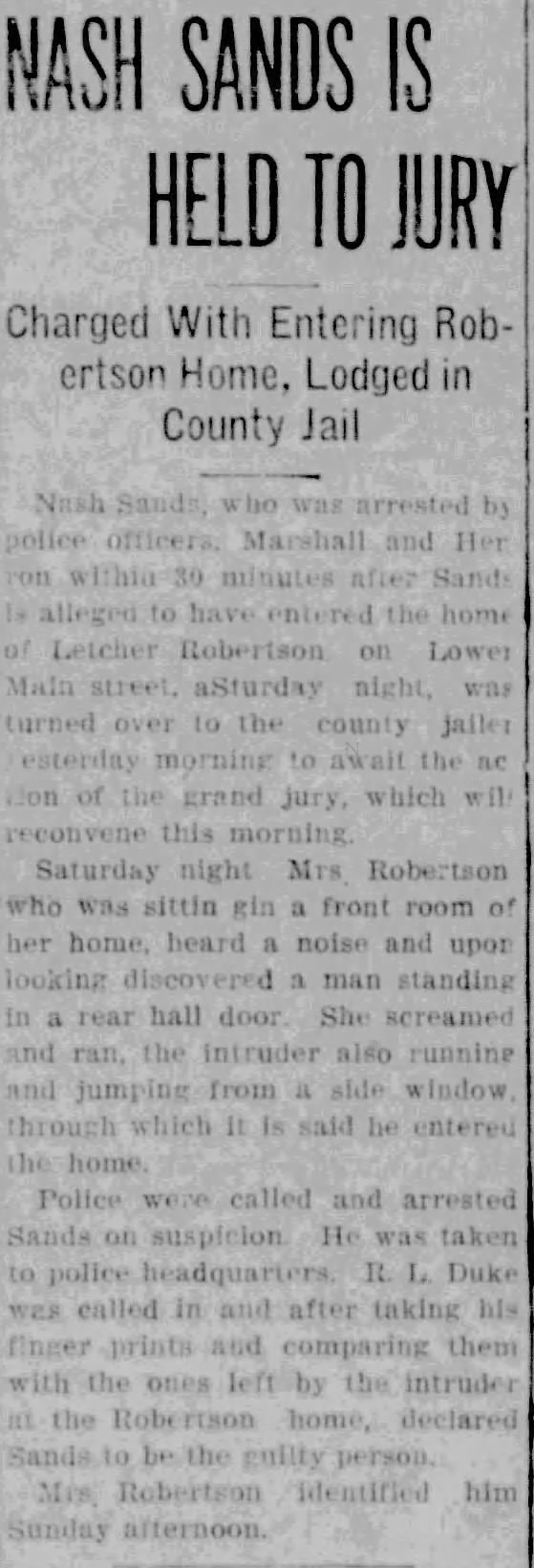
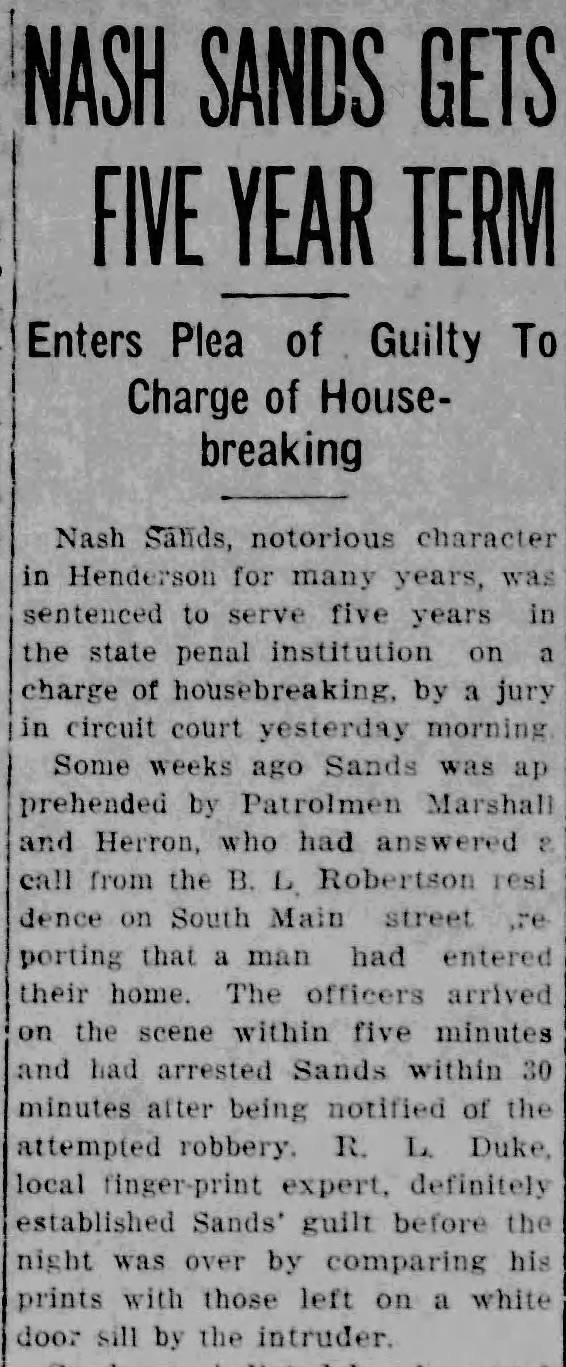
Sands continued to appear in the local news in the years that followed. In 1920, he was arrested after a dispute with his brother John Sands at a home on Plum Street. The incident resulted in a charge of breach of the peace. At the time, Sands was reported to be working at the city gas works. More serious trouble followed several years later. In 1926, Sands was arrested after allegedly breaking into the home of B. L. Robertson, a druggist on South Main Street. Police arrested him within thirty minutes of the incident, and fingerprint evidence reportedly linked him to the crime.
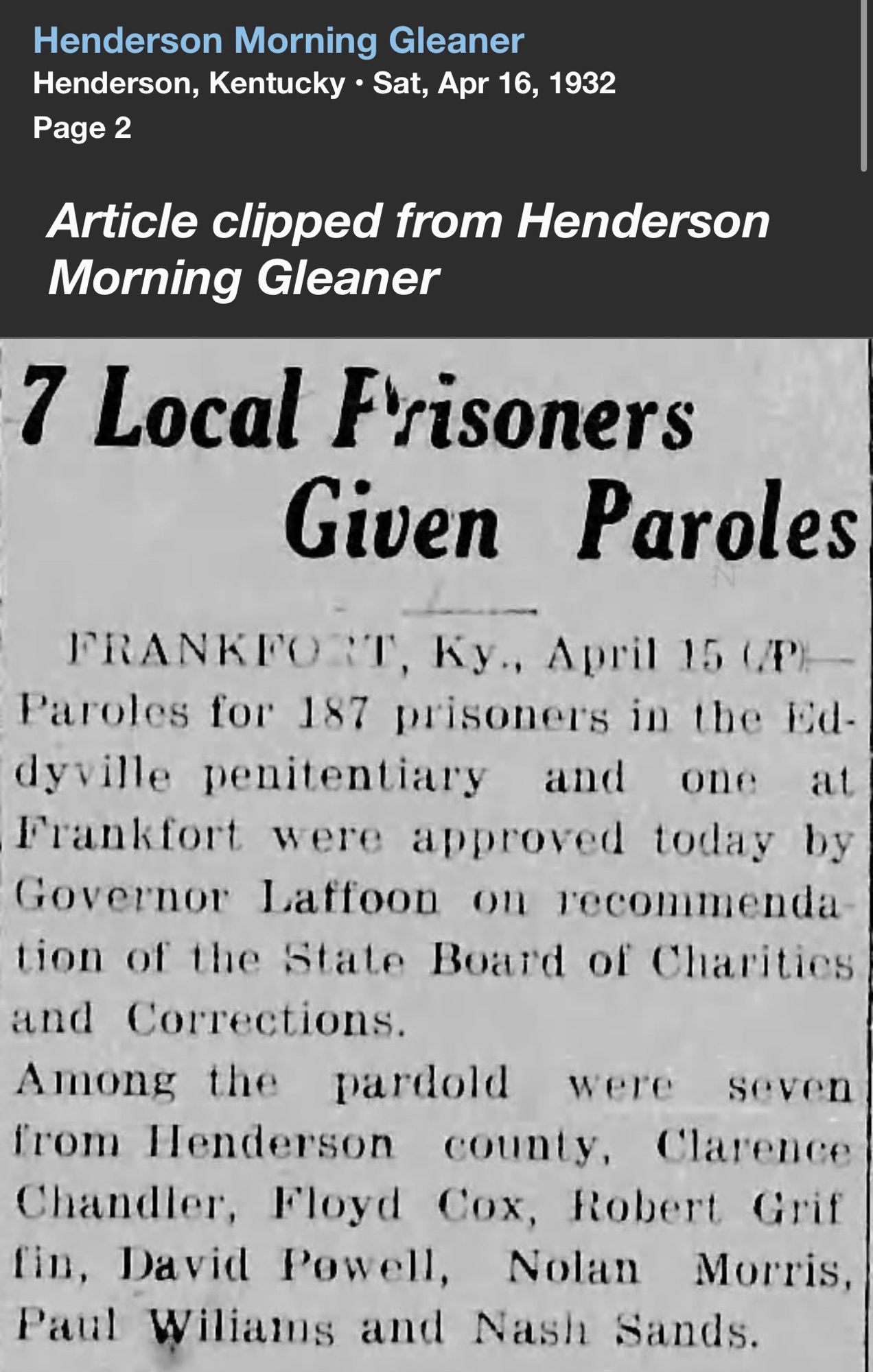
Sands pleaded guilty and was sentenced to five years in the state penitentiary. Newspapers referred to him as a “notorious character in Henderson for many years.” In 1932, state officials announced a large group of paroles from Kentucky penitentiaries. Among the Henderson County prisoners granted release was Nash Sands.
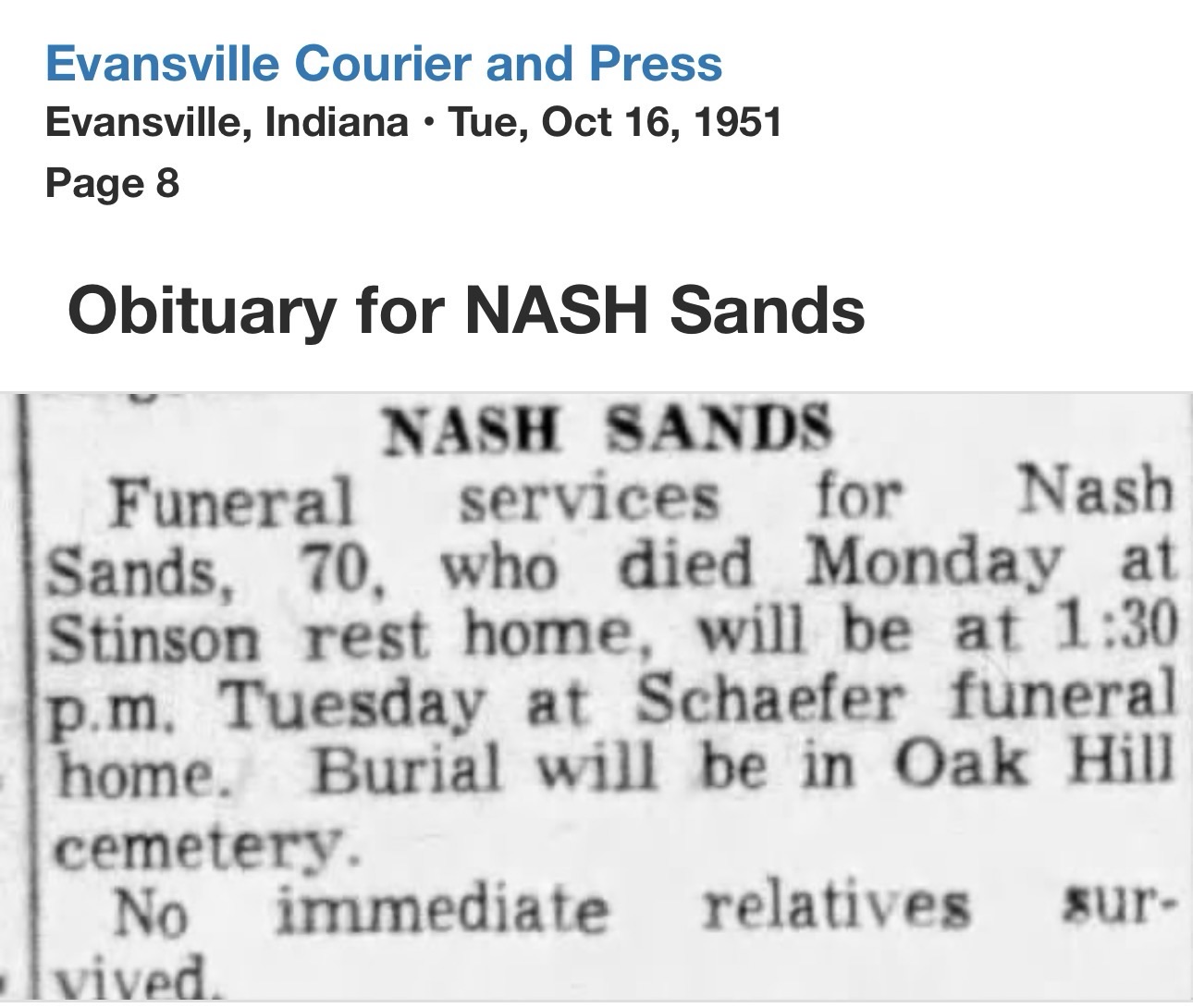
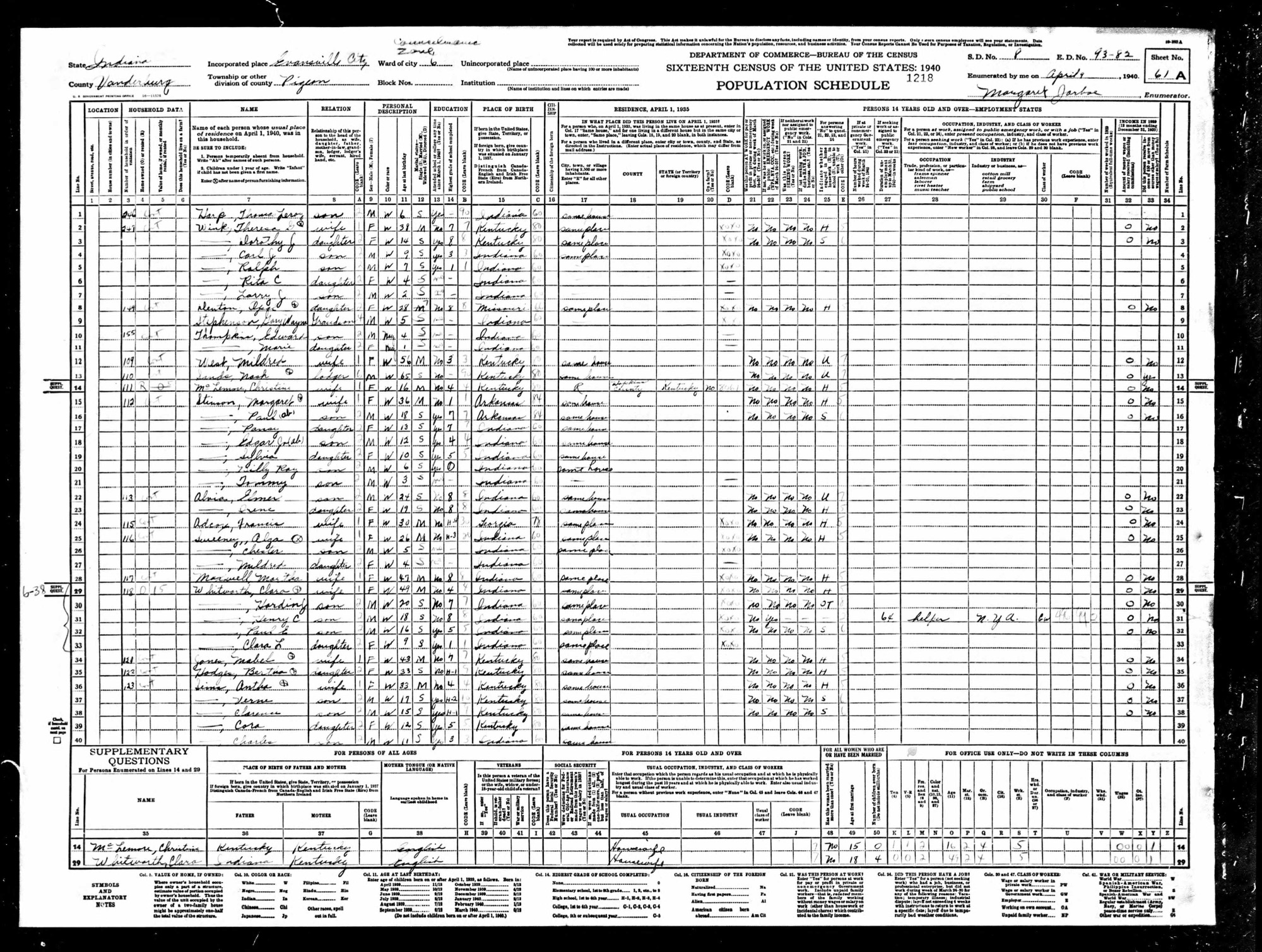
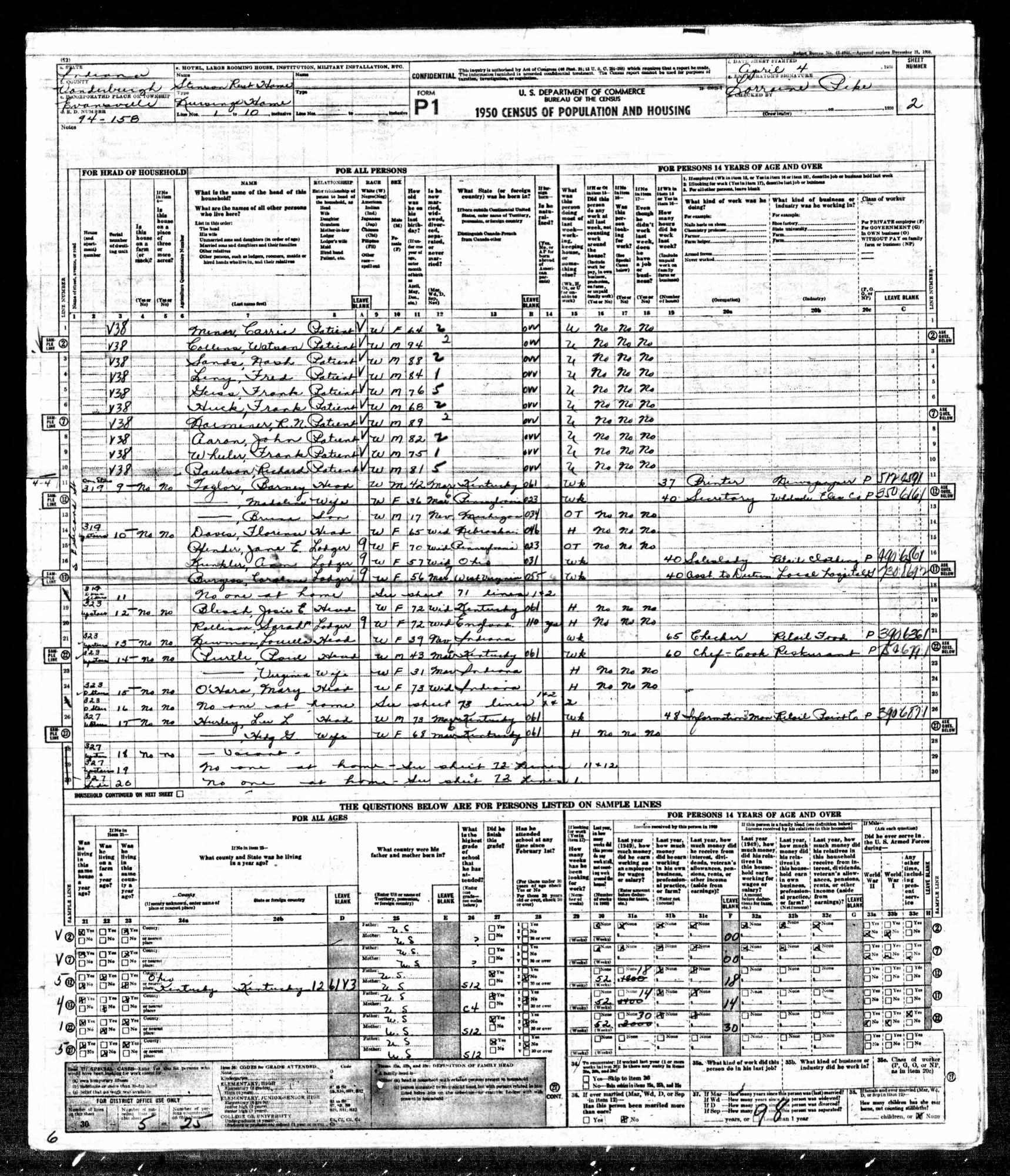
Despite the notoriety of his past, Sands lived several more decades. Later records place him living in Evansville, Indiana. Nash Sands died on October 15, 1951, at age seventy. He was buried in Oak Hill Cemetery in Evansville.
The story of Nash Sands and Jane Brenner Sands is one of the darker chapters in Henderson’s early twentieth-century history.
Jane was only fifteen years old when she died – her life cut short by jealousy and violence. More than a century later, the case remains a stark reminder of how quickly tragedy could unfold and how the echoes of such events could follow a community for decades.