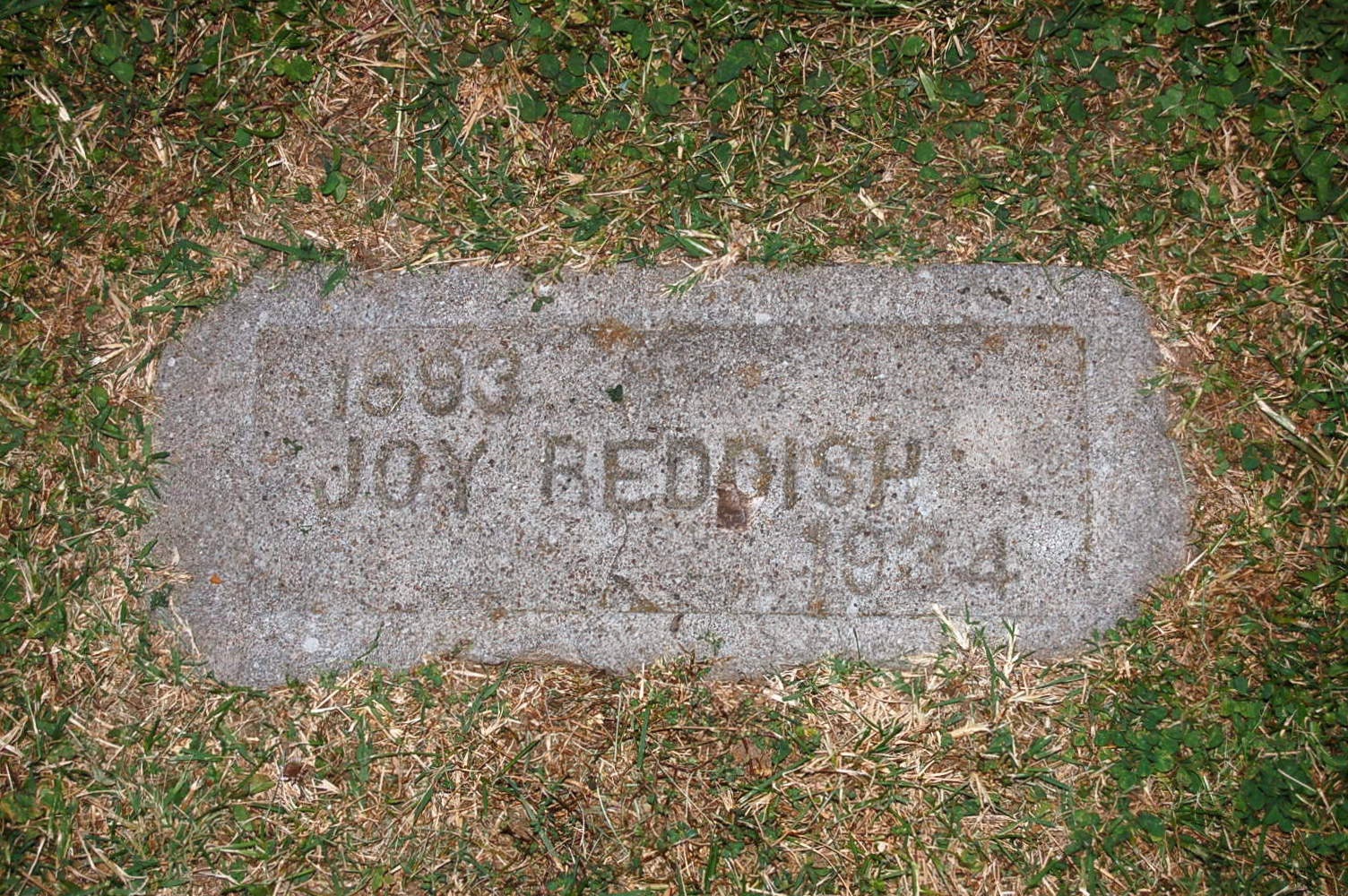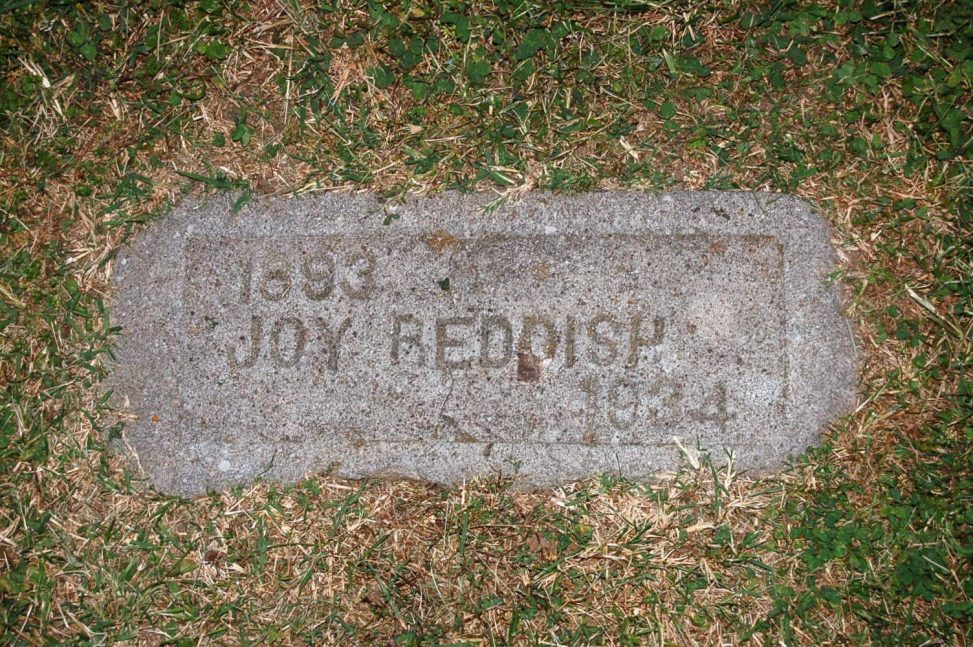
Joy Reddish (1893-1934)
A River Man’s Life in an Unforgiving Era
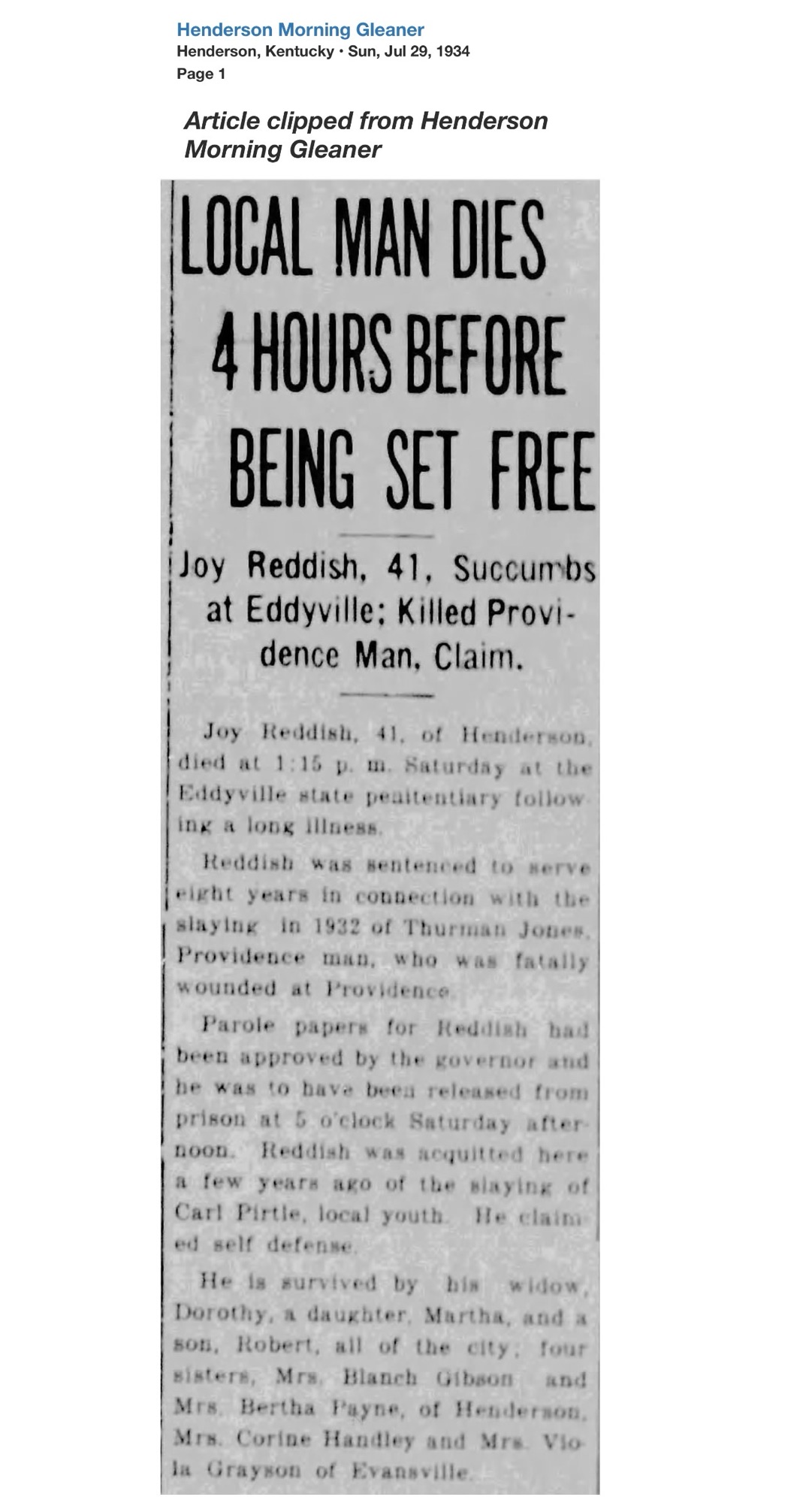
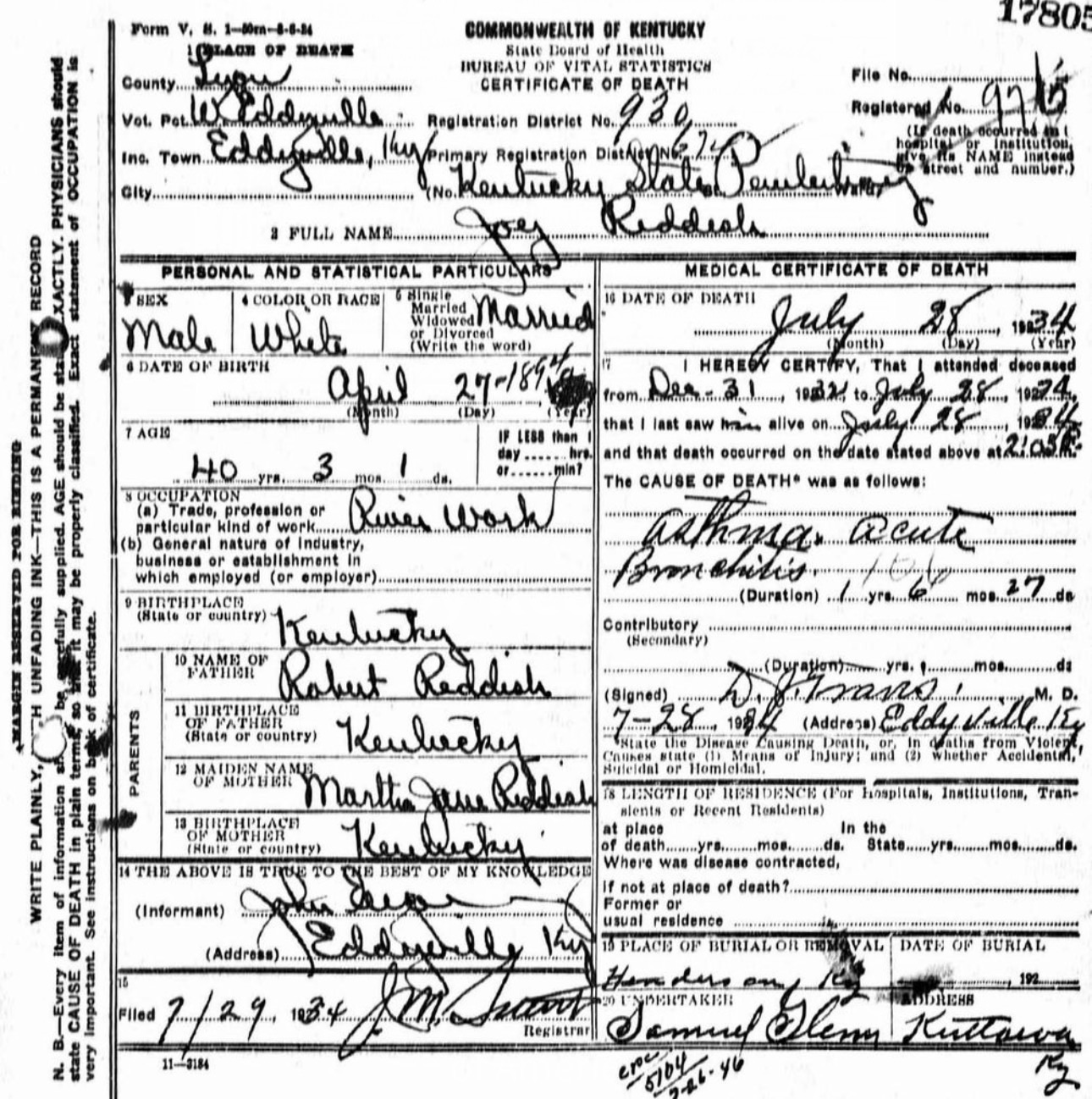
On July 28, 1934, in a cell at the Kentucky State Penitentiary in Eddyville, Joy Reddish died at 1:15 in the afternoon.
Parole papers had been approved. He was scheduled to walk free at 5:00 p.m. Freedom came four hours too late.
His life, lived largely along the Ohio River, had been marked by labor, conflict, two homicide trials, and a prison sentence that he would not outlive.
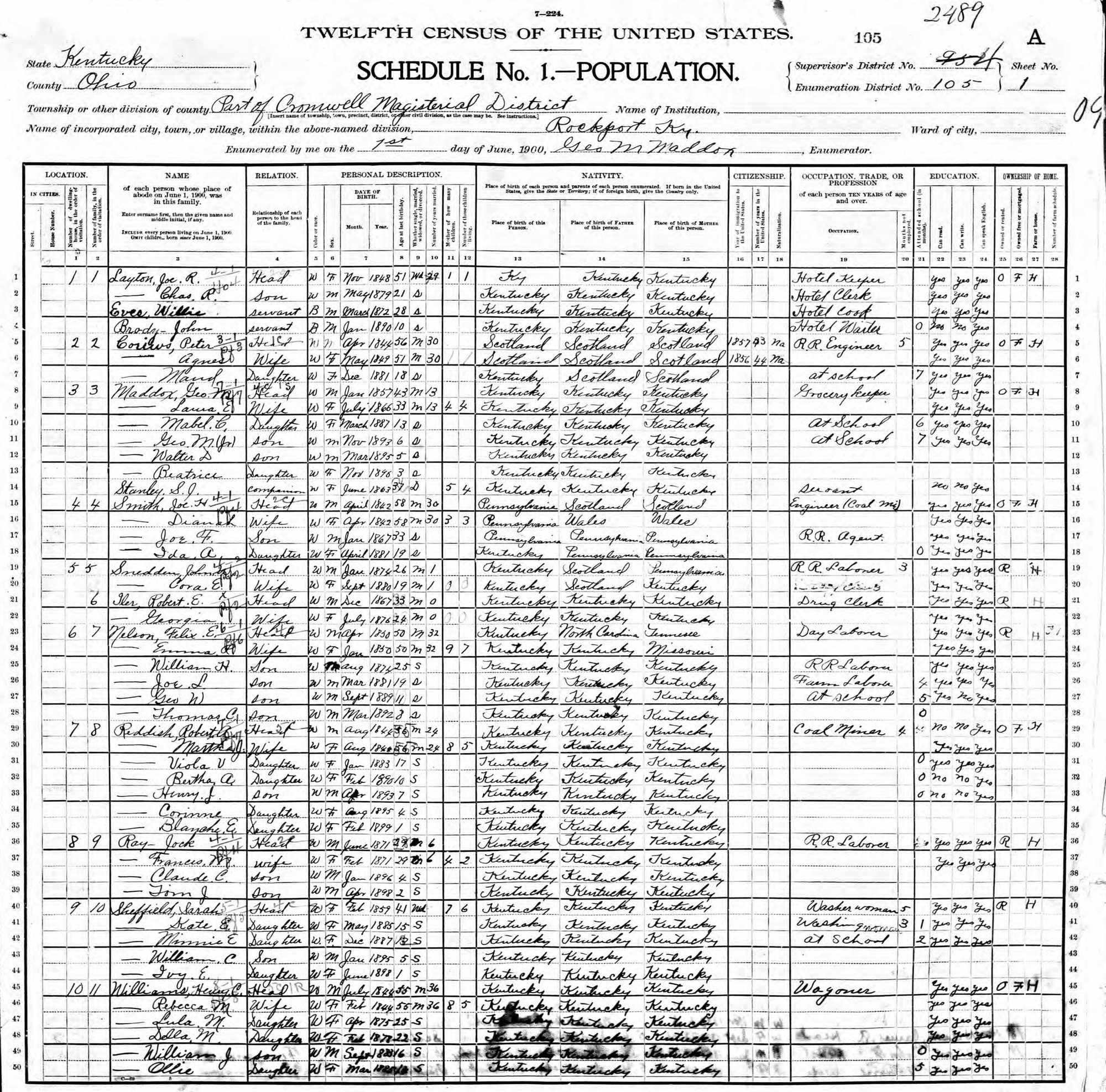
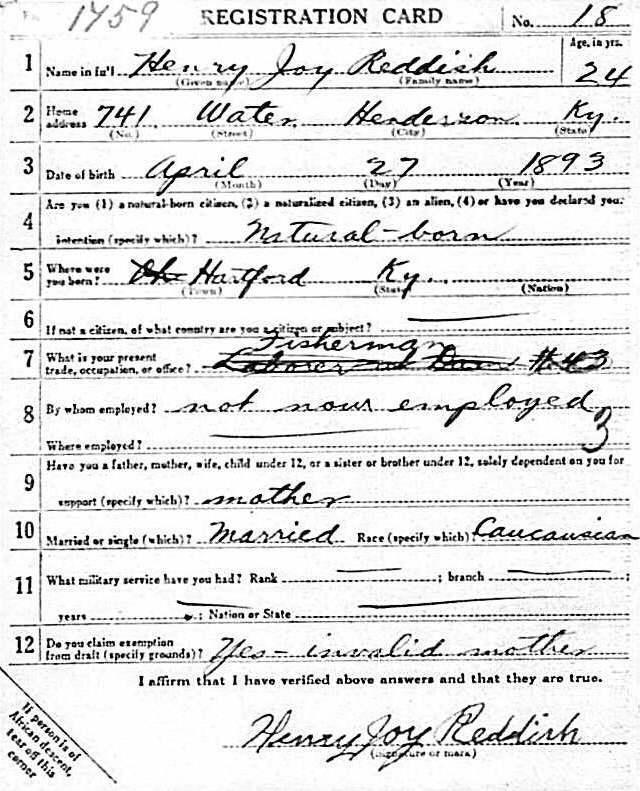
Joy Reddish was born April 27, 1893, in Kentucky, the son of Robert Reddish and Martha Jane Reddish. His father was a coal miner, dangerous work common to western Kentucky families at the turn of the century.
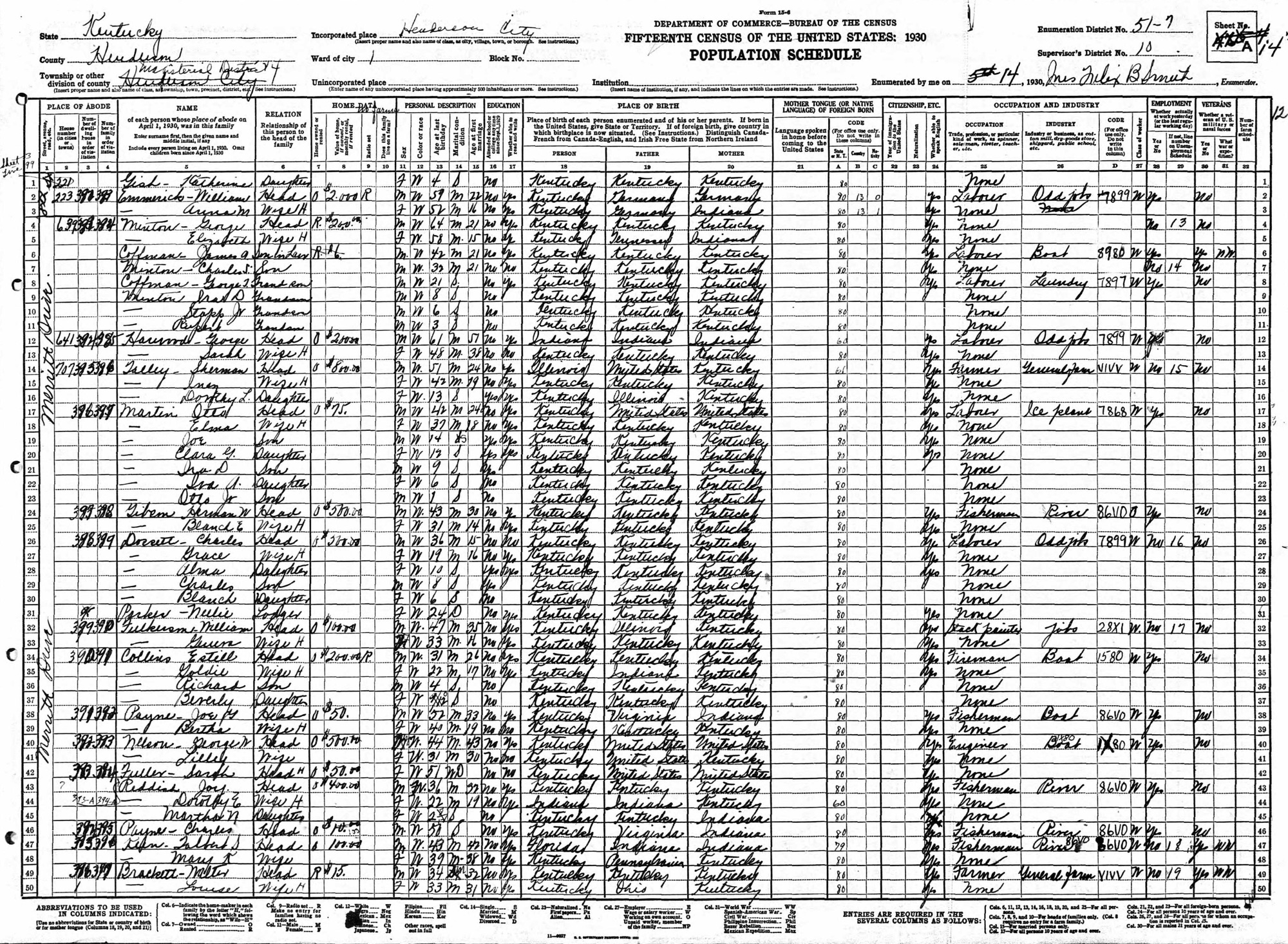
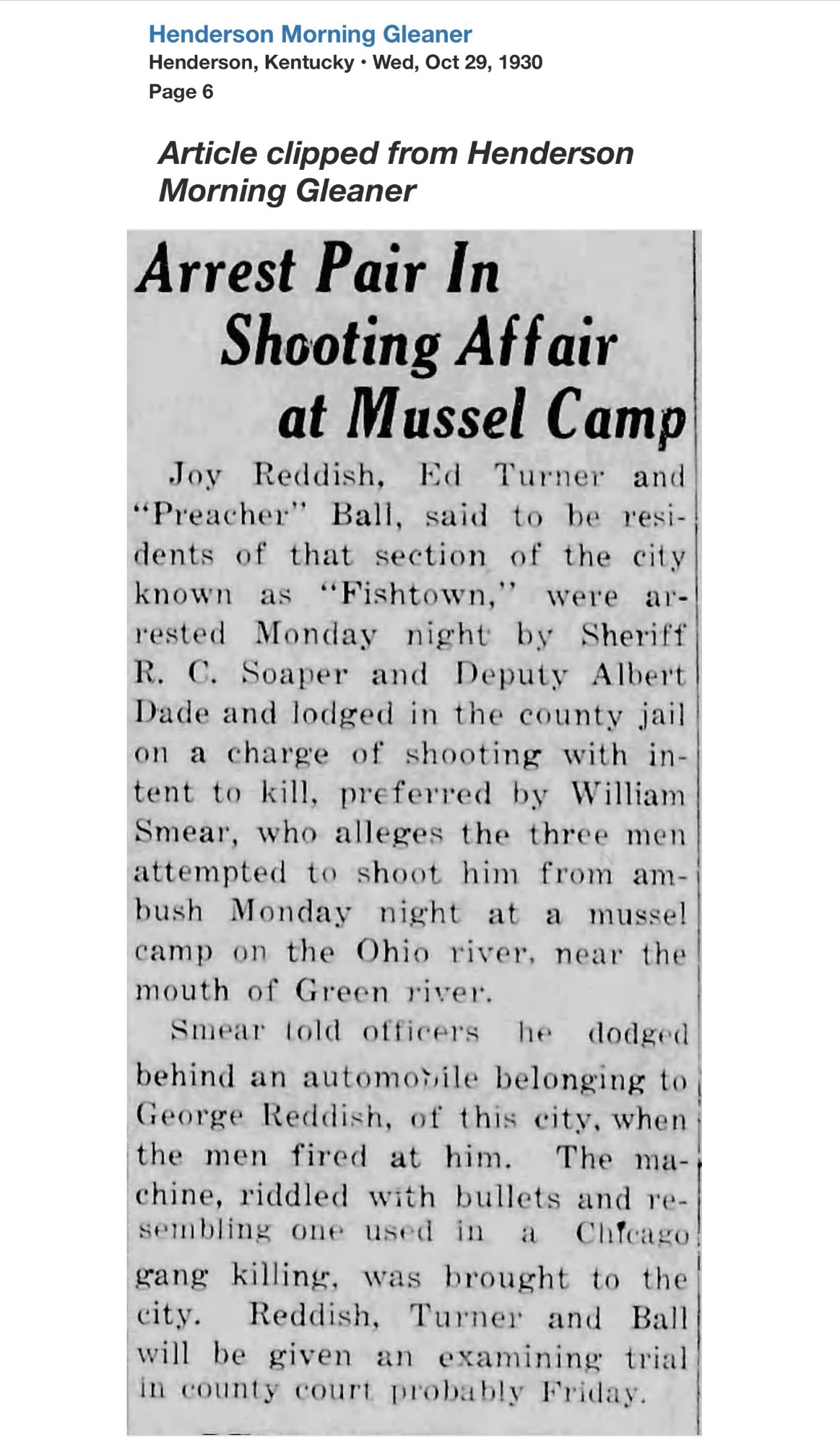
By adulthood, Joy’s life centered around Henderson’s river district. His World War I draft registration card lists him at 741 Water Street, working in fishing – Boat No. 3. That address placed him squarely in the river settlement known as Fishtown, a rough, working-class strip beneath the riverbank near Merritt Drive.
The river was both employer and environment. Fishermen, sand and gravel laborers, mussel hunters, scrap collectors, and coal handlers made their living there. It was physical, seasonal work. Money was inconsistent. Disputes were common. Joy Reddish fit that world.
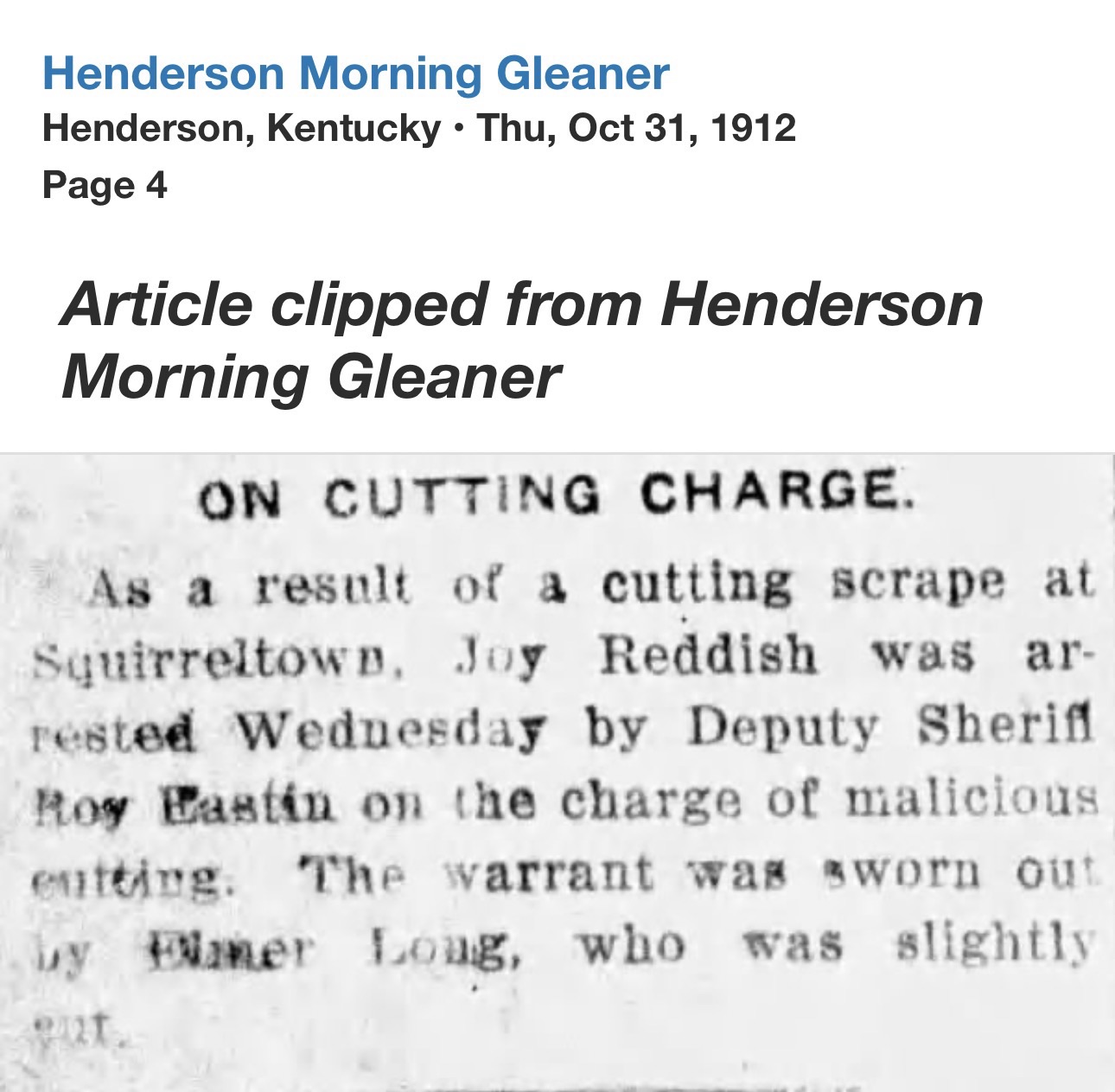
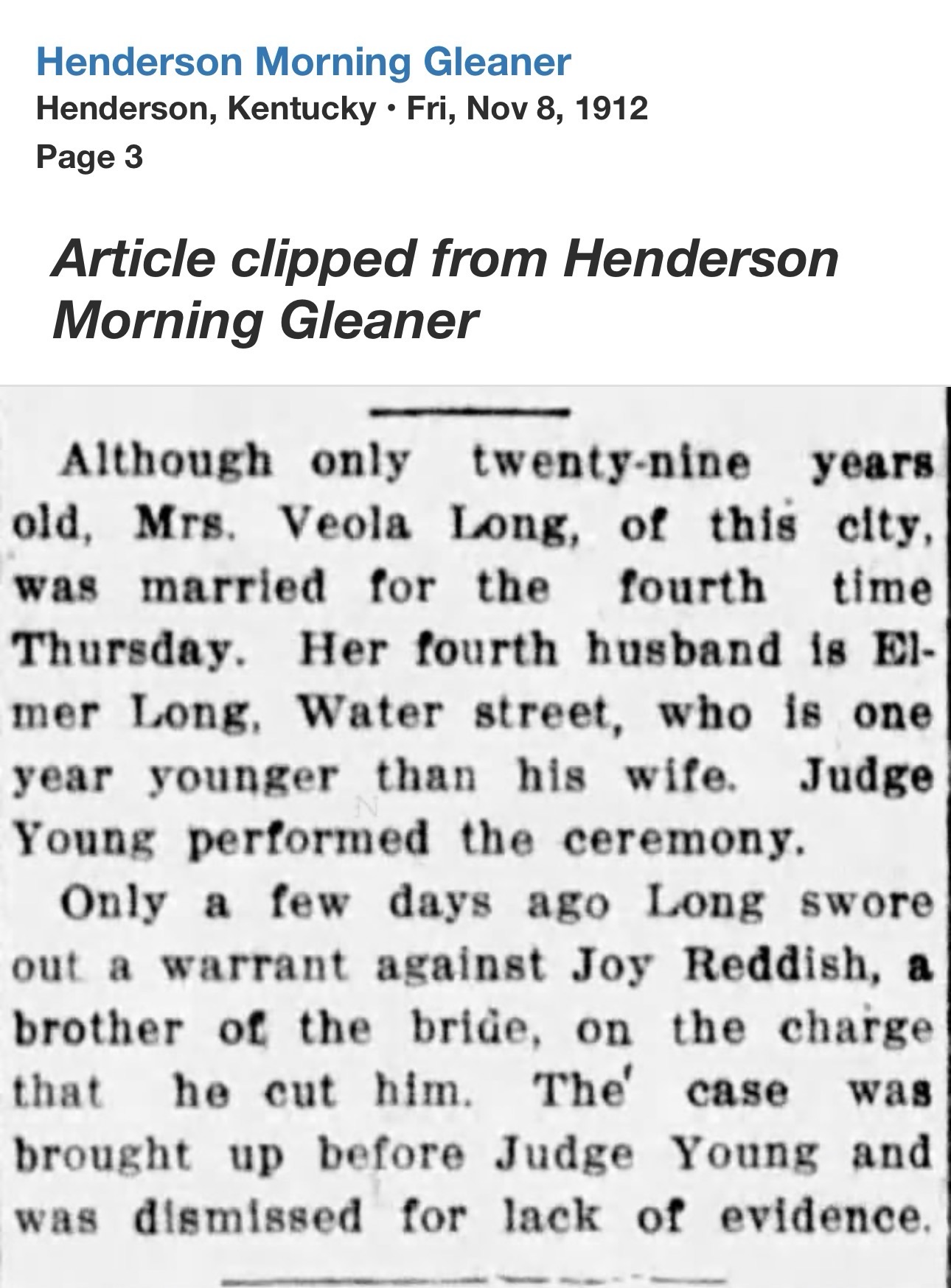
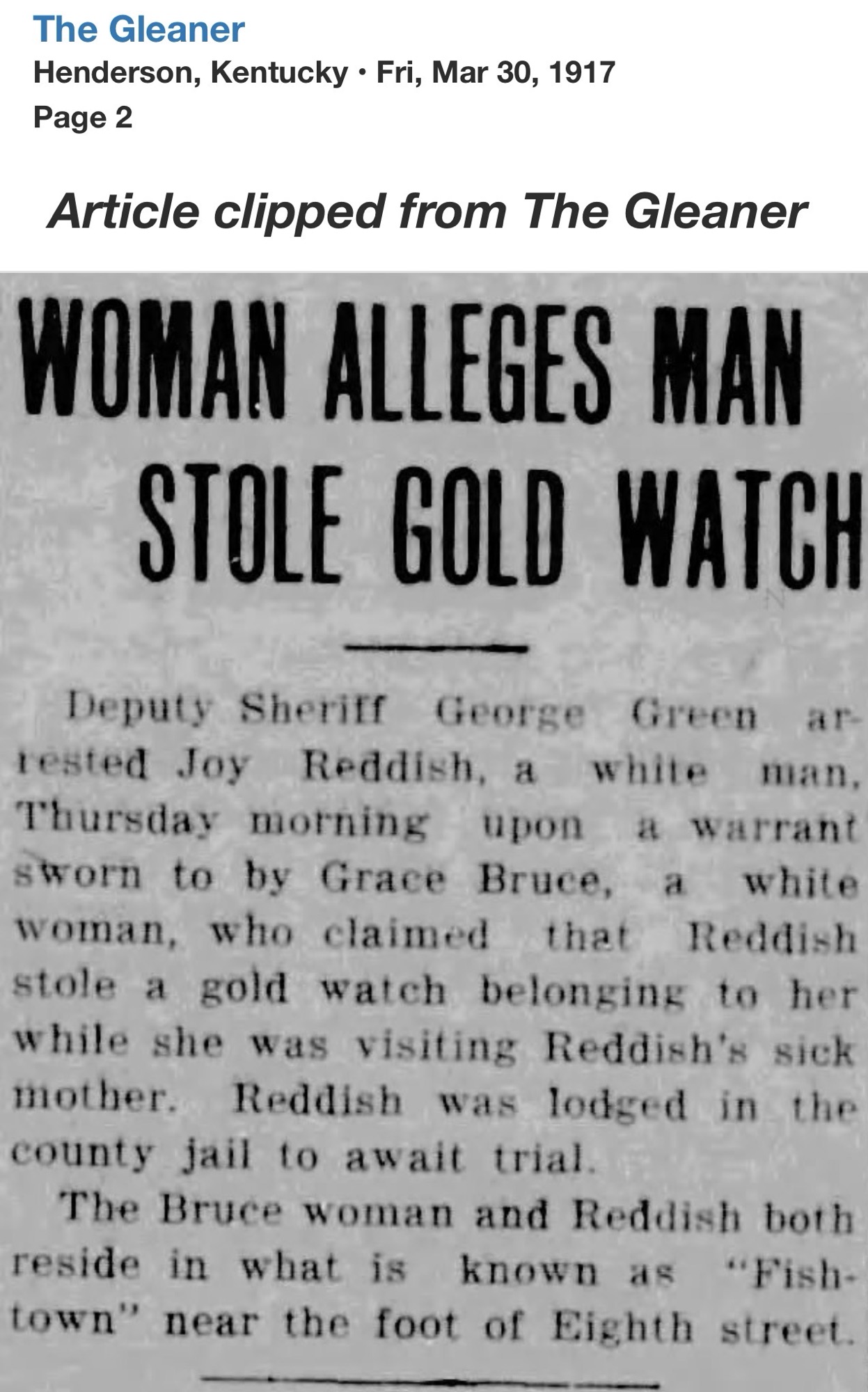
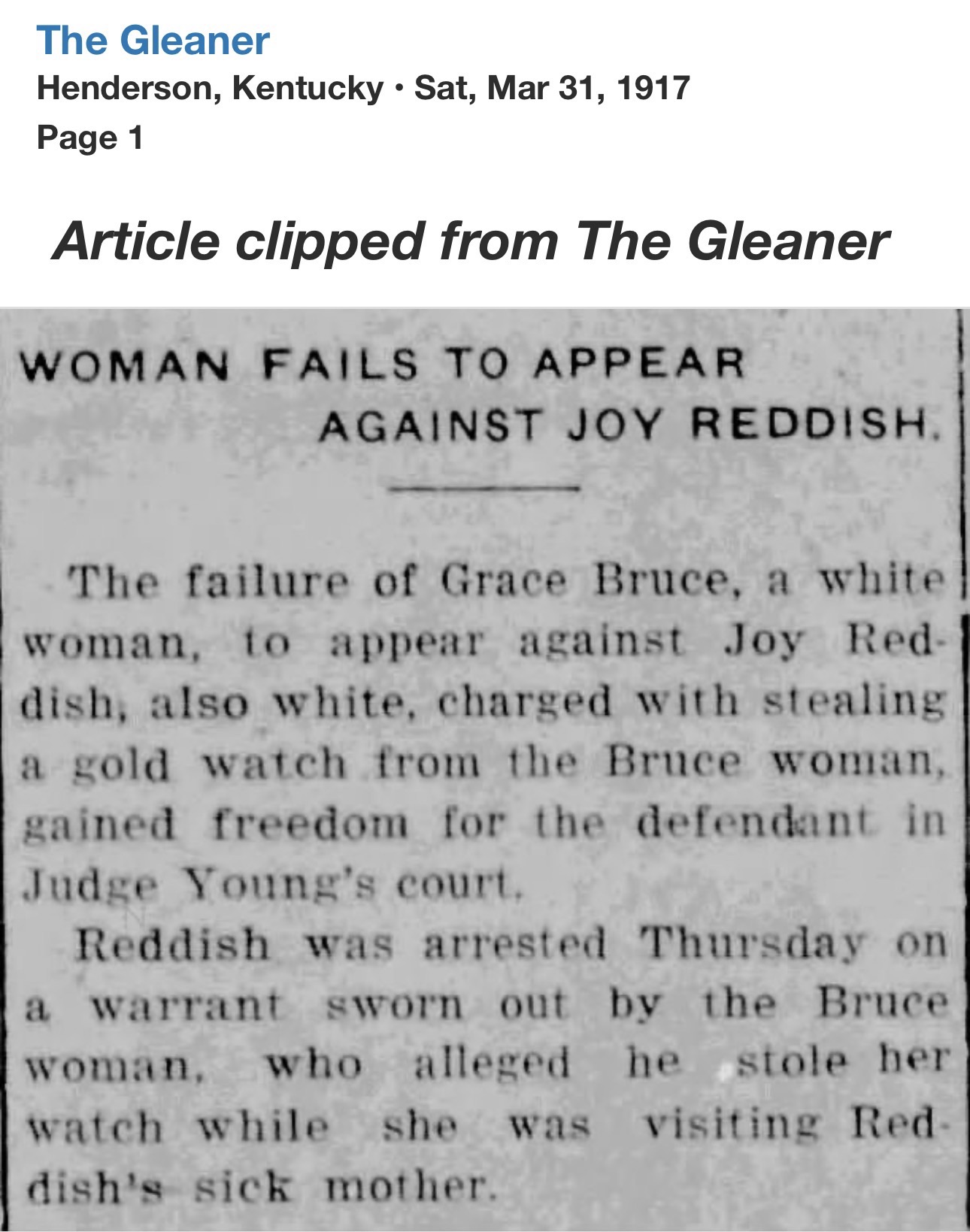
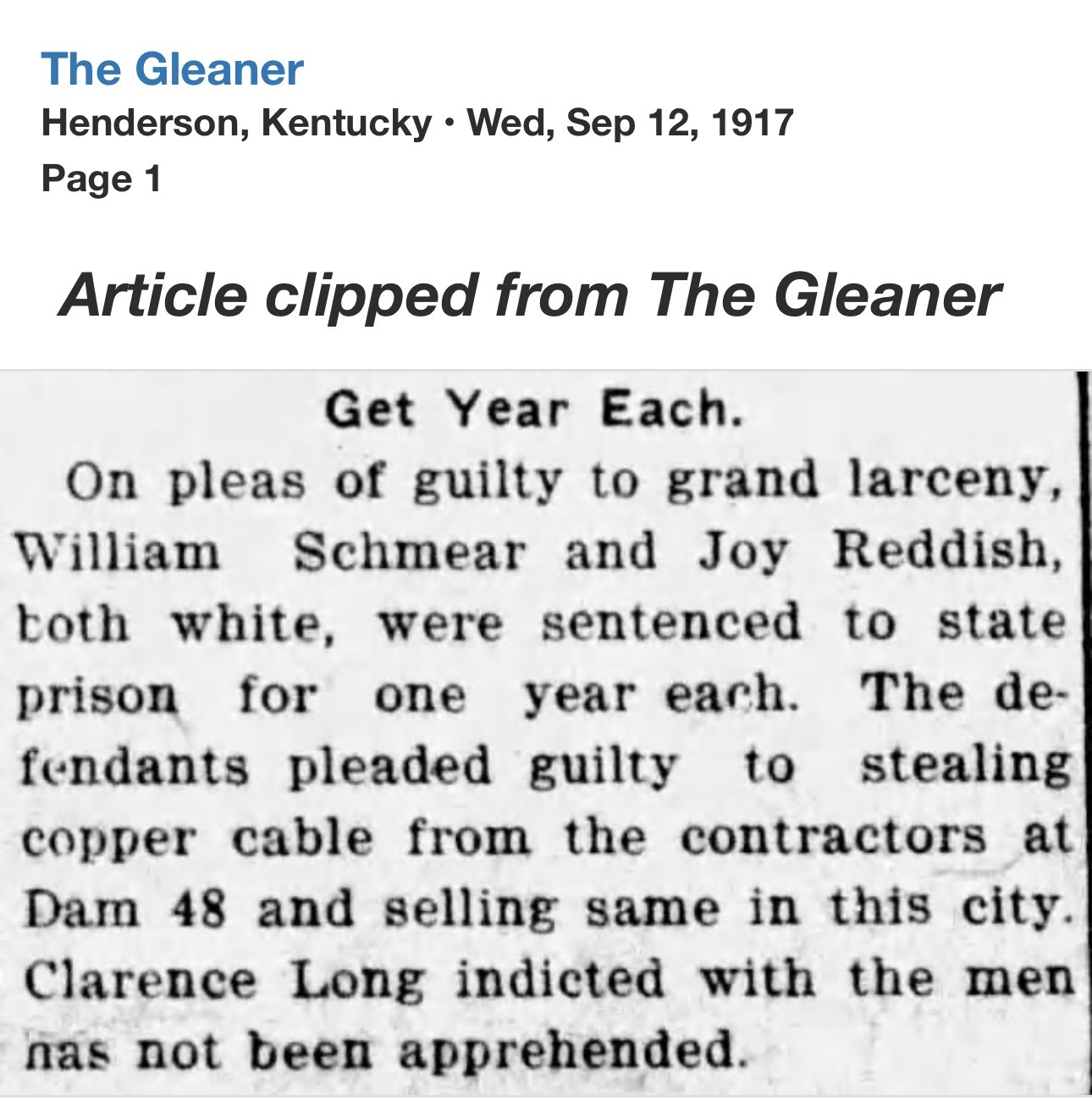
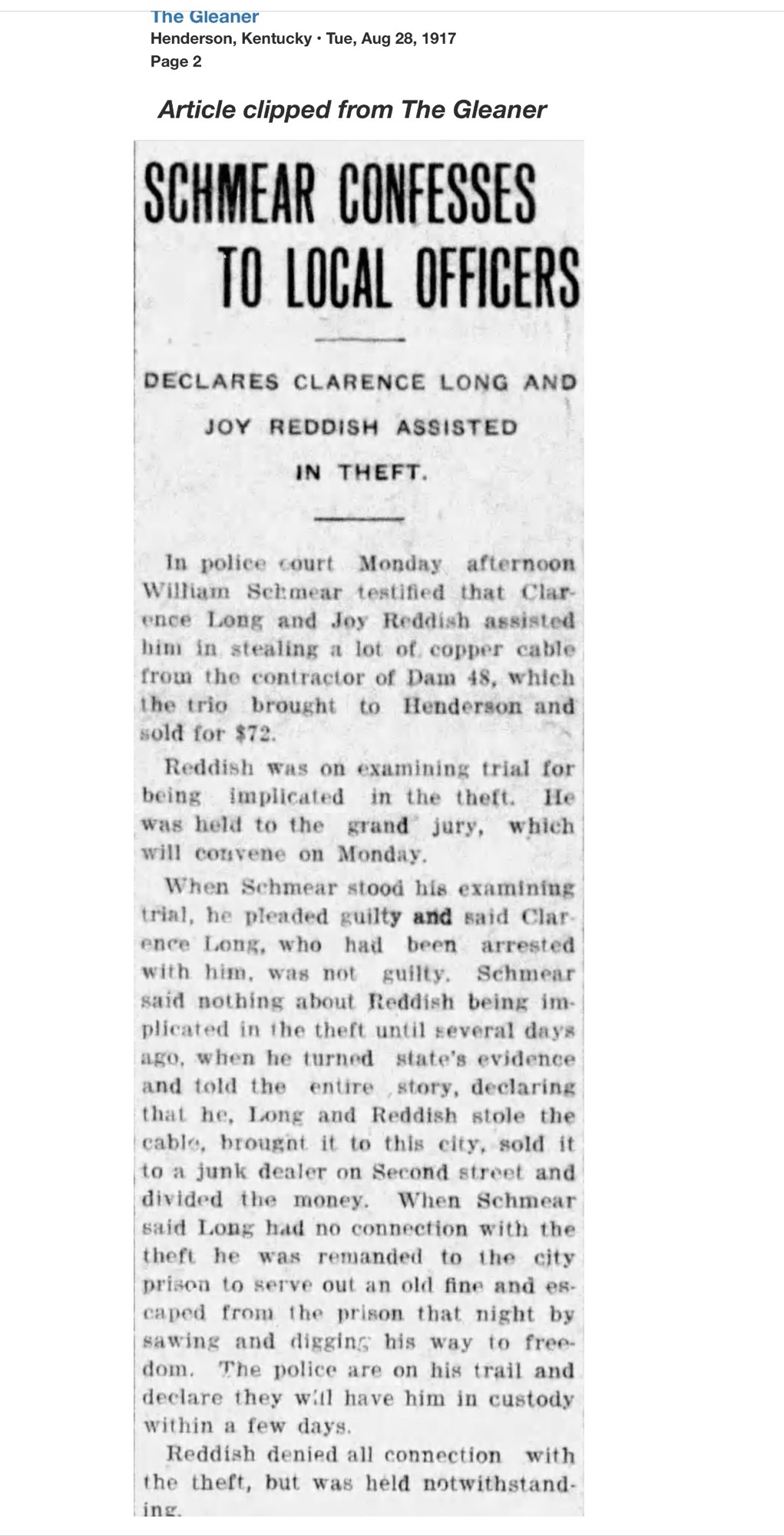
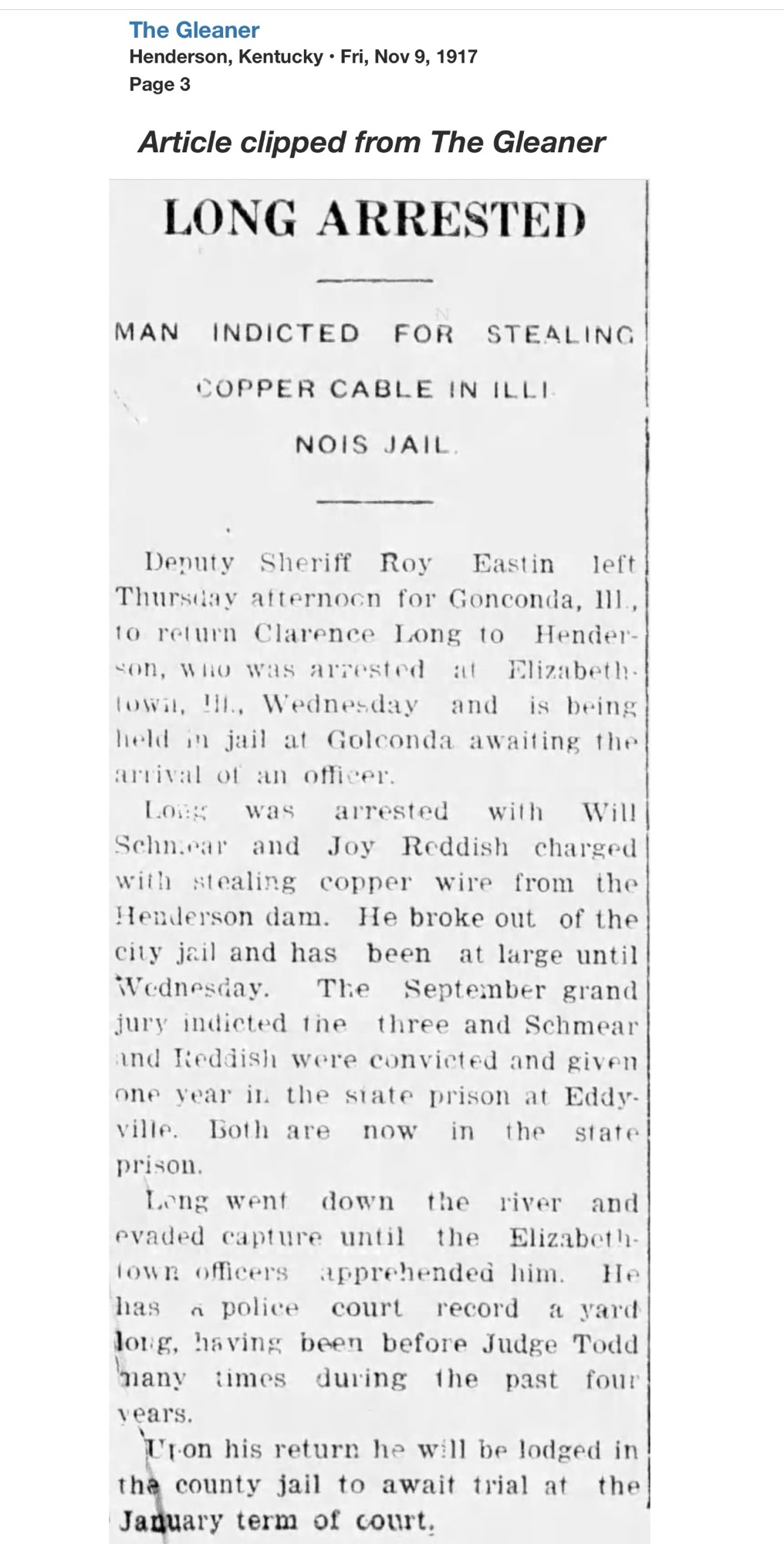
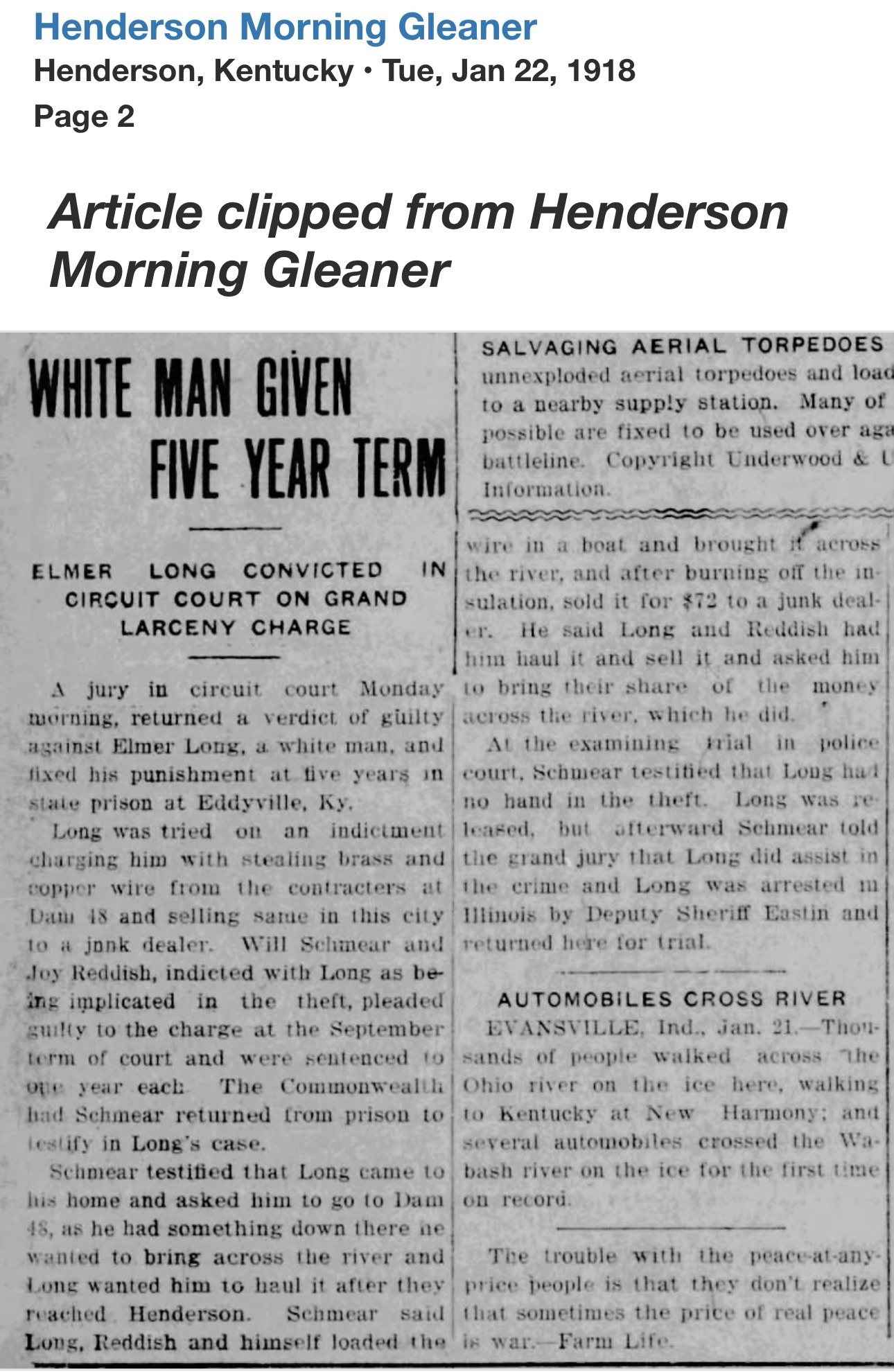
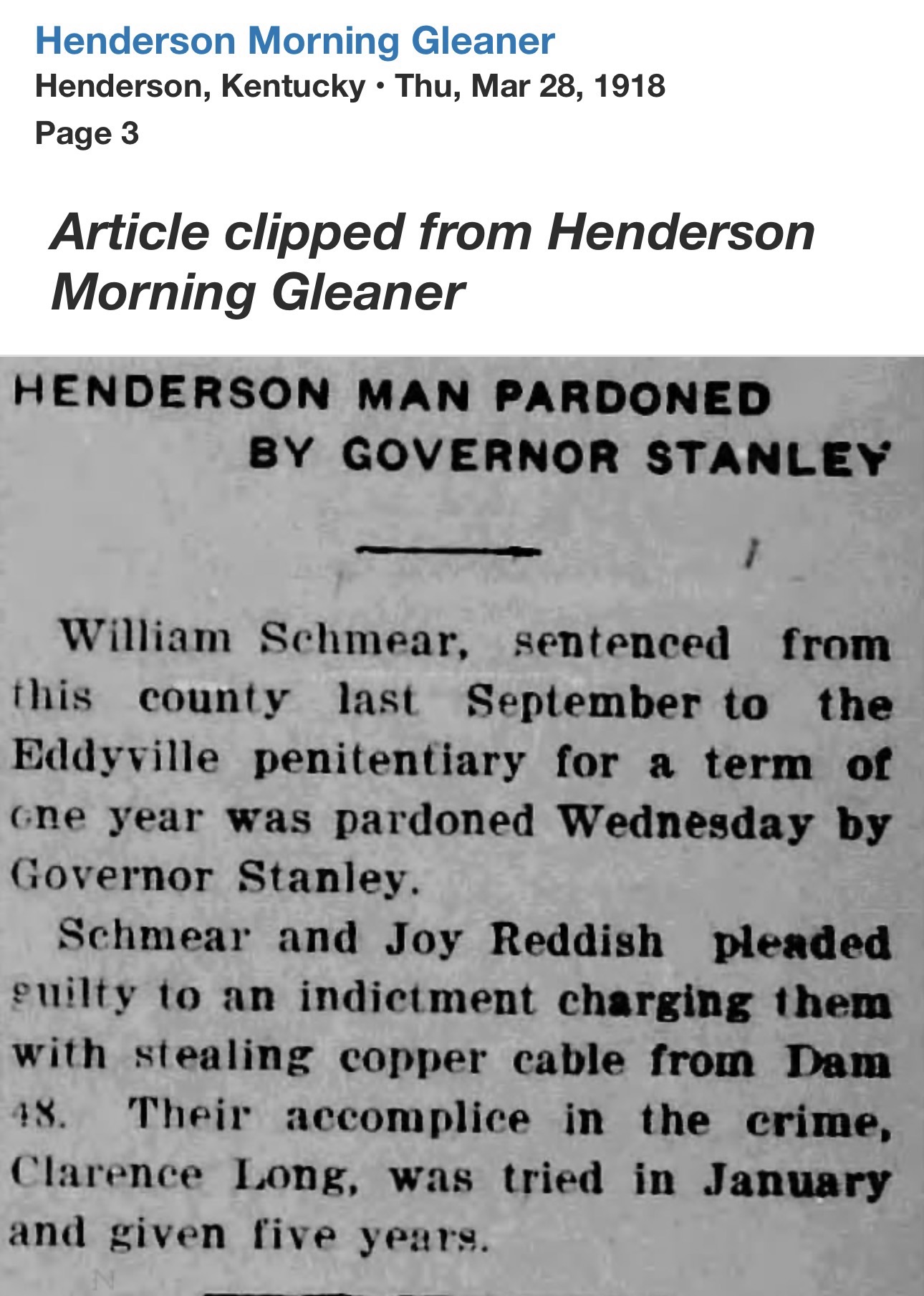
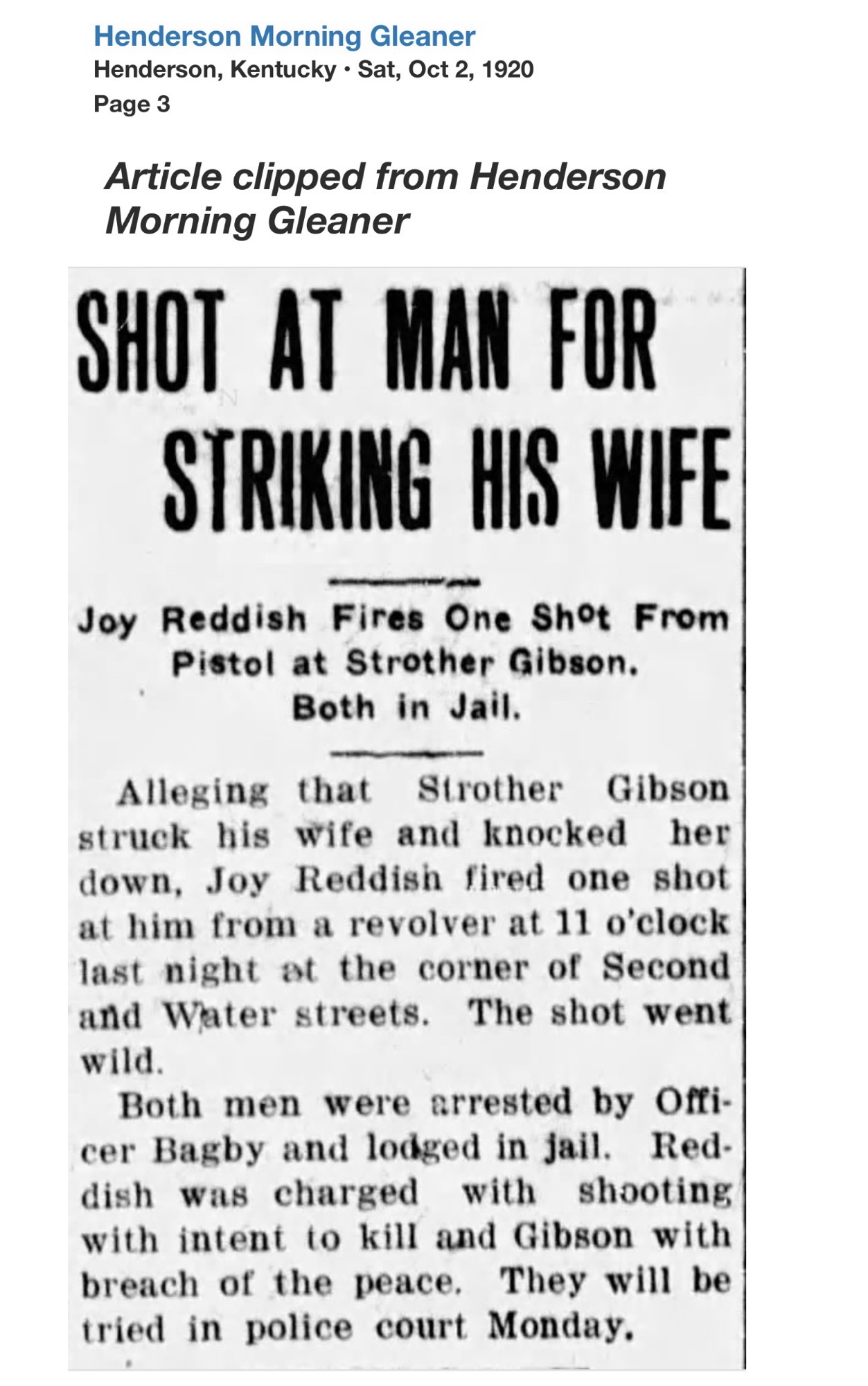
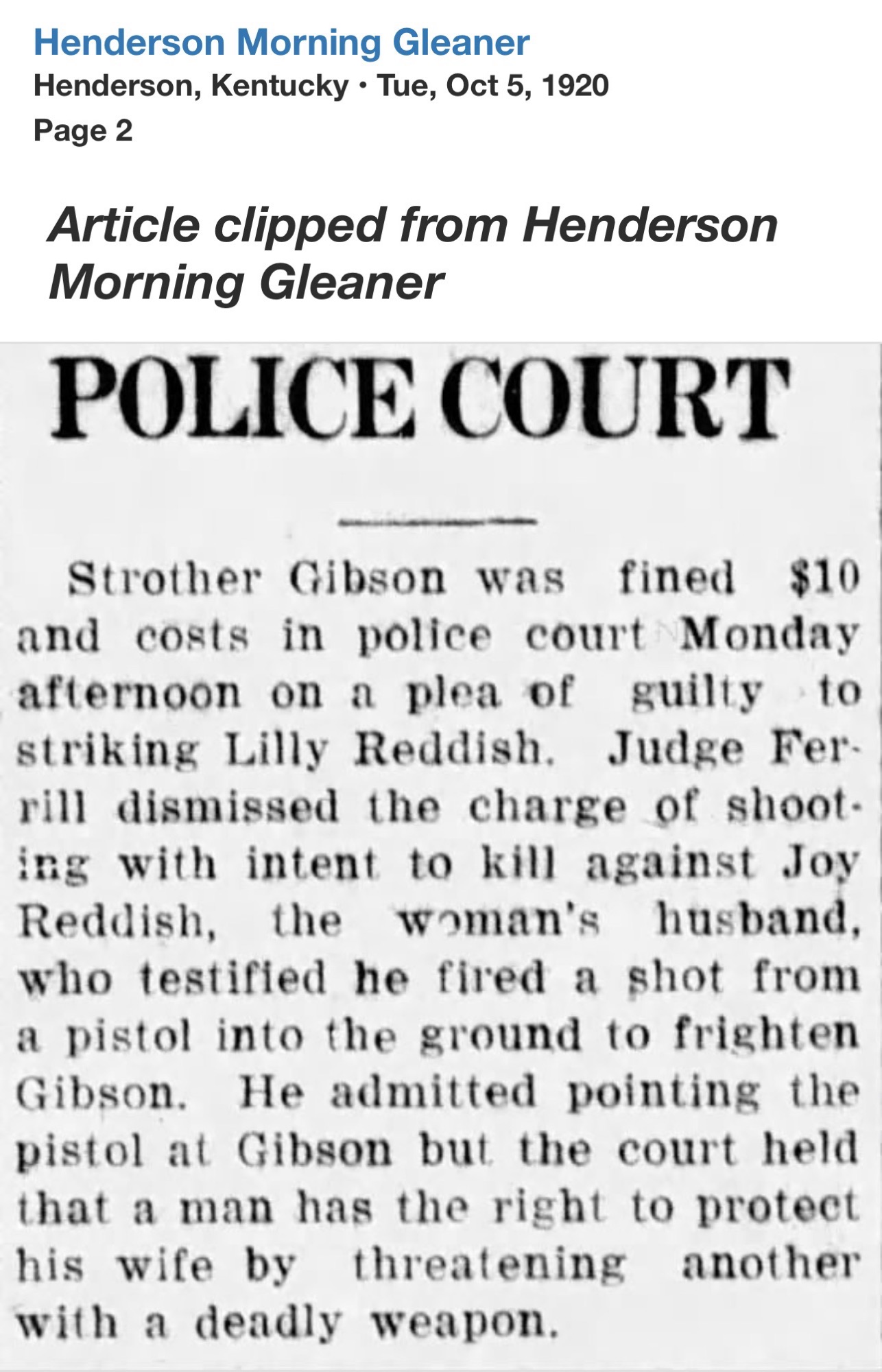
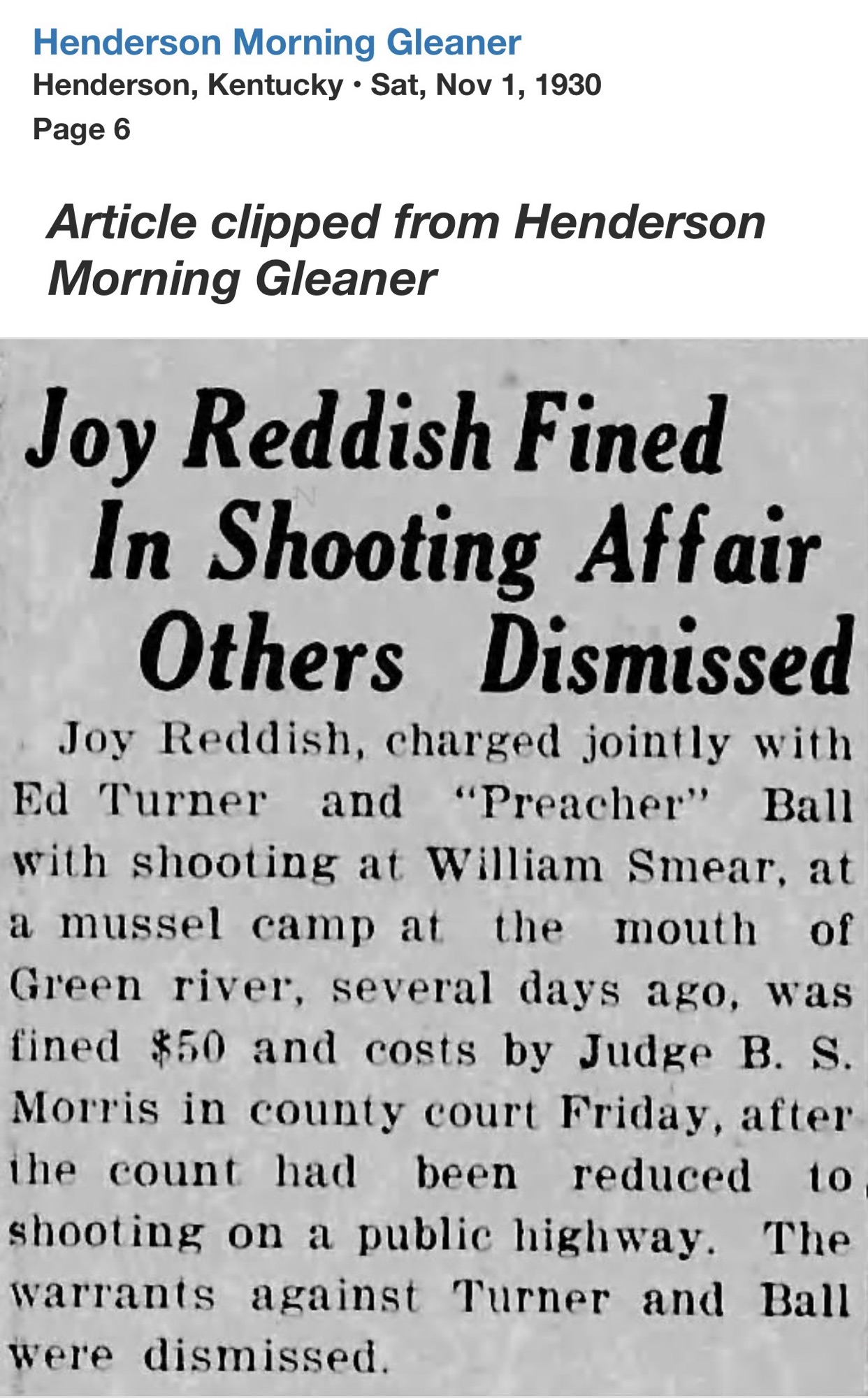
Long before the murder trials, Reddish’s name appeared in local news columns in connection with disturbances and weapons incidents. He was involved in earlier altercations that resulted in court appearances and fines. In one episode tied to river work disputes, he was accused of firing a pistol during a confrontation. In another earlier matter, he faced legal consequences related to river-related theft activity.
These incidents did not result in lengthy imprisonment, but they established a pattern: arguments that escalated, firearms present, tempers quick. The river settlement was not gentle ground.
October 4, 1931: The Fishtown Gun Battle
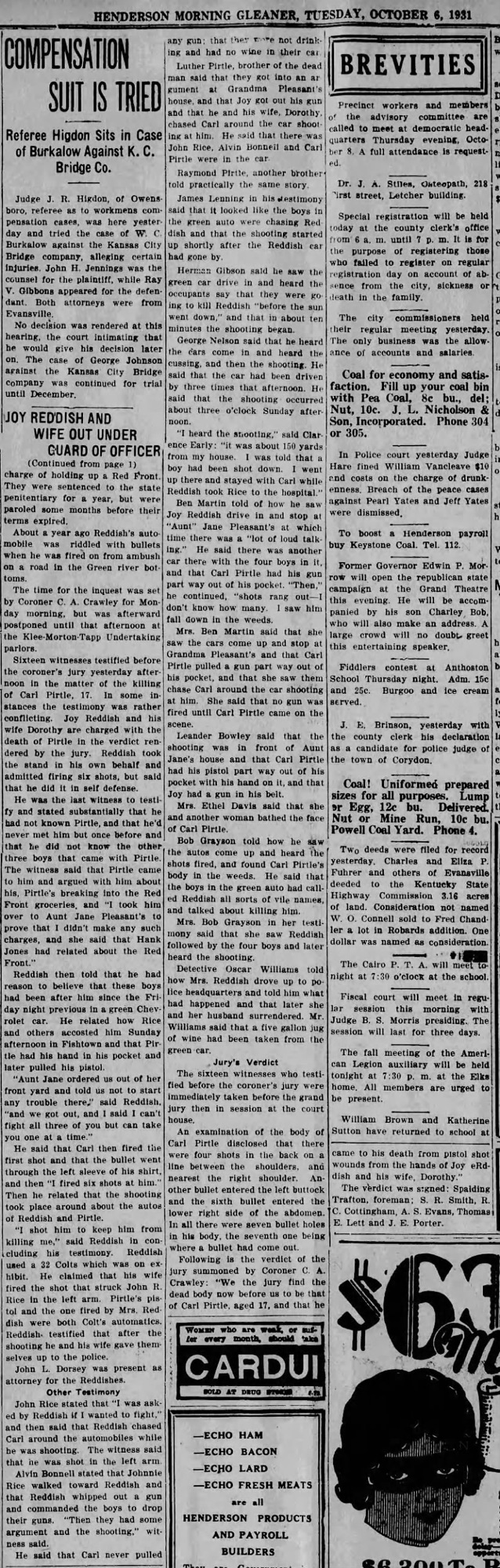
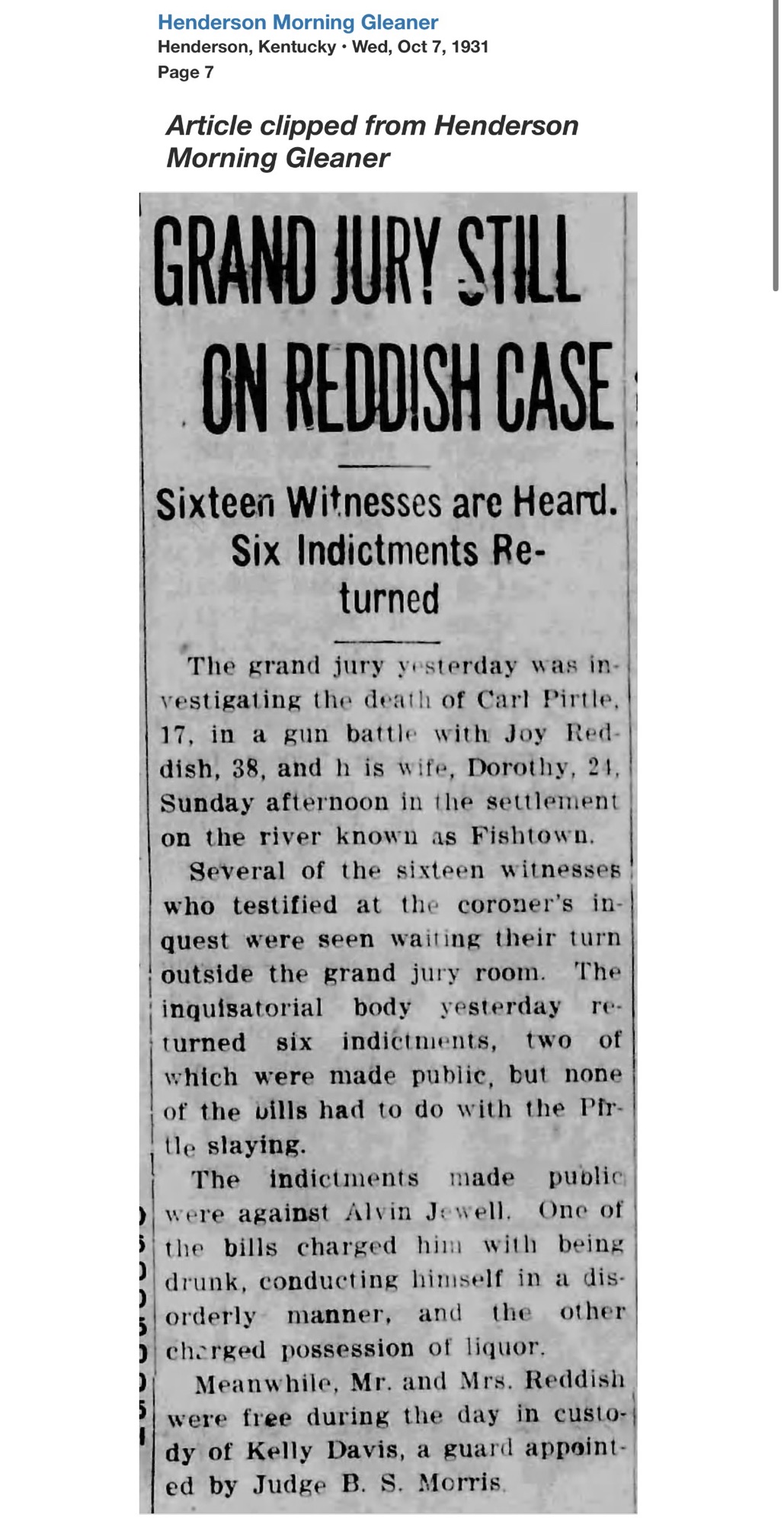
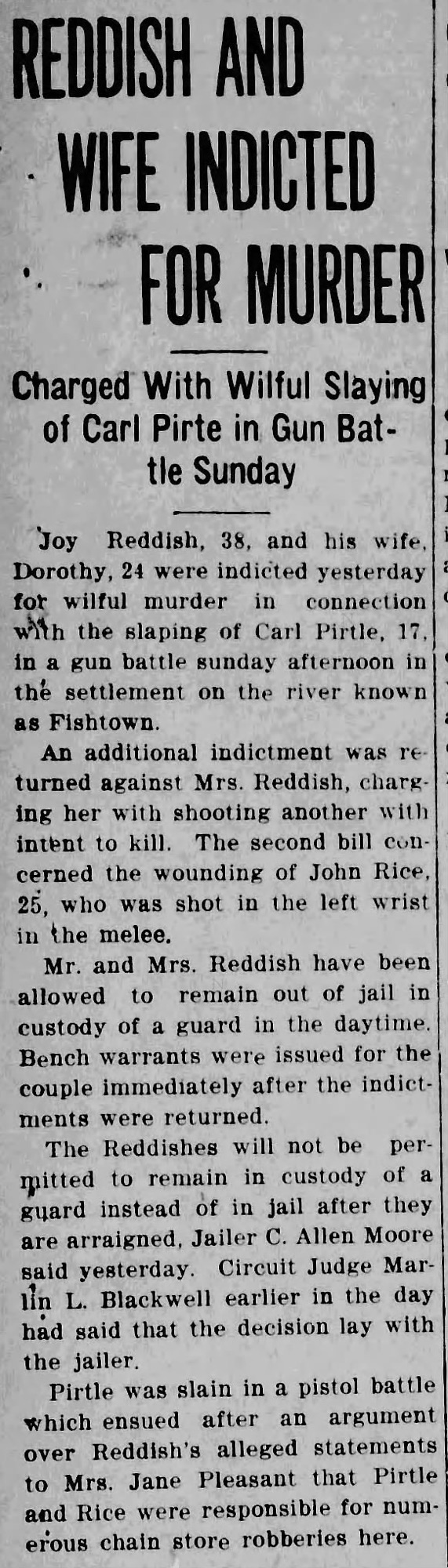
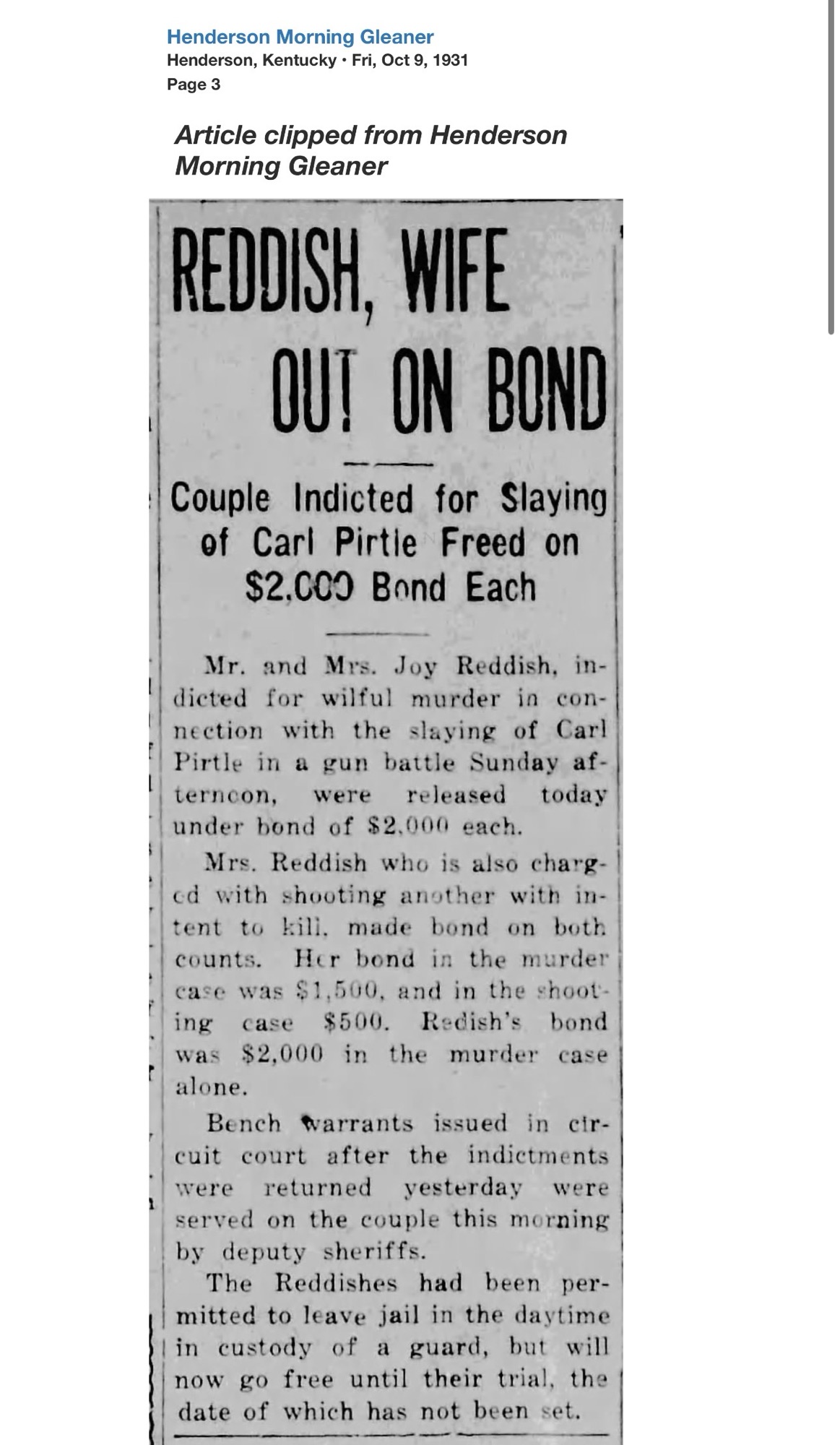
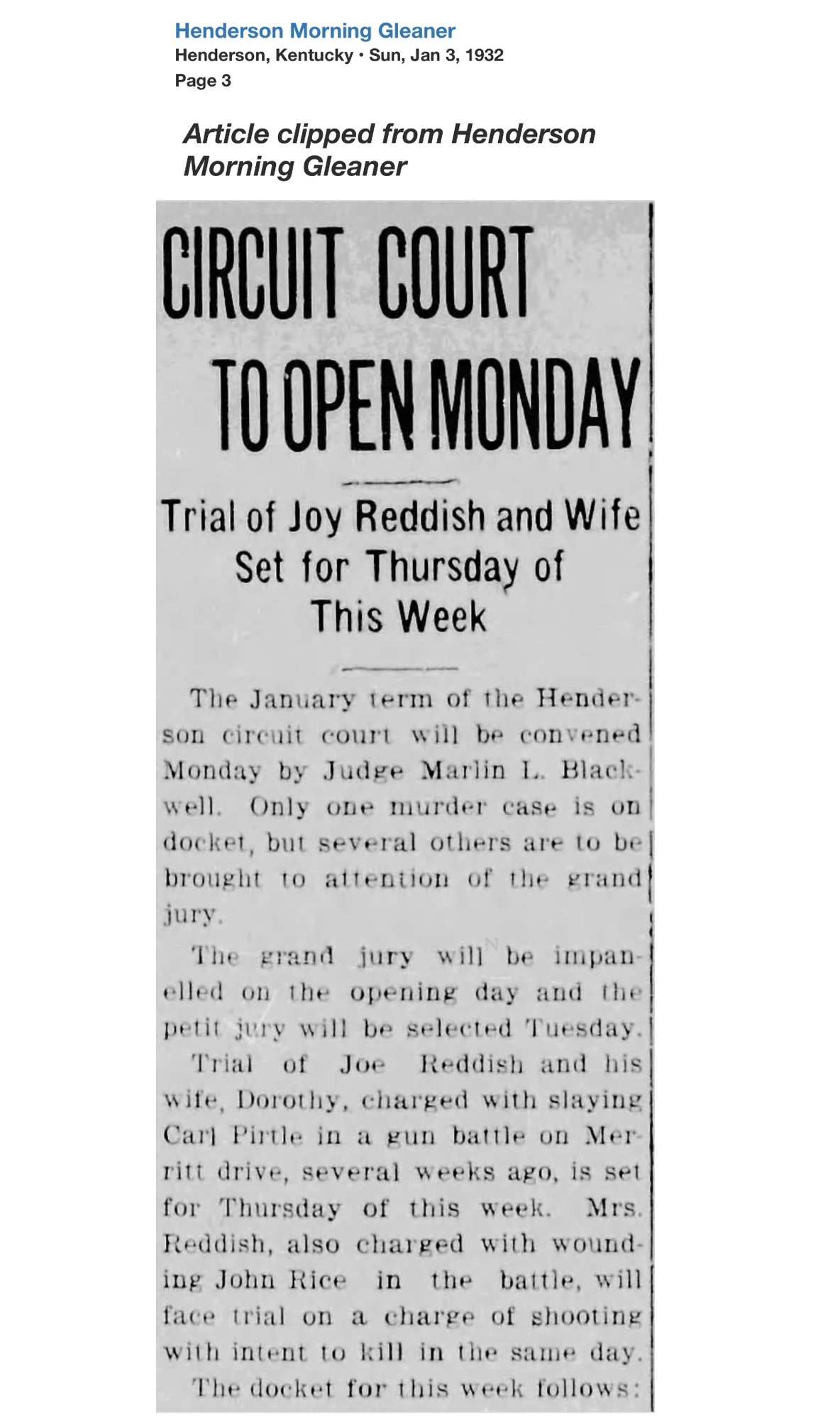
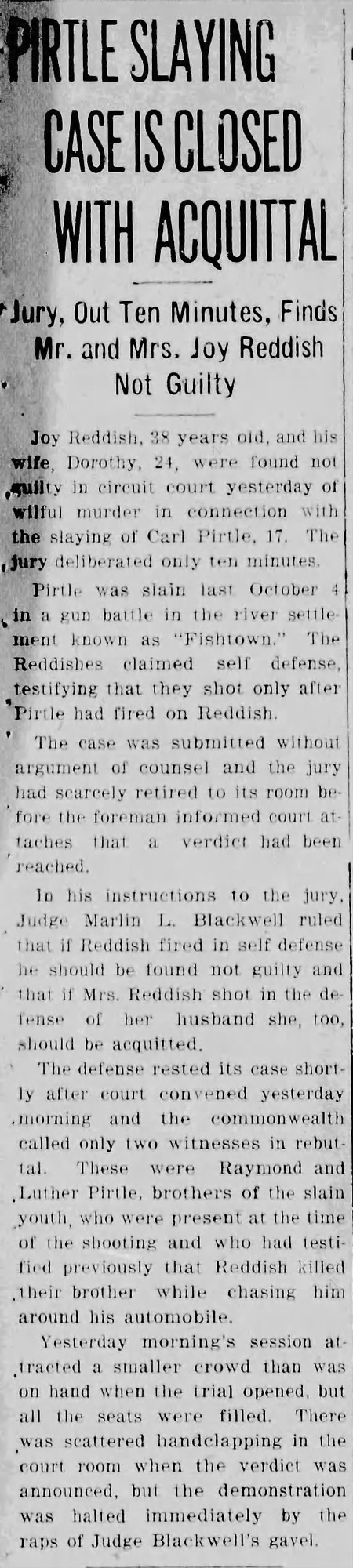
The incident that made him widely known occurred in October 1931. Seventeen-year-old Carl Pirtle was killed during a gun battle in Fishtown near Merritt Drive. John Rice was wounded. Joy Reddish and his wife, Dorothy, were indicted for willful murder.
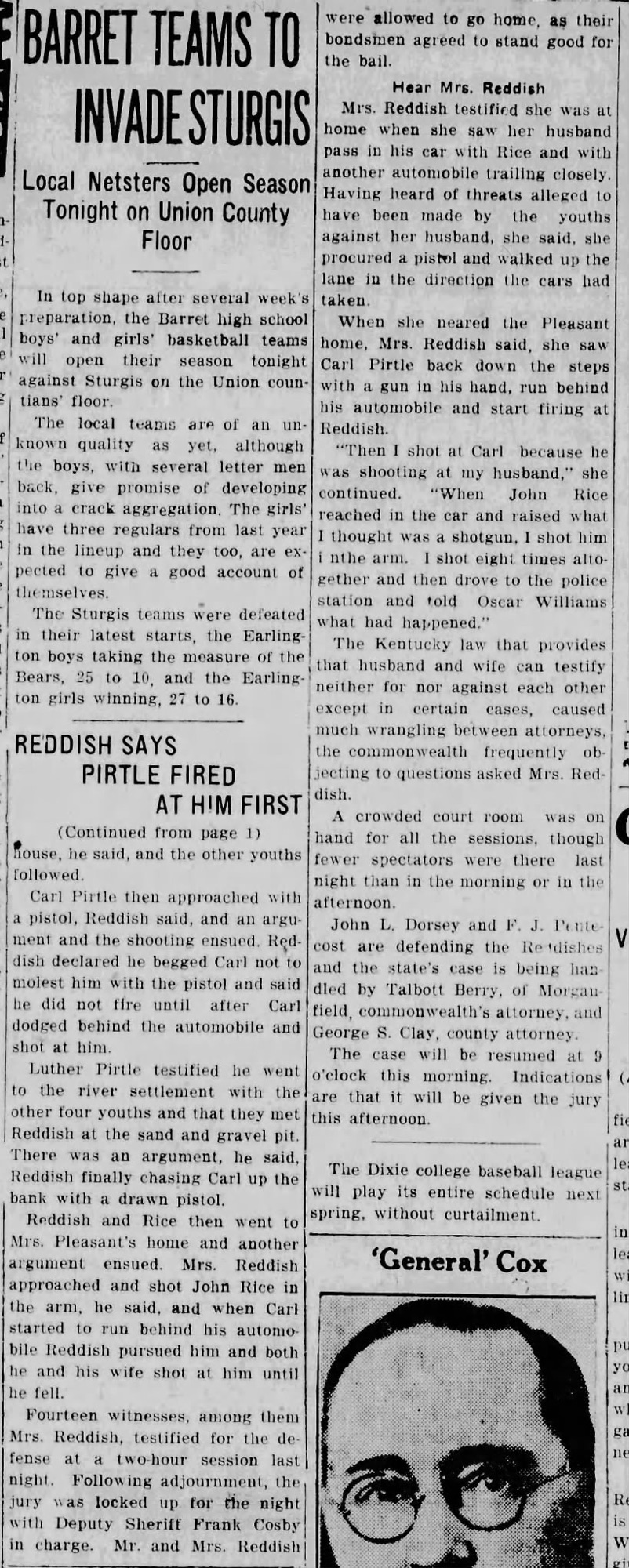
Headlines read: “Reddish, Wife Out on Bond.” Both were released on $2,000 bond. Dorothy also faced a charge of shooting with intent to kill. Testimony at trial painted conflicting scenes:
- An argument escalating near an automobile
- Multiple firearms discharged
- Pirtle allegedly firing first
- Dorothy claiming she acted to defend her husband
Judge Marlin L. Blackwell instructed the jury clearly: if Joy fired in self-defense, he must be acquitted; if Dorothy shot defending her husband, she too must be acquitted. The jury deliberated ten minutes. Not guilty.
The Pirtle case was closed. For a brief moment, Joy Reddish walked free of the most serious charge a man could face.
March 13, 1932: The Providence Shooting
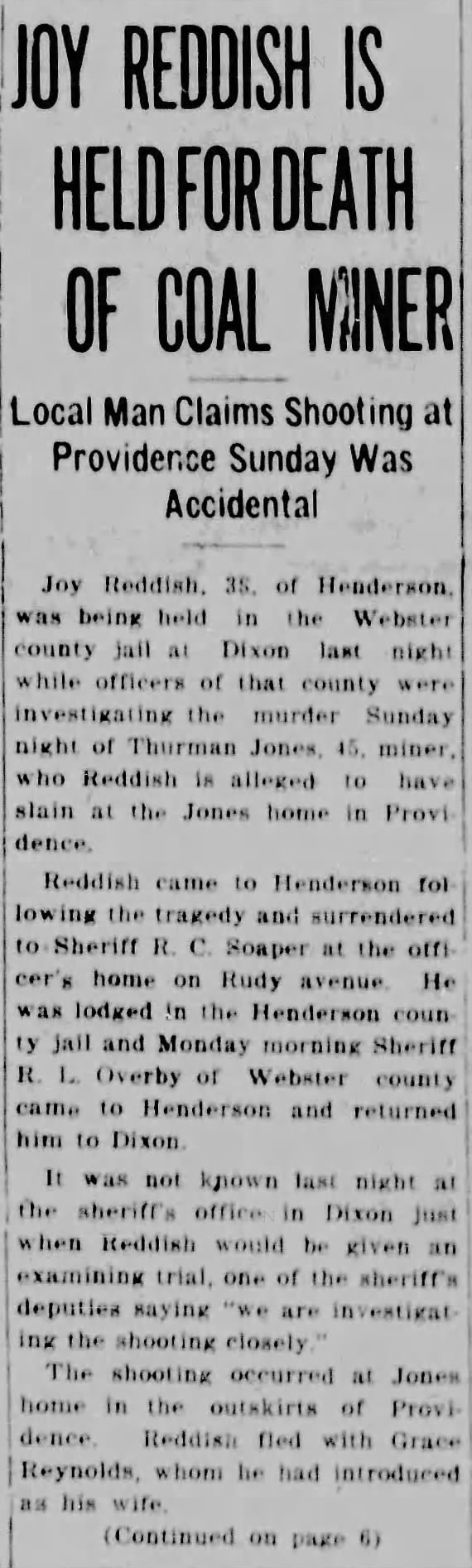
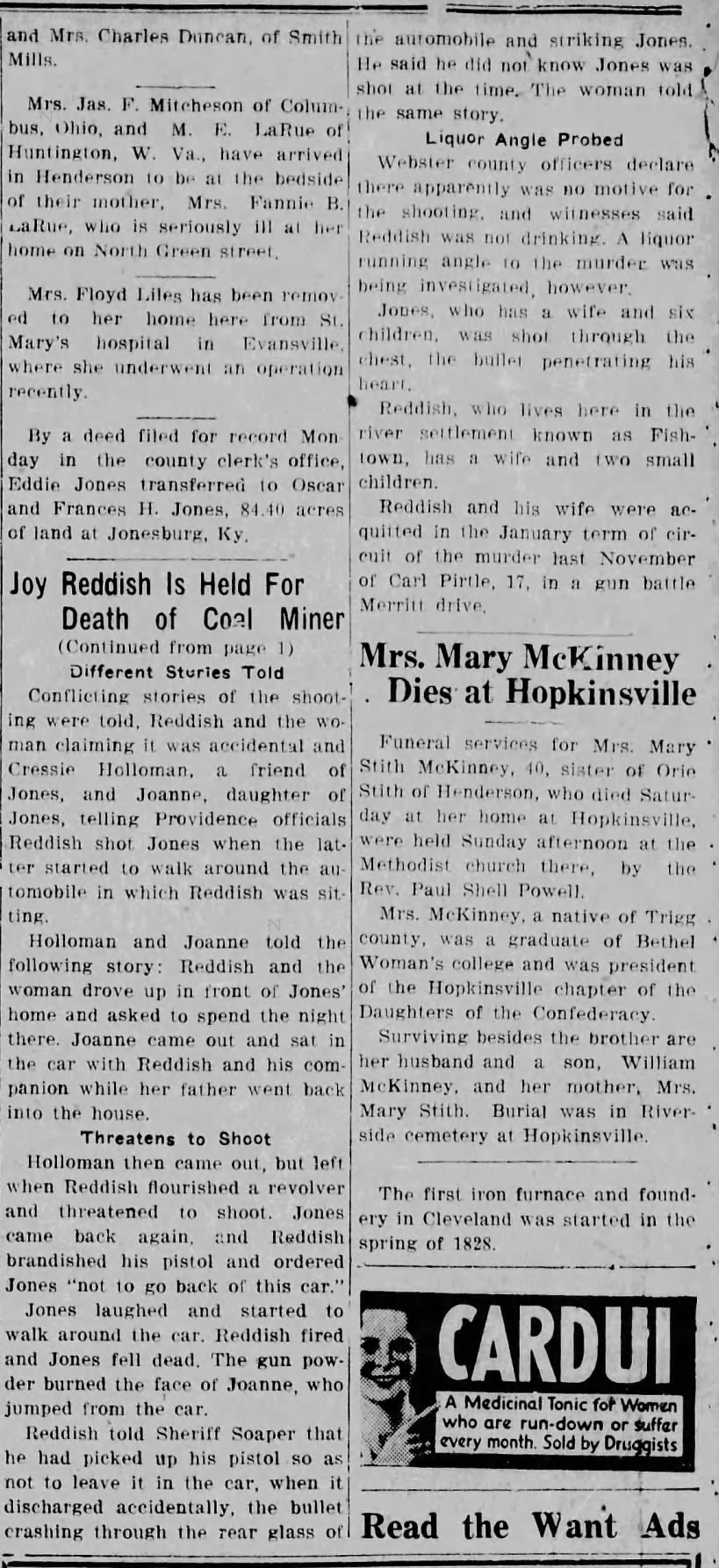
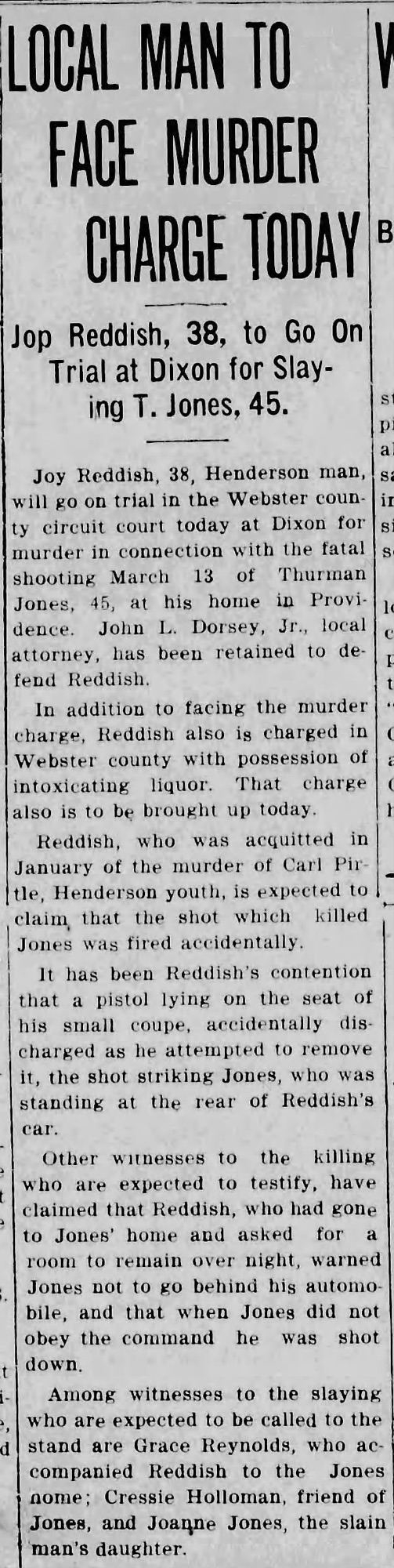
Only weeks later, Reddish’s name returned to the headlines, this time from Webster County. At the Providence home of Thurman Jones, a 45-year-old coal miner, a shot was fired. Jones fell dead. Reddish surrendered to Henderson Sheriff R.C. Soaper and was transported to Dixon.
His explanation differed sharply from the Fishtown defense. He claimed the shooting was accidental, that a pistol lying on the seat of his coupe discharged as he picked it up to avoid leaving it in the car. The bullet, he said, crashed through the rear glass and struck Jones.
Witnesses told a different story:
- That Reddish had warned Jones not to walk behind the vehicle
- That Jones ignored the warning
- That Reddish fired intentionally
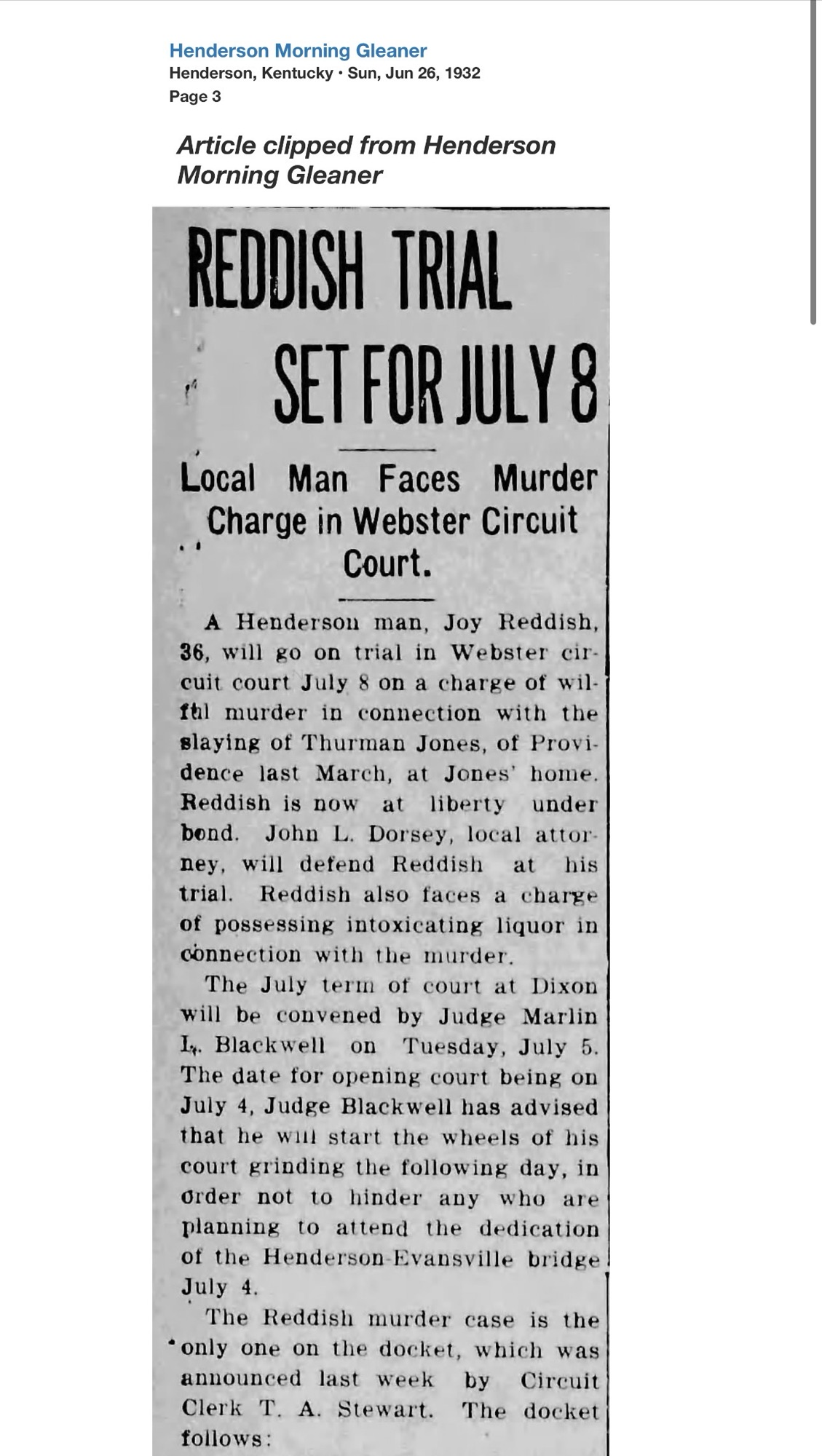
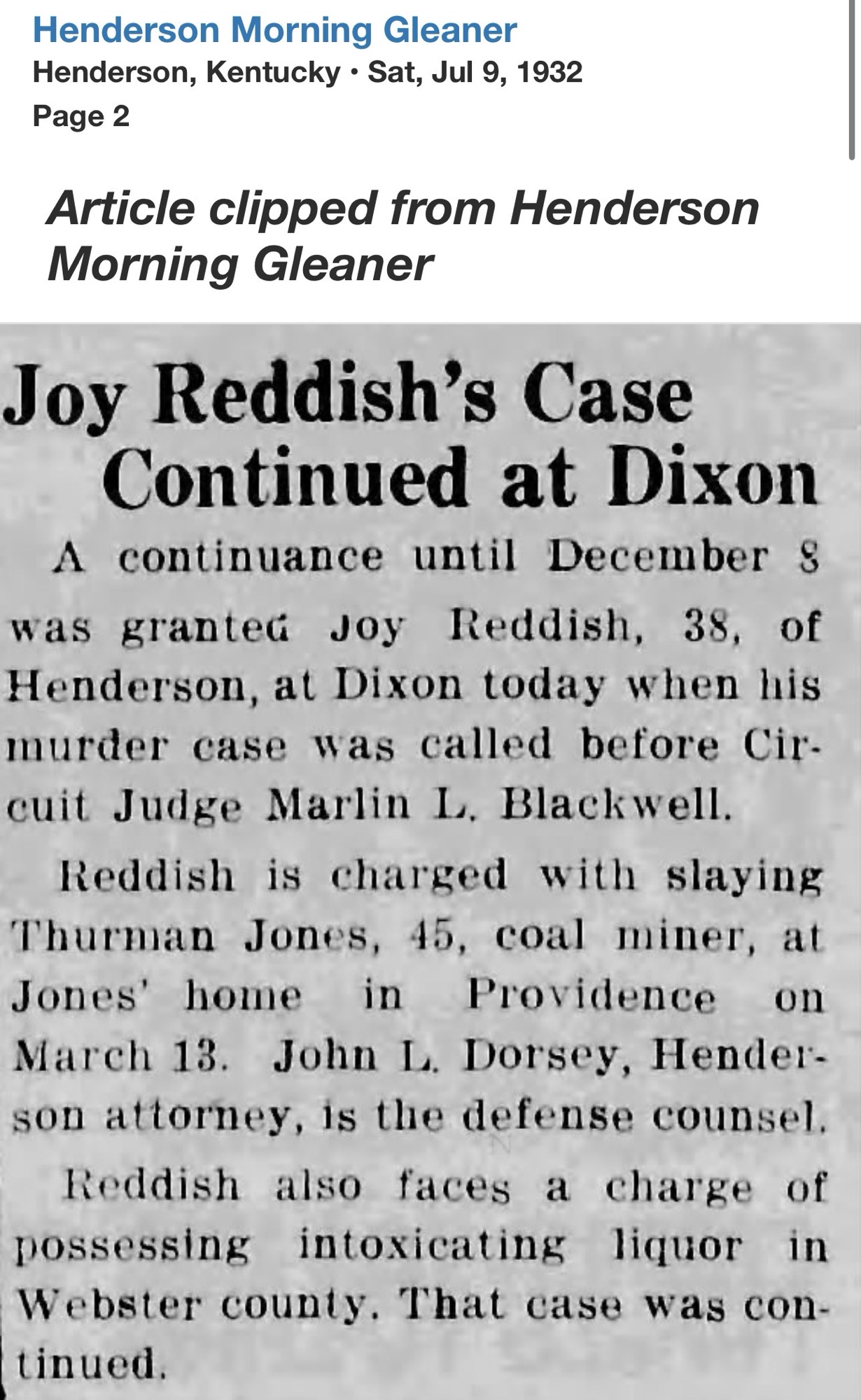
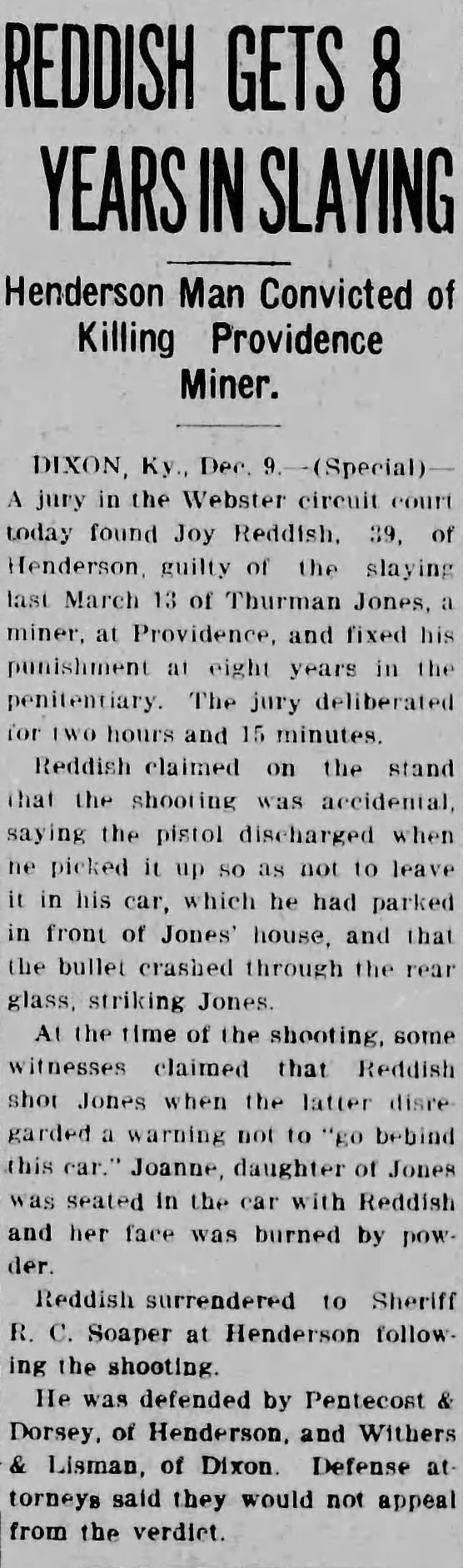
The case was continued until December 1932. In Webster Circuit Court, a jury deliberated for two hours and fifteen minutes. This time, it was not acquittal. Guilty.
Joy Reddish, 39, was sentenced to eight years in the Kentucky State Penitentiary for the slaying of Thurman Jones. Defense attorneys announced they would not appeal. The river laborer from Fishtown was taken to Eddyville.
Prison life was hard. At some point during his incarceration, Reddish became seriously ill. Parole papers were eventually approved by the governor. He was scheduled to be released at 5:00 p.m. on July 28, 1934. He died at 1:15 p.m. that same day.
His death certificate lists the cause as acute bronchitis following illness. His occupation: river work. Age: 41 years, 3 months, 1 day.
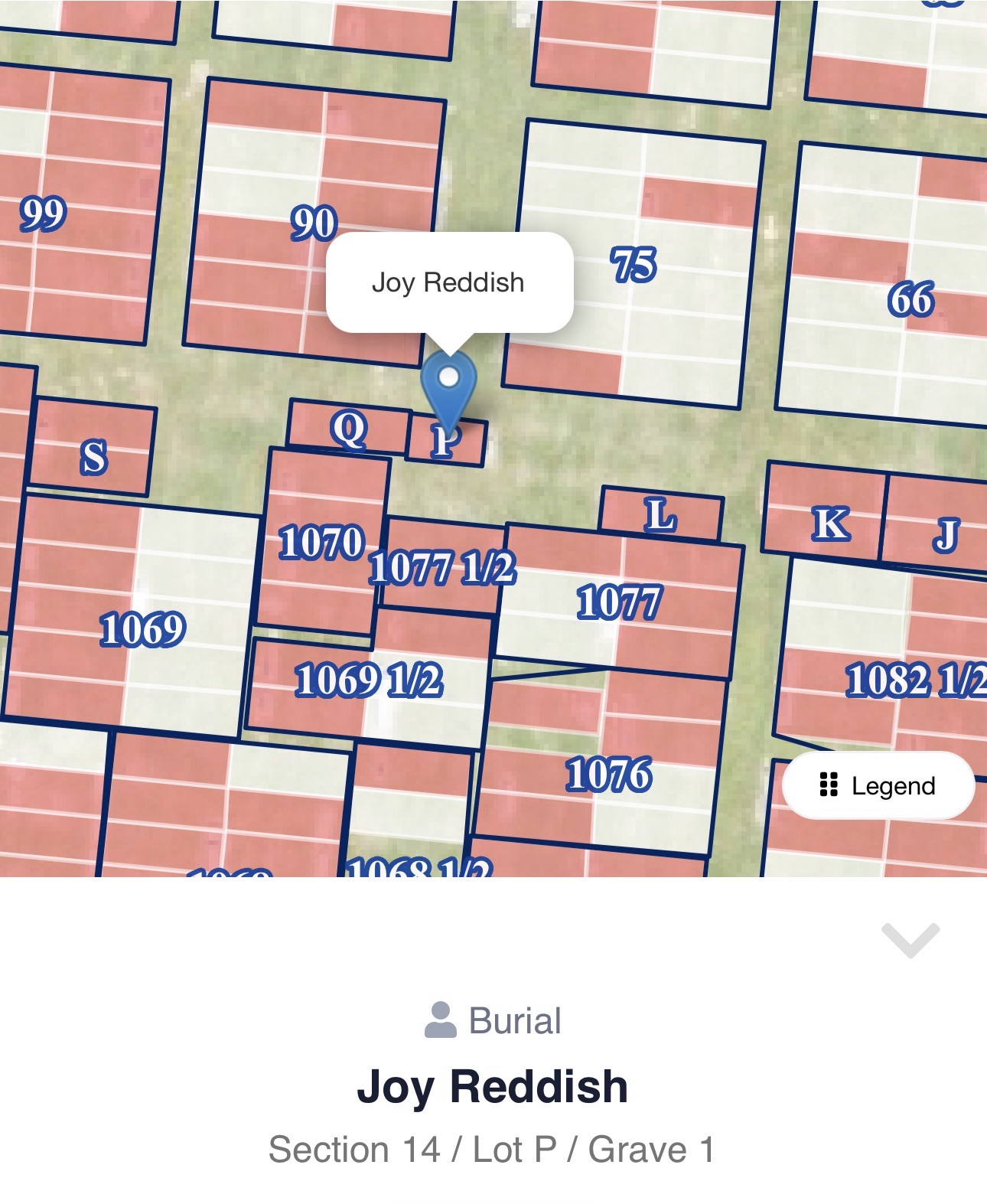
He was returned to Henderson and buried at Fernwood Cemetery.
Joy Reddish’s life was not one of public office or civic distinction. It was a life shaped by the volatile mix of poverty, pride, firearms, and the hard codes of a river settlement in the early twentieth century.