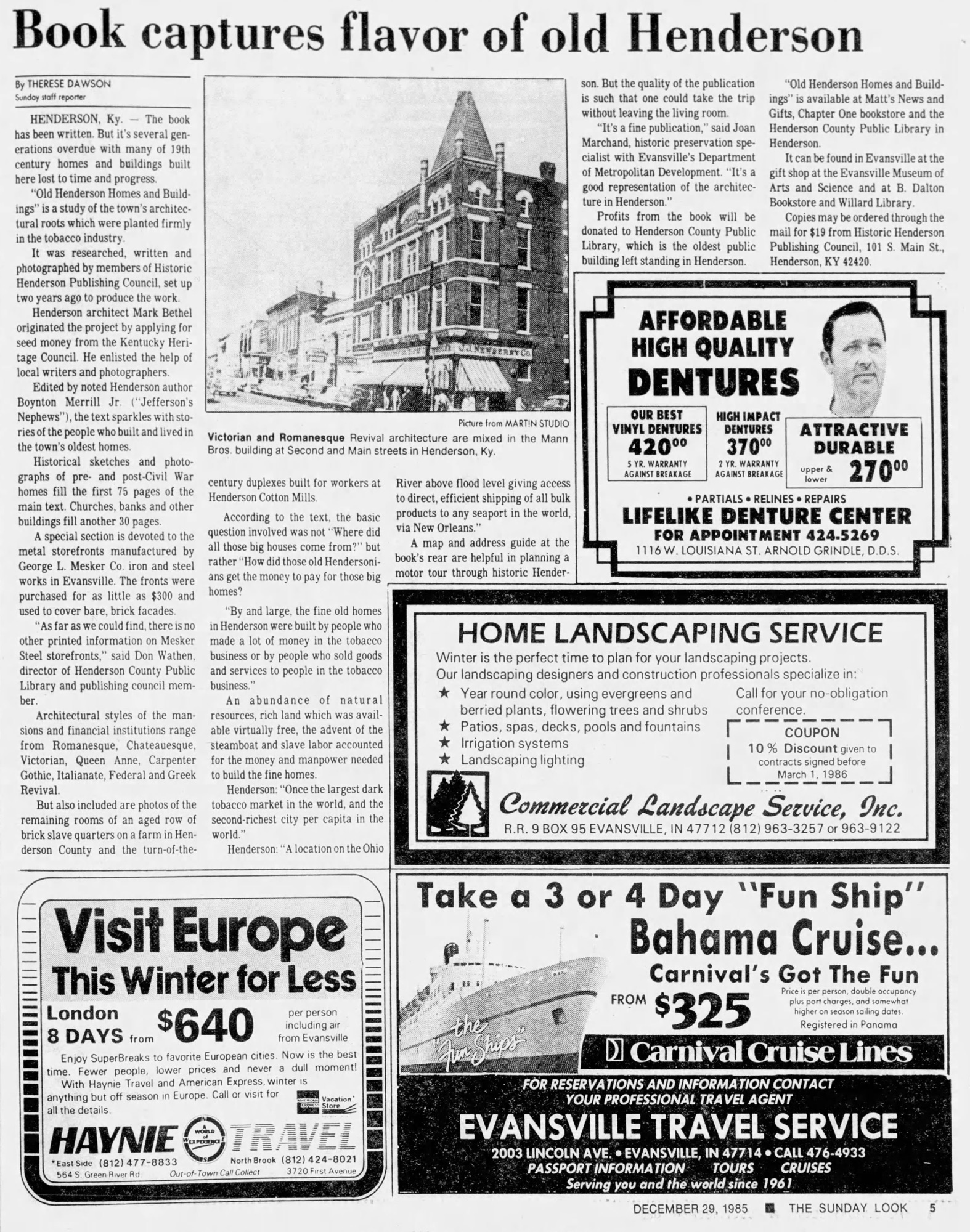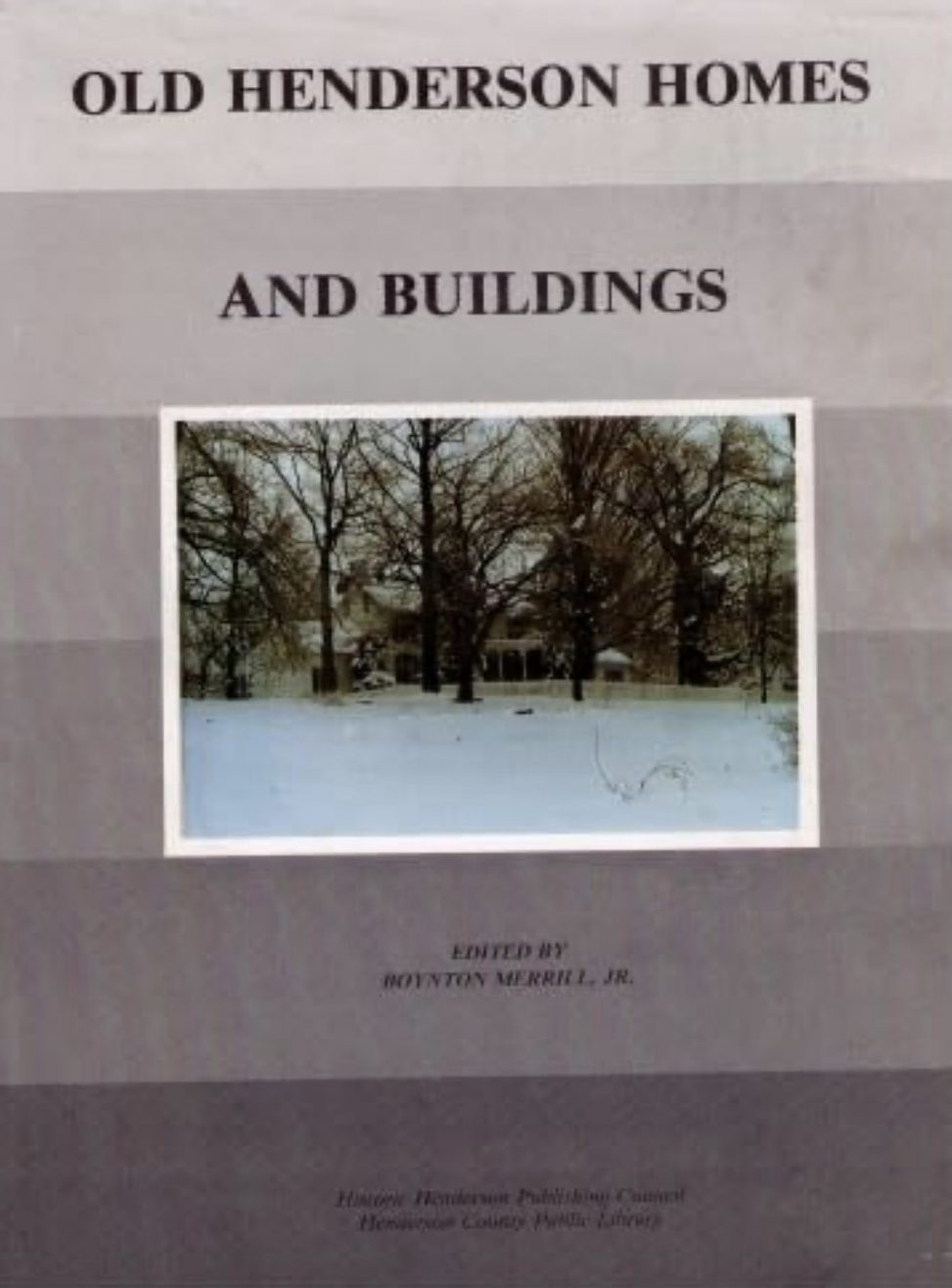
Old Henderson Homes and Buildings is a 1985 publication by the Historic Henderson Publishing Council in Henderson, Kentucky that documents the city’s historic residences and structures.
Book captures flavor of old Henderson
By THERESE DAWSON
HENDERSON, Ky. – The book has been written. But it’s several generations overdue with many of 19th century homes and buildings built here lost to time and progress.
“Old Henderson Homes and Build-ings” is a study of the town’s architectural roots which were planted firmly in the tobacco industry.
It was researched, written and photographed by members of Historic Henderson Publishing Council, set up two years ago to produce the work.
Henderson architect Mark Bethel originated the project by applying for seed money from the Kentucky Heritage Council. He enlisted the help of local writers and photographers. Edited by noted Henderson author Boynton Merrill Jr. (“Jefferson’s Nephews”), the text sparkles with stories of the people who built and lived in the town’s oldest homes.
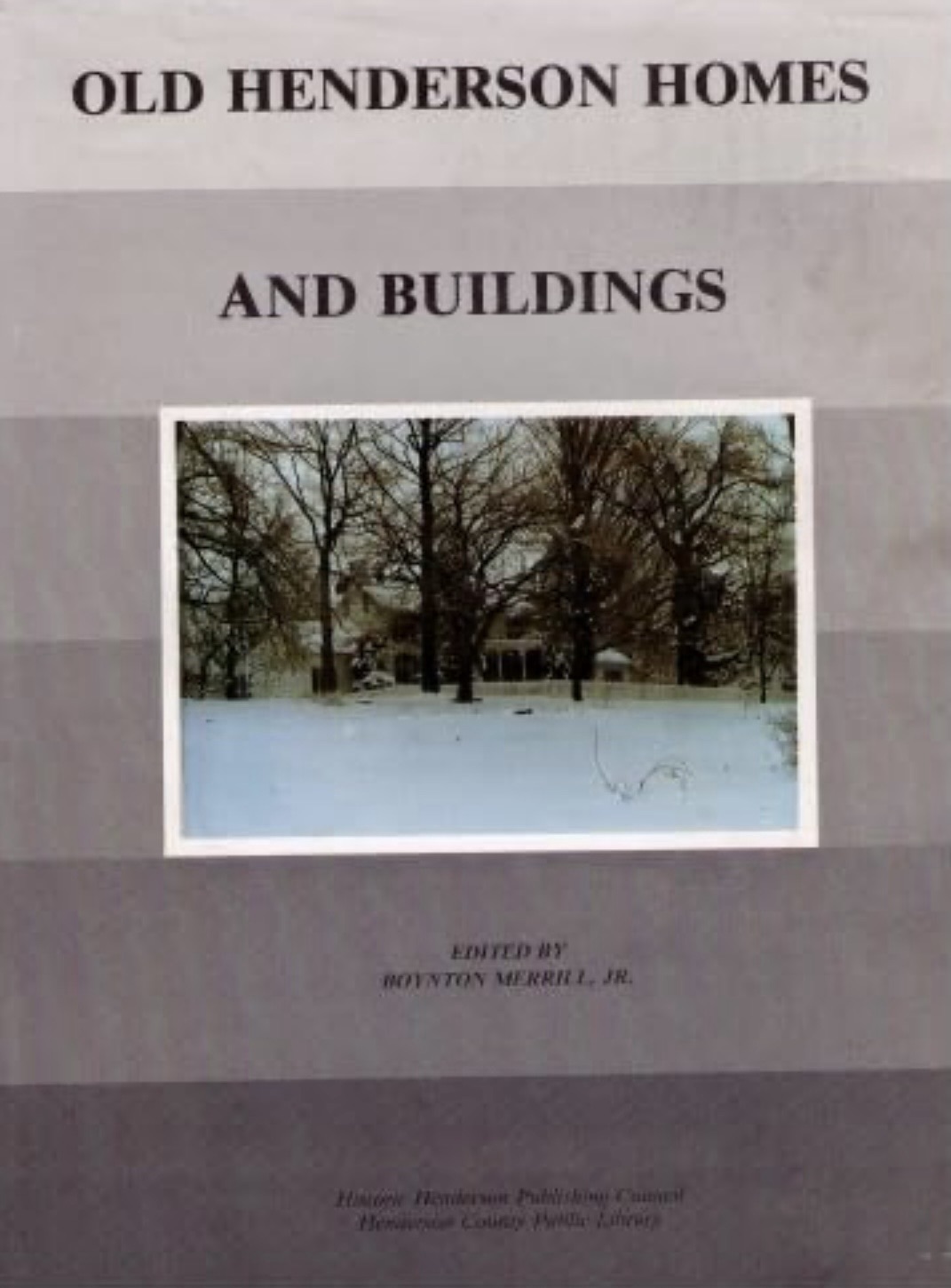
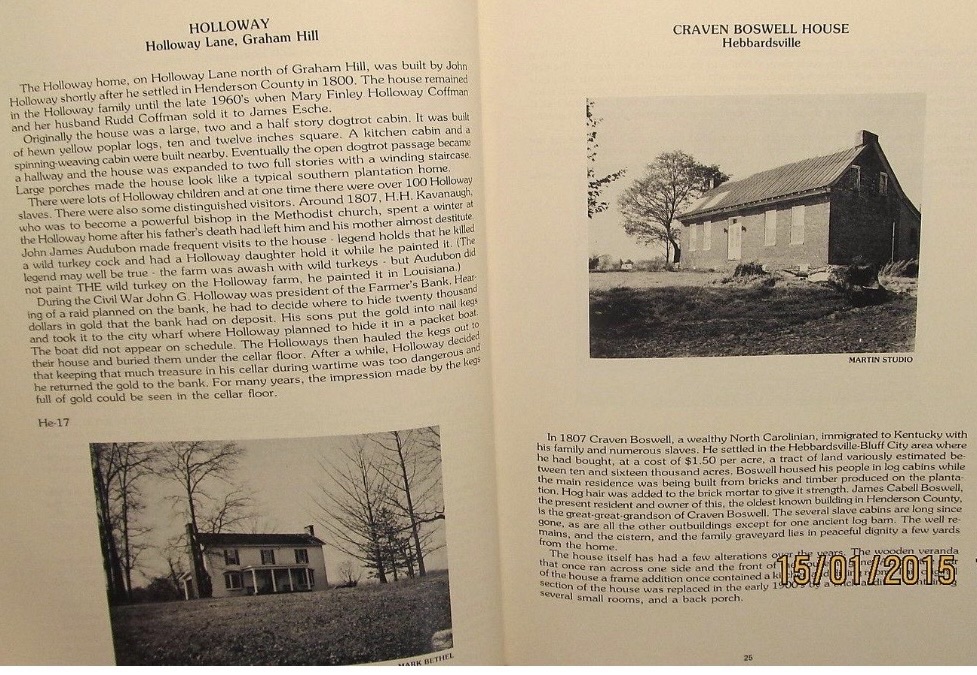
Historical sketches and photographs of pre- and post-Civil War homes fill the first 75 pages of the main text. Churches, banks and other buildings fill another 30 pages. A special section is devoted to the metal storefronts manufactured by George L. Mesker Co. iron and steel works in Evansville. The fronts were purchased for as little as $300 and used to cover bare, brick facades.
“As far as we could find, there is no other printed information on Mesker Steel storefronts,” said Don Wathen, director of Henderson County Public Library and publishing council member. Architectural styles of the mansions and financial institutions range from Romanesque, Chateauesque, Victorian, Queen Anne, Carpenter Gothic, Italianate, Federal and Greek Revival.
But also included are photos of the remaining rooms of an aged row of brick slave quarters on a farm in Henderson County and the turn-of-the-century duplexes built for workers at Henderson Cotton Mills.
According to the text, the basic question involved was not “Where did all those big houses come from?” but rather “How did those old Hendersoni-ans get the money to pay for those big homes?
“By and large, the fine old homes in Henderson were built by people who made a lot of money in the tobacco business or by people who sold goods and services to people in the tobacco business.”
An abundance of natural resources, rich land which was available virtually free, the advent of the steamboat and slave labor accounted for the money and manpower needed to build the fine homes.
Henderson: “Once the largest dark tobacco market in the world, and the second-richest city per capita in the world.”
Henderson: “A location on the Ohio River above flood level giving access to direct, efficient shipping of all bulk products to any seaport in the world, via New Orleans.”
A map and address guide at the book’s rear are helpful in planning a motor tour through historic Henderson. But the quality of the publication is such that one could take the trip without leaving the living room.
“It’s a fine publication,” said Joan Marchand, historic preservation specialist with Evansville’s Department of Metropolitan Development. “It’s a good representation of the architecture in Henderson.”
Profits from the book will be donated to Henderson County Public Library, which is the oldest public building left standing in Henderson. “Old Henderson Homes and Build-ings” is available at Matt’s News and Gifts, Chapter One bookstore and the Henderson County Public Library in Henderson.
It can be found in Evansville at the gift shop at the Evansville Museum of Arts and Science and at B. Dalton Bookstore and Willard Library.