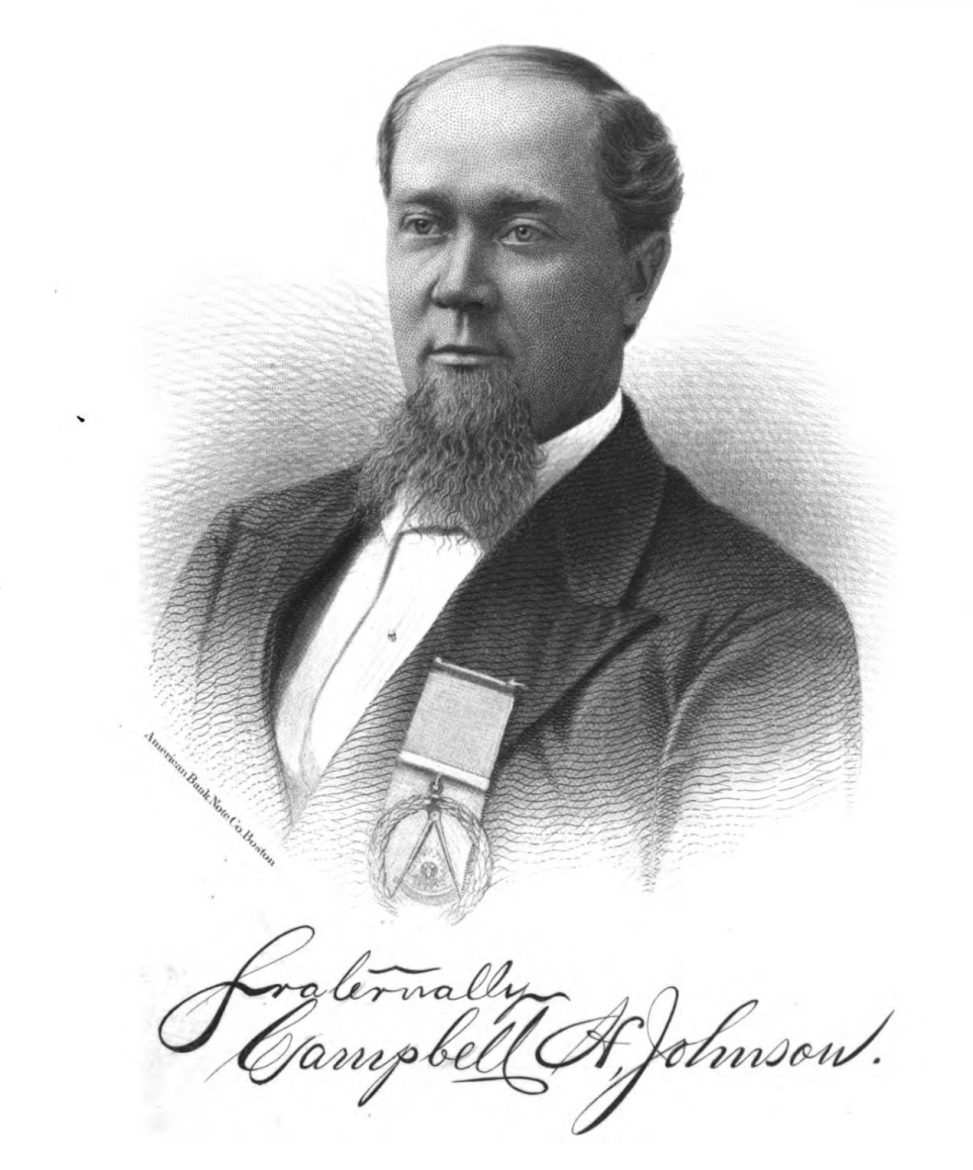
Campbell H. Johnson: Soldier, Druggist, Mason, and Advocate for Children
When Campbell H. Johnson died at his Henderson home on June 19, 1896, the Henderson Morning Gleaner remembered a man whose life had encompassed military service, business, civic leadership, Freemasonry, and care for Kentucky’s widows and orphans.
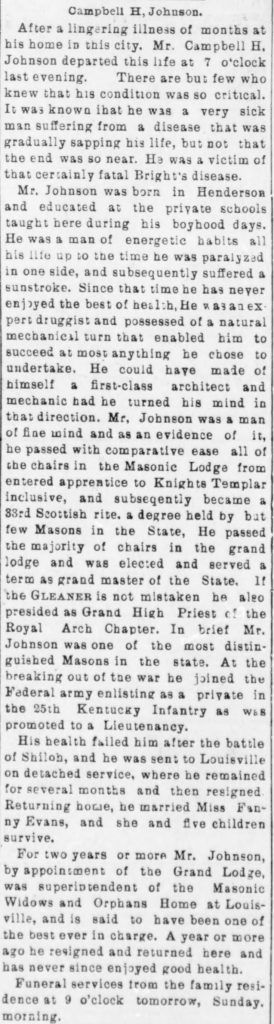
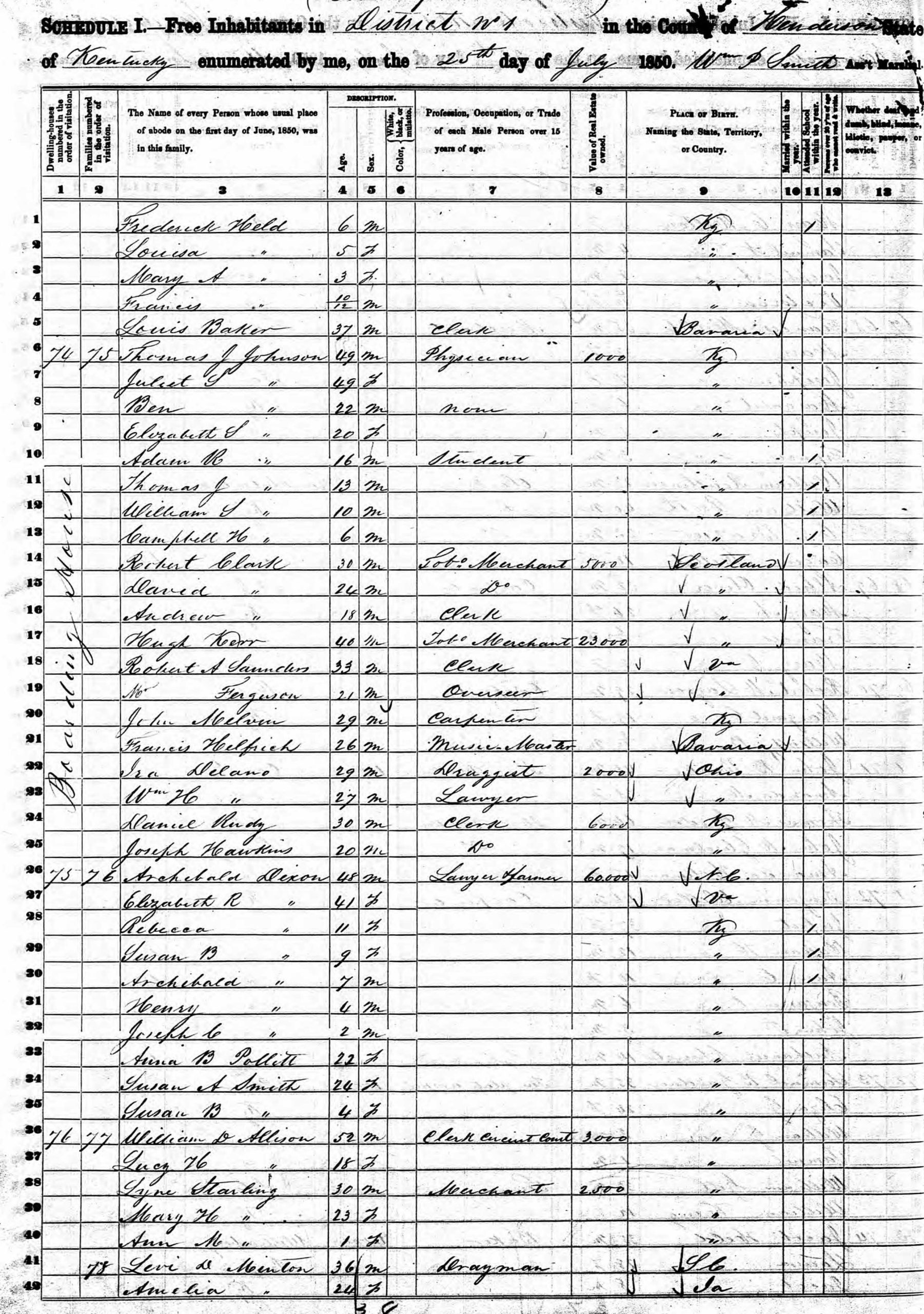
Johnson was born in Henderson about 1844, a son of Dr. Thomas J. Johnson and Juliet Spencer Rankin Johnson. The 1850 census records six-year-old Campbell in a household that included five older siblings. He attended Henderson’s private schools and, according to his obituary, developed an unusually active mind and considerable mechanical ability. Although he made his living as a druggist, acquaintances believed he also possessed the talent to succeed as an architect or mechanic.
Among Campbell’s older brothers was Adam Rankin “Stovepipe” Johnson, who became a noted Confederate cavalry commander. Campbell chose the opposite side. Their wartime service illustrates how the Civil War divided not only Kentucky communities, but individual families.
A Union soldier
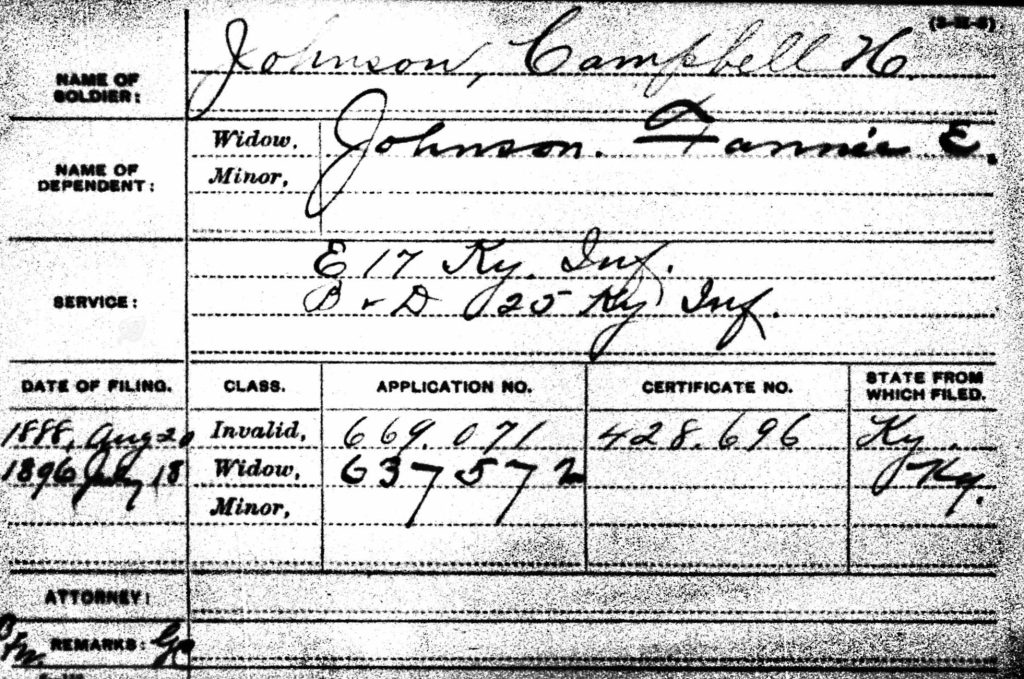
Campbell Johnson entered Union service in 1861 as a private in the 25th Kentucky Infantry. His obituary states that he advanced to lieutenant and that his health failed following the Battle of Shiloh in April 1862. He subsequently performed detached duty in Louisville for several months.
The apparent discrepancy between records identifying him with both the 25th and 17th Kentucky regiments is explained by their consolidation. The 25th was merged into the 17th Kentucky Infantry in March 1862. The federal Official Army Register of the Volunteer Force lists Campbell H. Johnson as a second lieutenant in the 17th and records his resignation on July 24, 1862.
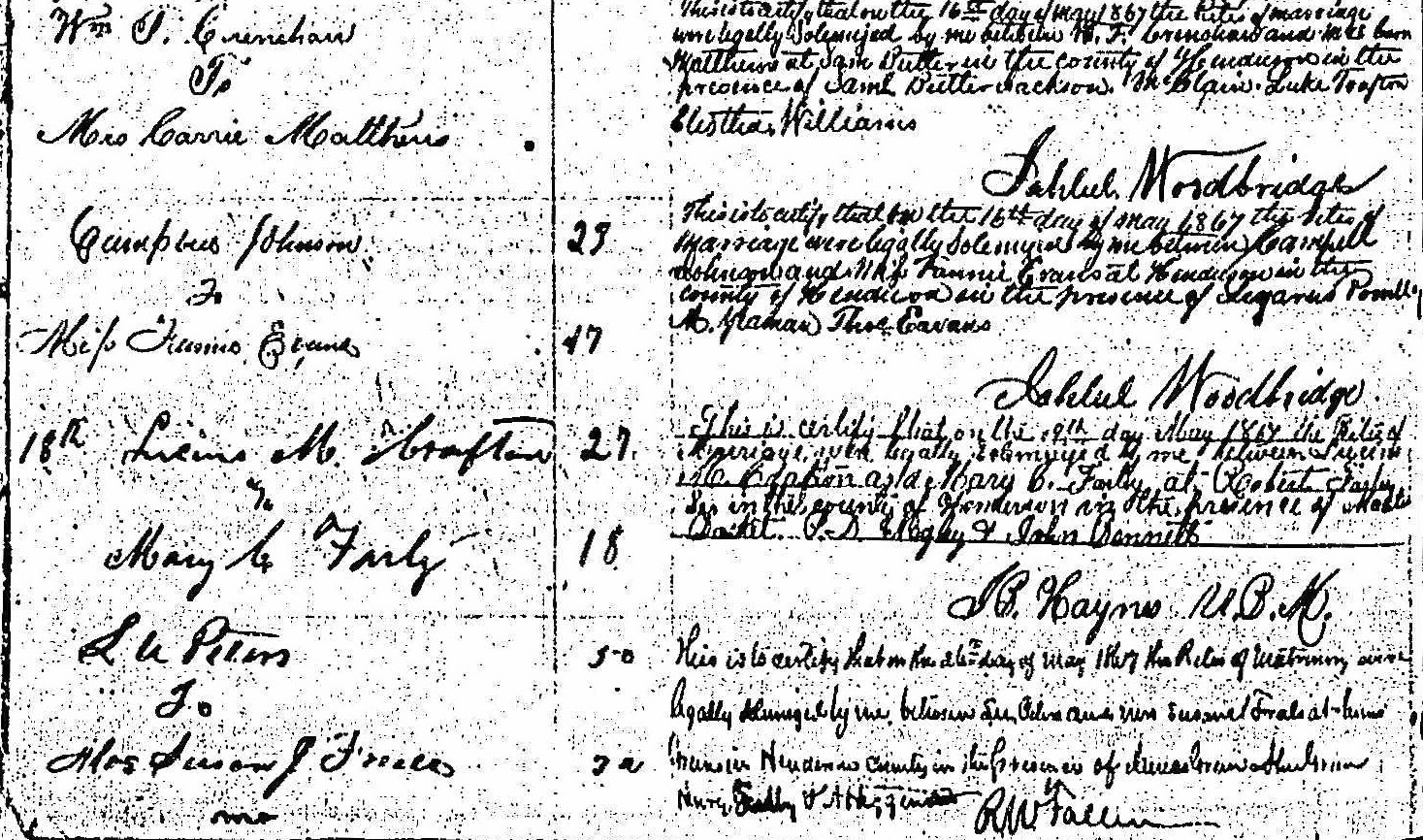
Returning to Henderson, Johnson resumed civilian life. On May 16, 1867, he married Fannie Evans. The couple eventually had five children. His obituary described him as an expert druggist, energetic in his habits and skilled at nearly anything he undertook.
A leader in Kentucky Masonry
Freemasonry became the central public institution of Johnson’s adult life. He rose through the offices of Henderson’s Jerusalem Lodge No. 9, serving as its master in 1873–74 and again from 1887 through 1891, according to the lodge’s record of past masters.
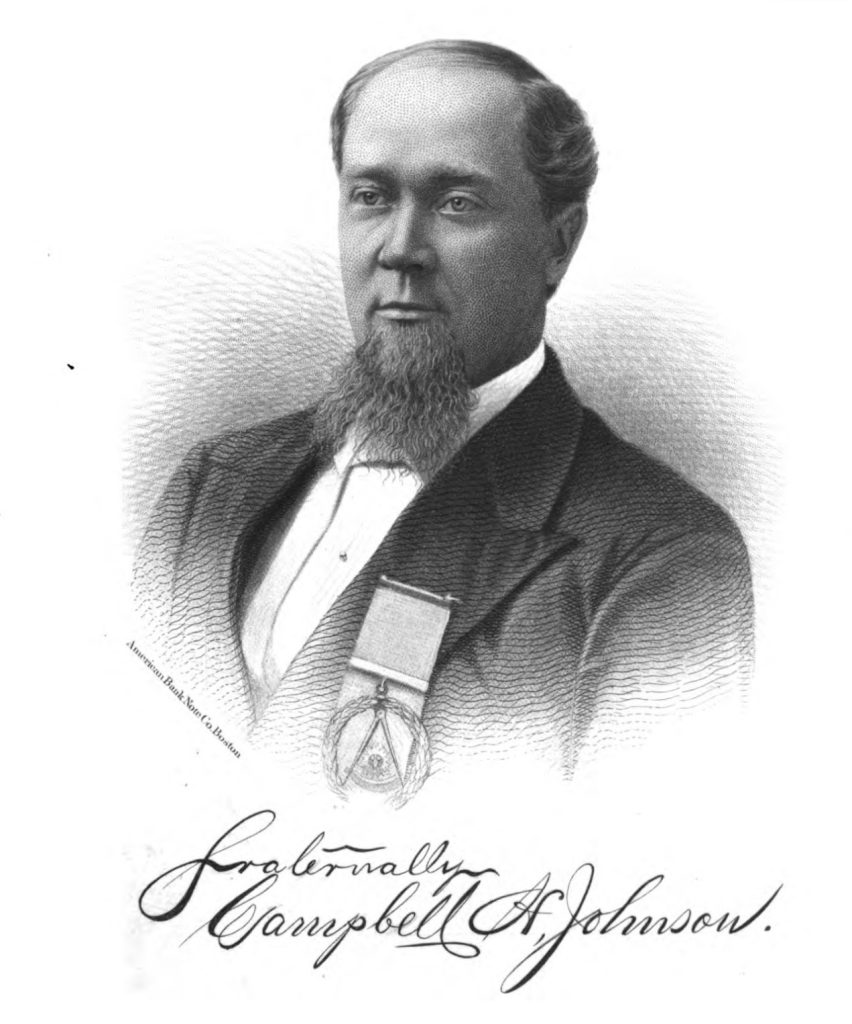
His reputation soon extended beyond Henderson. Johnson was elected Grand Master of Kentucky for 1877–78, a position confirmed by the Grand Lodge of Kentucky’s official register. A formal steel-engraved portrait of him appeared in the Grand Lodge proceedings for 1878.
Johnson participated in several branches of Masonry. Contemporary accounts identified him as a Knight Templar, a thirty-third-degree Scottish Rite Mason, and a former Grand High Priest in Royal Arch Masonry. These distinctions represented decades of involvement extending from his Henderson lodge to the highest levels of the fraternity in Kentucky.
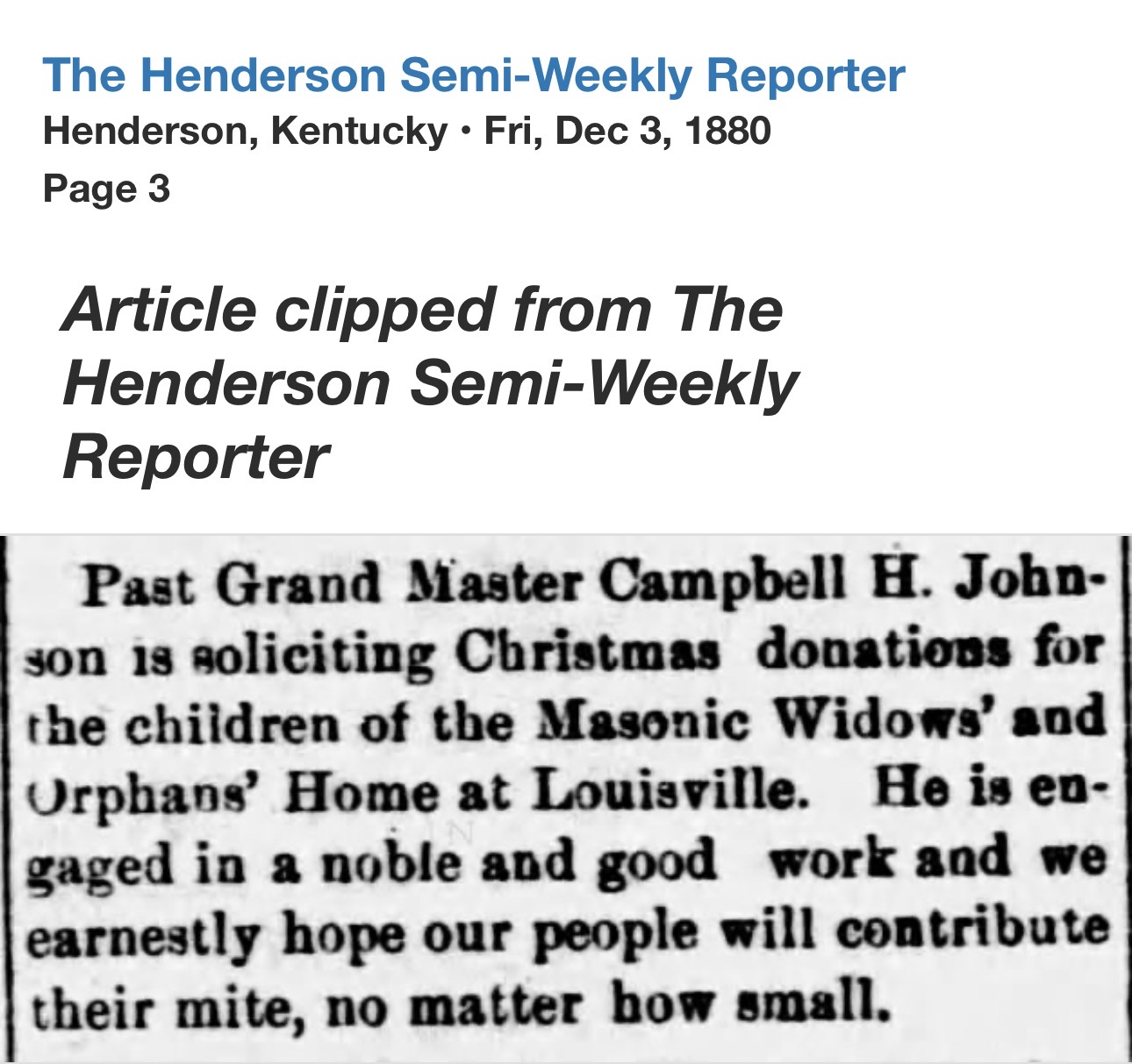
Yet Johnson’s Masonic work was not confined to ceremonies and titles. In December 1880, the Henderson Semi-Weekly Reporter announced that he was collecting Christmas gifts for children at the Masonic Widows’ and Orphans’ Home in Louisville. The newspaper urged Henderson residents to contribute, emphasizing that even small gifts would help make the children’s Christmas happier.
Established in the aftermath of the Civil War, the institution had opened in 1871 to care for Masonic widows and children. Its history is preserved by Masonic Homes Kentucky. Years after his 1880 Christmas appeal, Johnson became the Home’s superintendent. He held the position for more than two years and was remembered as one of its most effective administrators. Failing health forced him to resign and return to Henderson around 1895.
A national Masonic publication later confirmed both his service to the Home and his standing within the fraternity. Its July 1896 memorial noted that Johnson had been Kentucky’s Grand Master, superintendent of the Masonic Home, a Union officer, and a former Grand High Priest. (The Masonic Token, July 15, 1896)
Civic service—and olive leaves from Jerusalem
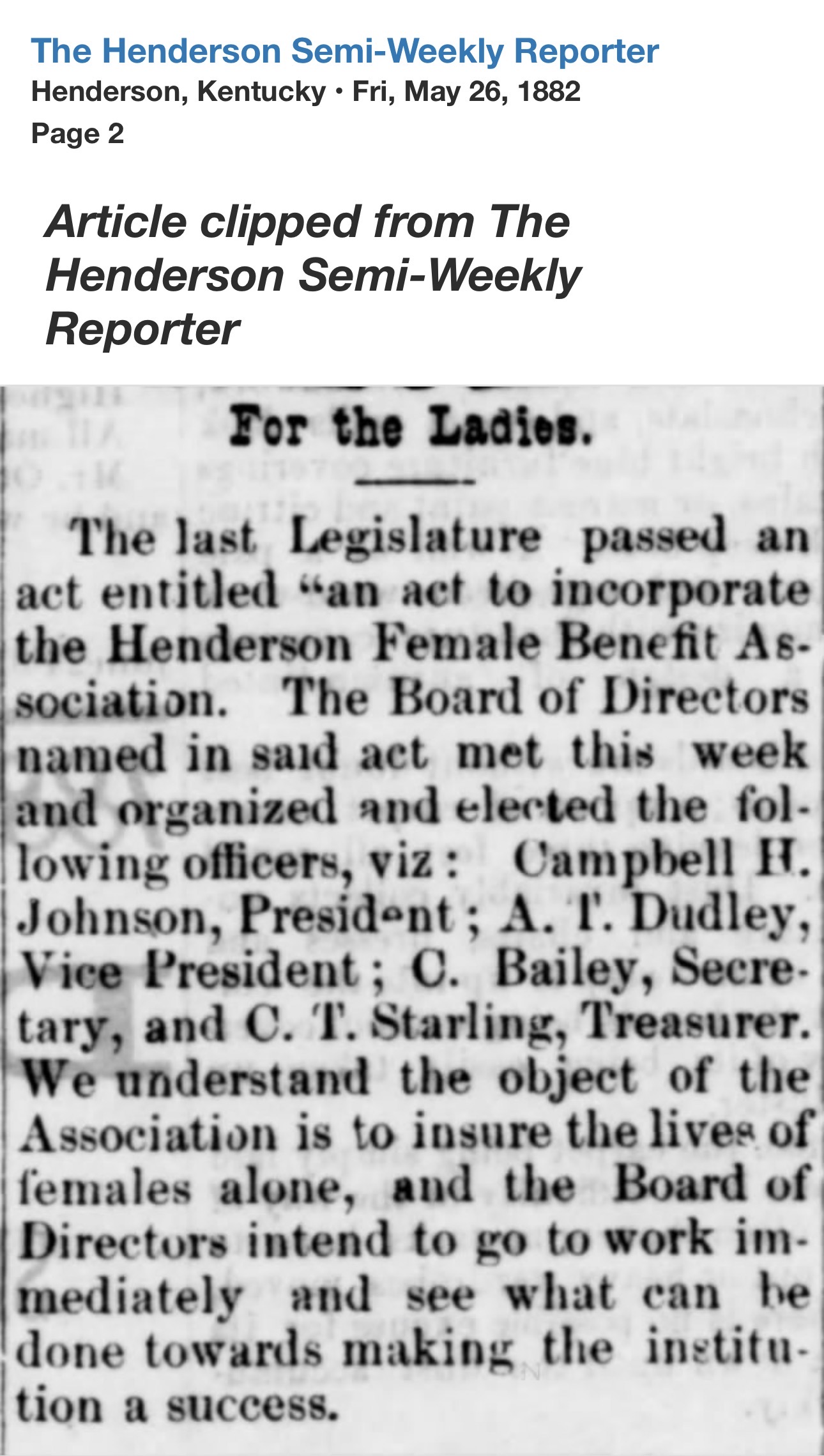
Johnson’s public activity extended beyond Masonry. In 1882, the Kentucky legislature incorporated the Henderson Female Benefit Association, an organization created to provide life insurance for women. Johnson was elected its first president, with several other prominent Henderson residents serving on its governing board.
One newspaper story provides a more personal glimpse of him. In 1880, Johnson received a letter from Jerusalem written by Henry R. Coleman, an American Mason then traveling in the Holy Land. Coleman enclosed olive leaves gathered on Mount Zion as a token of friendship. The Reporter observed that Johnson valued the letter and leaves highly and placed them among his “relics of antiquity.”
The episode suggests both Johnson’s interest in history and the international fraternity to which he belonged. From Henderson, he corresponded with a fellow Mason exploring Jerusalem, meeting Arabs, Druses, Bedouins, and Egyptians, and investigating places associated with biblical and Masonic traditions.
Final years
Johnson’s later life was marked by declining health. His obituary reported that he suffered paralysis on one side and later experienced a sunstroke from which he never fully recovered. After a prolonged illness, he died at approximately seven o’clock on the evening of June 19, 1896. The cause was given as Bright’s disease, the period’s name for a serious kidney disorder.
He was survived by Fannie and their five children. His funeral was conducted from the family residence on Sunday morning, June 21.
Campbell H. Johnson’s life connected Henderson with some of the defining institutions and events of nineteenth-century Kentucky. He served the Union while his brother became a Confederate commander. He built a professional life as a druggist, led Kentucky’s Masons, participated in local civic enterprises, and devoted his later years to children who had lost the security of a family home.
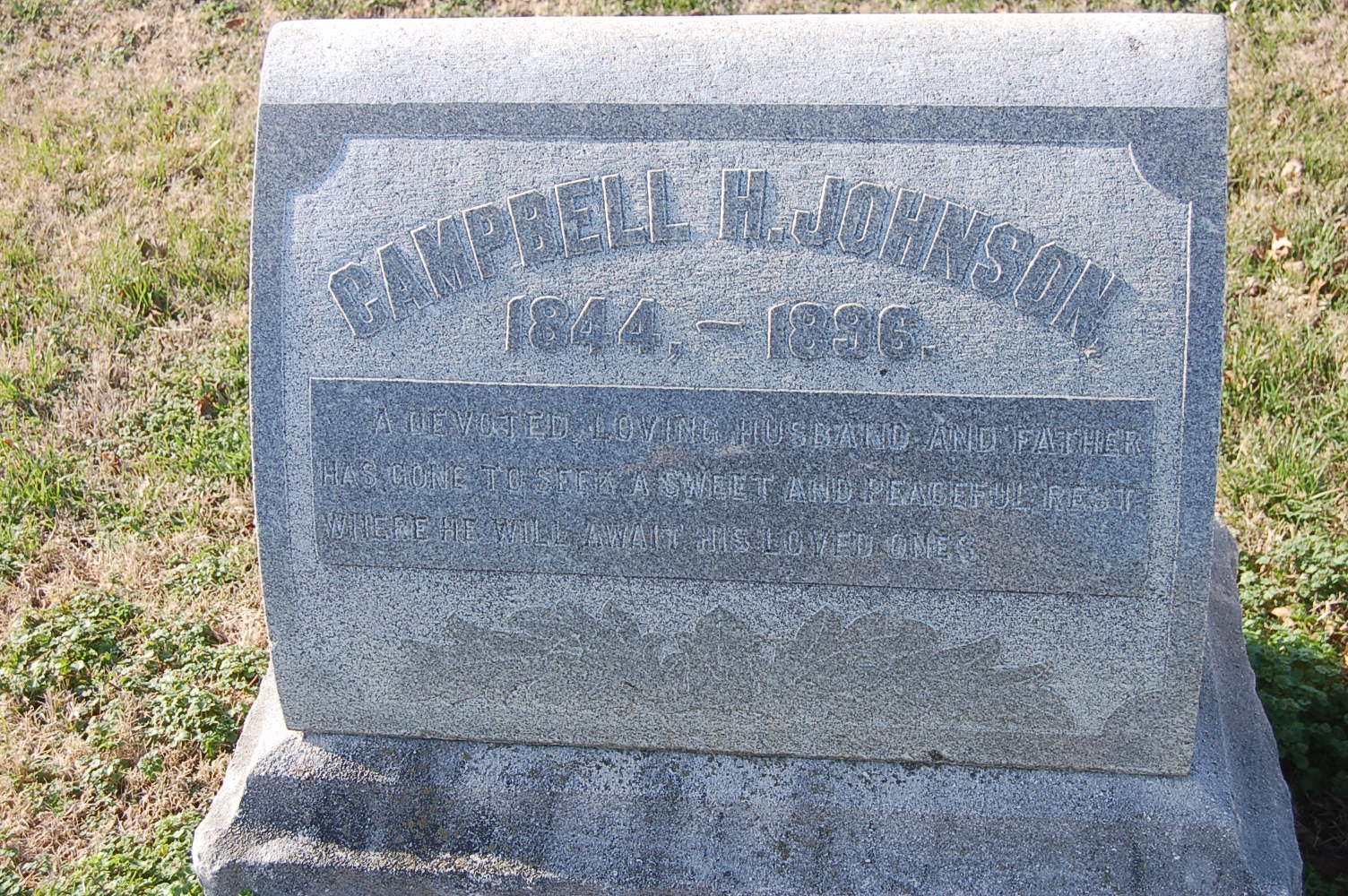
The inscription placed on his gravestone summarized the more private legacy left to his family:
A devoted loving husband and father has gone to his sweet and peaceful rest where he will await his loved ones.
Sources:
United States census, Henderson County, Kentucky, 1850.
Henderson County marriage record for Campbell Johnson and Fannie Evans, May 16, 1867.
Civil War pension index for Campbell H. Johnson and widow Fannie E. Johnson.
Henderson Semi-Weekly Reporter, November 2 and December 3, 1880; May 26, 1882.
Henderson Morning Gleaner, June 20, 1896.
Official Army Register of the Volunteer Force of the United States Army.
Grand Lodge of Kentucky and Jerusalem Lodge No. 9 historical records.
The Masonic Token, July 15, 1896.
Leave a Reply