The Floating Coffin Mystery of 1927
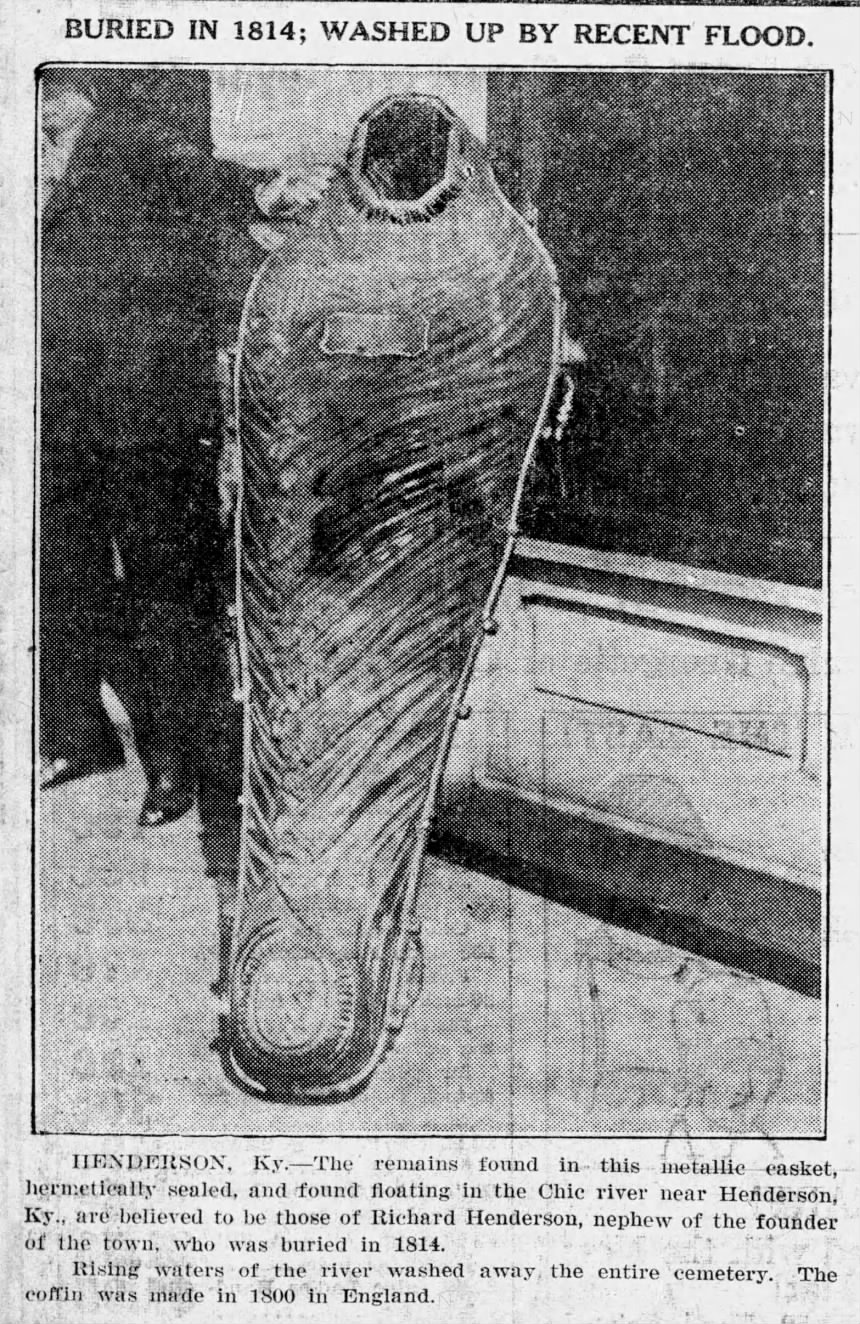
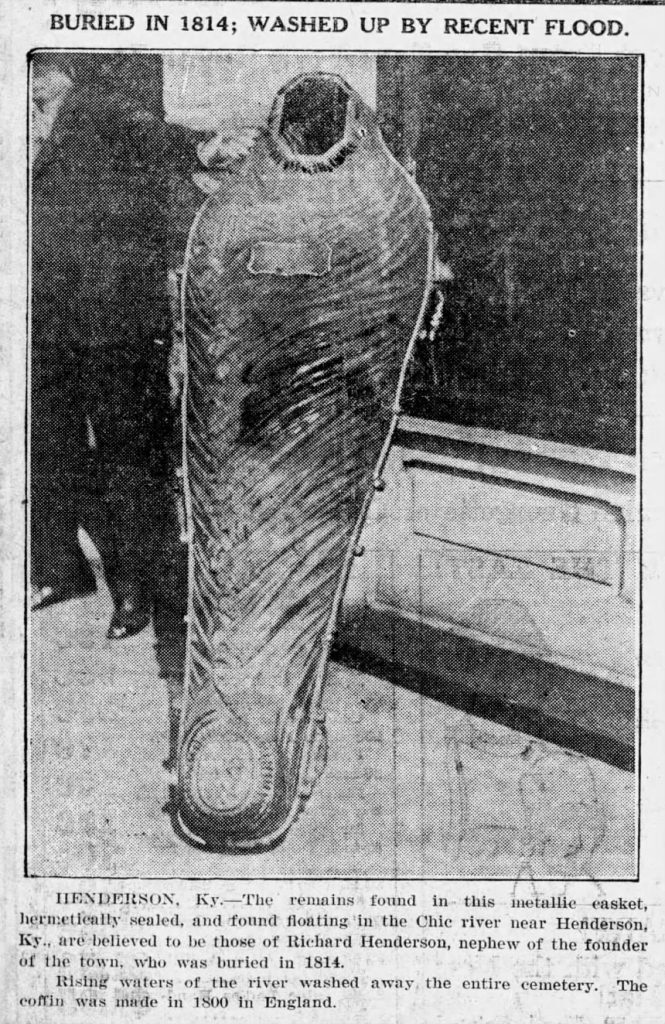
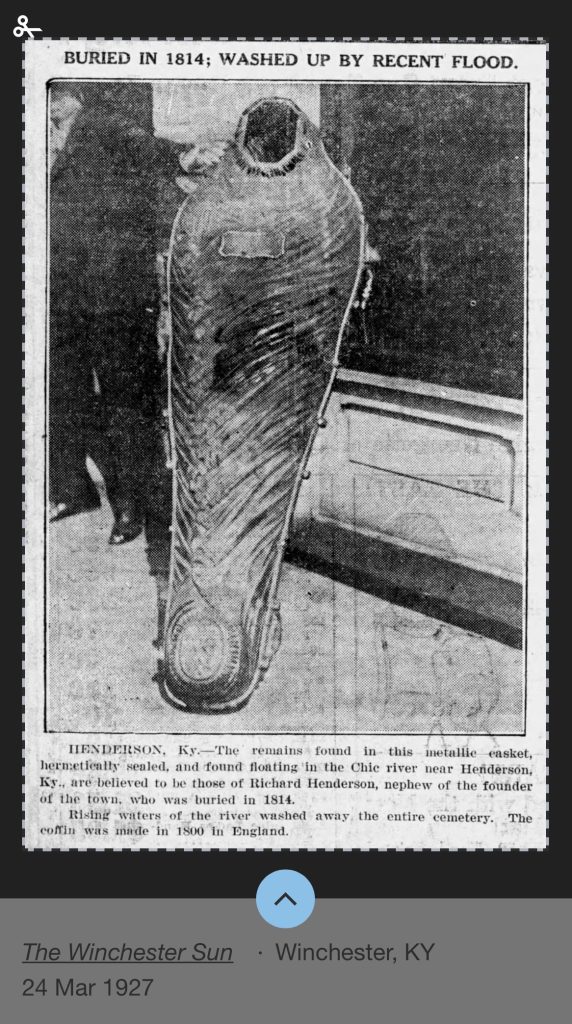
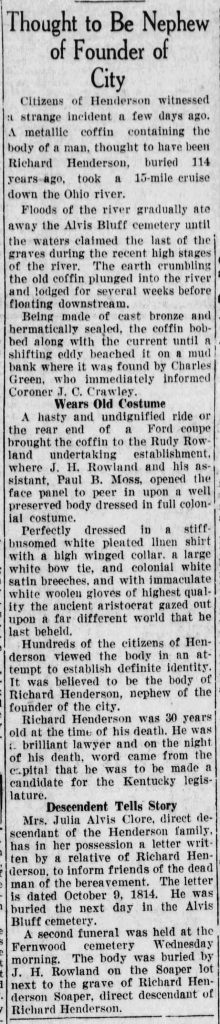
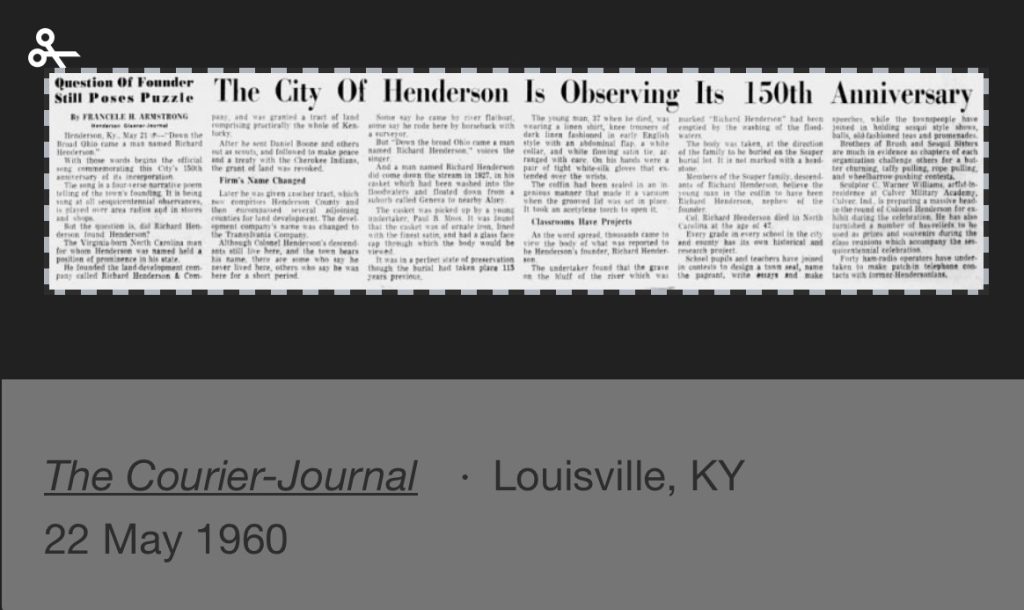
On March 14, 1927, an unusual metal coffin was recovered from the Ohio River below Henderson. Inside were the remarkably well-preserved remains of a young man whose identity would become one of the community’s enduring mysteries.
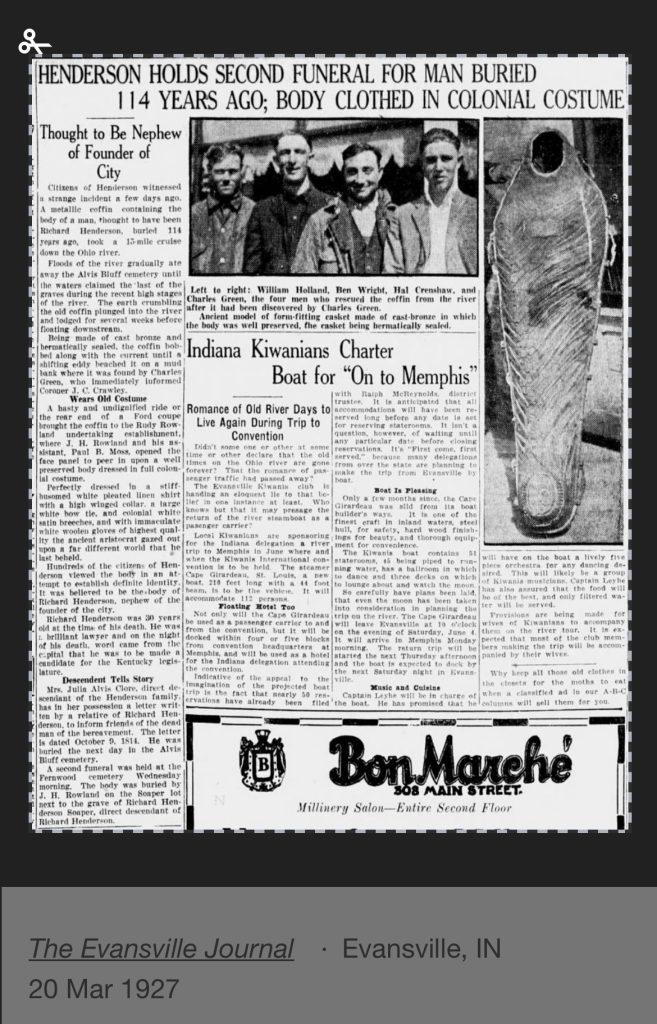
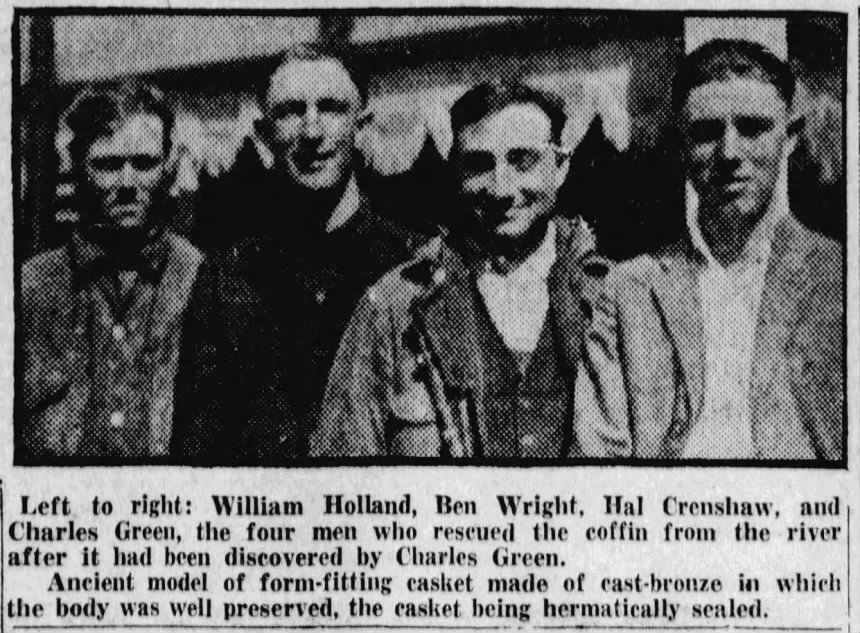
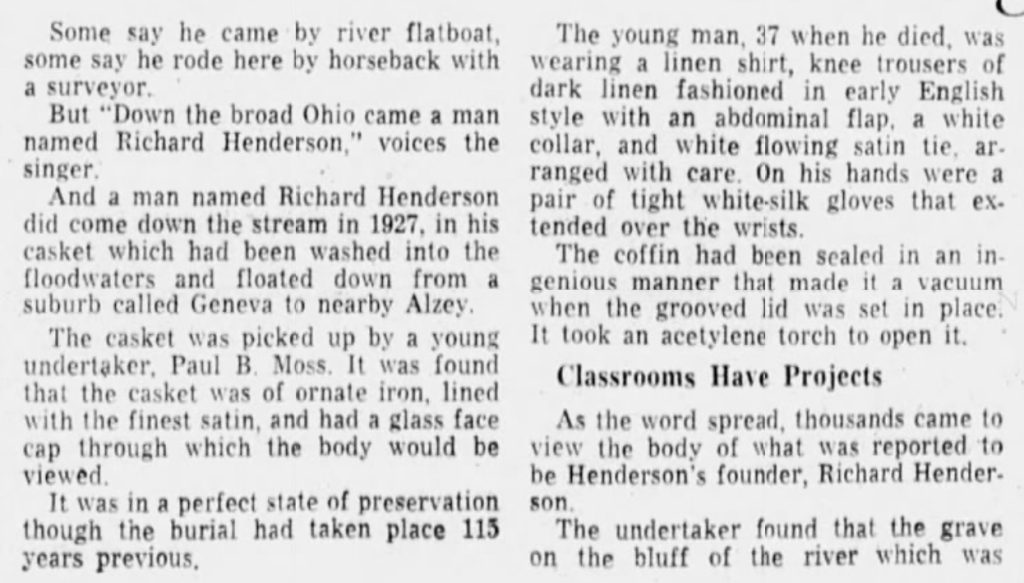
Charles Green was credited with spotting the coffin near the Towles farm, approximately fourteen to fifteen miles downstream from Henderson. Four men brought it ashore, and funeral-home assistant Paul B. Moss helped retrieve it with the county coroner.
As Frank Boyett recounted in his March 17, 2002, Henderson Gleaner column, the recovery required some improvisation. Poor roads prevented the use of a hearse, so Moss drove his Model T coupe to Smith Mills, then borrowed a team and wagon to reach the riverbank. He ultimately transported the coffin to Henderson strapped to the back of his car.
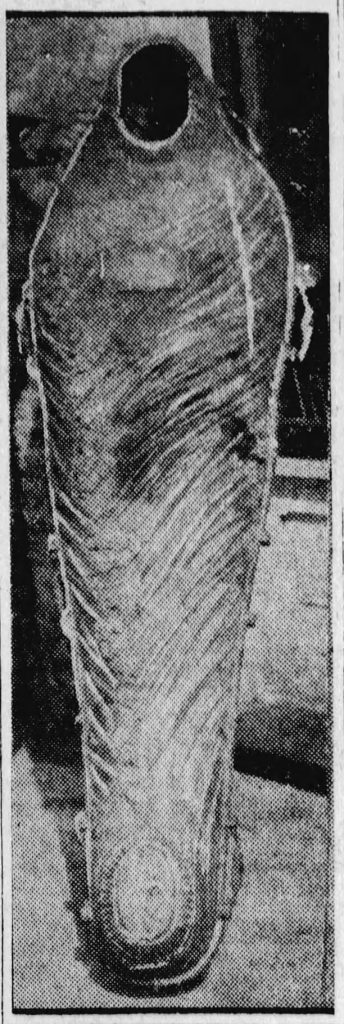
Crowds gathered at Rudy-Rowland’s establishment at First and Green streets. The ornate, body-shaped coffin had a glass viewing window, and the young man inside wore formal clothing and gloves. Hundreds came to look, hoping someone could identify him.
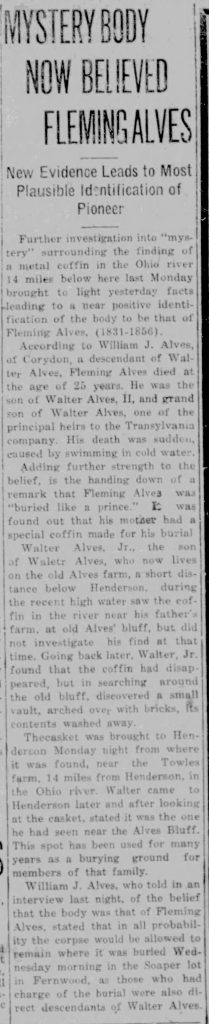
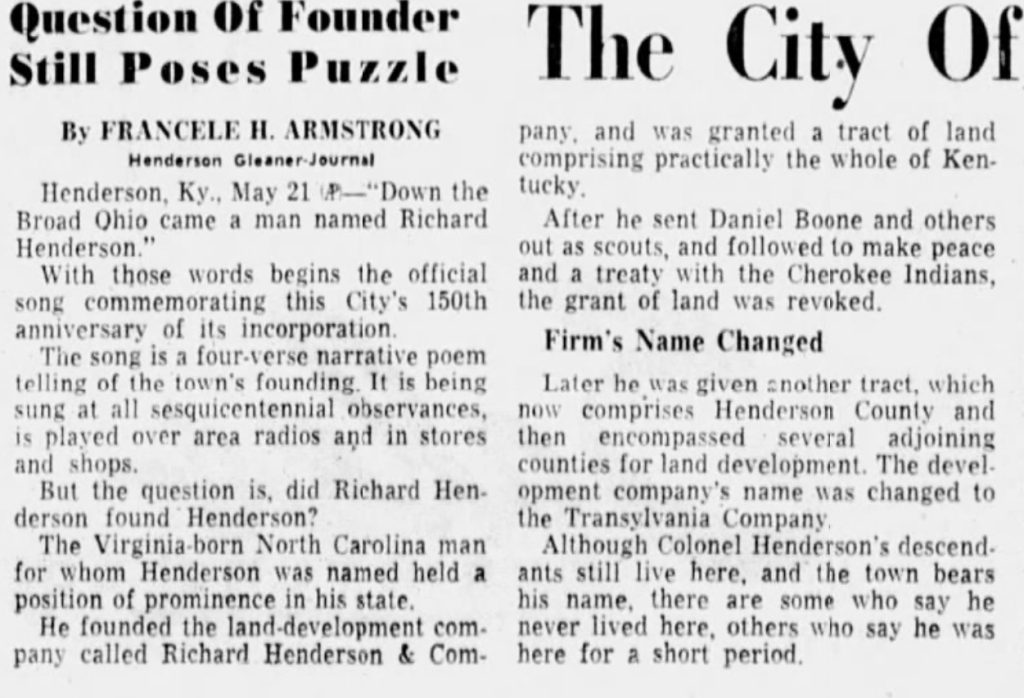
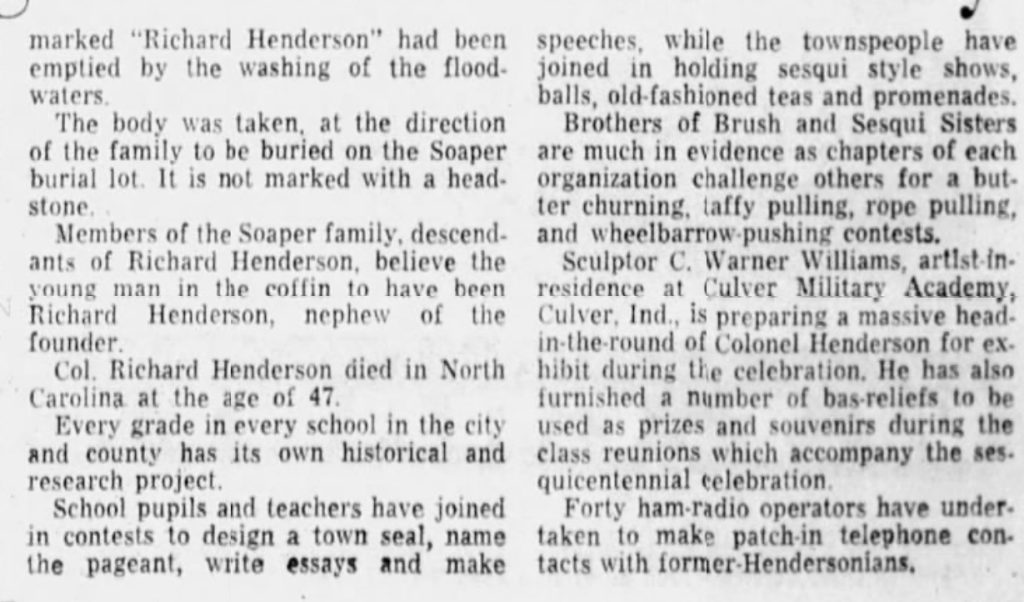
Early speculation connected the remains to Richard Henderson, the city’s namesake. Attention then shifted to his nephew, also named Richard, who reportedly died in 1814.
But the Henderson Morning Gleaner offered another explanation on March 18: Fleming Alves, who lived from 1831 to 1856. Family members remembered that his mother had arranged an elaborate burial. Walter Alves Jr. also reported seeing the coffin near Alves Bluff and discovering an emptied brick burial vault after floodwaters eroded the family cemetery.
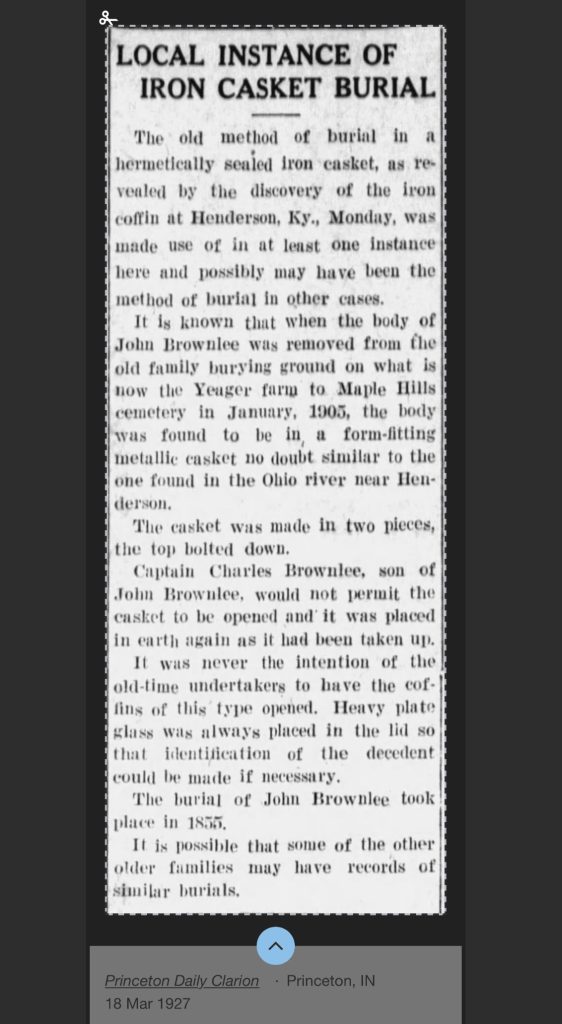
The casket’s appearance supports caution about the earlier dates. It resembles metallic burial cases patented by Almond D. Fisk in 1848, making a mid-century burial plausible, although its manufacturer has not been confirmed.
The remains were reburied at Fernwood Cemetery on March 16, 1927. Boyett reported in 2002 that the grave was unmarked in the Soaper lot.
Fleming Alves remains the strongest documented possibility, but the mystery was never conclusively solved. Moss himself later recalled: “I don’t think it was ever proven beyond a shadow of a doubt.”

Leave a Reply