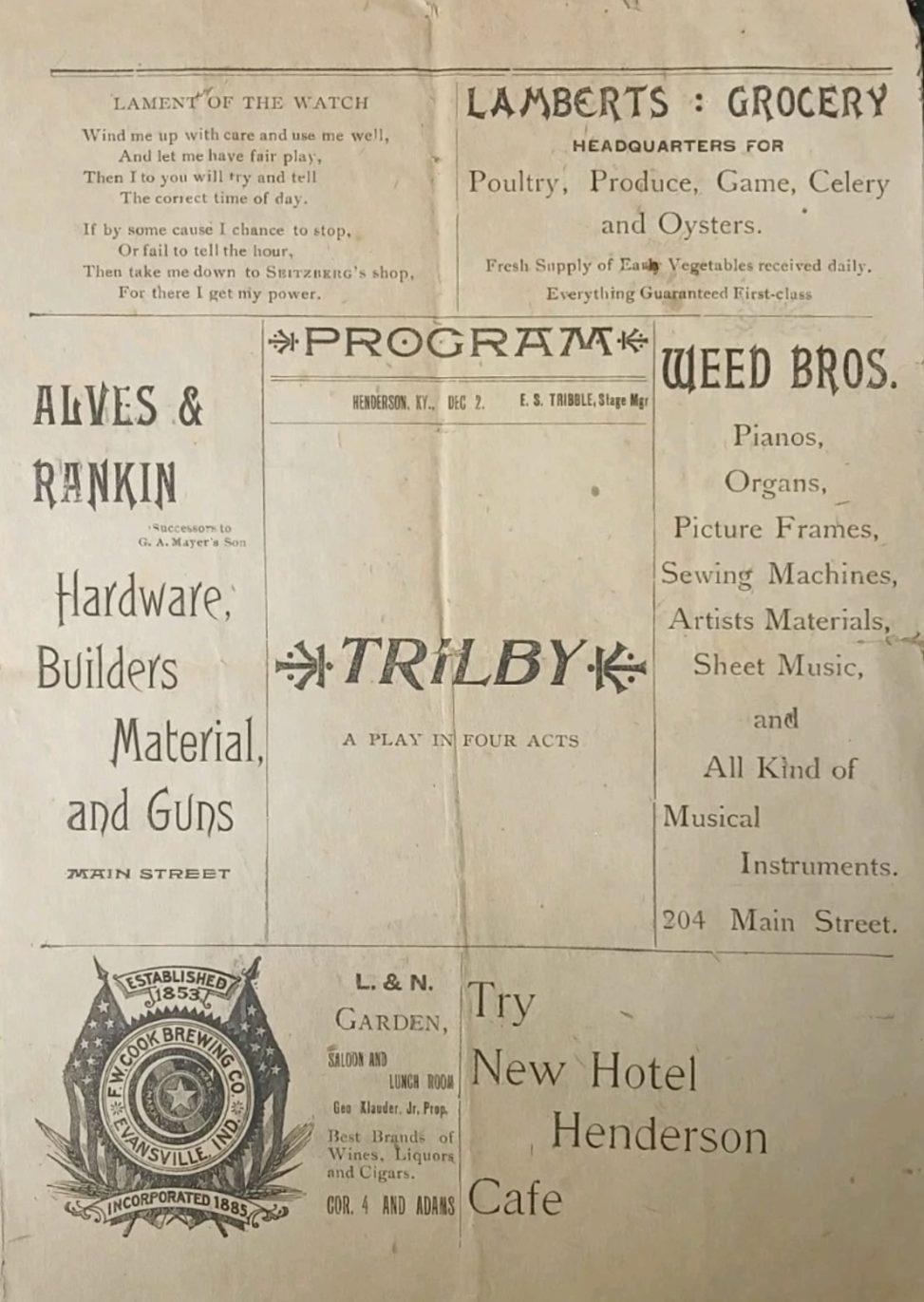
Trilby at the Park Theater in 1895
On December 2, 1895, Henderson’s Park Theater presented Trilby, a four-act adaptation of George du Maurier’s popular novel. A surviving program, together with newspaper clippings, preserves a glimpse of the performance and the city’s businesses.
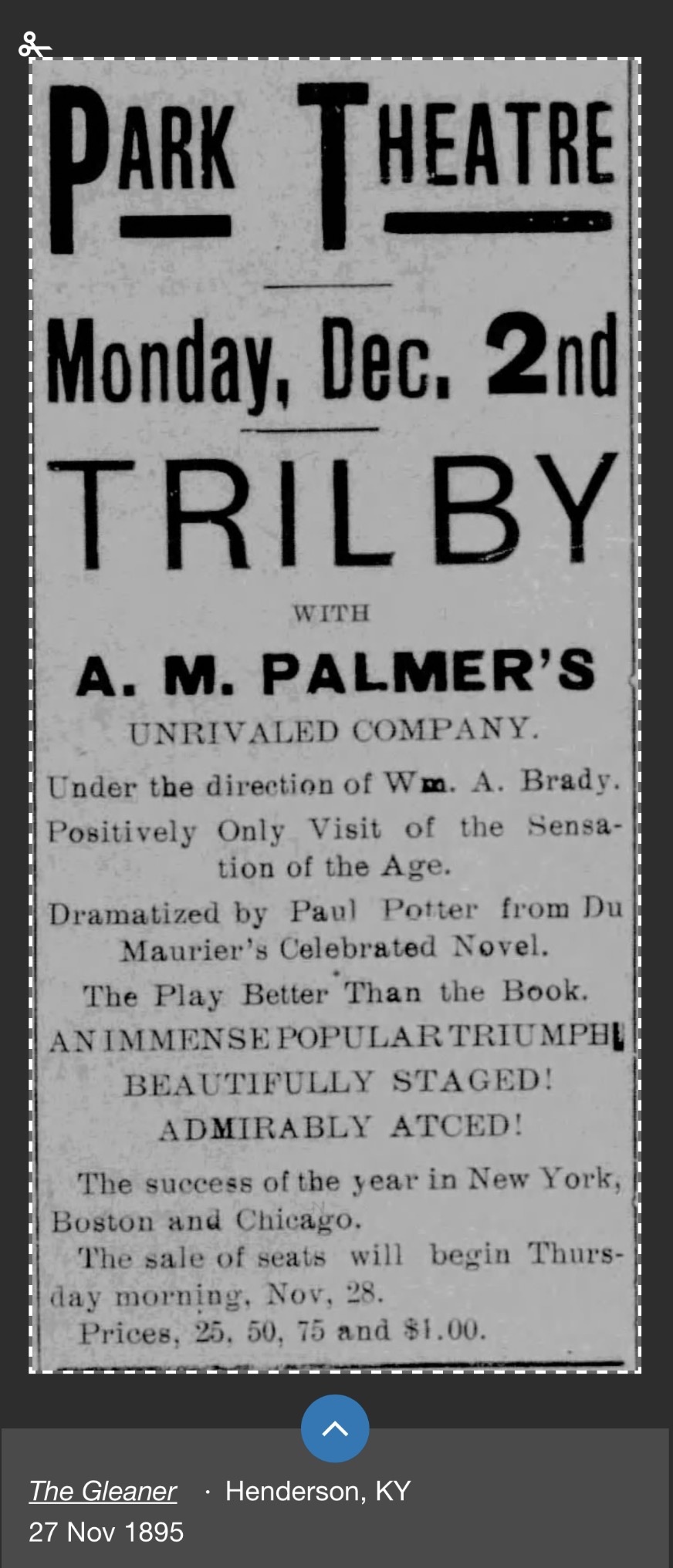
Advance publicity promised an exceptional evening. The Gleaner advertised A. M. Palmer’s “Unrivaled Company,” under the direction of William A. Brady, calling the production the “Sensation of the Age” and declaring, “The Play Better Than the Book.” Tickets ranged from 25 cents to $1.
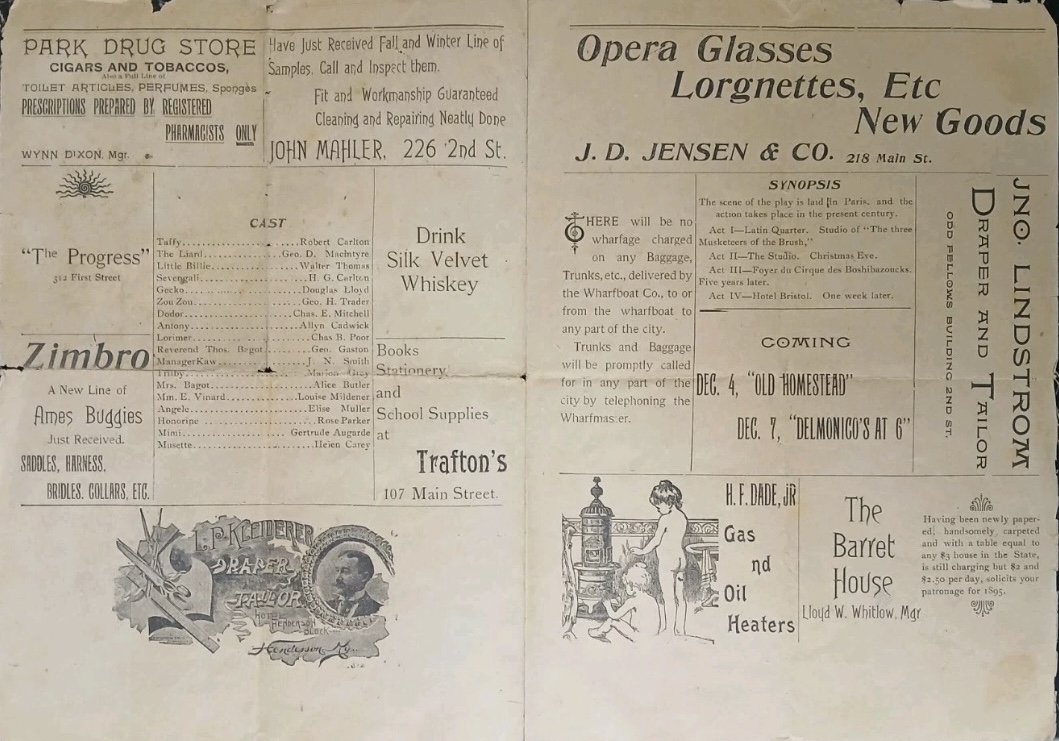
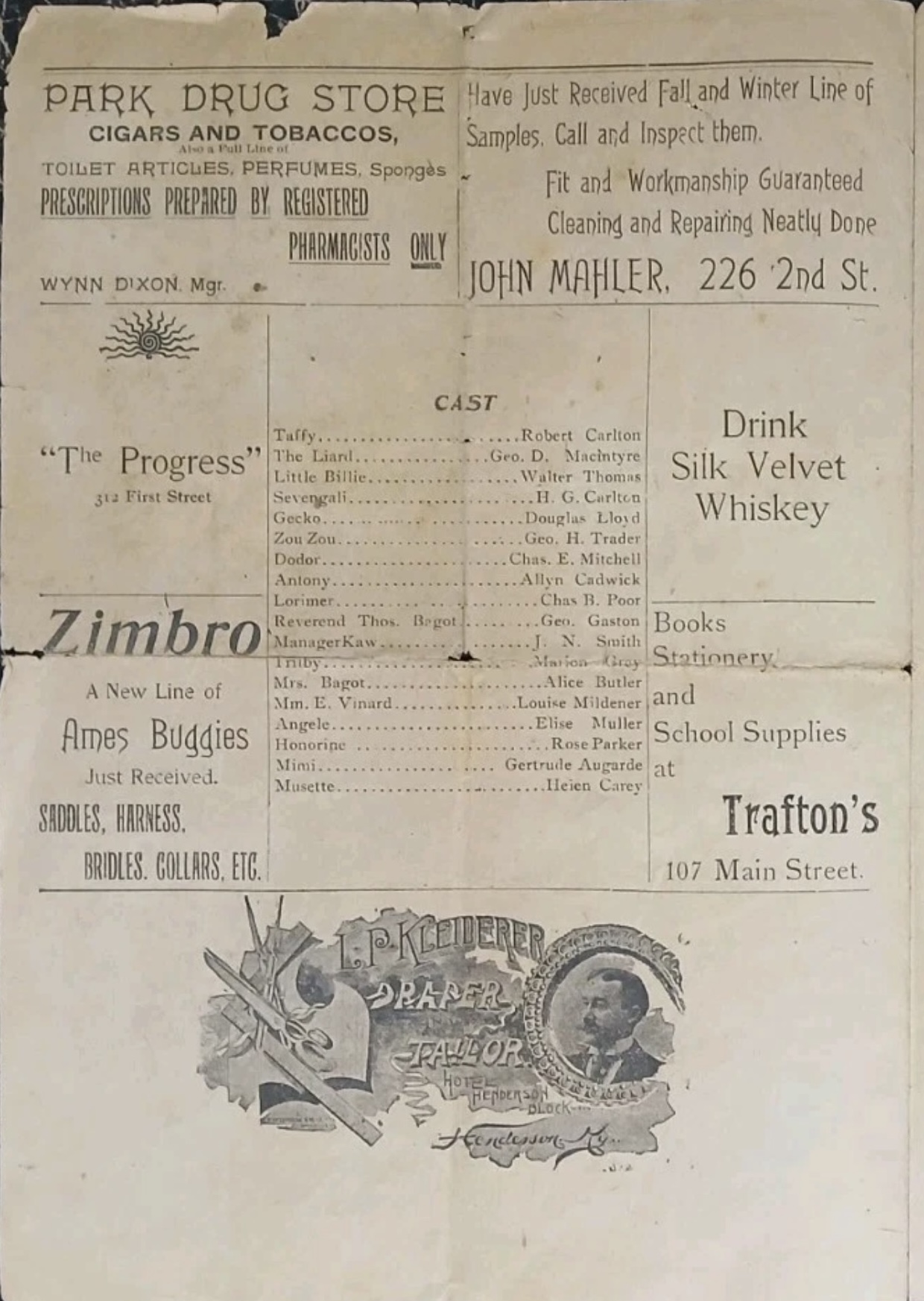
The program listed Marion Grey as Trilby and H. G. Carlton as Svengali, the hypnotist whose control over the young woman drives the story. Eighteen performers appeared in the cast, with scenes set in Parisian artists’ studios, a circus foyer, and the Hotel Bristol.
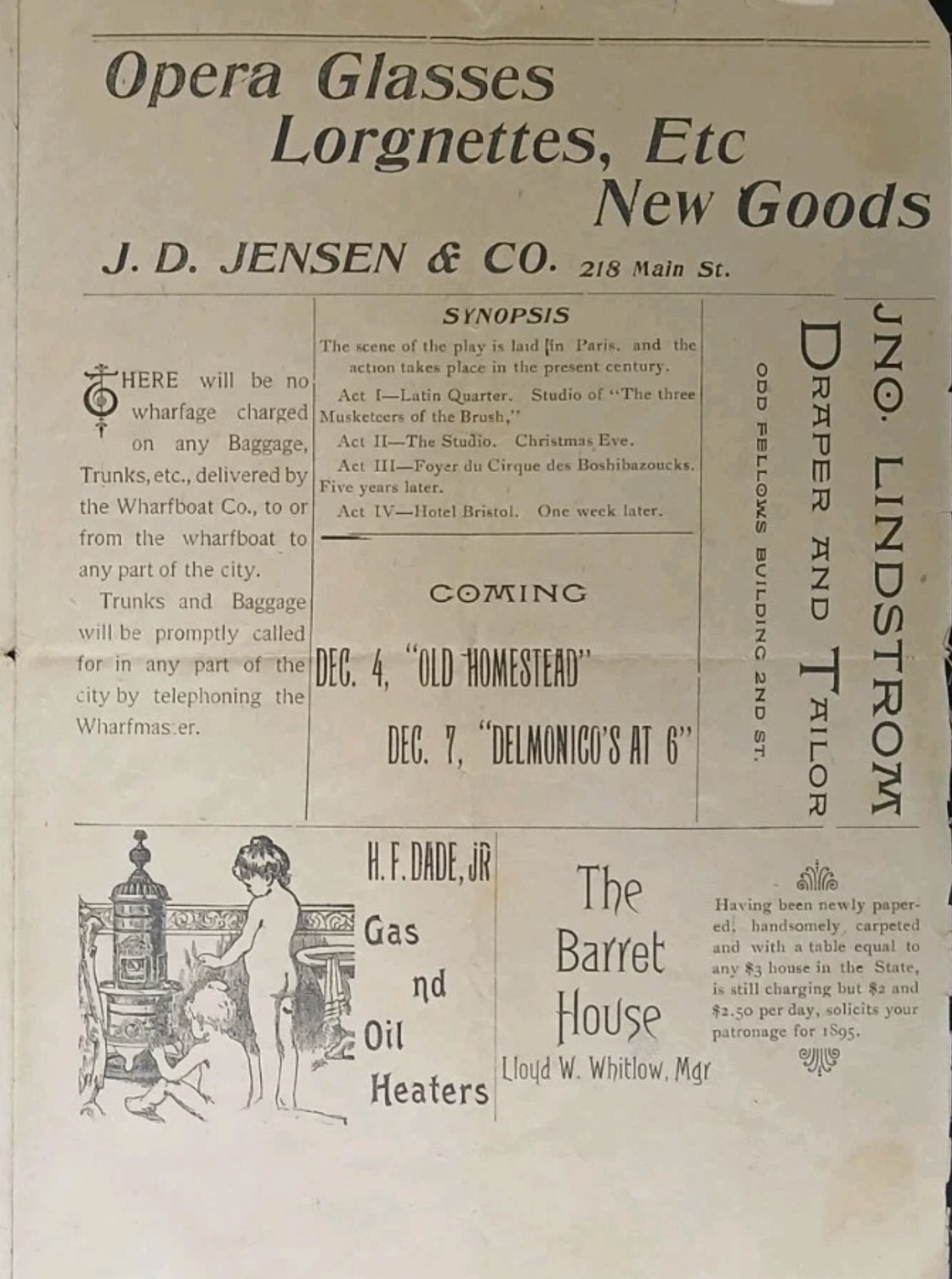
Advertisements surrounding the cast and synopsis capture Henderson commerce in 1895. Weed Bros., at 204 Main Street, offered musical instruments, sewing machines, and picture frames. Trafton’s sold books and school supplies at 107 Main, while J. D. Jensen & Co. advertised opera glasses and lorgnettes at 218 Main. Lambert’s Grocery promoted poultry, game, vegetables, and oysters, and Alves & Rankin offered hardware, building materials, and guns.
The Barret House advertised rooms at $2 and $2.50 per day. A Wharfboat Company notice offered baggage collection anywhere in town by telephoning the wharfmaster, a reminder of Henderson’s riverfront connections.
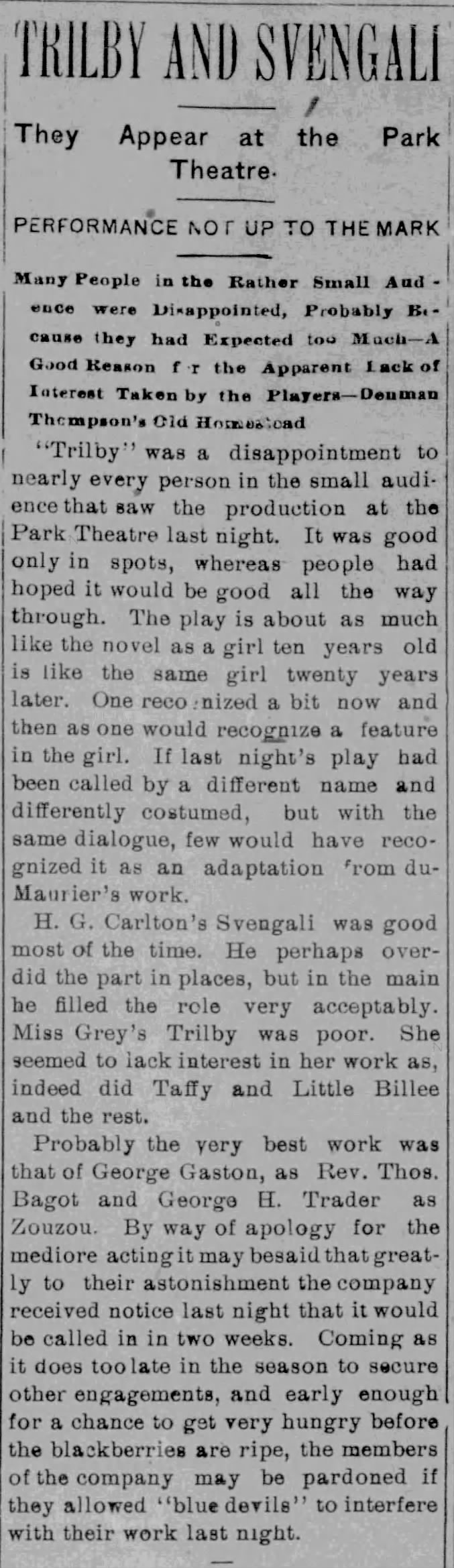
Despite the publicity, the performance disappointed the local reviewer. On December 3, The Gleaner described a small audience beneath the blunt heading “Performance Not Up to the Mark.” Carlton’s Svengali received qualified praise, while Grey’s Trilby was criticized. George Gaston as Reverend Thomas Bagot and George H. Trader as Zouzou earned the strongest compliments.
The newspaper also offered a sympathetic explanation: the actors reportedly learned that evening that their company would be called in within two weeks. Facing uncertain employment as winter approached, they may have allowed discouragement to affect their work.
The program advertised upcoming performances of Old Homestead and Delmonico’s at 6. The Park itself, opened in November 1894, would burn in July 1896. This program preserves one evening in its brief history, recording the performers, merchants, and expectations that shaped Henderson’s theatrical life.
Leave a Reply