W. W. Williams: Dry Goods, Millinery, and a Henderson Merchant’s Life
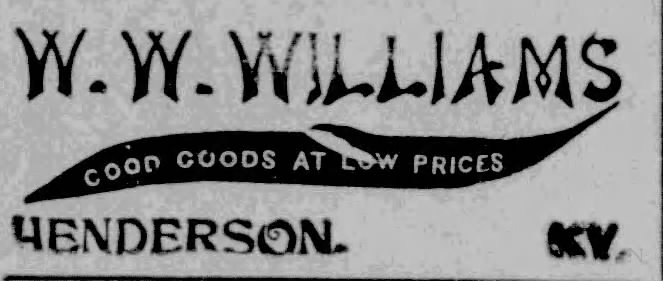
Silk laces, folding fans, fashionable shoes, and hats trimmed with ribbons and feathers: the advertisements of W. W. Williams offer a glimpse of shopping in Henderson around the turn of the twentieth century. Behind the bold newspaper lettering was William Wallace Williams, a Massachusetts-born merchant whose business became a familiar part of the city’s downtown trade.
His store supplied both everyday necessities and the finishing touches of a fashionable wardrobe. Newspaper notices also reveal the man beyond the counter—a husband and father, a bicycle club officer, and a host whose home welcomed friends and church gatherings.
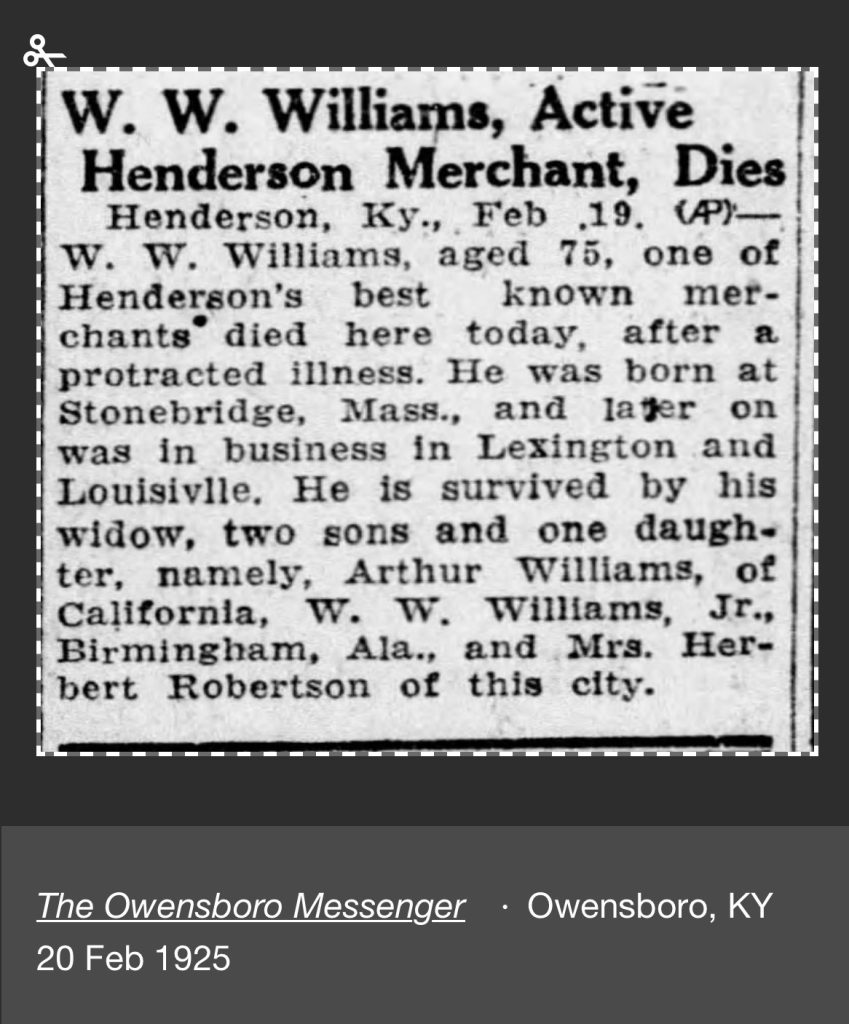
Williams was born in Massachusetts and conducted business in Lexington and Louisville during his career, according to an Associated Press obituary published in The Owensboro Messenger in February 1925. In Henderson, he established the dry goods business that would carry his name through the closing years of the nineteenth century and into the twentieth.
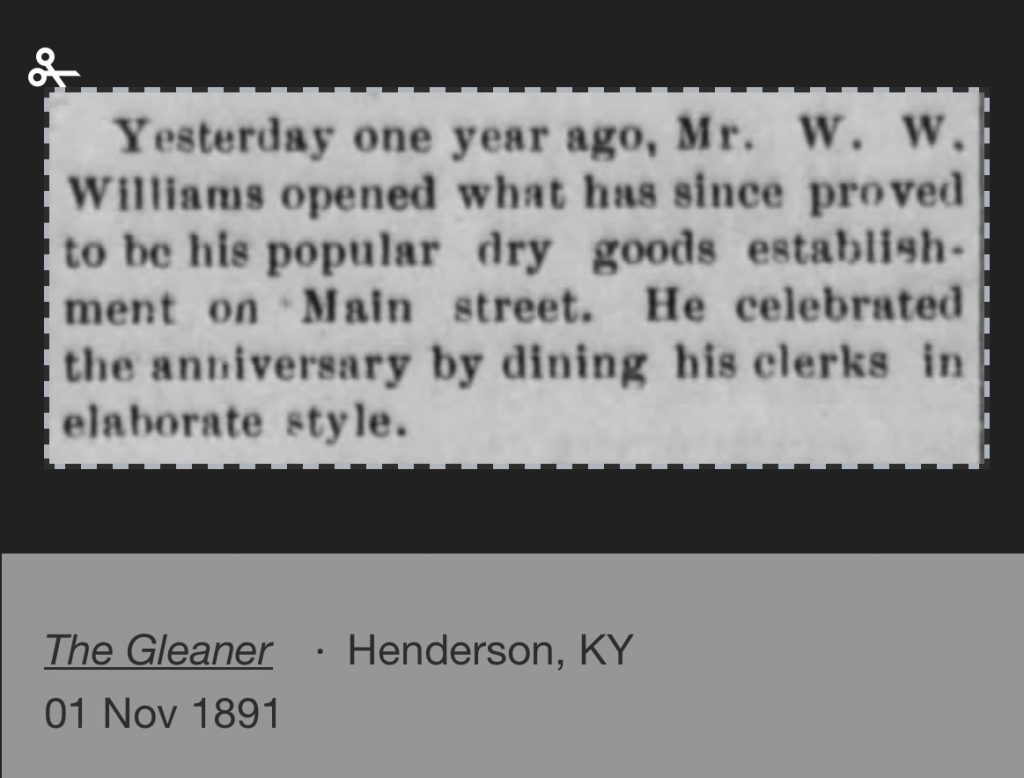
A brief notice in The Gleaner on November 1, 1891, provides a particularly useful clue to the store’s beginnings. The newspaper reported that Williams had opened his Main Street dry goods establishment “yesterday one year ago,” placing that opening on October 31, 1890. To celebrate the first anniversary, he treated his clerks to an elaborate dinner.
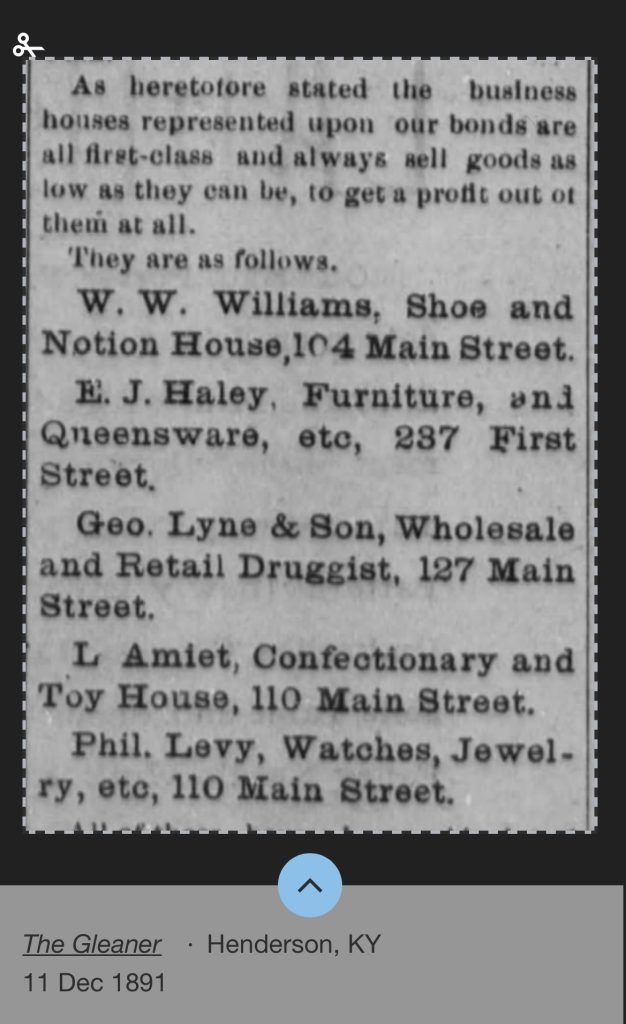
By December 1891, a newspaper listing identified the business as the “W. W. Williams, Shoe and Notion House,” at 104 Main Street. The name emphasized two important parts of his trade: footwear and the small articles and accessories that accompanied clothing and sewing. His advertising, however, shows that the selection reached considerably further.
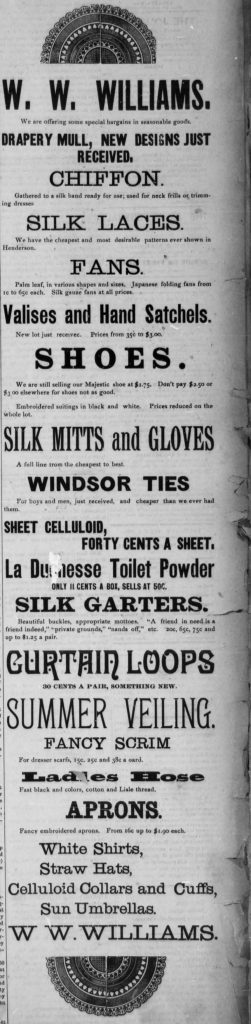
One surviving advertisement listed chiffon for neck frills and dress trimming, silk laces, embroidered suitings, silk mitts and gloves, Windsor ties, summer veiling, hosiery, and embroidered aprons. Customers could also purchase white shirts, straw hats, celluloid collars and cuffs, sun umbrellas, and valises and hand satchels. Household items included drapery fabrics, fancy scrim for dresser scarves, and curtain loops.
The prices help bring the merchandise into focus. Japanese folding fans ranged from one cent to sixty-five cents. Hand luggage was advertised from thirty-five cents to three dollars. The store’s Majestic shoe sold for $1.75, with Williams urging shoppers against paying $2.50 or $3 elsewhere for shoes he claimed were no better. His advertisements combined an extensive selection with a direct appeal to customers looking for value.
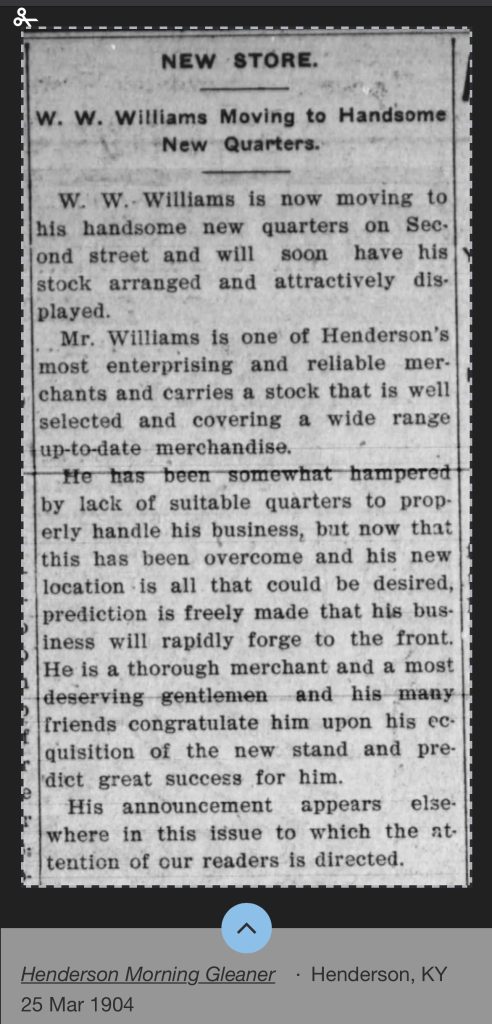
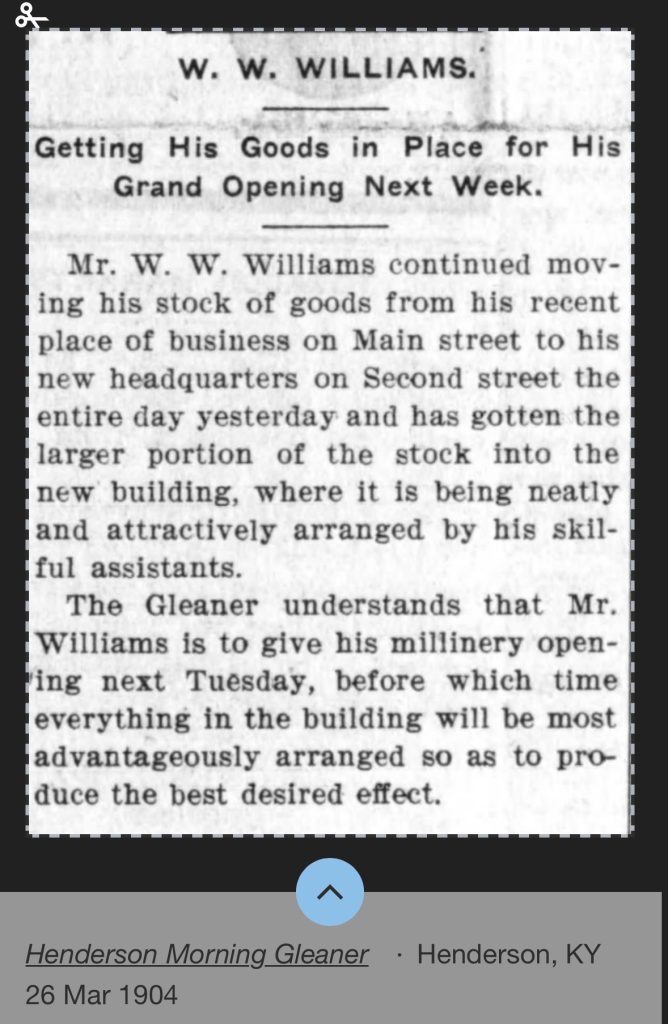
In March 1904, the business entered a new chapter. Williams moved his stock from Main Street to new quarters on Second Street. Reporting the move on March 25, the Henderson Morning Gleaner described him as one of the city’s enterprising and reliable merchants. The paper explained that inadequate quarters had hindered his business and expressed confidence that the new location would allow it to grow.
The following day’s report described the work still underway. Most of the merchandise had reached the new building, where assistants were arranging the goods for display. A millinery opening was planned for the coming Tuesday.
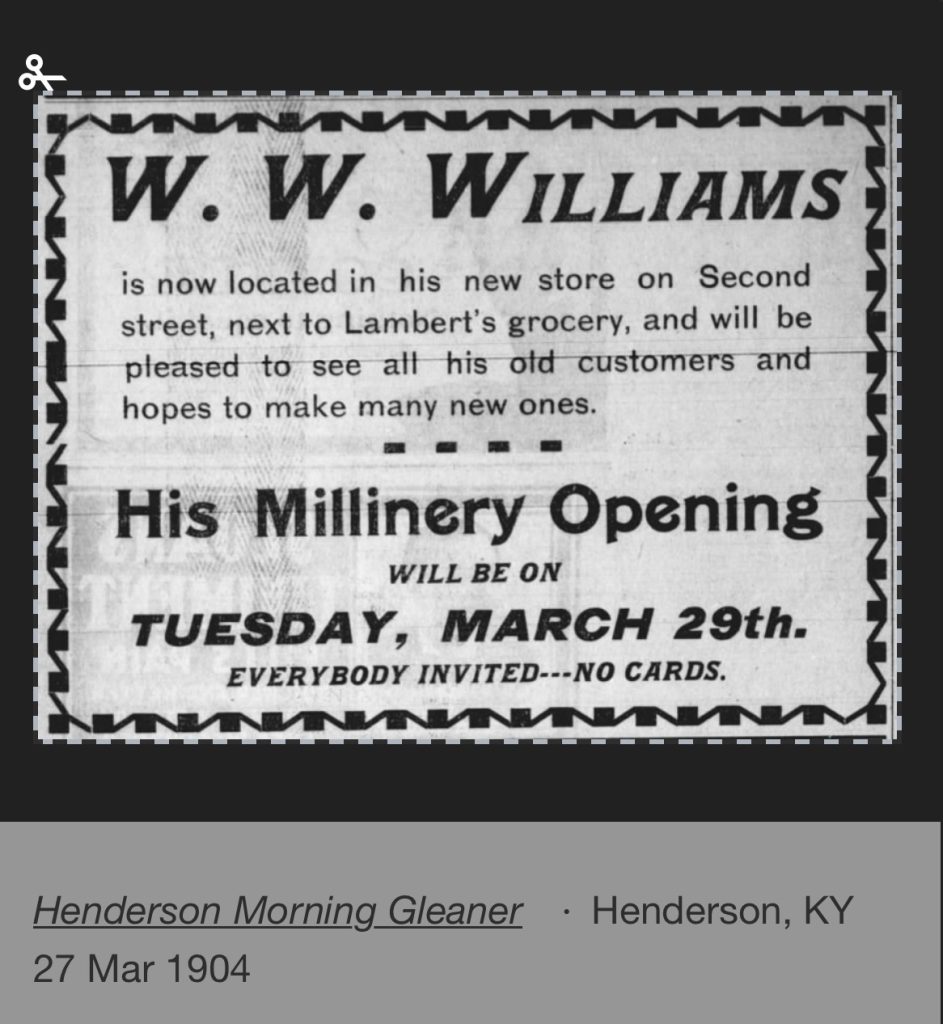
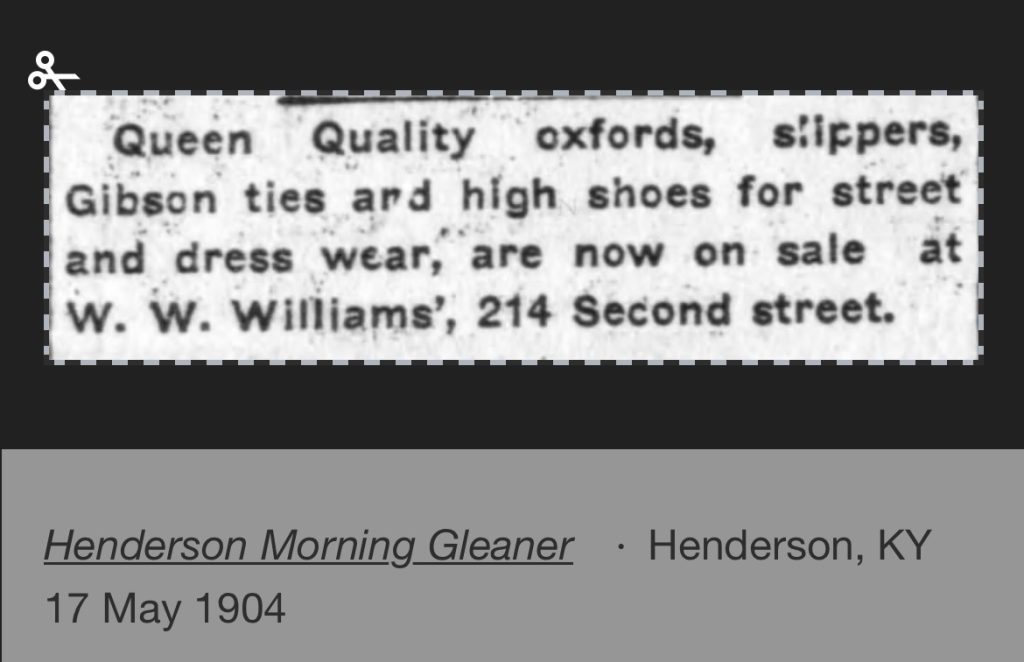
Williams’s own announcement supplied the particulars: the new store stood next to Lambert’s grocery, and the millinery opening would take place Tuesday, March 29. The invitation was deliberately broad: “Everybody invited—no cards.” A May advertisement identified the address as 214 Second Street. IMG_0127.jpeg
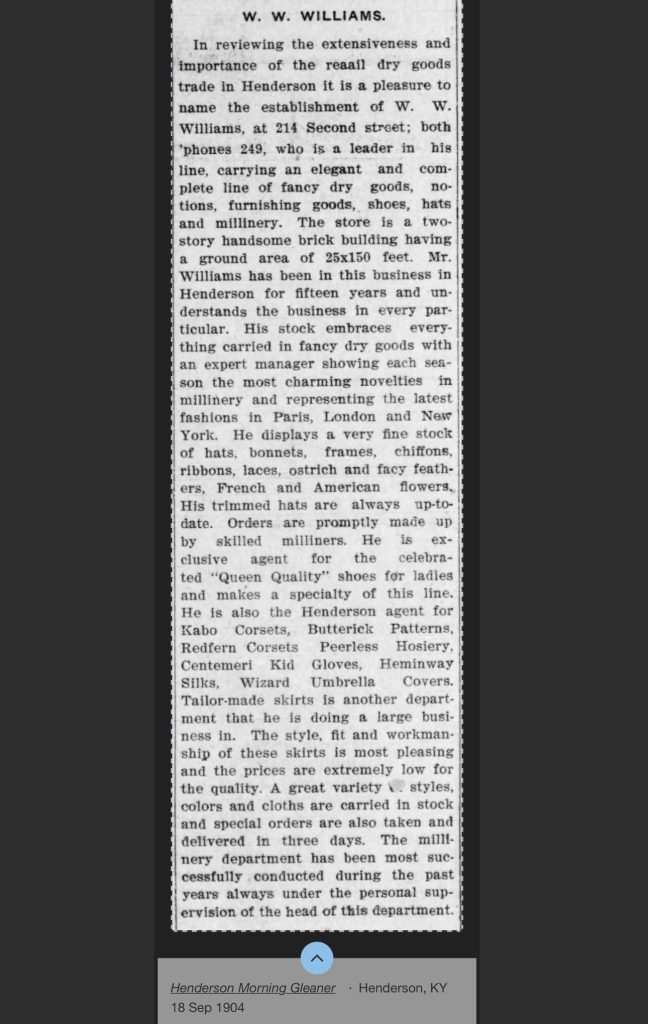
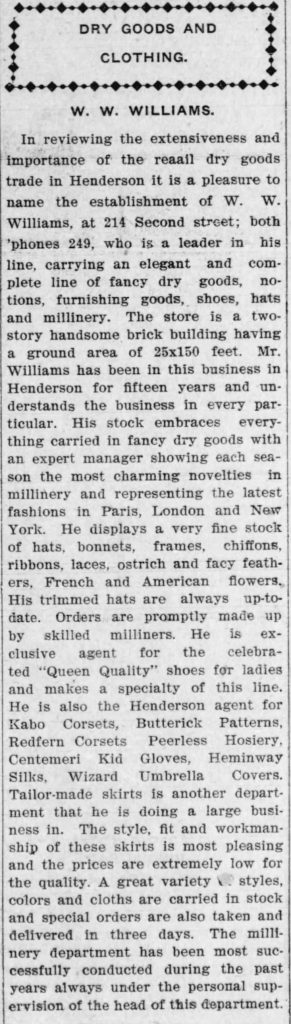
A detailed business profile published that September described the premises as a two-story brick building with a ground area measuring twenty-five by one hundred fifty feet. It listed fancy dry goods, notions, furnishing goods, shoes, hats, and millinery among the store’s principal lines. Customers could reach the business at number 249 on both telephone systems listed in the account.
Millinery received especially enthusiastic attention. The profile promoted fashions associated with Paris, London, and New York and described a stock of hats, bonnets, hat frames, chiffons, ribbons, laces, ostrich and other decorative feathers, and French and American flowers. Skilled milliners made up customers’ orders, offering a service that went beyond selling finished merchandise from a shelf.
Williams also carried recognizable brands. The profile identified him as the exclusive local agent for Queen Quality women’s shoes and named Kabo and Redfern corsets, Butterick patterns, Peerless hosiery, Centemeri kid gloves, Heminway silks, and Wizard umbrella covers among his other lines. Tailor-made skirts formed another department, with the account advertising a variety of fabrics, colors, and styles and promising delivery of special orders in three days.
Although written in the promotional language of a business review, the description preserves a remarkably specific picture of the establishment. Williams offered fabric and patterns for those making clothes, ready-made garments and footwear, and the accessories needed to complete an outfit. His millinery staff added the ability to prepare and trim hats to order.
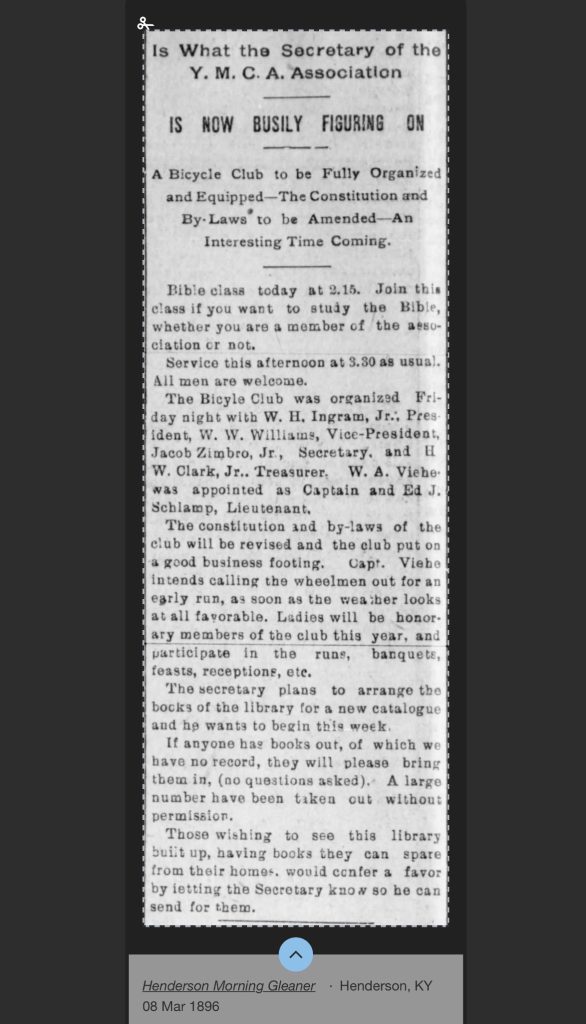
Away from the store, Williams participated in Henderson’s social life. In March 1896, the Henderson Morning Gleaner named him vice-president of a bicycle club organized in connection with the YMCA. W. H. Ingram Jr. served as president, and the club planned rides as weather permitted, along with banquets and other gatherings. Women were to participate as honorary members.
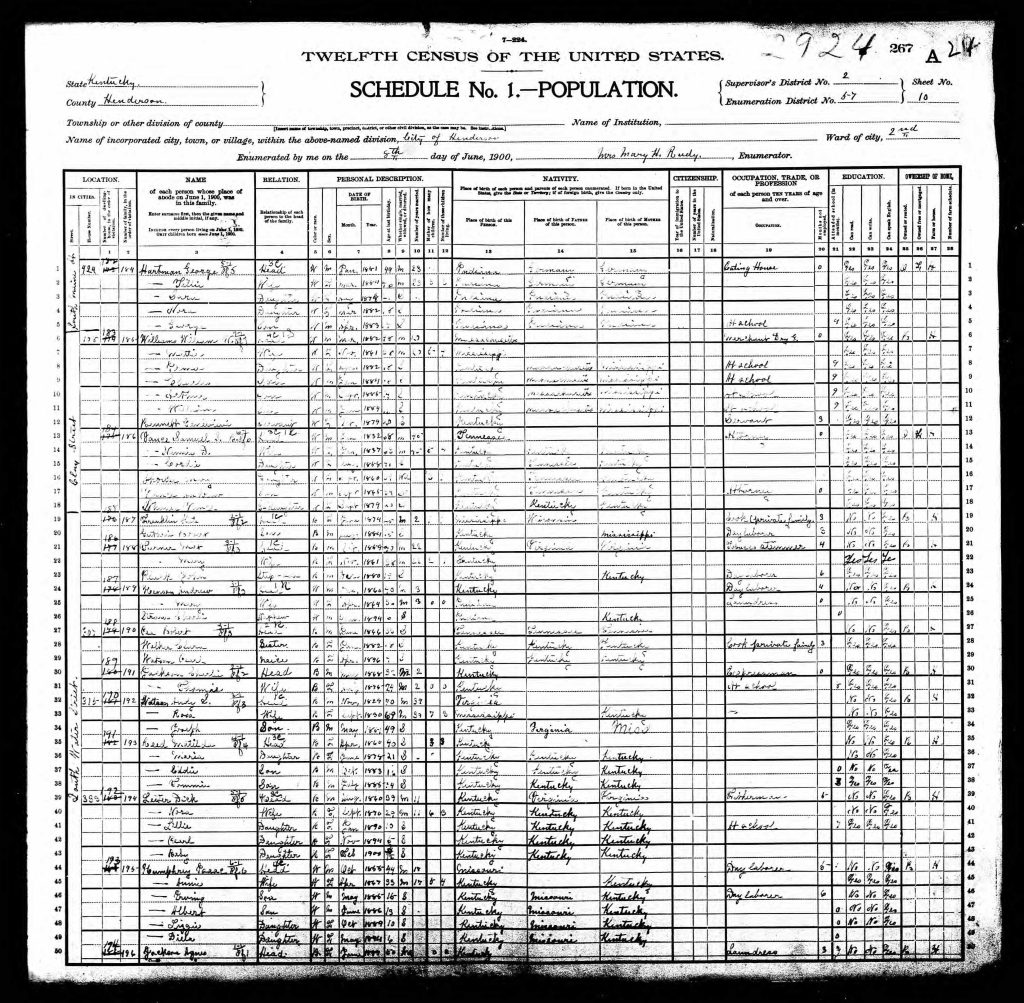
The 1900 federal census recorded Williams with his wife, Mattie, their daughter Irma, and sons Charles, Arthur, and William. His occupation was recorded as a dry goods merchant. The household places the newspaper business notices within a family story that continued well beyond the store’s counters.
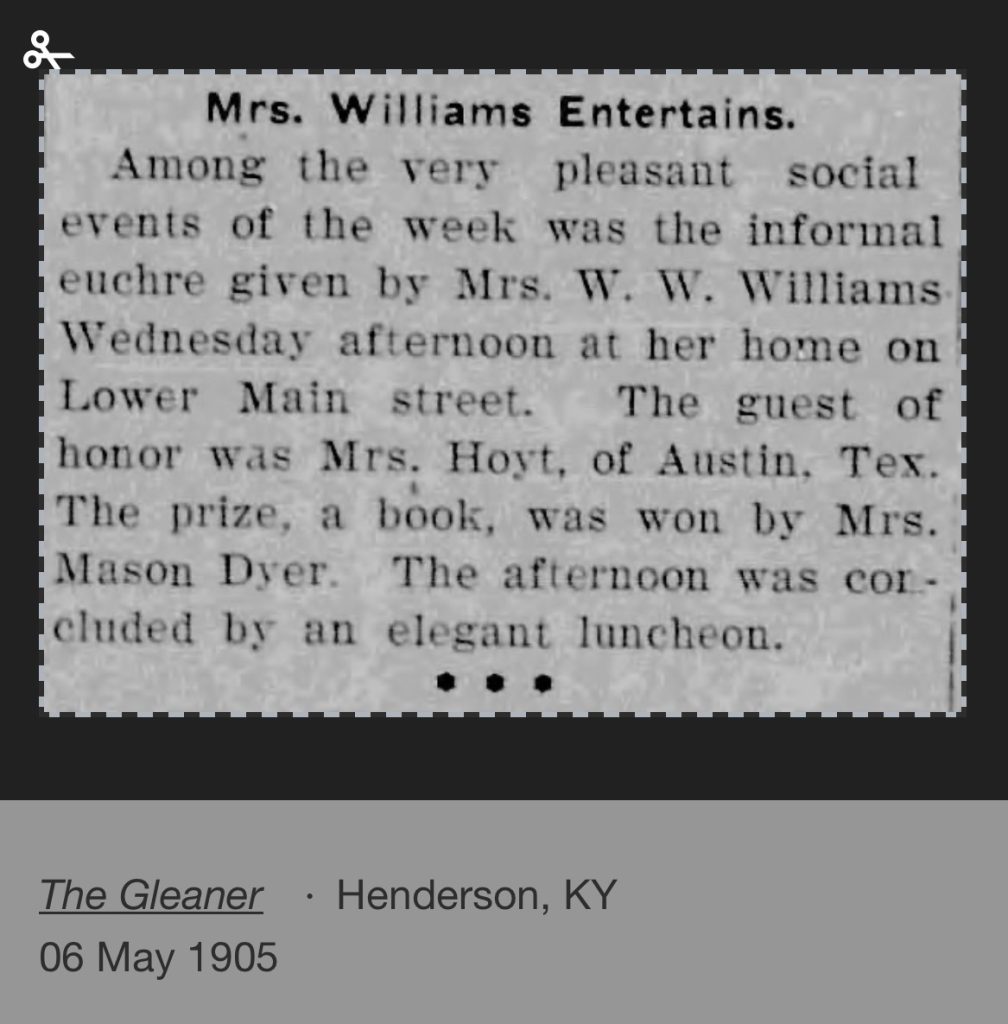
The Williams home also appeared in the society columns. In May 1905, Mrs. W. W. Williams hosted an afternoon euchre gathering at her home on Lower Main Street in honor of Mrs. Hoyt of Austin, Texas. Mrs. Mason Dyer won the prize, a book, and the afternoon concluded with luncheon.
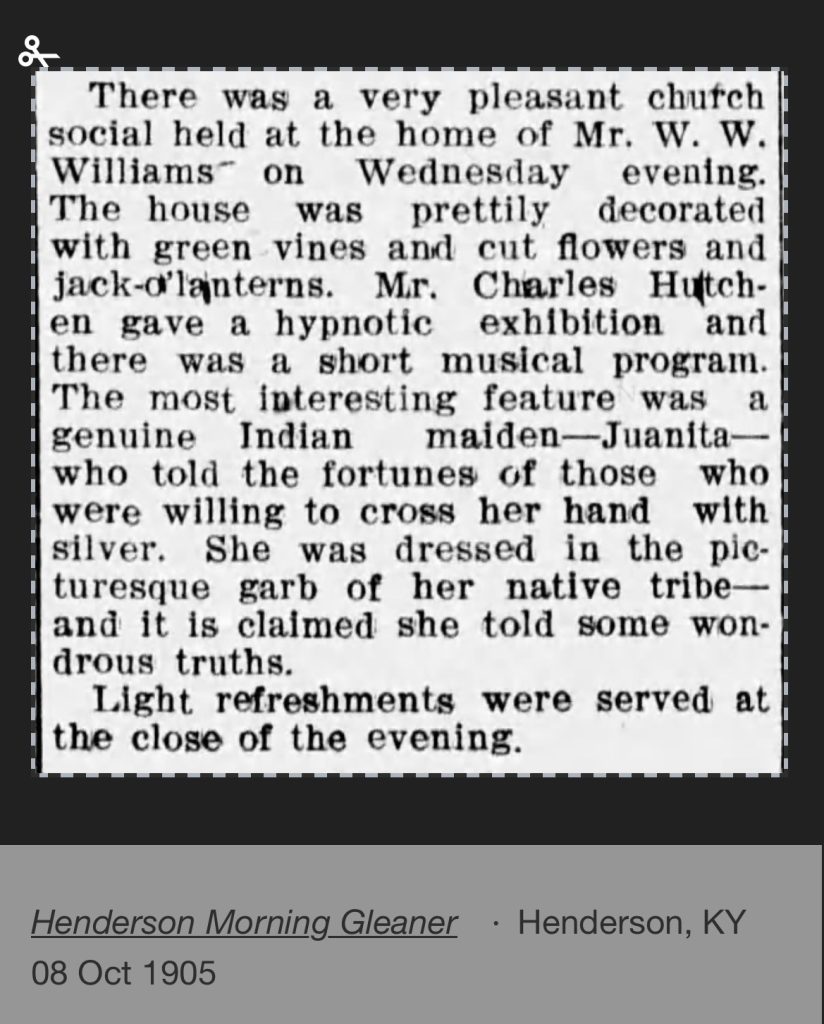
That October, the newspaper described a church social at the Williams home, decorated with green vines, cut flowers, and jack-o’-lanterns. Entertainment included a hypnotic exhibition by Charles Hutchen, a short musical program, and fortune-telling. Refreshments closed the evening. Such notices offer small but revealing glimpses of the family’s place in the community.
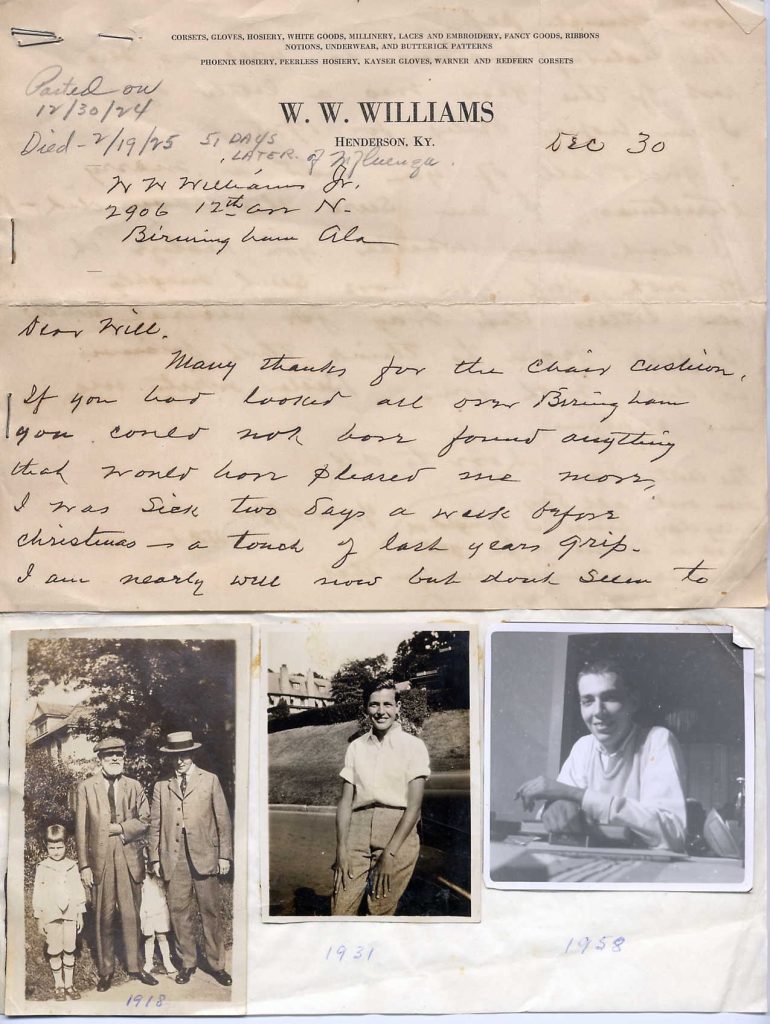
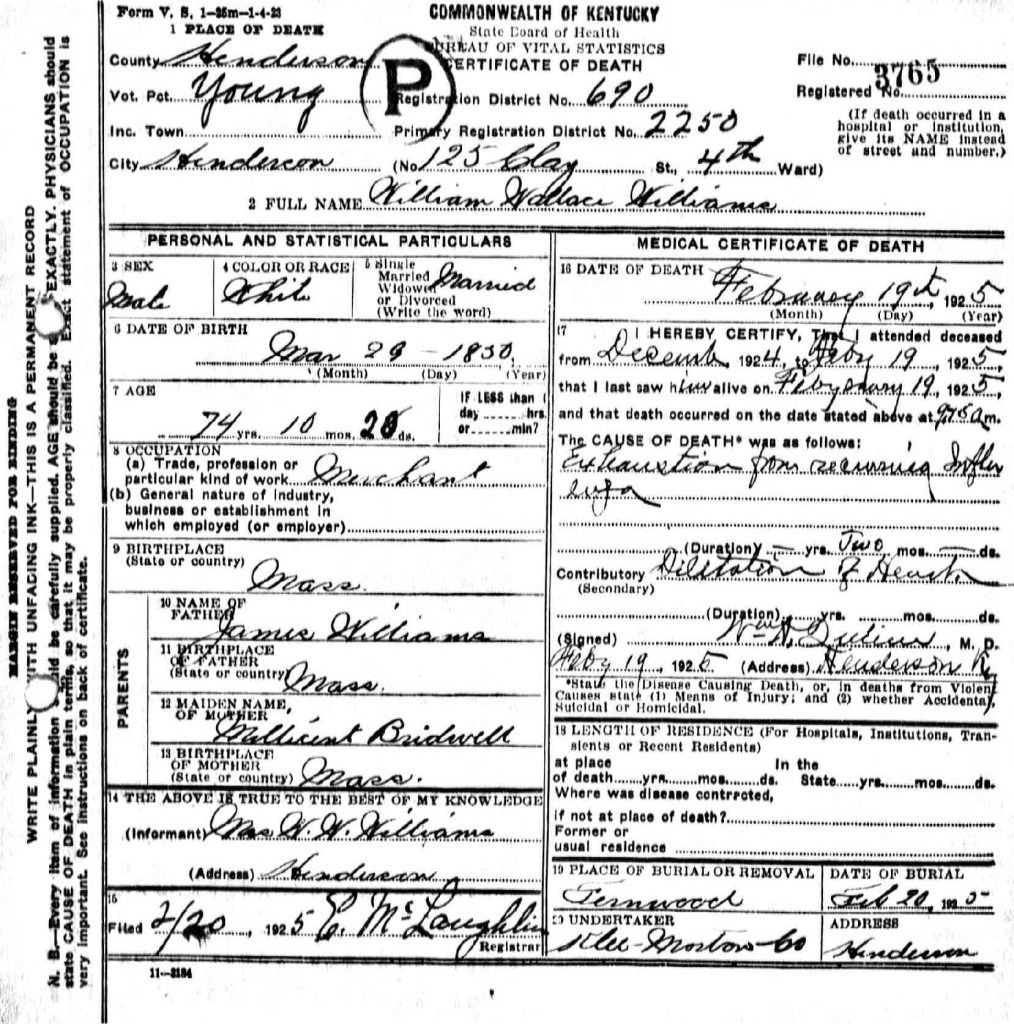
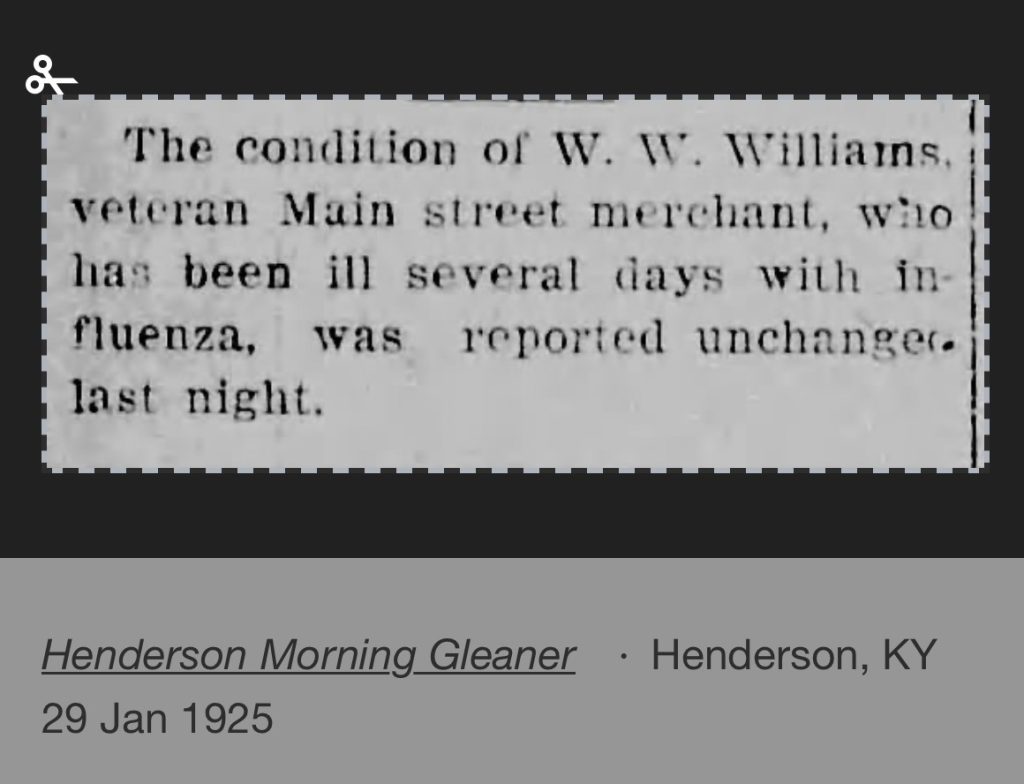
By January 1925, Williams was seriously ill. A January 29 newspaper item called him a veteran Main Street merchant and reported that his condition remained unchanged after several days of influenza. IMG_0184.jpeg He died on February 19, 1925. His death certificate recorded the place of death as 125 Clay Street and attributed his final illness to recurring influenza.
The Associated Press obituary described him as one of Henderson’s best-known merchants. It named his surviving children as Arthur Williams of California, W. W. Williams Jr. of Birmingham, Alabama, and Mrs. Herbert Robertson of Henderson, in addition to his widow.
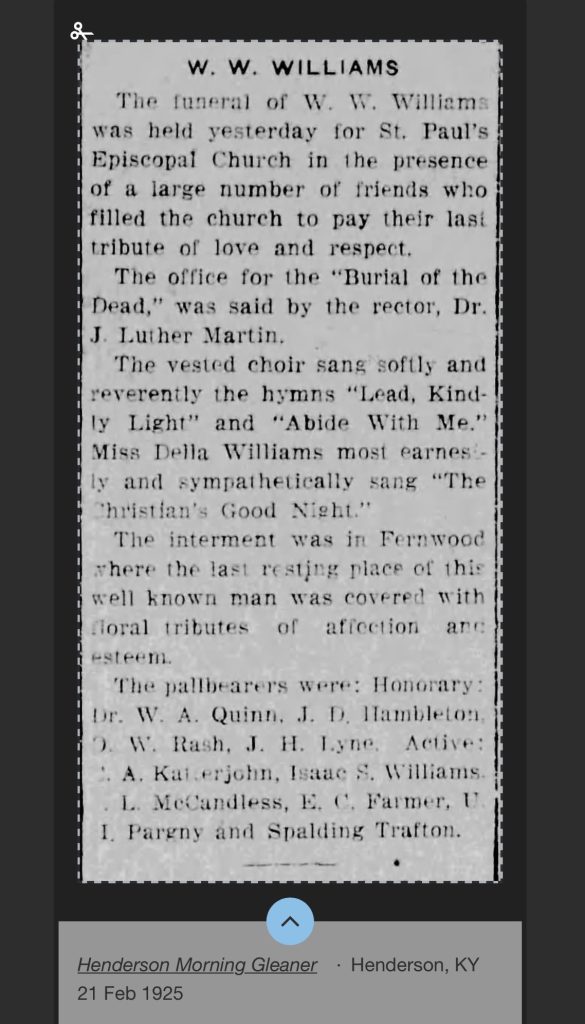
His funeral was held on February 20 at St. Paul’s Episcopal Church, with Dr. J. Luther Martin conducting the service. The newspaper reported that friends filled the church. The choir sang “Lead, Kindly Light” and “Abide With Me,” and Miss Della Williams sang “The Christian’s Good Night.” Burial followed in Fernwood Cemetery.
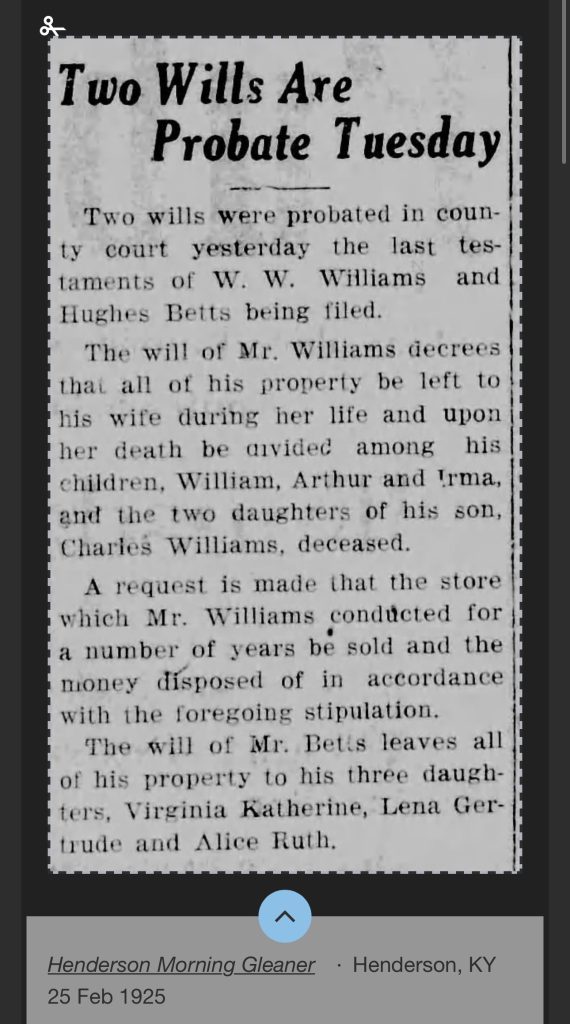
A report of his will, published February 25, brought the store itself into the final arrangements. Williams left his property to his wife for her lifetime, with its subsequent division among William, Arthur, Irma, and the two daughters of his deceased son Charles. He also requested that the store be sold and the proceeds handled under those provisions.
The surviving notices do not establish when that sale occurred or what became of the business afterward. They do preserve the record of a merchant who built his reputation through years of selling shoes, fabrics, hats, and household goods to Henderson customers. From the first-anniversary dinner for his clerks to the carefully arranged displays on Second Street, Williams’s story captures the work and personal relationships behind one of downtown Henderson’s familiar store names.
Leave a Reply