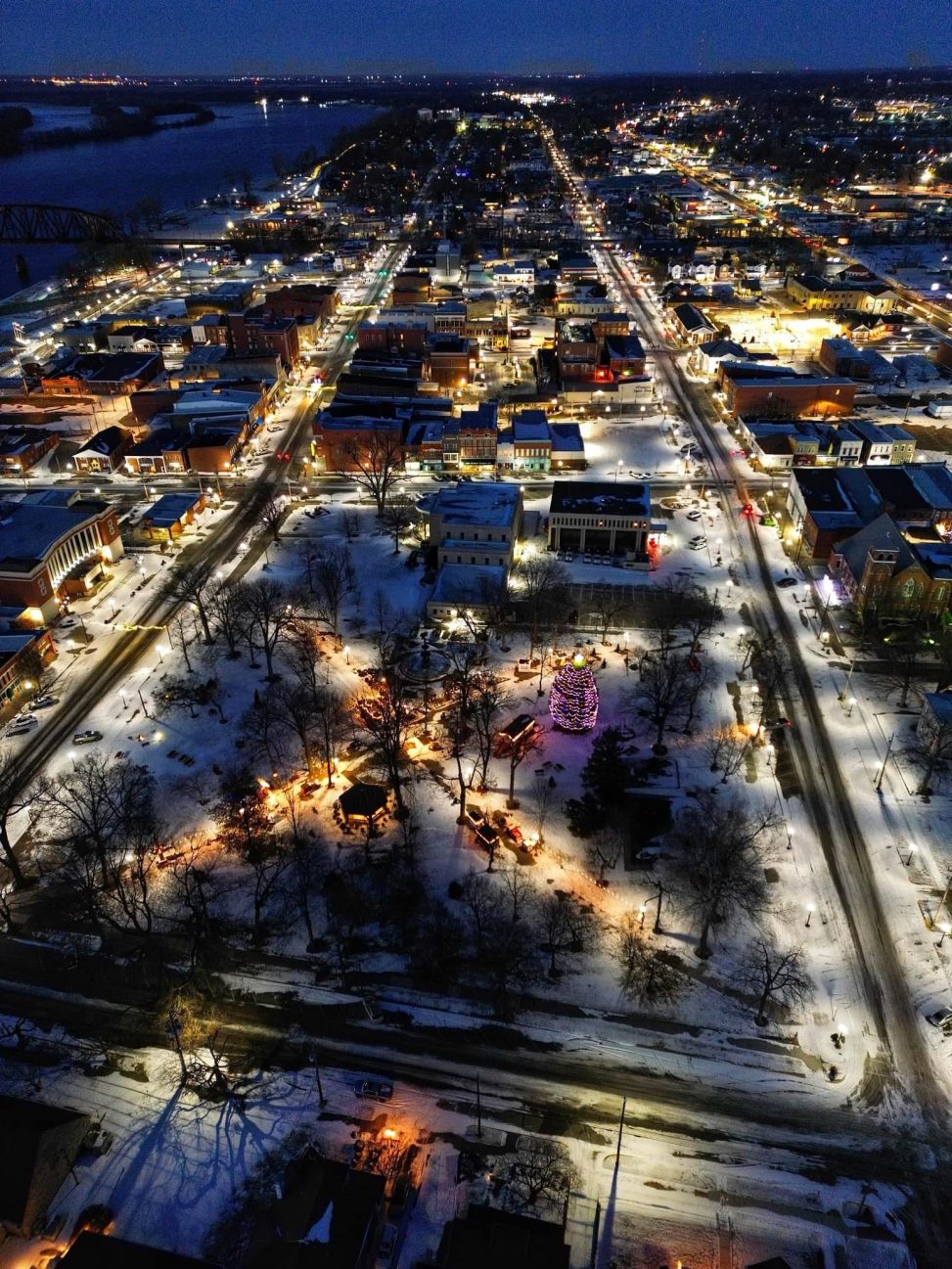
Central Park has been part of Henderson’s story since the town’s beginnings. Its shaded grounds have hosted churches, circuses, soldiers, political speeches, and community celebrations. Yet the park’s survival was never guaranteed. Portions were surrendered in a land dispute, and the remaining square was once divided into building lots and sold.
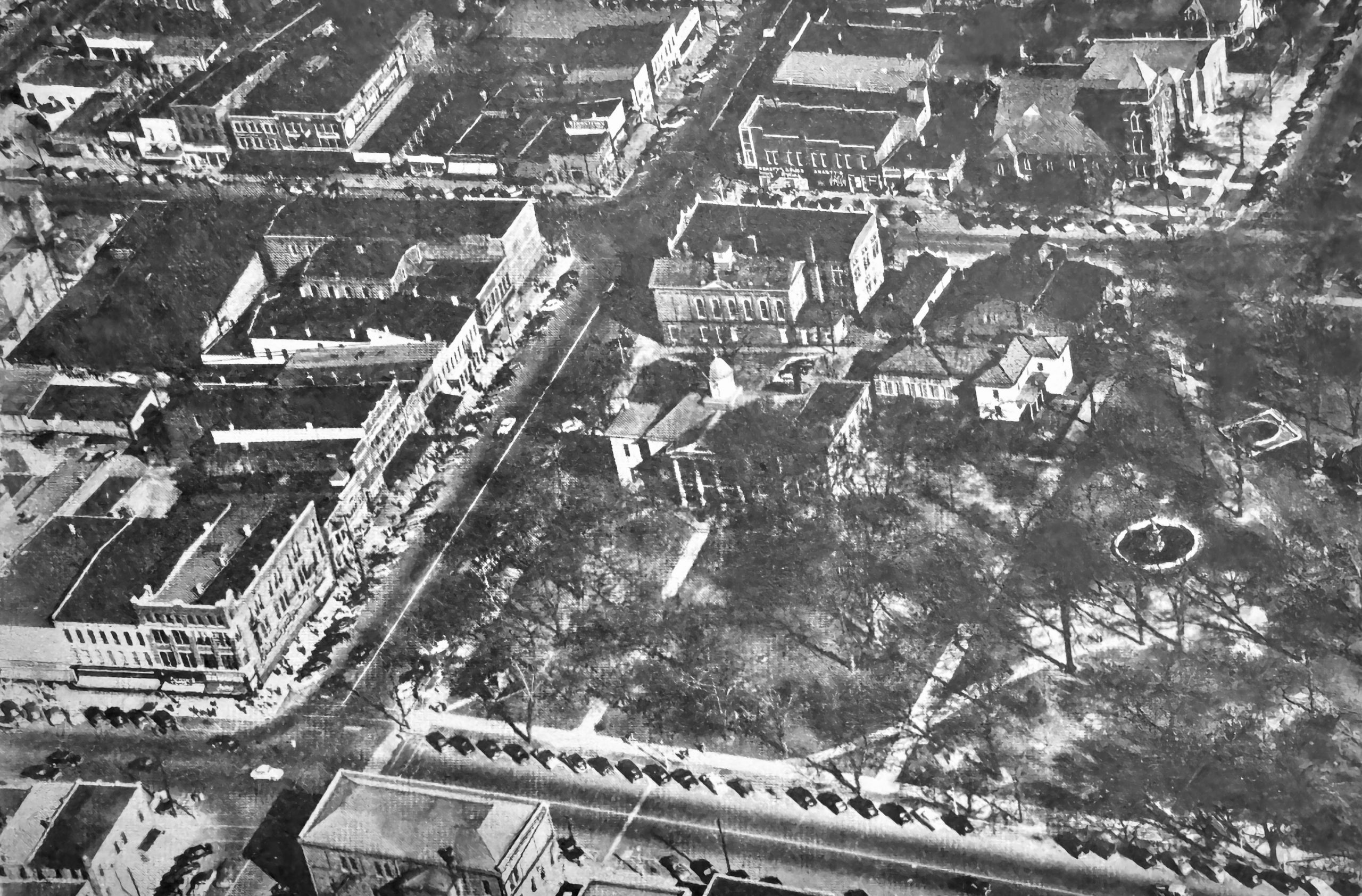
On August 9, 1797, the Transylvania Company reserved land between Water and Green streets, bounded by today’s First and Washington streets, for public purposes. The reservation covered the equivalent of six city blocks, including the present park and courthouse grounds. Because of this early dedication, Central Park is often described as believed to be the oldest municipal park west of the Allegheny Mountains. Its appearance as a landscaped park, however, developed much later.
In 1825, members of the Alves family and Richard G. Hart asserted ownership interests that threatened existing property titles. To settle the dispute, townspeople surrendered public land between Water and Main and between Elm and Green. The central grounds between Main and Elm remained public. Historian Edmund L. Starling later condemned the arrangement, arguing that residents had protected their own lots by giving away property intended for everyone.
The surviving Public Square served many purposes. Union Church stood near Washington Street in the mid-1820s. Farmers hitched their horses on the grounds, traveling circuses erected tents, and the celebrated entertainer Dan Rice performed there. The square also witnessed public executions, including the hanging of convicted murderer Charles C. Carr in 1819.
Much of the landscape once consisted of poorly drained ground and a large pond. Henry C. Dixon remembered skating there as a boy in the 1850s and recalled a neighbor catching bullfrogs with red flannel bait. Filling work in 1856 and a plank fence erected the following spring began changing the square’s appearance. During the Civil War, soldiers occupied the grounds, and Colonel Foster established an enclosure with stables for several hundred horses.
The greatest threat came in 1865, when Henderson sought to sell the square to finance a riverfront wharf. Voters approved the proposal, and officials divided the property into 26 building lots. When purchasers failed to pay, the resulting litigation established that the city could not convey valid title to the public ground. The sales were undone, preserving the square.
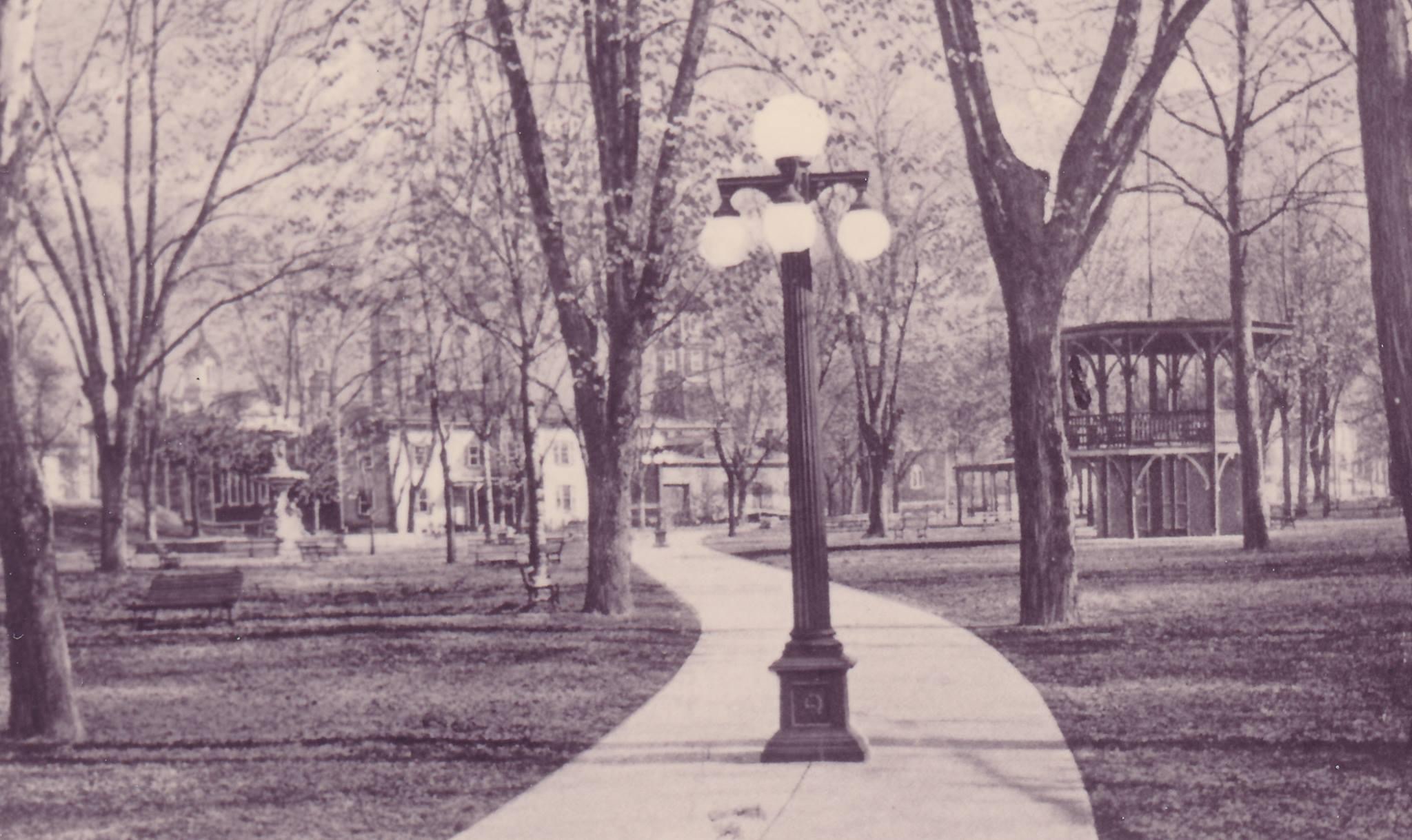
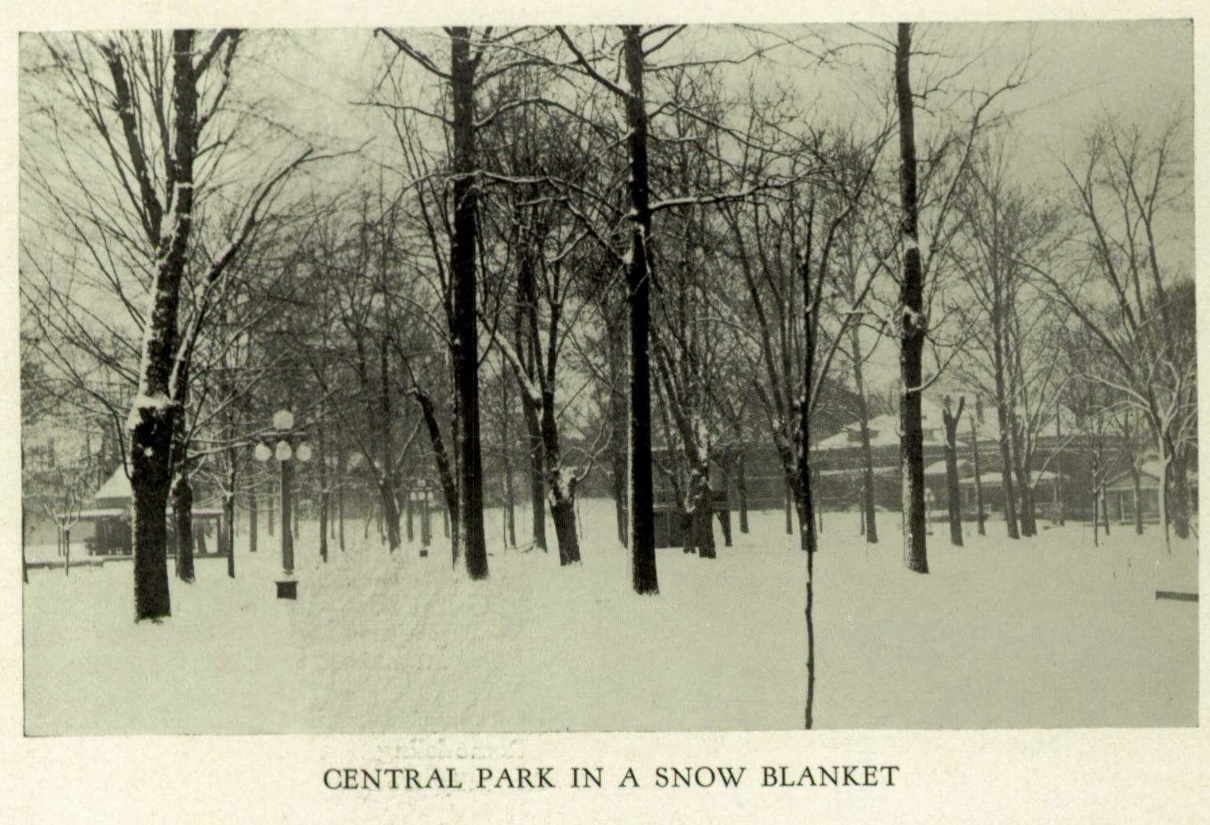
In 1878, Center Street was closed between Main and Elm, joining the Public and Courthouse squares. Officials rejected a proposal to rent the grounds as a cow pasture the following year. By 1887, Starling described a beautified park enclosed by a handsome county-funded iron fence.
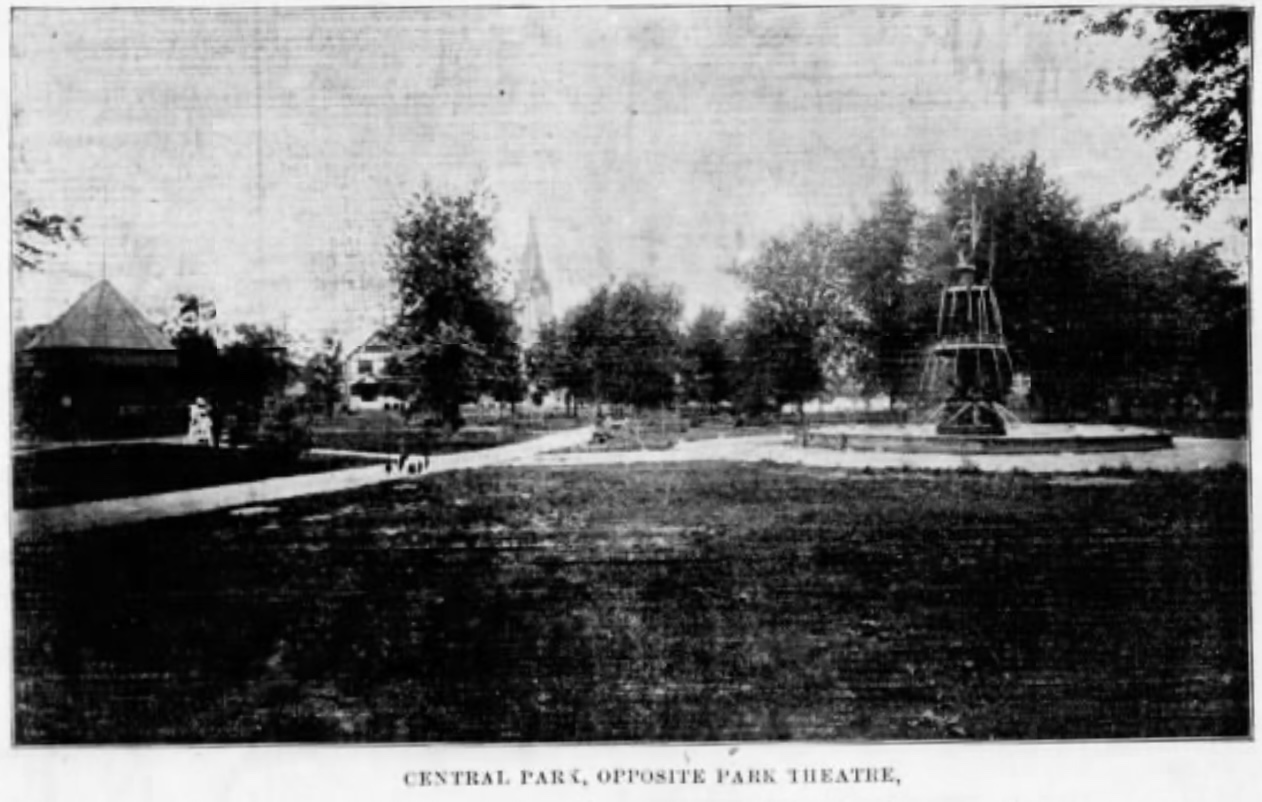
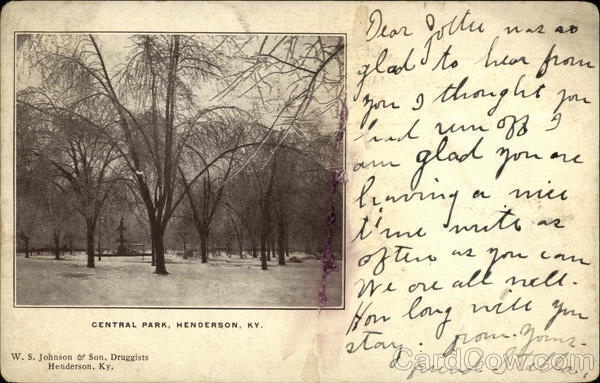
The ornamental fountain purchased from J. W. Fiske in 1892 became the park’s defining landmark. Its decorative figures and elevated female statue appeared in generations of photographs. Deterioration, freezing conditions, and vandalism eventually took their toll, and the original fountain was removed by the early 1960s.
Central Park continued to attract public gatherings. Approximately 3,000 people attended Franklin D. Roosevelt’s appearance during his 1920 campaign for vice president. Another preservation battle arose in 1969, when a proposed city hall in the park prompted opposition from Friends of the Park. The city building ultimately constructed at First and Elm stood outside the park proper.
On July 25, 2003, Henderson dedicated a replica of the historic fountain, fabricated by Robinson Iron of Alabama. The approximately 26-foot structure restored the familiar figure known as “Rebecca” to the grounds. It underwent extensive restoration in 2021.
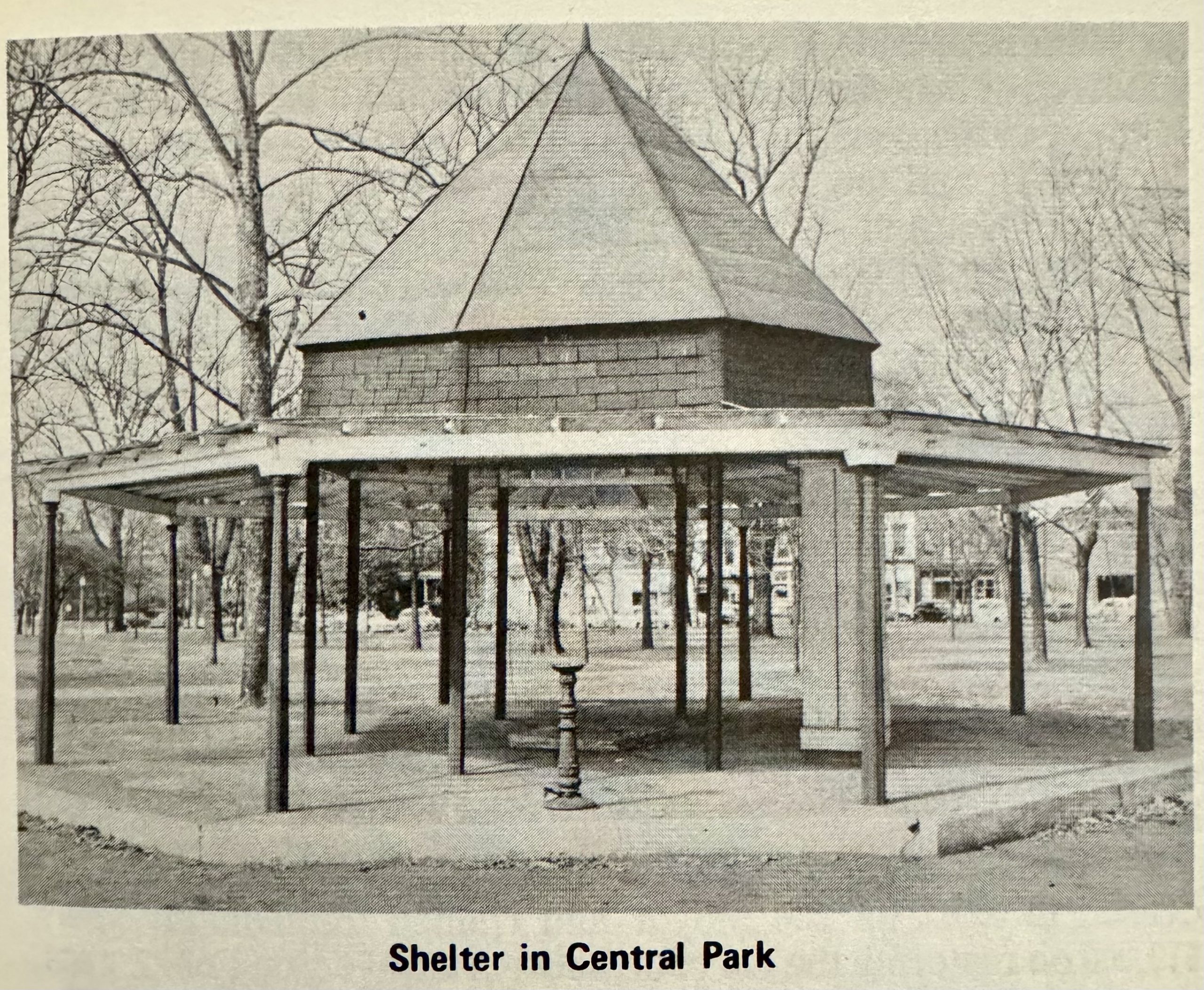
Today, Central Park’s fountain, gazebo, playground, and memorials occupy the surviving portion of Henderson’s original public reservation. Its history reflects both the many ways residents have used the grounds and the repeated efforts required to preserve them.
Other Posts including Central Park: